
AARP Hearing Center











































))



)

Could Vaccines Help Fight Cancer? Scientists Are Making Progress
What once seemed like a far-fetched idea could be a reality in the next five to 10 years


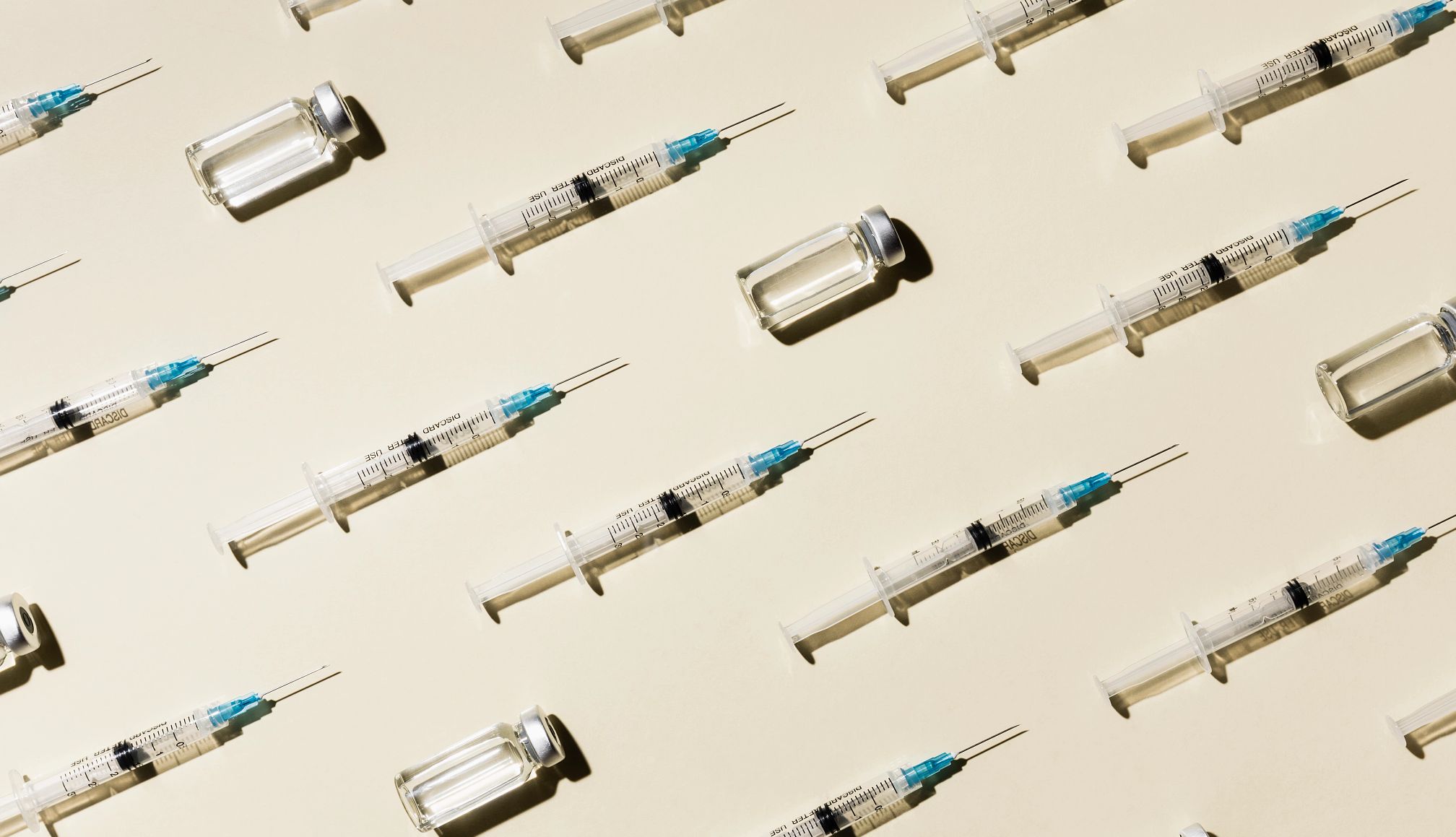
Getty Images
Jim Furneaux was diagnosed with stage 4 melanoma in 2021 after a scan showed the cancer was in his lungs.
Although stage 4 melanoma is the deadliest form of skin cancer, Furneaux was optimistic because his doctors planned to use a new weapon to fight his disease: a personalized cancer vaccine formulated to attack his specific cancer cells.
More Ways to Benefit
- Related Benefit 1
- Related Benefit 2
- Related Benefit 3
- Related Benefit 4
- Related Benefit 5
“I was really taken by the technology,” says Furneaux, who is now 82 and lives in Sarasota, Florida. “You have a weapon that is going against your known enemy. It can go right directly to your cells and kill them.”
The vaccine, part of a clinical trial at the Dana-Farber Cancer Institute in Boston, is one of dozens being developed and tested across the country to fight different types of cancer.

Jim Furneaux, 79, is participating in a clinical trial testing a personalized cancer vaccine to fight melanoma
Courtesy Jim Furneaux
Not just prevention: Vaccines may help with cancer treatment
When most people think about vaccines, they think of shots that can prevent a disease from developing in the first place, as with the measles vaccine or the flu shot. And already there are two preventive cancer vaccines: the HPV vaccine, which targets a virus linked to cervical cancer, and the hepatitis B vaccine, which helps guard against liver cancer caused by a hepatitis B infection.
But researchers are also studying vaccines as a way to treat cancer once it has already occurred or to prevent it from coming back. Just as vaccines train the body’s immune system to recognize and attack a virus or other foreign invader, scientists have figured out a way to teach it to do the same with some cancer cells. And that’s a big deal, because tumor cells are derived from human cells, which makes it difficult for the body to distinguish the good guys from the bad.
After decades of setbacks, researchers say this idea is at a watershed moment. Scientists have discovered new ways to target certain proteins, called antigens, on the surface of tumor cells, and some experts predict that at least some cancer vaccines will be commercially available in the next five to 10 years.
“It’s exciting, because people in the field have thought about this since the 1980s, and nobody could make it happen,” says Dr. Patrick Ott, clinical director of the Melanoma Disease Center at the Dana-Farber Cancer Institute.
One thing to note, however: The cancer vaccines being developed aren’t mass-produced shots for everyone like the COVID-19 vaccine or flu vaccine. Instead, they are formulated for specific patients or groups of patients — either those who have already been diagnosed with cancer, cancer survivors or those who are at high genetic risk.
A vaccine tailored for one patient at a time
The cancer vaccines that have gotten the most attention recently are personalized vaccines, like the one Furneaux received. They are created for a specific person based on the genetic mutations in their tumor cells.
“Every patient has a different tumor with different mutations,” Ott says. To create a personalized vaccine, those mutations are programmed into a vaccine tailored for that person. The whole process can take six to eight weeks, and experts say it likely comes with a high price tag.
In Furneaux’s case, researchers biopsied the tumors in his lungs and genetically sequenced his cancer cells. Then they formulated a vaccine that targeted his unique tumor protein mutations.
Furneaux got two injections at each of four appointments in fall 2021. He also received immunotherapy — the standard treatment for his type of melanoma that helps the immune system fight it.
Now, five years later, Furneaux says his cancer not only didn’t progress, it actually receded. His participation in the trial wrapped up this year.
“I was so fortunate to be able to participate,” he says.
Data from another vaccine being tested for the treatment of melanoma has produced similarly promising results.
In August 2026, Moderna and Merck announced that their mRNA melanoma vaccine significantly reduced the risk of cancer recurrence or spread in a large phase 3 clinical trial when combined with Merck’s immunotherapy treatment.
Previous trials showed the vaccine cut the risk of death or recurrence in nearly half when added to the typical treatment. Merck and Moderna are also testing the vaccine, called intismeran, in phase 2 and 3 trials against lung, bladder and kidney cancers.
Another promising personalized vaccine targets pancreatic cancer, one of the deadliest forms of the disease. In April 2026, researchers at Memorial Sloan Kettering Cancer Center reported that an mRNA vaccine they developed extended the lives of patients with pancreatic cancer in a small phase 1 trial.
Researchers are also developing and testing personalized vaccines for cervical, colorectal, prostate and brain cancers.
“This is all very exciting,” says Dr. William Dahut, chief scientific officer for the American Cancer Society. “The small trials are being transformed into big trials, and if they have positive results, at least in those cancers, I think this could be just a couple of years away.”
Some vaccines target specific subsets of cancers
Other cancer vaccines in the pipeline are designed to work for more than just one patient.
At the University of Washington Cancer Vaccine Institute, for example, researchers are testing vaccines that target a protein, called HER2, that is expressed at abnormally high levels in some 20 percent of breast cancers, causing the cancer to grow rapidly.

In a phase 1 study of 66 women with advanced-stage HER2-positive breast cancer, the vaccine elicited a strong immune response, according to published results. And although the study was not designed to test the vaccine’s effectiveness, the researchers noted that the participants did better than would be expected for having such an advanced stage of the disease.
“If you look at patients at that stage, you would have expected that only half would be alive in five years. But 80 percent of our participants are still alive today,” says Kiran Dhillon, executive director of the UW Cancer Vaccine Institute. “That’s pretty powerful.”
The vaccine institute is now testing new vaccine formulations that target multiple proteins rather than just one, Dhillon says, as well as vaccines for ovarian cancer, lung cancer, prostate cancer, bladder cancer and colon cancer.
The holy grail: More preventive cancer vaccines
While much of the momentum has been on vaccines for people who already have cancer, scientists are still working to develop more vaccines that can effectively prevent cancer.
Many preventative vaccines being developed target high-risk groups, such as those with inherited genetic mutations that predispose them to certain cancers.
At Johns Hopkins, for example, researchers are testing an experimental vaccine that aims to prevent pancreatic cancer in people who have hereditary predisposition genes by targeting six common genetic mutations that put them at higher risk. Early results published in July 2026 show the vaccine triggered an immune response in 90 percent of participants.
And at New York’s Weill Cornell Medicine, scientists are developing a vaccine for people with Lynch syndrome, a genetic condition that greatly increases the risk of developing colon and other cancers before the age of 50. The vaccine targets common proteins that often appear on tumors in patients with the syndrome, says Dr. Steven Lipkin, a medical geneticist leading the effort.
Weill Cornell Medicine is also working to develop preventive vaccines for children who have a rare genetic condition that predisposes them to cancer and for patients who develop precancerous lung lesions that increase their risk of lung cancer, Lipkin says.
Focusing on those high-risk groups will allow the team to know sooner how effective a vaccine is at preventing a tumor, he says.
“It’s a practical thing — we want to run trials and be able to do it quickly, within a few years,” Lipkin says. “It gives us a chance to see if the vaccine can intervene and slow it down or get rid of it.”
The good news, he says, is that the risk of dying from cancer in the United States is down about 27 percent in recent decades, but “the next thing to really move the needle in a meaningful way is vaccines.
“We’re hopeful that this is really going to make meaningful progress against cancer in the next decade or so,” Lipkin says. “Prevention is really the best cure for cancer.”
Editor’s note: This story, first published Sept. 22, 2023, has been updated to include new information.

AARP Membership
Join AARP for only $15 per year with automatic renewal. Get instant access to members-only products and hundreds of benefits, a free second membership, and a subscription to AARP The Magazine.
More From AARP
15 Things to Do After a Cancer Diagnosis
The steps to take and questions to ask if you hear ‘it’s cancer’
Mammogram Guidelines When You’re 75 and Up
Doctors look at health, life expectancy and risk to advise women on continued screening
How My Cancer Diagnosis Transformed My Finances
I saved for a long retirement. Then I heard from my doctor