



AARP Hearing Center



































































)




Shana Novak / Getty Images
Key takeaways
- Several common medications can strain kidney function and may require dose review.
- Pain relievers, antibiotics and supplements are frequent sources of kidney risks.
- It’s important to discuss medication safety with your doctor before use.
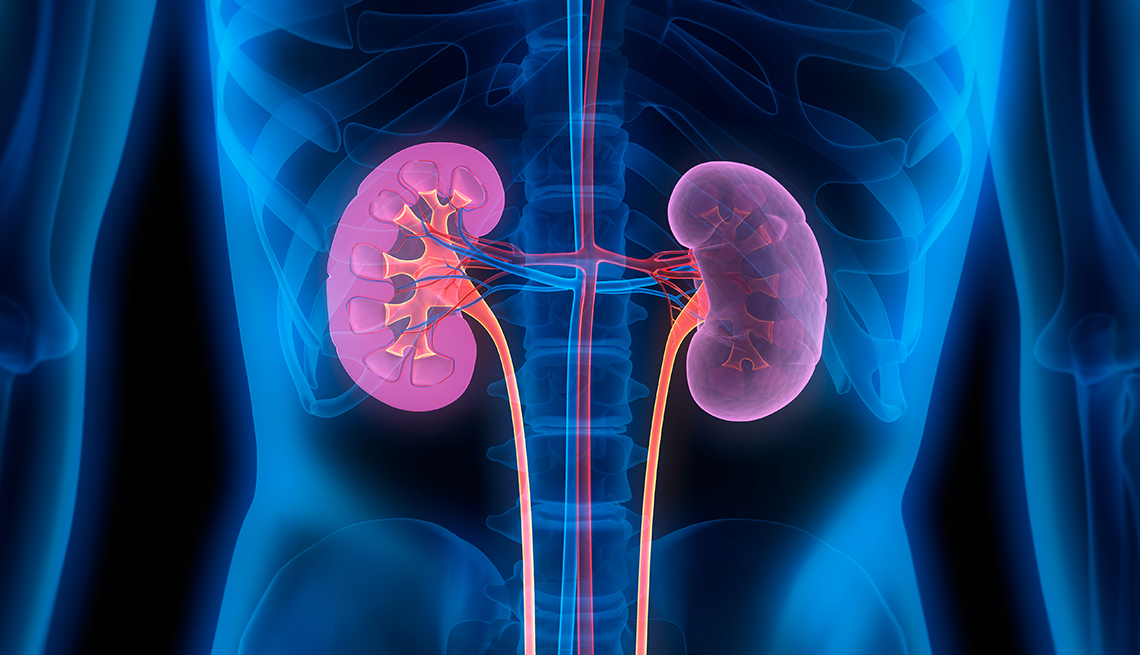
Most prescription drugs are excreted by the kidneys, and so are many of the medications you buy over the counter.
Whether or not you have decreased kidney function — and many do; kidney disease is among the top 10 causes of death, according to a 2025 report in The Lancet — it’s important to speak with your doctors and pharmacist about what medications you’re taking, how much you’re taking and how often you’re taking them. Doses may have to be adjusted to prevent adverse effects, toxicity and increased damage to your kidneys.
Dr. Steven Coca, a professor of medicine and a nephrologist at the Icahn School of Medicine at Mount Sinai in New York, says you should know your estimated glomerular filtration rate (eGFR), which is the primary measurement of kidney function, and your urine albumin-to-creatinine ratio (UACR), a marker of kidney damage.
Your eGFR will show up any time your doctor orders standard blood work, which is usually covered by insurance. It’s part of the most basic generic lab work you can get.
Your UACR test, usually covered by insurance, at least in part, indicates the level of protein in your urine and is normally given once a year to monitor kidney damage for those with kidney disease. The UACR also monitors the kidneys for patients who’ve had type 1 diabetes for five years or more and for patients with type 2 diabetes.
“You ought to know these numbers because chronic kidney disease is one of the strongest risk factors for cardiovascular disease and because many medications that are taken by older people are cleared by the kidneys and can, in some cases, cause harm or worsen preexisting kidney disease,” Coca says.
People who are most vulnerable to medication-induced adverse kidney events include those 65 and older, those with underlying kidney disease, people who are dehydrated, patients with low blood pressure, and those who have other health conditions such as diabetes, heart disease or have had heart surgery or transplantation, says Dr. Karthik Ramani, a nephrologist at Michigan Medicine at the University of Michigan.
Ramani suggests that prior to taking medications, including over-the-counter (OTC) and herbal supplements, reach out to a qualified health care provider or pharmacist and do your own research by getting information from verified sources such as the National Kidney Foundation (NKF), the American Medical Association, the National Institutes of Health and the American Society of Nephrology.
“In certain situations, such as when you may need to undergo chemotherapy treatment that could be lifesaving but could also cause some damage to your kidneys, you may decide to proceed with taking the chemotherapy medication even though it can harm your kidneys,” says Ramani.
“You should discuss this type of situation with your physician and weigh the benefits against the risks of taking medications,” says Dr. Michelle Josephson, a nephrologist and professor of medicine and surgery at the University of Chicago Department of Medicine.
Derek Owen, a clinical pharmacist formerly with the kidney team at the University of Chicago Department of Medicine, says don’t assume that because a medication can be purchased over the counter it’s harmless.
“Many over-the-counter medications have multiple medications in them, so it’s important to always check the label to make sure each ingredient is safe for you to take,” he says.


More From AARP
38 Ways to Protect Kidney Health
How to protect your kidneys, in sickness and in health
Herbal Supplements: Risks for People 50-Plus
Herbal pills may harm liver, impacting people 50-plus
Avoid These Food-Drug Combos for Safety
Mixing medicines with certain meals can render them ineffective