
























































Javascript is not enabled.

Javascript must be enabled to use this site. Please enable Javascript in your browser and try again.

Skip to content
Content starts here
CLOSE ×
Search
CLOSE ×
Search
Leaving AARP.org Website

You are now leaving AARP.org and going to a website that is not operated by AARP. A different privacy policy and terms of service will apply.

3 Best Medical Alert Watches of 2026: Tested and Approved

These discreet emergency devices look like regular smartwatches, but they can call a 24/7-staffed monitoring center if you need help


The products and services discussed on this page have been independently tested and researched. AARP may earn a commission through affiliate links, but this does not influence our objective reviews. Proceeds earned go toward supporting our mission.


LifeFone medical alert watch on a white background
AARP Smart Picks™

For some older adults, wearing a watch is second nature. So, how cool would it be if your watch could also call for help if you need it? Medical alert watches have help buttons that connect to a 24/7 staffed monitoring center. If you press the button, you’re connected to a monitoring center agent who can communicate with you through the watch’s two-way speaker and dispatch help if you need it. Because these watches provide help with the push of a button, they can offer users a sense of safety and independence, as well as peace of mind for caregivers. 

Medical alert watches are enabled with GPS technology to track a user’s movements and connect to monitoring centers using cellular networks — the same kinds of networks your cell phone uses. If you buy a medical alert watch, you’d also pay for a monthly subscription to have access to the company’s monitoring center.

If you’re looking for a medical alert watch to help maintain independence for yourself or a loved one, we’re here to help. The AARP Smart Picks team worked with older adult testers ages 60 to 65 to assess these watches based on important factors like fall detection, GPS tracking accuracy and discretion. We also consulted subject matter experts, conducted a survey and a focus group on the topic at hand and completed several tests in our lab to find the top performers. Read on to see which watches performed the best in our testing.

Our top medical alert watch

Medical Guardian MGMove

  • Sleek and easy to use
  • Reliable GPS tracking
  • 30-day trial

The best medical alert watches of 2026

Comparing the best medical alert watches

Best Overall Medical Alert Watch: Medical Guardian MGMove

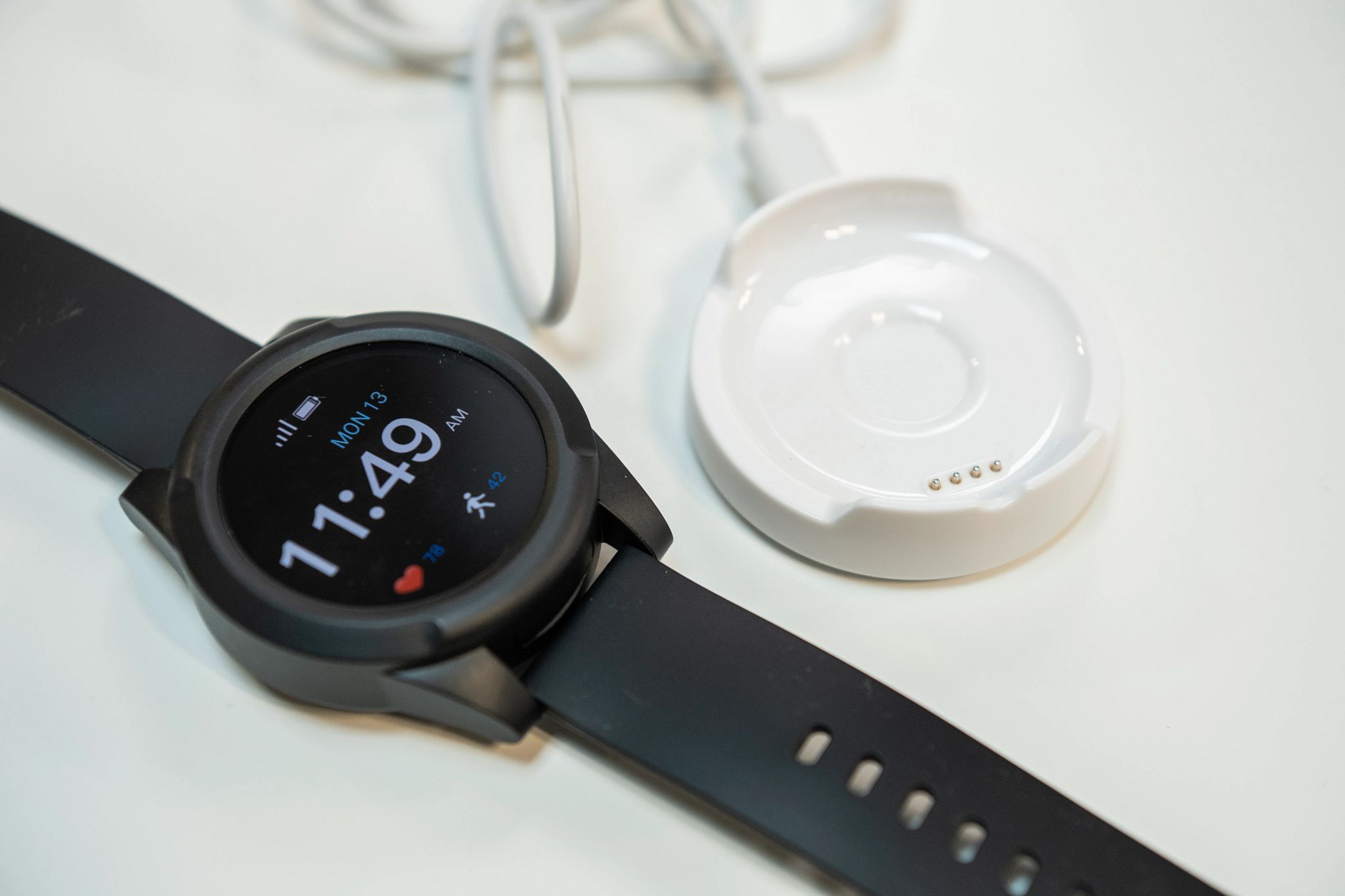
The Medical Guardian MGMove next to a charger and a product pamphlet
AARP Smart Picks

Score: 9.3 out of 10

Visit Site

Pros and cons

Pros

  • High scores in setup and use
  • Attractive look and comfortable to wear
  • Feature-rich caregiver app

Cons

  • One-time equipment fee
  • Average audio clarity

Features

  • App available: Yes
  • GPS tracking: Yes
  • Max battery life (hours): 24
  • Water-resistant: Yes

Key takeaways from our testing

User-friendly and stylish. The Medical Guardian MG Move earned perfect scores on the metrics of device setup, comfort on the wrist and discretion, or the ability to incorporate the device into your daily routine, potentially without others knowing you’re wearing a medical alert device. Donna, a 60-year-old tester, said the Medical Guardian MGMove was “really easy to set up” and that she only needed to charge the watch before it was ready to use. Another plus? This device received a perfect rating for how easy it is to integrate into everyday life — and it’s the only device on this list to receive that score on this measure. “I could wear this with anything, and I could see myself wearing this easily every day,” Donna explained. “It’s comfortable, stylish and it has a clean and simple design.” She also noted that it looked like an Apple Watch, but with a circular watch face rather than a square.

A woman wearing the Medical Guardian MGMove smartwatch, swiping the screen.
Tester Donna said she liked that you can customize the Medical Guardian MGMove (shown here), including tailoring its interface to suit your individual needs and preferences, establishing step goals and selecting a watch face.
AARP Smart Picks

Thorough caregiver monitoring. The MGMove is the only watch on this list with a caregiver app that has access to the user’s location history. This MyMedicalGuardian app allows caregivers to view the wearer’s status, including hourly updates on their location and activity. Caregivers can also see the watch’s status, including battery life and signal strength. In our April 2026 focus group of seven people who had bought a medical alert system in the last three years, nearly all were caregivers who had bought a device for a loved one and said detailed location tracking was invaluable for their peace of mind. Paul, a 57-year-old focus group participant in Washington state, said he wished his mother’s device had a GPS tracker to see if her daily movement routines were out of the ordinary. “Is she active today? Is she sitting in one spot too long? I want to know if something doesn’t seem right,” he said. So, if this kind of functionality is important for you, too, this device could meet those needs.

Pricey equipment fee. This watch has the lowest starting subscription cost of $42.95 per month, before any optional fees for automatic fall detection. But it also requires a $199.95 equipment fee at checkout. That means your first order total may be about $242.90, which is steep compared to other watches in this review. If you’re looking for a lower starting price, consider the Lifefone Safe Watch Active, which doesn’t have this hefty activation fee. Another knock? Donna said the audio quality varied. “On some test calls to the monitoring center, the agent sounded quieter and somewhat muffled.” If you have hearing loss, you may want a watch with a stronger two-way speaker. 

Best Value: Lifefone Safe Watch Active

The Lifefone Safe Watch Active next to its charging dock
AARP Smart Picks

Score: 9.4 out of 10

Visit Site

Pros and cons

Pros

  • Reasonably priced
  • Accurate fall detection
  • Clear audio

Cons

  • Bulky design
  • Passable comfort score

Features

  • App available: Yes
  • GPS tracking: Yes
  • Max battery life (hours): 24
  • Water-resistant: Yes

Key takeaways from our testing

High performance at an affordable rate. The Lifefone Safe Watch Active has the lowest total cost on this list. The starting price is $47.95 per month. Automatic fall detection is also available for an additional $5 per month, which is half the industry average of $10 per month. That brings the total monthly cost to $52.95. The difference between this device and our best overall pick? You don’t need to pay an up-front equipment fee. And based on our testing, the lower overall cost doesn’t sacrifice quick connections to the monitoring center. “The call center was professional and quick to answer,” said Will, a 65-year-old tester. “Everyone spoke clearly, and I didn’t have any issues with the speaker or its volume.”

A man holding the Lifefone Safe Watch Active while it’s plugged into the charger.
Tester Will said there was minimal setup for the LifeFone Safe Watch Active (shown here). He said all he had to do was put the watch on the charging dock and let it charge before use.
AARP Smart Picks

Registered most test falls — including falls from a chair. This watch passed our fall detection test by detecting nine of 12 test calls, including all three falls from a chair, which are typically harder for devices to identify. That difficulty can occur because, if you fall from a chair, you’re moving more slowly and traveling a shorter distance than if you were falling from standing. And fall detection sensors use your speed and changes in elevation to help automatically identify falls. 

In general, our lab testers assess fall detection accuracy by simulating four types of falls for a minimum of three times each per device.

  • Fall from a chair: Tester sits in chair and falls forward.
  • Standing fall: Tester is standing then drops to their knees and braces the fall with their arms outstretched.
  • Lateral standing fall: Tester is standing then falls sideways.
  • Backward fall: Tester is standing and falls backward.

Potentially awkward fit. Will’s only grievance about this watch was its size. “The watch is large and sits high on my wrist. It’s hard to wear my sleeves all the way down, and the rubber of the band rubs my skin more than I’d like,” he said, giving just a fair comfort rating. Despite its fit, he still found it to be discreet. “No one would know this is a medical alert system. I already wear a watch every day, so this would integrate well into my lifestyle,” he said. However, if you’d prefer a thinner watch profile, check out the Medical Guardian MGMove instead. 

Best Fall Detection: LifeStation Sidekick Smart 

The LifeStation Sidekick Smart on display
AARP Smart Picks

Score: 9.2 out of 10

Visit Site

Pros and cons

Pros

  • Aced fall detection test
  • Discreet design
  • Accurate GPS tracking

Cons

  • More expensive subscription compared to others
  • No app

Features

  • App available: No
  • GPS tracking: Yes
  • Max battery life (hours): 24
  • Water-resistant: Yes

Key takeaways from our testing

Excellent fall detection. In our lab assessments, the Sidekick Smart registered all 12 test falls, achieving the best fall detection performance on this list. Not only did it excel in fall detection, but tester Donna said she liked the watch’s design. “It’s very discreet,” she said. “It looks just like a regular smartwatch, so no one would guess it’s actually a medical alert device.” 

A woman wearing the LifeStation Sidekick Smart medical alert watch.
Tester Donna said the LifeStation Sidekick Smart (shown here) looks like a watch but felt a little bulky on her wrist, resulting in an average comfort score.
AARP Smart Picks

Reliable location tracking. This watch passed our GPS location tracking test with flying colors. When our lab team traveled to three different places and pressed the help buttons to test whether monitoring centers were able to verify their locations — a grocery store, hardware store and the cell phone lot of an airport — all LifeStation monitoring center agents were able to confirm their locations. Will said he appreciated the agents’ personal touches. “They were very clear and communicative. The different agents I talked to separately introduced themselves, were attentive, polite and quick to answer my questions,” he said. 

Highest starting monthly price on this list and no app access. The Sidekick Smart has the highest starting monthly cost on this list at $50.95 per month. That’s $3 more per month than the Lifefone watch and $8 more per month than the Medical Guardian watch. Another issue? Unlike with Medical Guardian and Lifefone, caregivers of older adults using this device don’t have access to a free app to track users’ locations. That said, LifeStation does offer the Find My Loved One feature in place of an app, which gives caregivers access to users’ real-time locations through text messages. To use this feature, just text a dedicated number “Find [User name]” and receive a text with the user’s location on Google Maps. 

How we tested the best medical alert watches

We began testing the best medical alert watches by researching the market. Which products are popular and why? Which companies have the best reviews — and are the reviews legitimate?

To put the medical alert watches through their paces, we recruited adults 50 and older to test the devices. We purchased each device, and testers unboxed each one, giving us their unbiased feedback on how the devices looked, how professional the operators were and how confident the testers would feel relying on the watches during an emergency. We also asked testers to rank how easy it was to set up and charge watches.

Become an AARP member

Interested in joining or renewing your membership? Explore all that AARP membership can offer — join or renew today!

In addition, we performed a series of lab-controlled tests assessing the following criteria, which survey respondents, focus group participants and subject matter experts told us were most important:

  • Fall detection
  • Call connection speed
  • Audio clarity
  • Operator professionalism
  • GPS location tracking

For more details, you can see our medical alert system testing methodology page.

How to choose the best medical alert watches

Kylie Meyer, an assistant professor at the Case Western Reserve University Frances Payne Bolton School of Nursing in Cleveland, says the best medical alert watch for older adults depends on their specific health needs. 

For example, she says automatic fall detection would likely be a top consideration for people with a history of falls. She also says that GPS location services may be valuable for some older adults with cognitive issues, like dementia, who may wander. However, as with most medical alert devices, they are only helpful if you wear them as directed. So, caregivers may want to keep a close eye on factors like charging frequency and wear time. 

Based on our research, testing, survey results and feedback from focus group participants, if you’re shopping for a medical alert watch for yourself or a loved one, the following features are most important to consider. 

User-friendly design and wearability

You or a loved one may be more likely to wear a medical alert watch if it’s easy to use and wear every day. According to our test results, the most user-friendly watches have quick setup, responsive screens and clear two-way speakers.

In fact, Cherie Macri, an occupational therapist and director at Masonicare, a not-for-profit provider of health care and retirement living for older adults in Connecticut, says one of the most overlooked factors is wearability. “If a device is uncomfortable or doesn’t align with someone’s preferences, it won’t be worn,” she says. And if a device isn’t worn, it doesn’t serve its purpose.

However, what’s user-friendly to one person may not be user-friendly to another. Meyer, the assistant professor in Cleveland, emphasizes that visual and dexterity issues are common factors impacting a person's ability to use a watch. If a person has low vision, a large, bright watch face with bold lettering and high contrast might be helpful. Also, if a person has difficulty closing a watch buckle due to arthritis pain, for instance, they may want to consider watch bands made of elastic or Velcro or those that are magnetic to make the device easier to wear and use. 

So how do the watches on our list stack up? In general, watches on our list have a modern and sporty look — similar to most smartwatches on the market. Testers said the MGMove is a relatively small model for older adults with thin wrists or who prefer more delicate wearables. The LifeStation Sidekick Smart and Lifefone Safe Watch Active are slightly larger.

Which watch features can be helpful?

Cherie Macri, the occupational therapist and director at Masonicare in Connecticut, recommends that older adults choose medical alert watches with meaningful — not decorative — features. Examples of meaningful features include a clear call button for help, GPS tracking and fall detection. “Metrics like step counts can be useful, but without clear parameters or clinical context, they often add noise rather than value,” she says.

Connectivity

Macri places monitoring center connectivity high on her checklist for patients considering a medical alert watch. These devices often rely on cellular data, the same connection cell phones use, to reach an operator when someone needs help. If there’s no cellular service, there’s no connection. 

Cellular service can fluctuate, such as when driving across town or walking into a store. Also, many rural areas have dead zones, or places with little to no service, with certain carriers. So if you’re considering a medical alert watch, check to make sure the device you choose uses a carrier that offers service in your area. Most medical alert systems use either AT&T or Verizon’s cellular networks. You can check the AT&T or Verizon coverage maps to confirm whether your area has good service.

Response time

If you ever need help, you’ll want to reach an operator as quickly as possible. Most medical alert watches we’ve tested have a short window to cancel a call if you accidentally press the help button on your device. If the call isn't canceled, you'll be connected to an automated voice system or a real person. All watches included in this review have a response time of connecting to a live agent in less than one minute, which we consider a passing performance.

GPS location

One of the perks of using a mobile medical alert system, like a watch, is its GPS tracking. All watches in this list passed our GPS location tests, during which our lab team traveled to various locations, pressed the help button to connect to the monitoring center and asked agents to confirm their locations.

Accurate GPS location can help older adults gain the independence and confidence to do things on their own. Adults ages 50 and older who are active and are wearing a medical alert device can walk to their local park, visit a neighbor down the street or do their usual shopping, knowing someone can still find them if something were to happen.

Advanced devices, such as the Medical Guardian MGMove, offer GPS tracking for caregivers by displaying regularly updated location data via a smartphone app. These apps can store historical data. Several focus group members, particularly the caregivers, shared that GPS tracking provided peace of mind by allowing them to monitor family members who might wander. 

Automatic fall detection

Automatic fall detection is an optional feature that detects a fall and calls for help without the user having to press the help button. All watches in this review offer automatic fall detection, but it costs an additional $5 to $10 per month.

Macri, the occupational therapist, says fall detection isn’t always perfect, especially in watches. Some research suggests wrist fall detection devices aren’t as accurate as those worn around your neck. In addition, there are scenarios in which fall detection may not work. Rick Douglass, a doctor of physical therapy and chief clinical officer of FYZICAL Therapy in Sarasota, Florida, says most systems detect hard falls, which are defined as rapid acceleration, sudden deceleration and sometimes a period of inactivity afterward. “But softer or controlled movements, like sliding out of a chair or bed, might not trigger [a response],” he says.

Another caution? Automatic fall detection can cause false alarms if you drop your watch or move your arm too quickly. “These products are trustworthy, but I’d be prepared for a few false positives,” says Meyer, the assistant professor of nursing in Cleveland. 

Notably, all watches in this review have easy ways of canceling a false alarm, based on our testing results. Usually, you can cancel the call manually by pressing a cancel button on the display after the call is initiated. If the call goes through because you miss the window, you can tell the operator it was a false alarm.

The bottom line here: Adding a functional automatic fall detection feature can add a layer of protection when someone may not be able to press a button after a fall. For example, being dehydrated or taking certain medications (such as blood pressure medicines) increases the risk of fainting episodes. And if a person faints, they likely won’t be able to press a help button right away. 

For more information on this feature, see our review of the best medical alert systems with fall detection.

Does Medicare cover the best medical alert watches?

No, original Medicare (Part A and Part B) generally doesn’t cover medical alert watches. Some Medicare Advantage (Part C) plans might offer partial coverage. For example, William, a 50-year-old focus group participant in Missouri, says his mother was able to afford one of these devices because of her Advantage plan. You can check with your insurance provider to see whether your medical alert watch — or other devices to help you age in place — is covered. 

For example, Medicare and Medicaid may cover other devices, like pulse oximeters and blood pressure monitors, as durable medical equipment.

Does insurance cover medical alert watches?

No, private insurance typically doesn’t cover medical alert watches, but it doesn’t hurt to call and ask. If they do offer coverage, you can ask how much and what documentation you’ll need to receive it.

TRICARE — health insurance for active-duty military members — also doesn’t cover medical alert watches. However, retired military members with the Department of Veterans Affairs (VA) may qualify for discounted or free devices. The VA requires you to first discuss with your health care provider whether you meet the criteria for coverage, which include living alone or being unable to use a cellphone.

How to save money on medical alert watches

You can save money on medical alert watches in a few ways.

  • Pay annually for monitoring: Companies often offer discounts for annual subscriptions.
  • Watch for sales: Many medical alert companies have promotions, including around holidays.
  • Use a Health Savings Account (HSA): If you have one of these tax-advantaged accounts, many HSAs consider medical alert systems eligible purchases. You can call to check the terms for your specific account.
  • Use a Flexible Spending Account (FSA): In many cases, FSAs (another type of tax-advantaged account) also consider medical alert systems to be eligible purchases, but you may want to check your specific account’s terms first.
  • Check state and local programs: You can also browse community programs to see if you qualify for a free or discounted device. For example, some states may cover medical alert systems — also known as personal emergency response services — through certain programs, like Home and Community-Based Services. You can check your state’s coverage to learn more.

Comparing the cost of the best medical alert watches

The best medical alert watches for older adults on this list have starting monthly costs between $42.95 and $50.95. Your monthly payments may vary if you opt for the fall detection service, which generally adds $5 to $10 per month. You can see a breakdown in the chart below. 

FAQs

Are medical alert watches or necklaces better for fall detection?

In general, some research suggests wrist fall detection devices aren’t as accurate as those worn around your neck, because arm movements while wearing wrist devices may accidentally trigger false alarms. However, necklaces (aka pendants) are more likely to hang in the way, and they don’t always hide well when tucked underneath shirts. And a medical alert device can only detect a fall if you’re wearing it. So, if you’re more likely to wear and charge a medical alert watch every day — and wouldn’t like a medical alert necklace — that watch may be the best option for you. But if you’re open to a necklace or a watch, choose the device you’re likely to wear the most often. 

Will medical alert watches work with iPhone and Android phones?

Some medical alert watches work with iPhone and Android phones. For example, the Medical Guardian MGMove has a companion app called MyMedicalGuardian that you can install on both types of phones. The app lets you see the status of the medical alert watch (including battery life and signal strength), receive hourly location updates and view any tracked activity.

Does an Apple Watch have fall detection?

Yes, the Apple Watch has fall detection. If it detects a fall, it will send a notification to the device's display or main screen, where you can make an emergency call or press “I’m OK.” If you don’t move for about a minute, the device automatically calls for help. However, an Apple Watch connects you directly to 911, while a medical alert watch connects you to a staffed monitoring center. And if you have a medical alert watch that connects you to a monitoring center, an agent there can ask whether you need assistance and call emergency services if you do, or if you’re unresponsive. 

How much does a medical alert watch cost?

The best medical alert watches on this list cost between $38.95 and $50.95 per month at the lowest subscription cost. Most medical alert companies also offer optional automatic fall detection for an additional $5 to $10 per month. Some companies may have an additional equipment fee, like with the Medical Guardian MGMove on this list, so be sure to factor in this potential extra cost when deciding on the best device for your needs. 

Questions or feedback? Email us at AARPSmartPicks@aarp.org.


Unlock Access to AARP Members Edition

Join AARP to Continue

Already a Member?

Get instant access to members-only products and hundreds of discounts, a free second membership, and a subscription to AARP the Magazine.