



AARP Hearing Center

































































James Yates
How can I reduce painful gout attacks?
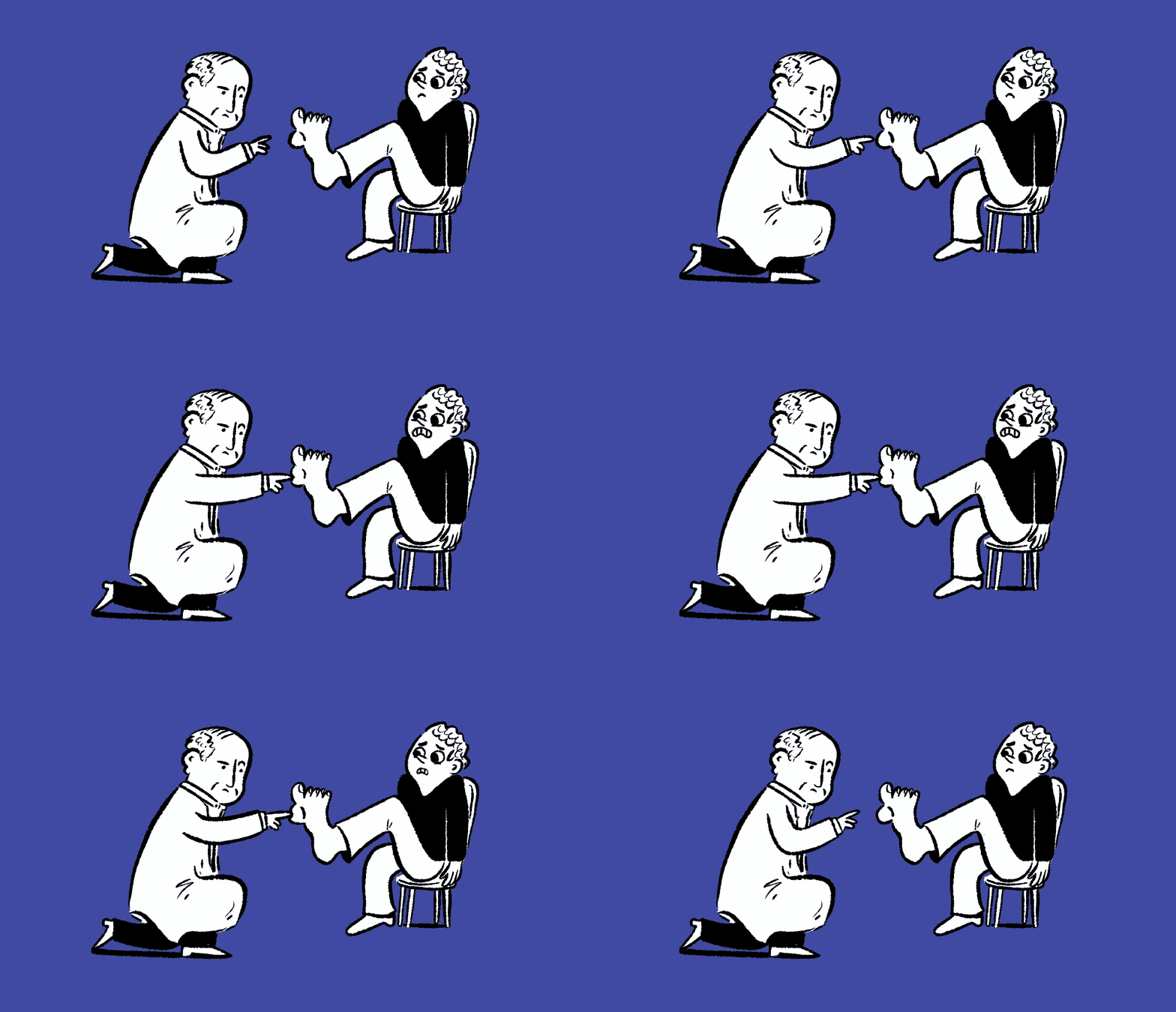
Gout has a way of announcing itself: suddenly, intensely, and often at the most inconvenient moment. Patients describe going to bed feeling fine and waking up with a red, hot, swollen and exquisitely tender joint. Most often it’s their big toe, and just touching the bedsheets can be agony.
At its core, gout is a form of inflammatory arthritis caused by a buildup of uric acid in the bloodstream. Over time, that uric acid forms needlelike crystals that deposit in joints. When your immune system reacts to those crystals, you get a flare, which will trigger pain, swelling, heat and redness that can be severe enough to limit walking or even standing.
Some people are more prone to gout than others. Genetics play a role; many patients have a family history of it. Age matters, too. Men tend to develop gout earlier, while women’s risk rises after menopause, when estrogen, which helps to clear uric acid, declines.
The question you’re asking — how to reduce attacks — is exactly the right one, because gout isn’t just about managing pain in the moment. Repeated flares can damage joints permanently. Preventing them is the goal.

Ask Dr. Adam
Adam B. Rosenbluth, M.D., is an internist and cardiologist in New York City. Each Monday, he’ll weigh in on your questions about how to make your body work better for you. His AARP book will be published in 2027. Join in on the conversation on social media @dradamrosenbluth to learn to move the needle on your personal health in an achievable way.
If you’ve had gout, your doctor should measure your uric acid. While “normal” levels vary, for people with gout we generally aim for keeping their uric acid levels below 6mg/dL. Research continues to support a “treat-to-target” approach. A 2022 review in the journal Nature Reviews Rheumatology confirmed that maintaining uric acid below this threshold significantly reduces flares.
Uric acid is measured as a concentration in your blood. When you’re dehydrated, whether from travel, illness or even a busy day, you effectively concentrate those crystals. That’s why gout attacks often follow dehydration. Drinking water consistently all day is one of the simplest yet most effective preventative strategies.


You Might Also Like
Quiz: Can You Eat Healthily on a Budget?
Read our article on grocery budgeting, then test your knowledge
Could Stimulating One Nerve Stop What Ails You?
The vagus nerve plays a key role in how the body functions. Here’s how to activate it
What It Means When You Suddenly Feel Old
How to survive the unexpected midlife downfall