
AARP Hearing Center









































What It Means When You Suddenly Feel Old
Here’s how you can survive the quick and unexpected midlife downfall

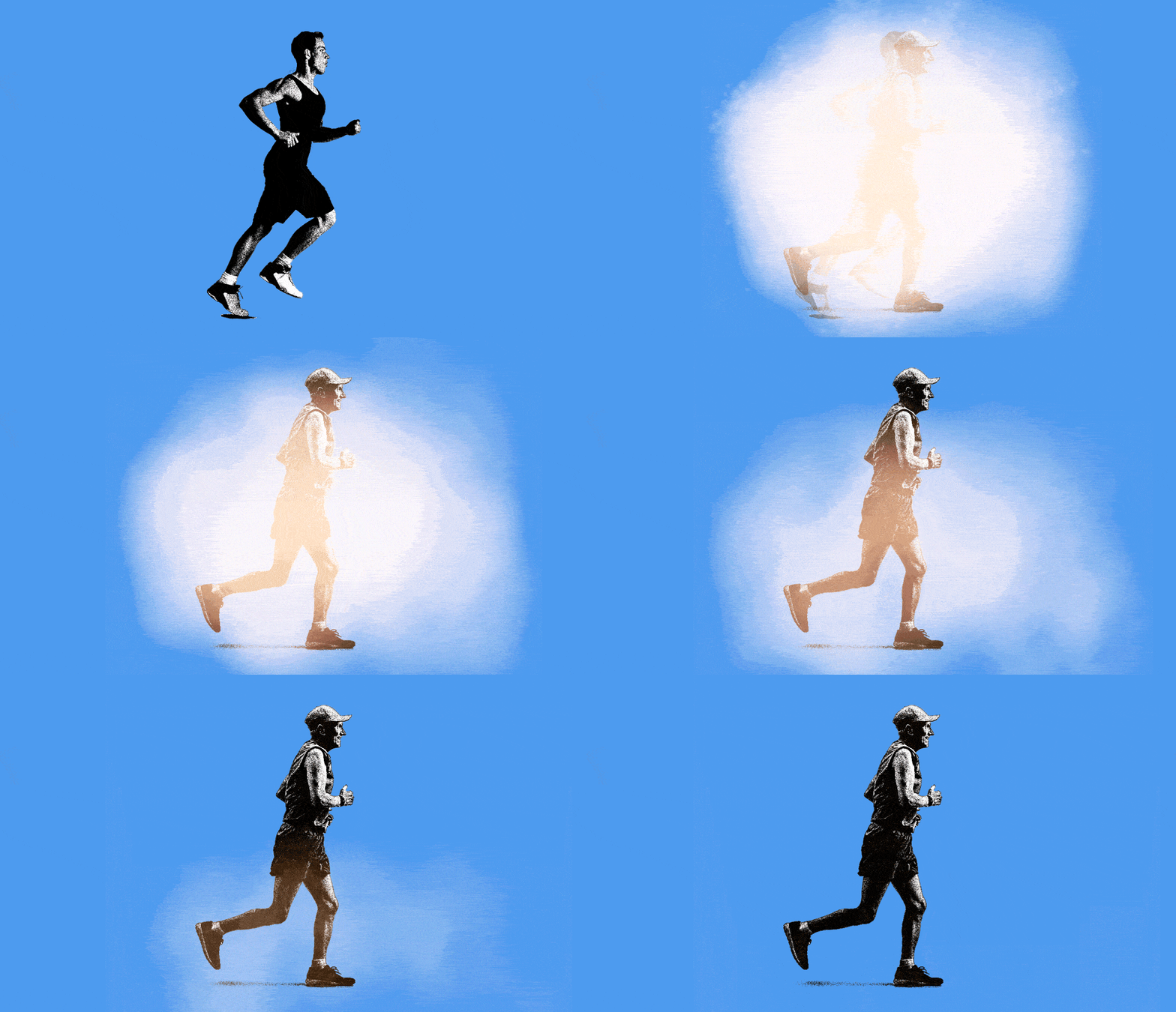
The physical effects of aging can seem like they hit suddenly and surprisingly when you reach your 50s.
Paul Spella
I felt younger than my age for the longest time, right up until I didn’t. Then everything went south, and quickly. What causes that split second when guys our age start to actually feel their age?
I spent my 20s running marathons, and my 30s on softball fields and racquetball courts. My 40s were spent as a father of two young children, which was as challenging and exhausting as my earlier athletic endeavors.
More Ways to Benefit
- Related Benefit 1
- Related Benefit 2
- Related Benefit 3
- Related Benefit 4
- Related Benefit 5
On the cusp of 50, I started down the CrossFit path. I worked out religiously with a hard-core crew decades younger than me and managed to hold my own — at least until a torn meniscus and rotator cuff sent me back to traditional lifting and cardio.
The doctor explained that the cartilage was still fine but both knees were riddled with arthritis. I asked what had caused it, and he said it was quite common for men my age.
Men. My. Age. That one hurt.
It happened like Hemingway wrote in The Sun Also Rises when a character is asked how he went bankrupt: “Gradually and then suddenly.” That’s how I aged. The slow, lingering maladies of the past few years combined all at once to push me off the cliff of physically fit into the chasm of perpetually sore.
The occasional plantar fasciitis flare-up was now full-blown heel pain during any activity. An hour of hard-core racquetball required a two-day recovery. My beat-up shoulders brought me to the point where my travel-baseball-playing son had a stronger arm than me.
Instead of staying quiet about my sudden and rapid decline, I reached out to some of my 50-something peers. To my surprise, they too had their own “falling off the cliff” moments. Everyone I talked to remembered exactly when they instantly felt older. Is there really a switch our body flips to make us feel our age?
“I don’t think the literature or any data supports a precipitous fall-off in the 50s,” says Miriam C. Morey, a professor emeritus at the Duke University School of Medicine. “In general, decline is quite gradual and modified by health status and fitness.”
So how to explain that sudden feeling that everything has gone south in an instant? Aging tends to speed up “when you notice the actual cliff itself,” says Thomas Buford, director of the Center for Exercise Medicine at the University of Alabama at Birmingham.
In other words, it’s not just how you feel, it’s how you expect to feel.
A 2018 study discovered that “subjective aging” is a real thing. Elderly people who feel young “show fewer signs of brain aging, compared with those who feel their age or older than their age,” researchers found.
But how exactly does one “feel young”? It sounds like the midlife equivalent of that Bobby McFerrin song, “Don’t Worry, Be Happy.” Just feel young! It’s enough to have any self-respecting Gen Xer rolling his eyes and resigned to dissolving into dust like a vampire.
But it’s about more than just keeping a positive attitude. As one of the researchers behind the brain aging study pointed out, when you start feeling older than your age, it might be time to “take measures to better care for [your] brain health.”
Brain health isn’t just “thinking positive.” It’s taking care of your brain the same way you take care of your body. That could involve anything from meditation to improving your diet to finding ways to manage stress — all the stuff that’s just as important as staying active and building muscles.
As it turns out, my belief that I’d fallen off the 50s cliff was causing me to slow down and stress out, which only worsened the situation. And while waiting for nagging injuries to heal, I medicated myself with less-than-optimal eating habits and a few too many bourbons. I drove when I could have walked, sat when I could have moved, because my brain told me, “That’s gonna hurt!”
The best way to handle a quick and sudden downfall isn’t to ignore it. But that doesn’t mean wallowing in self-pity or pushing your body till it breaks. Remember that your brain has as much power over how you feel as your body itself. And when your body needs a restorative break, it might be time to focus on taking care of the organ between your ears.
Editor’s note: This story ran previously in The Arrow, AARP’s former online magazine for Gen X men.
AARP essays share a point of view in the author’s voice, drawn from expertise or experience, and do not necessarily reflect the views of AARP.

AARP Membership
Join AARP for only $15 per year with automatic renewal. Get instant access to members-only products and hundreds of benefits, a free second membership, and a subscription to AARP The Magazine.

You Might Also Like
25 Health Mistakes That Age You
Every day we make choices that can either protect us or accelerate the aging process
4 Key Exercises for Aging Well
Experts share the four exercise types that support healthy aging
6 Top Health Tips to Live By
An internist and cardiologist gives his best advice, gleaned from decades in practice