






















































Javascript is not enabled.

Javascript must be enabled to use this site. Please enable Javascript in your browser and try again.

Skip to content
Content starts here
CLOSE ×
Search
CLOSE ×
Search
Leaving AARP.org Website

You are now leaving AARP.org and going to a website that is not operated by AARP. A different privacy policy and terms of service will apply.

25 Health Mistakes That Age You

Every day, we make choices that either protect us or quietly accelerate the aging process. Here are 25 common pitfalls that could be shaving years off your healthy, vibrant life


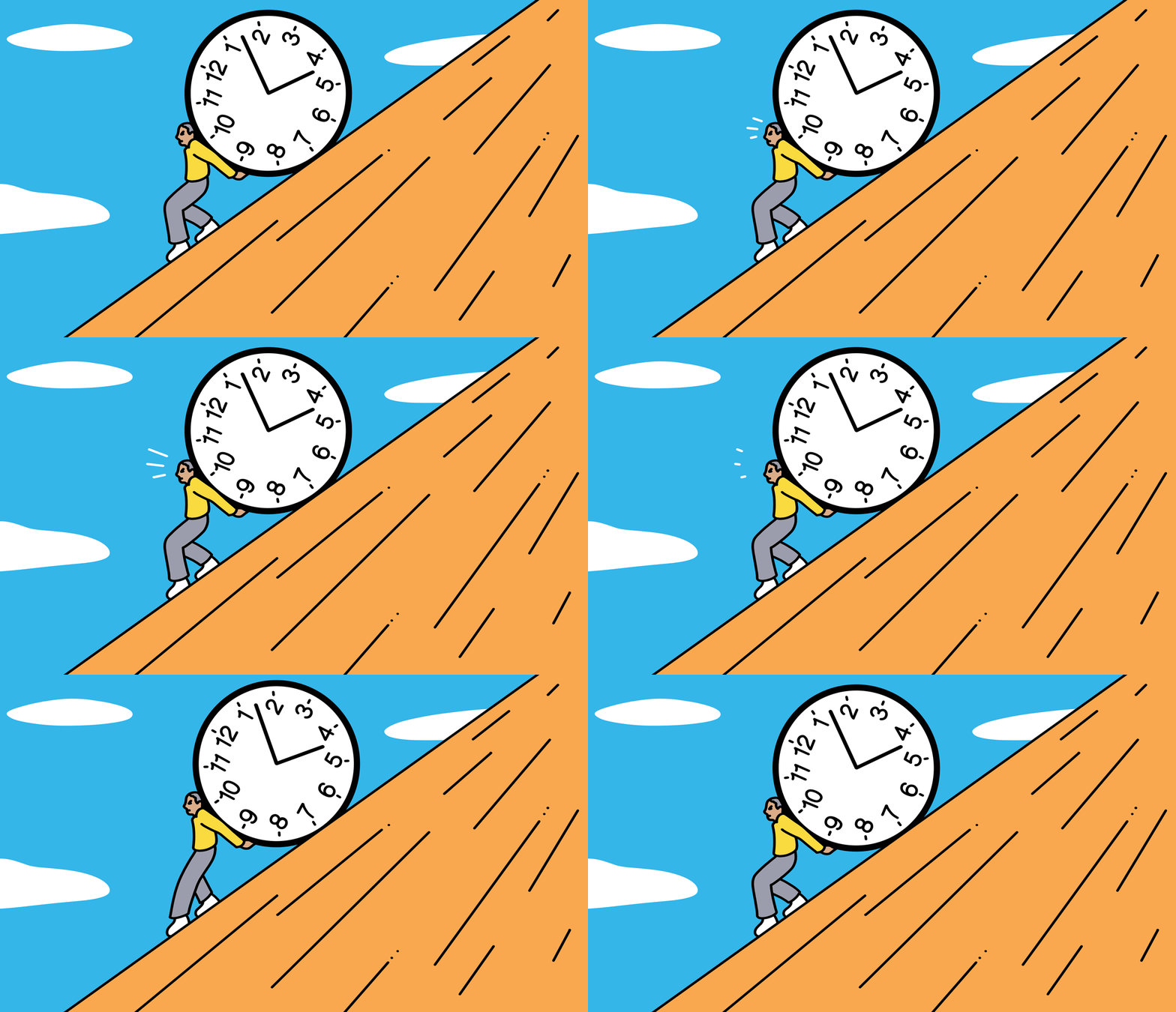
illustration of an older man in a yellow shirt and grey pants struggling to push a large, heavy clock up a steep incline against a blue sky with clouds
Want to slow the progression of aging? Avoiding these mistakes can help.
Sam Island

Research indicates that daily habits matter far more than your DNA or your family history when it comes to healthy aging.

Cardiologist Dr. Eric Topol, author of Super Agers: An Evidence-Based Approach to Longevity, tested that idea by sequencing the genomes of 1,400 “super agers” over age 85 who had never been seriously sick and didn’t take medications, and found “very little evidence that genetics played any substantive role” in healthy aging.  Instead, his research showed that super agers shared similar daily habits related to exercise, sleep and diet. “Lifestyle factors are vitally important,” Topol says.

His work adds to a body of research indicating that some habits speed aging while others can lengthen your life. Here are 25 common mistakes that are making you older, faster — along with tips on what to do instead.

1. Doing cardio without strength training

We all know exercise is good for us, and aerobic activities such as walking, jogging and cycling are great for health and longevity. But if that’s all you do, you’re missing a key piece of the puzzle, says Topol, founder of the Scripps Research Translational Institute in La Jolla, California.  “In recent years, clear evidence has emerged that preserving muscle mass is vital,” Topol explains. The best way to do that? Resistance training.

Strength work doesn’t just maintain your muscles; it also improves balance, boosts cognition and reduces inflammation. A 2022 review and meta-analysis of 16 studies published in the British Journal of Sports Medicine found that 30 to 60 minutes a week of muscle-strengthening exercise decreased the risk of death by 10 to 17 percent compared with doing none. And a small 2023 study published in GeroScience found that any amount of weight training, especially when combined with cardio, lowered the risk of death.

The federal government's Physical Activity Guidelines for Americans recommend at least two strength training sessions a week. You don’t need to lift heavy weights to see benefits, Topol says. Bodyweight moves such as squats and push-ups, plus gym machines and resistance bands, are all great options. (Try the AARP video All-Day Strength Training With Denise Austin.)

2. Skimping on sleep

It’s easy to brush off sleep as something you can catch up on later, but our bodies don’t work that way. During deep, restorative sleep, the brain’s lymphatic system flushes away toxic metabolic waste and tamps down inflammation, Topol says.  A 2024 study published in the journal QJM of more than 172,000 adults found that men who slept well added nearly five extra years to their lifespans, while women gained more than two.

Yet as we age, getting good sleep often becomes difficult, making it more important than ever to embrace healthy sleep habits: Hydrate earlier in the day to avoid late-night bathroom trips, keep your bedroom cool and dark, and limit caffeine and alcohol in the evening. Aim for at least seven hours of sleep a night, Topol advises. Devices such as smartwatches, rings or mattresses with sensors can help you track how much sleep you’re getting. “The more deep sleep you get every night, and the more regular it is, the better,” says Topol.

3. Not staying organized

Being dependable, organized and reliable — the hallmarks of conscientiousness — can help you live longer, research shows. In one 2021 study published in the journal Brain, Behavior, and Immunity that followed nearly 1,000 adults for 14 years, being more conscientious than average was linked to a 35 percent lower risk of death. People who are conscientious tend to stay on top of things like taking their medications on schedule and keeping up with doctor visits, explains Dr. Daniel Levitin, a neuroscientist who wrote about the importance of conscientiousness in his book Successful Aging.  While conscientiousness is partly genetically determined, “you can also cultivate it through an act of will, and through practice,” Levitin says. Simple habits like writing down reminders, keeping your keys and glasses in the same spot, and putting appointments into a calendar can help train your brain to be more conscientious.

4. Getting stuck in your comfort zone

As we age, our levels of dopamine, the neurochemical that drives teens to take risks, naturally decline, and our tendency to seek out new experiences drops. “We tend to get stuck in our ways,” Levitin says.

The problem, he says, is that “our brain was effectively built to explore and learn new things.” To keep your mind sharp, seek out fresh challenges, he says. One of the most powerful: learning to play a musical instrument, or going back to one you played before. Making music requires hand-eye coordination, prediction and a continuous feedback loop — all complex brain processes that keep your mind resilient well into later life, Levitin says.

5. Being a couch potato

llustration of a man lying awkwardly on a bright yellow sofa with his legs propped up against the backrest
If you’re inactive for extended periods of the day, your health may suffer.
Sam Island

Americans are sitting more than ever. Surveys show that most adults spend at least six hours a day planted in a chair. Even if you exercise, long periods of sitting without breaks increase your risk of cardiovascular disease, obesity, diabetes, cancer and other health problems. A 2017 study published in the Annals of Internal Medicine tracked the activity levels of 7,985 adults age 45 and older and found that those who sat for long, uninterrupted stretches faced almost double the risk of death compared to people who got up more often.

That same study also found that standing, stretching or taking a short walk every half hour could lower that risk. Consider setting a phone alarm or a smartwatch notification timer as a nudge to get yourself moving.

6. Neglecting the skin on your neck and hands

Many people wear sunscreen on their face every day, but what about the neck, chest, forearms and hands? “People just aren’t as diligent about that,” says Dr. Rajani Katta, adjunct clinical professor of dermatology at the University of Texas Health Science Center at Houston and author of Glow. And those are the areas that really give away your age, she says.

Over time, sun exposure harms the proteins and DNA in our skin, leading to wrinkles, sagging and sunspots that make us look older. It also increases the risk of melanoma, the most deadly type of skin cancer according to Katta. The fix? Apply broad-spectrum sunscreen to those often forgotten areas every day.  

7. Smoking or vaping

Lighting up ages your body fast. Smoking shortens life expectancy by at least a decade, and vaping isn’t harmless either, raising heart and lung risks. It also takes a visible toll: accelerating wrinkles, yellowing the teeth and dulling the skin.

Quitting helps, no matter your age. Your heart, lungs and brain will start to recover, and your risk of cancer, stroke and other diseases decreases. A 2024 study in the American Journal of Preventive Medicine found that people who quit smoking, even as late as age 65 or 75, could still gain extra years of life compared to those who continued smoking. Get help from a doctor, do a cessation program or try nicotine replacement to kick the habit for good.

Many states also have tobacco-cessation helplines that can be helpful. (For tips on how to quit, read New Ways to Quit Smoking.)

8. Keeping to yourself

Isolation can sneak up on us as we age. Friends pass away, hearing or mobility challenges make socializing harder, and retirement reduces daily interactions. But staying connected is essential for a long, healthy life, experts say. A 2023 meta-analysis of 90 prospective studies (where investigators followed participants over time to observe outcomes) that included more than 2 million adults found that isolation was linked to a 32 percent higher risk of death from all possible causes.

Stay socially active through phone calls, walks with friends, volunteering or joining a club, Levitin suggests.  Even small interactions, such as chatting with neighbors while walking your dog, can add purpose to your day. “Meeting someone new is a great exercise of the brain,” Levitin says, “especially someone of a different culture or different generation.” (Take AARP’s Staying Sharp Challenge: Pursuit of Happiness.)

9. Eating too many processed foods

Convenience foods may save you time, but they can also cost you years of healthy living, says Dr. Heather Whitson, a geriatrician and director of the Duke Center for the Study of Aging and Human Development in Durham, North Carolina. Highly processed foods (think packaged snacks, frozen meals and sugary drinks) drive inflammation, increase disease risk and undermine one’s overall health. A 2025 study published in the American Journal of Preventive Medicine contributed to a large body of new research revealing the harms of processed foods. It found that for each 10 percent increase in the proportion of ultra-processed foods in someone’s diet, their risk of death rose by 2.7 percent.

“There’s more and more data coming out about the immune response driven by these ultra-processed foods,” Whitson says. “It’s not to say people can’t enjoy a piece of cake if they’re at a birthday party … but really making them not a part of your daily diet as much as possible.”

Her advice: Shop the perimeter of the grocery store, where fresh and whole foods live. And if you’re looking for a model to follow, choose the Mediterranean diet, which is rich in vegetables, fruits, olive oil, fish and nuts.

10. Avoiding intimacy

illustration of two people's legs under a table with a pink background
Intimacy can reduce stress, help you sleep better, boost your heart health and increase your immune response. Plus, it's fun!
Sam Island

Sex may not be the first thing that comes to mind when you think of healthy aging, but it plays a bigger role than most people realize. Research has linked regular intimacy to lower stress, better sleep, improved heart health and stronger immunity. A July 2023 study published in The Journal of Sex Research found that frequent sex may even protect brain health. It also strengthens emotional bonds and reduces loneliness, two powerful factors for well-being as we age.

If changes in desire or performance are getting in the way, talk openly with both your partner and your doctor. Sometimes it takes just a small adjustment or treatment to get that spark back in the bedroom. (For advice, check out AARP’s In the Mood columns.)

11. Ignoring hearing and vision problems

Many people assume that age-related changes in hearing and vision should be accepted as normal, but that isn’t the case, Whitson says. Uncorrected hearing and vision problems are closely linked to other aspects of health, including cognitive decline, social isolation, depression and lower quality of life.

A 2023 study published in The Lancet found that hearing aids reduced cognitive decline in older adults at high risk of dementia by almost 50 percent over a three-year period, while a 2024 paper published in Ophthalmology reported that cataract surgery was linked to a 25 percent lower risk of dementia.

If you suspect vision or hearing loss, an audiologist or eye doctor can help you find the right solution. Whitson notes that hearing aids have improved significantly, so if you have a pair and aren’t satisfied with them, a newer model could make a big difference. (Read 5 Signs You Need to Replace Your Hearing Aids.) 

12. Being too cynical

A little skepticism can be healthy, but a cynical worldview, or constantly assuming the worst about others, is linked to higher rates of depression and anxiety, an increased risk of heart disease and even a shorter lifespan. Cynics also have a higher risk of developing dementia, and studies show they have shorter telomeres, the protective caps at the ends of chromosomes that help prevent DNA damage.

In his book Hope for Cynics, Dr. Jamil Zaki, a psychologist, says cynicism often creates a self-fulfilling prophecy: When we expect the worst in people, we often bring it out in them. Zaki’s book recommends “hopeful skepticism” instead. That means thinking critically about people and our problems while also honoring our strengths, rather than assuming the worst.

13. Not balance training

Falls are a serious threat to healthy aging, causing injuries that can dramatically reduce our independence and quality of life. And balance is the skill that declines most rapidly as we age, according to Mayo Clinic research. A 2022 study in the British Journal of Sports Medicine found that people ages 51 to 75 who couldn’t stand on one leg for 10 seconds had nearly twice the risk of premature death compared with those who could.

Simple balance exercises that take only a few minutes a day can help strengthen your balance and your brain-body connection, Topol says. He recommends starting with one-minute single-leg stands, then progressing to a foam pad and eventually adding 20 “touchdowns” (raising both arms straight over your head) while balancing on each leg. “I do it at least three or four times a week,” he says. “It only takes a few minutes, but it’s really important.” (Practice single-leg stands, the #1 Exercise for Balance.)

14. Never breaking a sweat

While any type of physical activity is better than none, studies show the biggest health gains come when you raise the intensity enough to feel your heart pumping and get a little out of breath. “Even if it’s just a walk for 15 or 20 minutes, try to make it a brisk walk,” Topol says. “Push it if you can.… Sweating is a good sign that you’re getting a good workout.” Even short bouts count. In fact, a 2022 study published in the journal Nature Medicine found that people ages 40 to 69 who engaged in spurts of vigorous movement for just one or two minutes, three times a day, significantly reduced their risk of death from heart disease or cancer, compared with those who weren’t physically active at all. (Read 2 Minutes of Daily Exercise May Help You Live Longer.)

15. Wearing the wrong footwear

illustration of a person's feet in pink high-heeled shoes against a bright yellow background. The feet and ankles appear significantly swollen, bulging out over the edges of the shoes.
Poor shoe choices can put your health, not to mention your feet, in a world of hurt.
Sam Island

The wrong pair of shoes can throw off your balance, cause serious foot problems and increase your risk of falls. Yet in one 2020 study of 111 older adults published in BMC Geriatrics, 72 percent of participants were wearing shoes that did not fit correctly, and 9 in 10 had worn-down soles that made their wearers more likely to slip.

“There are still a lot of women smooshing themselves into shoes that aren’t the right size,” says Dr. Patrick McEneaney, a podiatrist and CEO of Northern Illinois Foot & Ankle Specialists. Shoes that are too big aren’t safe either, he adds, because they can cause blisters, hammertoes and instability.

For the best support, try shoes on before you buy them, McEneaney says. And skip flimsy flip-flops, slip-ons and ultralight “memory foam” sneakers, he advises. Instead, choose shoes with a thick, slightly stiff midsole, and secure closures like laces or Velcro, to keep your feet steady and comfortable.

16. Not sleeping well

A 2023 analysis published in Elife found that adults with irregular sleep schedules had a significantly higher risk of death from any cause.  Going to bed and waking up at different times throws off your circadian rhythm, Topol explains.

An irregular sleep schedule can strain your heart, impact your metabolism, weaken your immune system and reduce the deep, restorative sleep you should be getting. The fix is simple: Stick to consistent bedtimes and wake-up times every day. If you are sleepy during the daytime or a partner says you snore or stop breathing at night, you should also be checked for sleep apnea.

17. Heavy drinking

If you drink heavily, cutting back is one of the most powerful moves you can make. A 2023 meta-analysis of 107 studies published in JAMA Network Open found a significantly higher risk of death for women who consumed two drinks a day, and men who consumed three drinks or more.

Even reducing your drinking a little bit can have immediate short- and long-term benefits, according to the Centers for Disease Control and Prevention, including a lower risk of injuries, cancer, heart and liver disease, mental health problems and dementia. Talk to a health care provider about setting limits, finding support or exploring programs that will help you cut down. (And read Is It Safe to Drink Alcohol?)

18. Taking too many medications

Medications are designed to help us, but taking five or more at once, called polypharmacy, can be risky for older adults. Polypharmacy increases the risk of drug side effects, falls and cognitive impairment, according to the National Institute on Aging.

“Don’t be shy about talking to your provider if your medication list has gotten unmanageable,” Whitson says. He or she may be able to de-prescribe drugs you no longer need, or set you up with blister packs, a pill organizer or home health support to make it easier to stay on track.

19. Staying inside all day

Many older adults don’t get outside as much as they used to, whether it’s due to mobility issues, health concerns or simply a change in routine. But even a little time in nature can make a difference. A 2023 study in The Lancet Planetary Health found that nature-based activities improved heart health and reduced symptoms of depression. Other research shows that getting outside can boost mood, lower blood pressure and sharpen your brain. Additional research has found that birdwatching can reduce stress and anxiety.

Aim for at least 30 minutes per week in green spaces, even if it’s just a short walk. Invite a friend along and pick up the pace, and “you’ve got a trifecta,” Topol says.

20. Worrying all the time

illustration of a blonde woman sitting up in bed at night, looking distressed and clutching her neck
Being a chronic worrier can take years off your life. Ways to break the cycle include exercise, social connections and meditation.
Sam Island

Chronic stress and anxiety trigger the body’s fight-or-flight mode, increasing its heart rate, raising blood pressure and creating inflammation. Research from Finland published in 2020 shows that heavy stress can shave off several years of life. That study found that stress affected men more than women.

To preserve your mental health and lower your anxiety, move your body every day, connect with friends, and experiment with mindfulness practices such as meditation. Another trick: Set aside 15 minutes a day as “worry time,” and tell yourself you will save your anxious thoughts until then. If those strategies don’t work, talk to your health care provider, or seek professional help from a therapist or counselor.

21. Using plastic bottles and containers

Tiny bits of plastic called microplastics are everywhere: in the air, in our food and even in human tissue, raising concerns about their effect on our health. Research has revealed higher levels of plastic in the brains of people who have dementia, and in the arteries of people who have suffered from heart attacks or strokes. While more research is needed to know whether plastic truly poses a health threat, “it doesn’t look good,” Topol says.

While we can’t avoid plastic completely, we can take small steps to reduce our exposure, Topol suggests. Don’t microwave food in plastic containers, swap plastic water bottles for glass or stainless steel, and invest in a good water filter. (Read on for 9 Ways to Reduce Microplastics in Your Life.)

22. Relying on a sleep aide

When sleep won’t come, it’s tempting to reach for a pill. But sleep meds may interfere with restorative rest. A 2025 study published in the journal Cell found that zolpidem (Ambien) suppressed the brain’s waste-clearing process.

In addition, says Whitson, sleep drugs come with risks older adults need to watch out for, such as grogginess, confusion and falls. Over-the-counter sleep aids can be especially concerning, she says, since many contain diphenhydramine (Benadryl), which can interact with other drugs and lead to memory issues.

While sleep medication can help some people with true sleep disorders, it shouldn’t be your first step, Whitson says. Instead, get an evaluation with a sleep specialist to figure out why you’re not sleeping.  

23. Ignoring your limits

Levitin warns that many Americans try to act younger than they are, pushing their bodies past safe limits. Climbing ladders after age 65, lifting heavy objects, pushing through joint pain or insisting on driving when your reflexes slow can put you at serious risk for health problems. Levitin notes that in longevity hot spots such as Japan, older adults thrive by pacing themselves, getting help from others and choosing activities that match their abilities.

Levitin recommends keeping your brain active and challenged through safer activities: learning a new game, a new musical instrument or a new fitness activity like yoga, Pilates or tai chi. Social activities such as volunteering or joining a club can also keep you engaged, all without risking injury. (Try our Pilates Anytime video series.)

24. Believing ageist stereotypes

How you think about getting older may actually change how long you live. A 2002 landmark study published in the Journal of Personality and Social Psychology revealed that people with positive self-perceptions of aging lived an average of 7.5 years longer than those with negative views. Negative beliefs about aging are also linked to stress, dementia and mental illness. More recent research has verified those findings, including a 23-year study, published in 2022 in the Journal of Personality and Social Psychology, that found people with positive views of aging had a 50 percent lower risk of dying during the study period. The good news is that you can shift your beliefs. Start by identifying and challenging ageist stereotypes, and focus on what your body can do rather than what it can’t. (Here are 6 Ways to Change the Way You Think About Aging.) “Don’t underestimate how much value you contribute to the people around you,” Whitson says.  

25. Skipping preventative care

Putting off checkups may seem harmless, but it can cost you down the road. Regular screenings and annual exams catch issues like high blood pressure, diabetes and cancer early, when they are far easier to treat.

And stay up-to-date on your vaccines. As we get older our immune systems weaken, so shots for serious conditions such as COVID-19, shingles and pneumonia become even more important. Research shows vaccines can also lower your risk of heart attack, stroke and dementia. (Read 8 Vaccines You Need After 50.)

Unlock Access to AARP Members Edition

Join AARP to Continue

Already a Member?

Red AARP membership card displayed at an angle

Get instant access to members-only products and hundreds of discounts, a free second membership, and a subscription to AARP the Magazine.