















Javascript is not enabled.

Javascript must be enabled to use this site. Please enable Javascript in your browser and try again.

Skip to content
Content starts here
CLOSE ×
Search
CLOSE ×
Search
Leaving AARP.org Website

You are now leaving AARP.org and going to a website that is not operated by AARP. A different privacy policy and terms of service will apply.

Know the Signs and Stages of Kidney Disease

​Many adults have no idea they’re developing kidney disease — or that high blood pressure and diabetes are their biggest risk factors


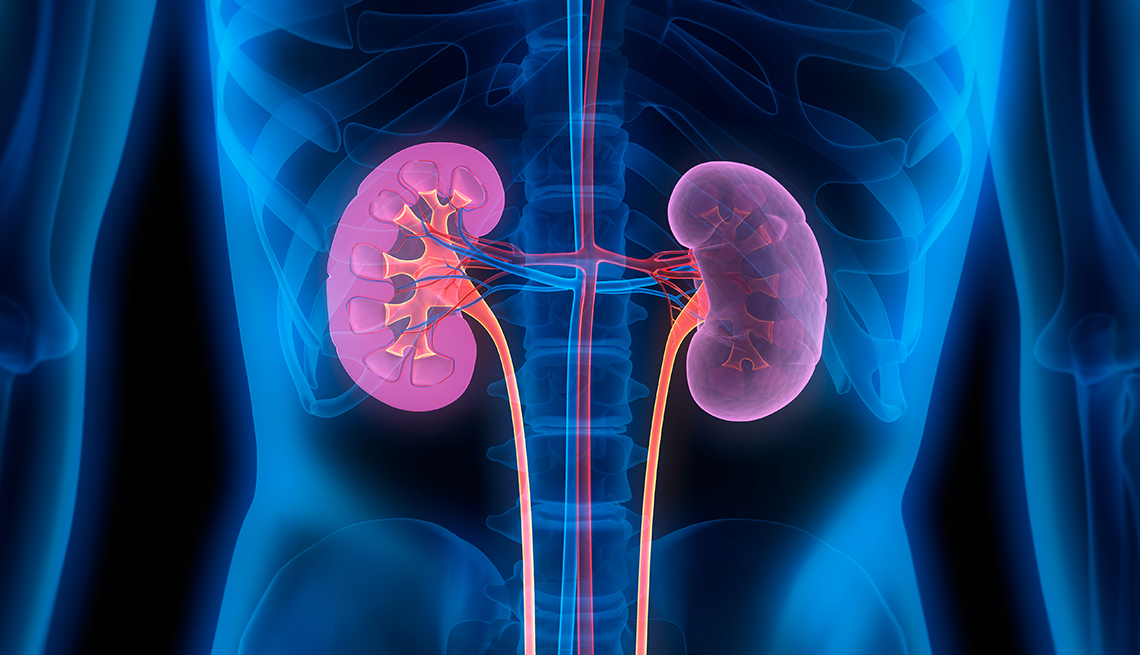
illustration of kidneys
peterschreiber.media / Getty Images

A basic blood or urine test can uncover it. Yet as many as nine in 10 adults in the United States who have kidney disease don’t know they do. That’s because this sometimes deadly condition is often asymptomatic until quite severe.

"Most people think it involves pain in the kidneys or blood in the urine,” says Dr. F. Perry Wilson, an associate professor of medicine at the Yale School of Medicine. In fact, it starts much more subtly. 

Your body makes the amino acid creatine from the normal wear and tear of your muscles. Normally, your kidneys filter excess creatine and other waste products, as well as extra fluid, from your body and pass them out in urine. If your kidneys aren’t working properly, the amount of creatine in your blood builds up while the amount of it in your urine goes down. 

This process can go on for years before noticeable symptoms appear. By the time they do, kidney disease can be deadly.

A report published Nov. 7 this year in The Lancet finds that kidney disease is now in the top 10 causes of death for the first time ever and is the ninth leading cause of death. The number of people with it globally surged from 378 million in 1990 to 788 million in 2023. Worldwide, about 14 percent of people have chronic kidney disease, and the percentage of people dying from it rose 6 percent between 1993 and 2023.

How to know if you’re at risk

Your age, race, sex and race/ethnicity play a role in whether kidney disease is likely to affect you. Chronic kidney disease, for example, is 34 percent more common in those age 65 and older than in younger people, according to the Centers for Disease Control and Prevention. It’s also only slightly more common in women than men, and slightly more common in Black adults than in white (16 percent to 13 percent, respectively).  

You’re also significantly more likely to have kidney disease if you’re a smoker, have obesity or have a family history of the condition. As for the greatest risk factors for the disease? Having long-term high blood pressure or diabetes, both of which damage the tiny blood vessels in the kidneys.

The relationship with your heart goes both ways. When your kidneys don’t work well, your heart needs to pump harder to increase blood flow through these small but important organs. And that extra effort takes a toll: Recent studies have found that chronic kidney disease can increase the risk of cardiovascular disease two- to fourfold, and heart disease and stroke are the major causes of death for people with kidney disease. 

Symptoms and stages of kidney disease  

If the bad news is that kidney disease kills more people than breast and prostate cancer combined, the good news is that it is a slow and progressive disease that can take decades to fully manifest.

“Many people with kidney disease at an even moderate level have minimal to no progression, and many people with progression will never reach the point of kidney failure requiring dialysis,” says Dr. Afshin Parsa, program director of the division of kidney, urologic and hematologic diseases at the National Institutes of Health (NIH) in Bethesda, Maryland.

Within the five stages of the disease, most people are diagnosed in stage 3 or 4, Parsa says. In the first and second stages of the disease, you may not have noticeable symptoms, but your blood work might show high levels of certain proteins in your urine as well as a slight decrease in your glomerular filtration rate (GFR), a standard age-adjusted measure of how well the organs are filtering waste. A typical GFR is around 90 in adults 50 to 69 years of age.

During the third stage of chronic kidney disease, your kidneys still work, but not as efficiently as they once did. The toxins that your kidneys would typically filter out of your body will start to build up and may cause swelling in your hands and feet, as well as changes in urination and anemia.

By stage 4, your kidneys become either moderately or severely damaged. You may have back pain, more swelling in your extremities, fatigue and trouble concentrating, as well as changes in your urination. Your GFR can plummet to between 15 and 29.

Some other symptoms at later stages can include shortness of breath, foamy urine, urge to urinate more often, puffy eyes, dry or itchy skin, sleep interruptions, nausea or vomiting, skin darkening and high blood pressure. 

When you reach the fifth stage, known as end-stage renal failure, your kidneys lose the ability to effectively filter fluids, electrolytes and waste out of your body. Some of the symptoms include itchiness, muscle cramps, swelling in your extremities, insomnia, back pain and changes in urination, including foamy urine. You may also lose your appetite.

While an estimated 47 percent of those over the age 70 have kidney disease, according to researchers at Johns Hopkins, it progresses to renal failure in only 1 to 2 percent of these patients, according to the National Kidney Foundation. At this stage, “people can live on dialysis for years,” Parsa says of the treatment that mechanically filters the blood and removes toxins.  

Prevention and treatments

The best way to protect yourself against kidney disease is to maintain control of your blood pressure and blood sugar, Parsa says. In addition, studies show that following the Mediterranean diet, which focuses on eating fish, fruits, vegetables, nuts and whole grains, can help reduce your risk of kidney problems.

If you already have advanced kidney disease, your doctor may ask you to restrict protein-rich foods, as well as food and drinks containing the minerals potassium, phosphorous and sodium, such as bananas.  

Until recently, doctors have relied mainly on medications called angiotensin-converting enzyme (ACE) inhibitors to slow the progression of kidney disease because they help relax veins and arteries, resulting in lower blood pressure. Recent trials show that some diabetes medications, such as Jardiance, can be used in addition to ACE inhibitors to reduce the kidney disease risk in adults with type 2 diabetes and cardiovascular disease.

Kidney damage after COVID-19

It’s been known for some time not only that can COVID-19 cause severe damage to the kidneys but that chronic kidney disease increases the risk of more serious complications with the virus. (One study of electronic health records showed that those with severe chronic kidney disease were almost 11 times more likely to be hospitalized with COVID-19 than others.) A large study of U.S. veterans shows that additional damage may appear following an infection. In the study published in 2024, researchers found approximately twice the risk of acute kidney injury 30 days after infection as compared with non-COVID patients. Some of the damage has been reported to be caused by blood clots that clog blood vessels supplying the kidneys.

Unlock Access to AARP Members Edition

Join AARP to Continue

Already a Member?

Red AARP membership card displayed at an angle

Get instant access to members-only products and hundreds of discounts, a free second membership, and a subscription to AARP the Magazine.