
AARP Hearing Center












































))





)

FDA Approves First mRNA Flu Vaccine for Older Adults
People 50 and older have another option for their annual influenza shot


Getty Images
Key takeaways
- The FDA has approved the first mRNA flu vaccine for adults age 50 and older, just ahead of the start of the 2026–27 flu season.
- mRNA flu shots can be produced more quickly than traditional vaccines, allowing a closer match to circulating strains.
- Annual flu vaccines are especially important for older adults, who are at higher risk of severe illness from influenza.
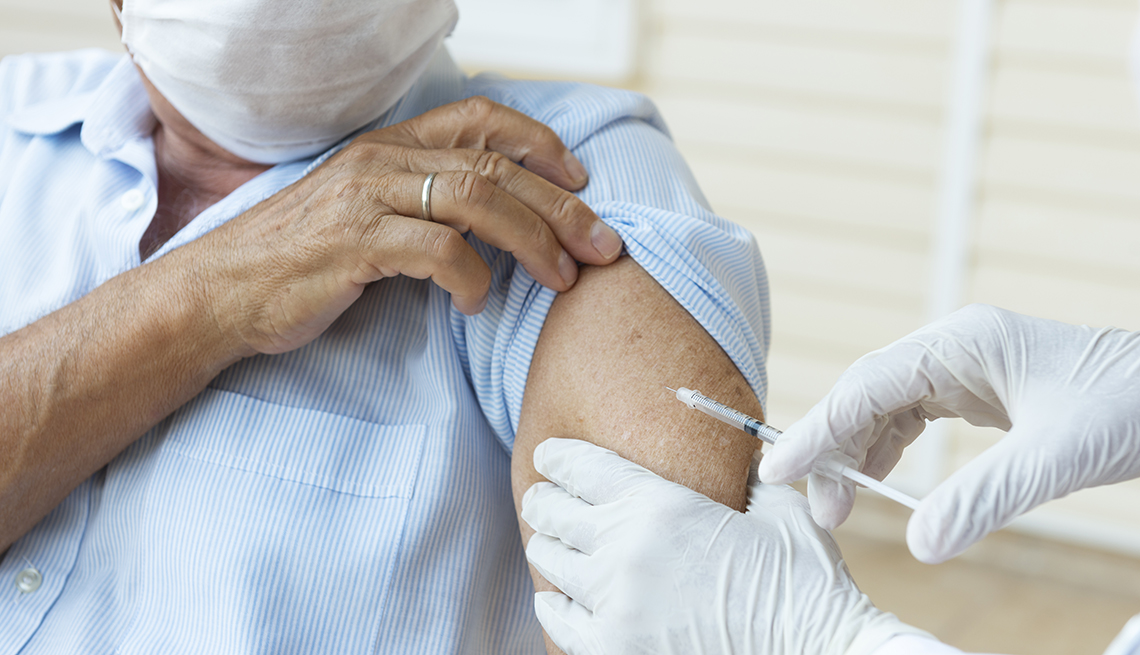
The U.S. Food and Drug Administration (FDA) has approved a new flu vaccine for adults 50 and older, giving this age group another option ahead of the upcoming flu season.
The vaccine, Moderna’s mFLUSIVA, is the first influenza shot to use mRNA technology, and experts say it could offer stronger protection against a virus that poses an especially serious risk to older adults.
More Ways to Benefit
- Related Benefit 1
- Related Benefit 2
- Related Benefit 3
- Related Benefit 4
- Related Benefit 5
“Flu remains a significant public health challenge, and mFLUSIVA provides an important new option for America’s seniors,” Moderna’s chief executive officer, Stéphane Bancel, said in a statement.
Here are four things to know about the new vaccine, plus advice from experts on how to stay healthy this flu season.
1. mRNA technology may help improve the annual flu shot
Each year, the flu vaccine prevents millions of cases of illness — an estimated 10 million during the 2024–25 winter season, according to preliminary estimates — and thousands of flu-related deaths. Even still, there’s room for improvement.
“Our current flu vaccines work, but they can be better,” says Andrew Pekosz, professor and vice chair of the W. Harry Feinstone Department of Molecular Microbiology and Immunology at the Johns Hopkins Bloomberg School of Public Health and codirector of the Johns Hopkins Center of Excellence in Influenza Research and Response.
To make the annual flu shot, experts meet every winter to review surveillance data and determine which influenza viruses are most likely to make people sick later that year. Then, manufacturers get to work to include these strains in the upcoming season’s vaccine.
The process takes several months, and sometimes, the result is a vaccine that no longer matches the flu viruses circulating in the community.
“But mRNA vaccines don’t need to take as long to manufacture as traditional vaccines. So instead of five to six months to make, they can take less than two months to manufacture,” says Gigi Gronvall, a professor in the department of environmental health and engineering at the Johns Hopkins Bloomberg School of Public Health.
That means researchers and companies can start working on them closer to the actual flu season. “This should lead to vaccines that are better matches for what flu viruses people are actually likely to encounter during the season,” Gronvall says.
2. mRNA vaccines give the body instructions to fight flu
Many people are familiar with mRNA, at least by name, from the development of the COVID-19 vaccines in 2020. There is also an mRNA vaccine for RSV (respiratory syncytial virus).
What makes mRNA vaccines different from other types of vaccines? First, it’s important to know that “all vaccines basically do the same thing,” Pekosz says. “They show your body something that is foreign, and they do it in a way that allows your immune system to recognize it and eliminate it.”
Traditional flu shots do this by introducing an inactivated particle or protein from the flu virus to stimulate an immune response.
The mRNA flu vaccine, on the other hand, contains instructions for the body to make a protein — a harmless piece of the flu virus — that generates the same type of immune response, explains Dr. Steven Lawrence, a vaccine expert and professor of medicine in the division of infectious diseases at WashU Medicine in St. Louis. These instructions can be updated to match the flu strains circulating in the community.
3. mRNA vaccines could help in future pandemics
The most important part of mRNA technology, Pekosz says, is how quickly you can make a vaccine once you know what you want to target. “It’s sort of like switching from a horse and buggy to a Corvette for travel. The mRNA technology still does the same basic thing, just a lot faster,” he says.
The faster manufacturing timeline not only allows the vaccine to be updated closer to the start of flu season but also positions researchers to respond more quickly to potential flu pandemics. Take, for instance, the 2009 H1N1 flu pandemic. By the time a vaccine for the virus was ready, the pandemic’s peak had already passed, Lawrence says.
“If we had that mRNA technology in 2009, we very likely could have had enough vaccine for the entire population and been able to administer it before the peak hit,” Lawrence says.
An mRNA flu vaccine would also “avoid some of the complications of egg-grown influenza vaccines,” Pekosz says. Most flu vaccines in the U.S. are made using chicken eggs, and “that process of growing influenza in eggs can sometimes introduce mutations that make those vaccines less effective at inducing responses to the current circulating vaccines.”
What’s more, “the very chickens that lay the eggs that make the vaccine could be wiped out” by future bird flu outbreaks, Lawrence says. “And so if you don’t have to rely on chickens, then you’ve not only sped things up,” but you’ve broadened your capacity for vaccine production, he explains.

4. They may offer stronger protection
Another plus: Pekosz says mRNA vaccines tend to generate a more robust immune response. In a phase 3 clinical trial, the Moderna mRNA influenza vaccine elicited a superior immune response compared with the standard-dose flu vaccine.
“It works about 25 percent better in people 50 and over” than a standard-dose flu shot, Lawrence says. “It’s important because those are people who are at higher risk of getting really sick or dying from flu.”
The FDA granted approval to Moderna’s vaccine for adults ages 50 to 64 and accelerated approval for those 65 and older, since the company is still studying how its mRNA vaccine compares with the high-dose flu shots recommended for this older population. The company says that “confirmation of clinical benefit in this population will be assessed in a postmarketing clinical trial.”
Misinformation and mRNA vaccines
Since their introduction about six years ago, mRNA vaccines have been a frequent target of misinformation. “And some of those falsehoods have, unfortunately, remained stuck in people’s minds,” Gronvall says — such as the fear that mRNA vaccines get incorporated into a person’s DNA, or that they cause infertility or cancer.
These claims are not true, Gronvall stresses. In fact, scientists are studying mRNA vaccines for treating cancer.
Because mRNA vaccines generate a strong, robust immune response, Lawrence says, they can be more likely to cause side effects in some people, the most common being a sore arm, fatigue and feeling achy or feverish. “It’s the immune system revving up,” he says.
However, “many companies now have second or third generations of these mRNA vaccine platforms that actually have been designed to reduce some of those side effects and to make them a little bit more acceptable in the population,” Pekosz says.
What are flu shot options for older adults?
In a press release, Moderna said it expects supply of its mRNA vaccine to be available in select retailers in the coming weeks. Most people are encouraged to get their annual flu vaccine in September or October, just ahead of the start of the season.
If the mRNA vaccine isn’t available near you, experts recommend getting the one that is. Adults 65 and older, who are at higher risk of complications from influenza, should choose a high-dose or adjuvanted option.
“I want to be very clear that everyone should get a flu shot every year,” Gronvall says.

AARP Membership
Join AARP for only $15 per year with automatic renewal. Get instant access to members-only products and hundreds of benefits, a free second membership, and a subscription to AARP The Magazine.
More From AARP
Essential Vaccines for People 50-Plus
Vaccines adults need for protection against serious diseases
Do You Need a Measles Vaccine?
What older adults should know about immunity, vaccines and current outbreaks
How Long Can I Spread the Flu?
Discover how long you can spread the flu, and what may shorten its course.