




















































Javascript is not enabled.

Javascript must be enabled to use this site. Please enable Javascript in your browser and try again.

Skip to content
Content starts here
CLOSE ×
Search
CLOSE ×
Search
Leaving AARP.org Website

You are now leaving AARP.org and going to a website that is not operated by AARP. A different privacy policy and terms of service will apply.

What Is the Sudoku Packing Method?

Bare-bones and maximalist packers alike can benefit from this smart packing system

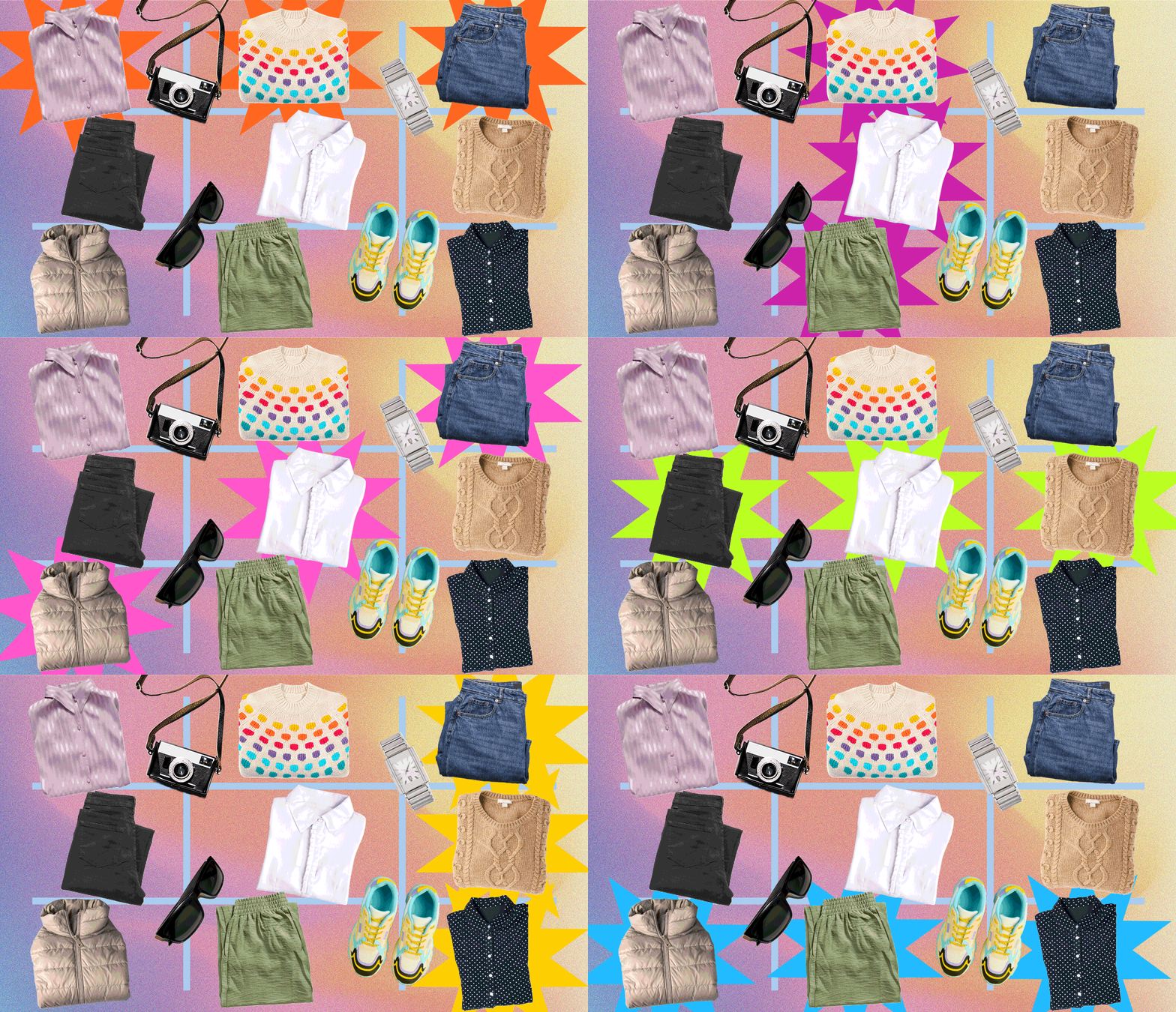
a gif of clothing and other items to pack for a trip
The Sudoku packing method’s grid format helps you narrow your wardrobe to nine coordinated pieces that create at least 27 vacation outfits.
AARP (Getty Images, 8; Shutterstock, 6)

Key takeaways

  • The method limits you to nine core clothing pieces that all work together.​
  • Choosing shoes first helps narrow down bottoms and tops that truly fit your trip.
  • ​A photo of your clothing grid can cut daily outfit decisions to minutes.​

The Sudoku packing method has more than a name in common with the game. Both use the constraints of a three-by-three grid to force careful selection into a winning outcome.

“I am an overpacker. I like options,” says Gen Xer Ilana Schattauer, who shares cruise and travel tips on Life Well Cruised. The method’s defining requirement that all items play well with each other ensures travelers a minimum of 27 outfits (3 times 3 times 3), providing the options Schattauer seeks. 

The physical perks of paring down your travel wardrobe include lighter, easier-to-maneuver luggage and potentially not having to check a bag, leading to cost savings that are important to people 50 and older, as the 2026 AARP Travel Trends survey revealed. But it lightens a traveler’s mental load too.

“I think the biggest, more psychological benefit is the reduction in decision fatigue — knowing that every piece goes with every other piece,” says Gen Xer Natalie Shaquer. While variations on a three-by-three grid packing process have existed for years, Shaquer trademarked her version as Packing Sudoku. It’s the focus of her popular Instagram account, The Natalie Way. 

“I think that once we get to 50, we are done with overthinking things. We know what we like.… We know what works for us. And this puts it into a package that we can really trust.”

How does Packing Sudoku work?

Take some time a week or two before your trip to run through these five steps, the basis of Shaquer’s trademarked method. “Put on some music, have a glass of wine and spend an evening, it might be an hour, doing it,” she says. The idea is that this focused preparation pays off during your trip. “When you’re on vacation, you want to be enjoying your vacation, not spending time thinking about what you’re going to wear.”

Step One: Consider your trip

Stay grounded in reality. “I think sometimes we get into this fantasy version of ourselves on a trip, and we take the silk dress that we never wear at home but we think that we’re suddenly going to wear when we’re away,” Shaquer says. She suggests keeping in mind your trip’s three to five core activities as you pack.

Step Two: Select shoes

Pick three pairs. Shaquer recommends a comfortable walking shoe, a weather-dependent shoe (think: sandals for the beach, boots for colder climates) and what she calls a “me shoe.” It’s the shoe “that makes you feel like yourself,” she explains. Her “me shoe” is a ballet flat, often in red or leopard print — though 20 years ago, it would’ve been a stiletto, she says.

Step Three: Pick bottoms

Pull out the contenders, lay them in a row, then play around until you find the strongest trio. “It’s really easy, when you put [them] down in that grid structure on your bed, to see the pieces immediately that don’t play nicely,” she says. “Things start to narrow down quite quickly.”

Step Four: Add in layering pieces

Now include a row of three items you’d wear as a top layer, such as sweaters, light coats and long-sleeved shirts. Compatibility is a must. If an item you really wanted to take doesn’t visually fit in the grid, “back into your closet it goes.”

Step Five: Single out shirts

Shoot for different colors and types, like a foundational tee, a silk blouse and a basic tank. Again, all three must work with the selections in previous rows.

Now arrange your chosen items so each is represented evenly across the grid, appearing once per row and column, Sudoku-style. Every row should contain a complete outfit. Swap out items as needed to finalize your grid.

Odds and ends and weather variations

“Stretch pieces”

On a trip that included an Australian summer and an Oregon winter, Shaquer added two stretch pieces, as she calls them: a sundress and a puffer vest. “Those nine pieces with those two extra stretch pieces on either end [of the weather spectrum] carried me through that three-week trip,” she says.

A fourth row

Schattauer, the cruise aficionado, sometimes chooses three additional pieces that play well within the grid. For cruises, they’re often dresses, she says.

Accessories

Scarves, belts and jewelry can change your travel capsule wardrobe while taking up little room. Add a few favorites to personalize and add variety to the outfits.

Bags

Schattauer applies the same grid methodology to choosing which bags to bring. For cruises, that’s often a small evening bag for a cruise card, lip gloss and tip money; a beach/excursion tote and a hands-free cross-body bag.

Sudoku packing tips and advice 

These ideas can help the system work for you.

Take a pic 

Shaquer snaps a photo of her laid-out items that she references each morning on her trip to select the day’s outfit. “I know … that every single piece goes together, and then it just becomes a five-minute decision rather than staring at my suitcase at 7 in the morning thinking, What on earth am I going to wear?” 

Travel day bonus

Shaquer and Schattauer agree: A comfortable outfit to wear on the first and last day, as you travel to and from your destination, lives outside the grid. Bonus points if it can double as loungewear on your trip.

Skip ‘just in case’ items

The key mistake to avoid, Shaquer says, is throwing an item in at the last minute “just in case.” Trust the system — and yourself. “People say, ‘But what if I spill red wine on my top? And I’m like … Should that happen, just like in your regular life, you would go out and buy a new top. You can do that when you’re traveling,” she says. The new top “becomes the memory rather than the memory of ‘I packed 10 extra dresses for just-in-case and lugged them around, and I didn’t wear any of them.’ ”

The key takeaways were created with the assistance of generative AI. An AARP editor reviewed and refined the content for accuracy and clarity.

Unlock Access to AARP Members Edition

Join AARP to Continue

Already a Member?

AARP Travel Center

Or Call: 1-800-675-4318

Enter a valid departing date

Enter a valid returning date

Age of children:

Child under 2 must either sit in laps or in seats:

Enter a valid departing date

Age of children:

Child under 2 must either sit in laps or in seats:

Enter a valid departing date

Age of children:

Child under 2 must either sit in laps or in seats:

Flight 2

Enter a valid departing date

Flight 3

Enter a valid departing date

Flight 4

Enter a valid departing date

Flight 5

Enter a valid departing date

+ Add Another Flight

Enter a valid checking in date

Enter a valid checking out date


Occupants of Room 1:


Occupants of Room 2:


Occupants of Room 3:


Occupants of Room 4:


Occupants of Room 5:


Occupants of Room 6:


Occupants of Room 7:


Occupants of Room 8:


Enter a valid departing date

Enter a valid returning date

Age of children:

Occupants of Room 1:

Age of children:


Occupants of Room 2:

Age of children:


Occupants of Room 3:

Age of children:


Occupants of Room 4:

Age of children:


Occupants of Room 5:

Age of children:

Age of children:

Child under 2 must either sit in laps or in seats:

Enter a valid start date

Please select a Pick Up Time from the list

Enter a valid drop off date

Please select Drop Off Time from the list

Select a valid to location

Select a month

Enter a valid from date

Enter a valid to date