




















































Javascript is not enabled.

Javascript must be enabled to use this site. Please enable Javascript in your browser and try again.

Skip to content
Content starts here
CLOSE ×
Search
CLOSE ×
Search
Leaving AARP.org Website

You are now leaving AARP.org and going to a website that is not operated by AARP. A different privacy policy and terms of service will apply.

How to Avoid ‘Wrong Number’ Text Scams

Criminals pretend to contact you accidentally to lure you into a crypto investment or other scheme


Getty Images

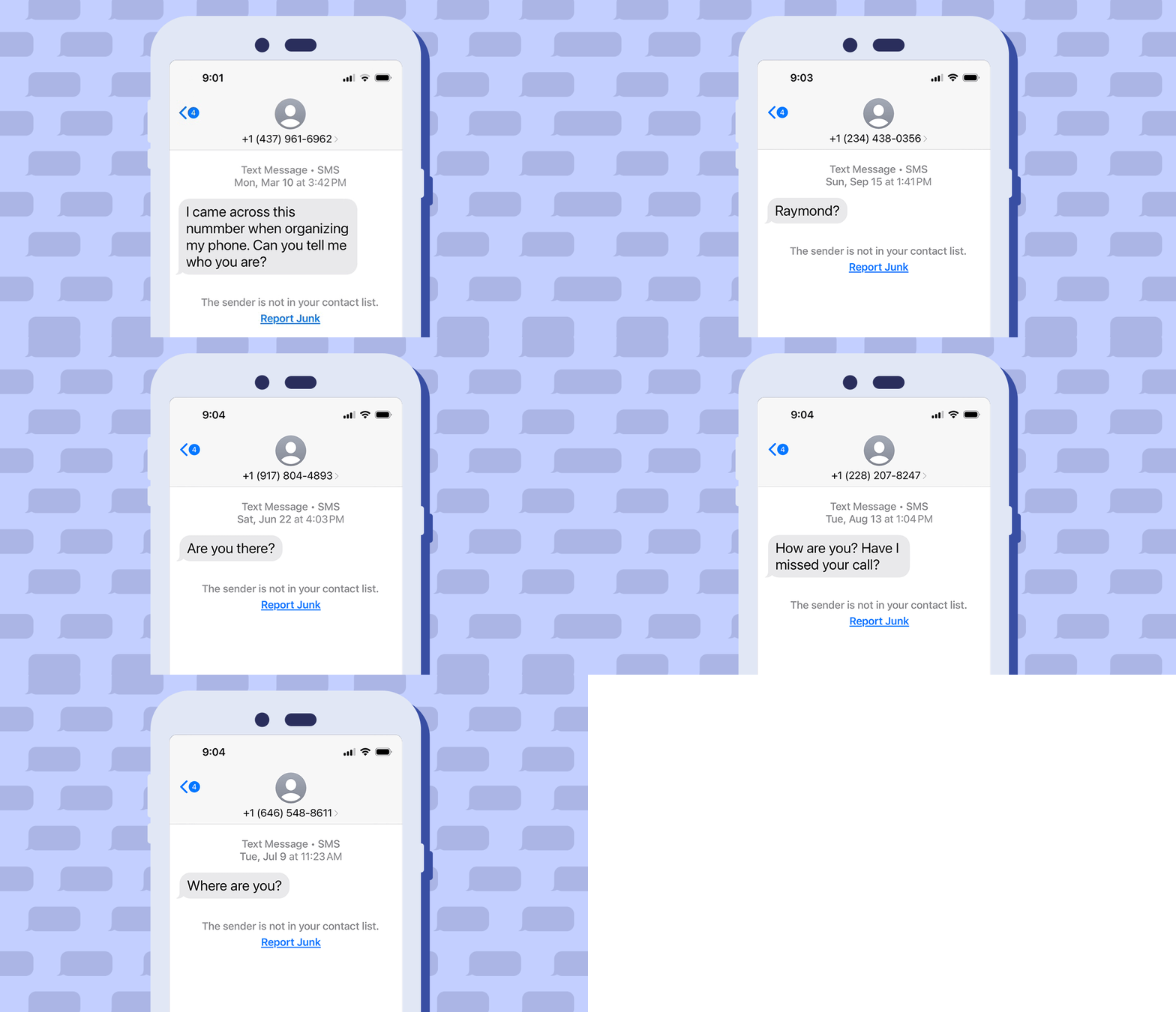
If you own a mobile phone, you’ve likely received a mysterious text from someone who acts as if they know you. But even though you quickly figure out that the person isn’t a real acquaintance, out of politeness — or curiosity — you might end up interacting with them anyway.

“You’ll get a text message that says, ‘Hey, you coming for dinner tonight?’” says Amy Nofziger, senior director of victim support for the AARP Fraud Watch Network. “And you’re like, ‘Oh, I’m sorry, I think you have the wrong number.’ And they’re like, ‘Oh, OK, I’m so sorry to bother you. But I hope you’re having a great day.’ And then you start an innocent conversation.”

That’s what perpetrators of fake wrong-number text message scams are counting on. Once they’ve made a connection with an unwary target, they’ll work to become friends with that person, or sometimes even cultivate a remote romantic relationship, embellished with fake photos. It’s all designed to get you to relax your defenses, so you’re susceptible to a scam, such as a cryptocurrency investment scheme.

Americans are already inundated with unwanted text messages, many of them sent by the automated apps known as bots. Security software company Robokiller reported that 19.2 billion spam texts were sent in April 2025 — an average of nearly 63 for each person in the U.S. While it’s unclear how many of those are wrong-number texts, consumer advocates warn that criminals — many of them based overseas — are frequently phishing for victims in this way.  

How fake wrong-number text scams work

“Scammers are aware that the quickest means of communicating with a victim is by text message, so their efforts naturally follow the societal shift to SMS messaging,” says Josh Planos, a Better Business Bureau spokesperson.

Nofziger once received a text from someone who seemed to be trying to reach a veterinarian to make an urgent appointment for a sick dog. When she responded out of concern, she says, the scammer quickly shifted to a discussion about crypto. She’s also received an “Oops, wrong number!” text from a likely scammer pretending to be a woman attempting to contact her yoga instructor. 

They may say, “How are you? Have I missed your call?” or even just, “Hello.” Some have telltale misspellings or grammatical mistakes.

cartoon of a woman holding a megaphone

Have you seen this scam?

  • Call the AARP Fraud Watch Network Helpline at 877-908-3360 or report it with the AARP Scam Tracking Map.  
  • Get Watchdog Alerts for tips on avoiding such scams.

Such scams often succeed because criminals are skilled at exploiting their targets’ friendliness. “You would be surprised at how many people who get a wrong number text are amenable to trying to help the person who they think has dialed a wrong number,” says Erin West, a former deputy district attorney in Santa Clara County, California, who has organized Operation Shamrock, a coalition of law enforcement officials who work together to combat crypto-related scams.

But what seems like an innocent mistake by the sender actually is the first move in what can be a long-running scam, according to West. Once the scammer gets a person to respond, more messages usually follow. “It goes on over a period of weeks, or even a month, where this scammer will develop a relationship,” she says. “It could be a romantic relationship, or a friendship, or a mentor relationship with the victim.” It’s a tactic known as financial grooming or pig butchering.  

Money enters the discussion

Once that bond is formed, experts say, the criminal usually transitions to luring you into a crypto investment scam. The scammers pretend to be living a high-end lifestyle, West notes, “then they say, ‘The reason I’m able to afford this is that I invest in cryptocurrency. Have you ever considered doing that?”

By that time, they’ve also gleaned plenty of personal details from conversations about your personal finances — whether you own a home, for example, or have relatives who might lend you some cash — that indicate how much of a payday you might provide.

In crypto schemes, they’ll typically try to convince you to invest in what looks like a legitimate account; it may even indicate that you’re getting a huge return on your investment. In reality, those funds are stolen, West says. When you try to withdraw money, she adds, you might be told that you need to pay taxes on it first. Some victims end up losing hundreds of thousands of dollars, she adds: “This is a scam designed to absolutely clean out every last penny that a victim has.”

How to protect yourself

Be wary of texts from people you don’t know. If you get a text from a stranger, the safest thing to do is ignore it and don’t reply. As the BBB warns, if you engage with a scammer even briefly, they’ll mark your phone number as active, which could lead to even more texts from scammers.

Don’t click on links in text messages. “You run the risk of instantly starting a malware download on a device,” says BBB’s Josh Planos. “On mobile, where the true URL is nearly always shortened, it’s very difficult to know where you’re actually about to be directed once you click the link.” 

Don’t respond. Don’t even respond with “STOP” if the messages say you can do this to avoid future messages, the FBI advises. “If you respond, it lets them know your phone number is active, and it will increase future text scams,” notes Steve Weisman, an attorney and fraud authority who reports on scams for his website, scamicide.com.

Block suspicious numbers. When you get texts that you think might be from scammers, block the numbers to prevent them from being used to contact you again.

Guard your personal information. Be careful with disclosing your full name, your home address, your Social Security number, your credit card and banking information, and other personal details. Definitely don’t share them with someone you only know from texting.

More resources

  • The Federal Communications Commission recommends tipping off your wireless service provider by forwarding suspected scam texts to 7726.
  • Get tips from the FCC on how to stop unwanted robocalls and texts.
  • File a fraud report at the FBI’s Internet Crime Complaint Center, IC3.gov.
  • Contact the AARP Fraud Watch Network Helpline, 877-908-3360, a free resource with trained fraud specialists who provide support and guidance on what to do next and how to avoid scams in the future. 

Unlock Access to AARP Members Edition

Join AARP to Continue

Already a Member?

cartoon of a woman holding a megaphone

Have you seen this scam?

  • Call the AARP Fraud Watch Network Helpline at 877-908-3360 or report it with the AARP Scam Tracking Map.  
  • Get Watchdog Alerts for tips on avoiding such scams.