



AARP Hearing Center

































































James Yates
Every morning I wake up feeling stiff and achy. What can I do about it?
Millions of us wake up feeling like the Tin Man: creaky, slow, and desperately in need of an oil can. If that sounds familiar, you are absolutely not alone, and the good news is that a few simple habits can make a world of difference before your feet even hit the floor.
Morning stiffness is typically the sensation of our joints and muscles feeling tight, slow and reluctant to cooperate when we first wake up. It usually affects both sides of the body, including the knees, hips, shoulders, hands or lower back, and tends to ease once we get moving.
The underlying cause is a combination of inactivity and the body’s natural inflammatory rhythms. When you lie still for hours, the fluid that lubricates your joints thickens overnight, and the surrounding muscles cool and tighten. You may notice this more as you get older, because your joints produce less synovial fluid. The longer you are sedentary, the stiffer you become. That’s why people who spend extended periods in bed, at home or in a hospital setting can become remarkably stiff in a short period of time. But there is a simple prescription for typical morning stiffness, and I practice it myself.

Ask Dr. Adam
Adam B. Rosenbluth, M.D., is an internist and cardiologist in New York City. Each Monday, he’ll weigh in on your questions about how to make your body work better for you. His AARP book will be published in 2027. Join in on the conversation on social media @dradamrosenbluth to learn to move the needle on your personal health in an achievable way.
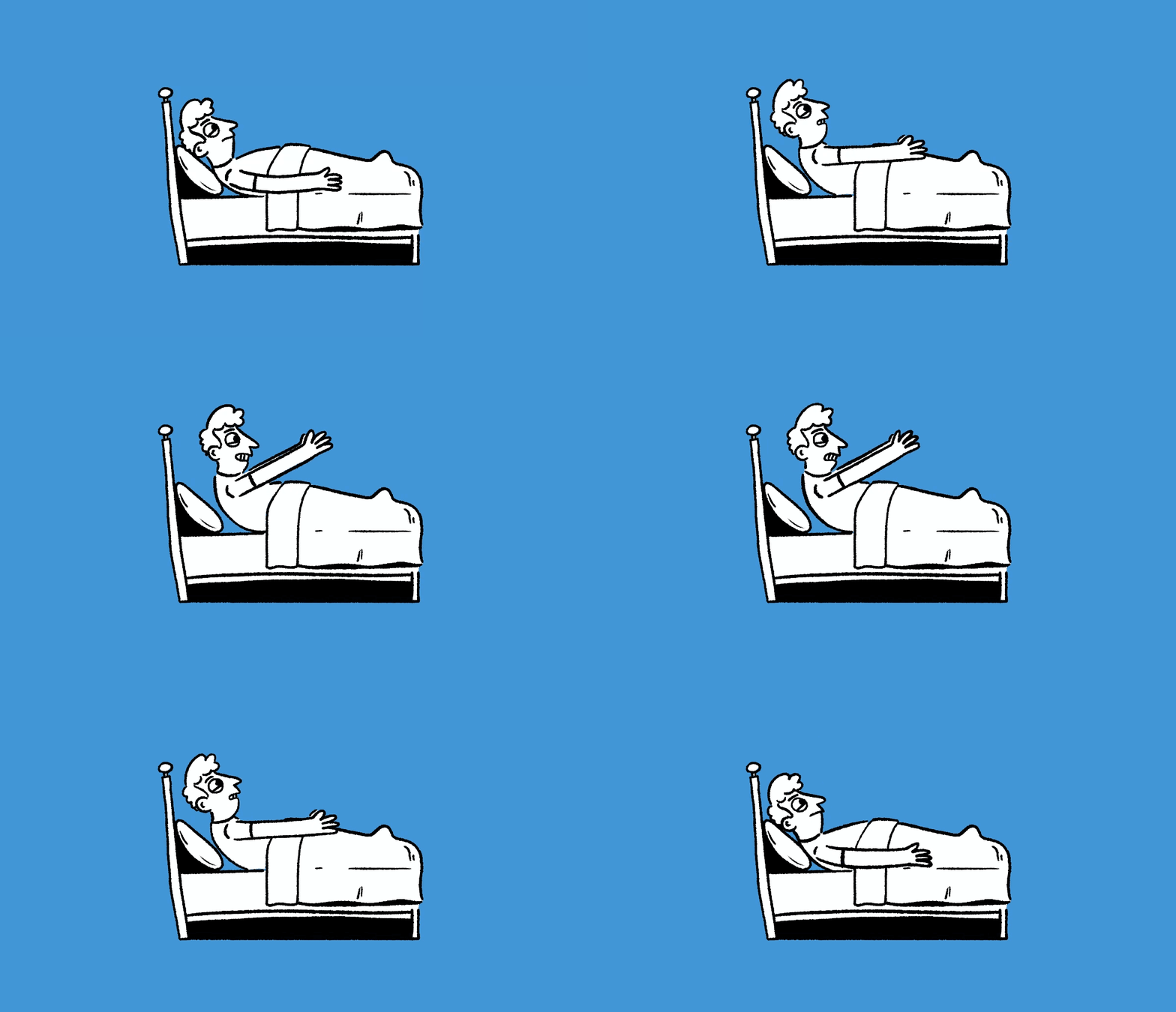
Before you even stand up, take one to two minutes doing gentle movements while still in bed or seated on its edge. Point and flex your feet, make small ankle circles, and press your toes into the floor while lifting your heels. This benefits your knees, hips, ankles and feet. Slowly rotate your wrists and move your fingers. These small movements begin circulating synovial fluid back into your joints.
Next, do a few sit-to-stands from the edge of the bed. This is one of the best things you can do for your legs and core. Then stand and rise up on the balls of your feet a couple of times. If balance is a concern, hold on to your headboard or bedpost, or to the back of a steady chair. Gently roll your shoulders and neck. This sequence takes about two minutes. Most of my patients tell me that by day two or three, they feel noticeably less stiff.


You Might Also Like
How to Treat Common Big Toe Problems
Learn what causes big toe pain and how to ease symptoms
Could Stimulating One Nerve Stop What Ails You?
The vagus nerve plays a key role in how the body functions. Here’s how to activate it
32 Ways to Improve Your Bone Health
How to strengthen your bone density