

























Javascript is not enabled.

Javascript must be enabled to use this site. Please enable Javascript in your browser and try again.

Skip to content
Content starts here
CLOSE ×
Search
CLOSE ×
Search
Leaving AARP.org Website

You are now leaving AARP.org and going to a website that is not operated by AARP. A different privacy policy and terms of service will apply.

Hypertension Stages and Types

The four stages of high blood pressure can impact your health in various, and sometimes surprising, ways


a heart with lightening bolts around it and a blood pressure reading in the background
AARP (Source: Shutterstock)

Almost everyone has had their blood pressure taken and has a general sense of what’s considered a good or bad result. The various stages and types of hypertension can seem difficult to understand, but knowing the risks behind the numbers is crucial, especially for people over 50.

The 2025 American College of Cardiology and the American Heart Association guidelines state that a normal blood pressure range is below 120/80 mm Hg (millimeters of mercury, a standard unit for measuring pressure). Stages at or above 120/80 mm Hg include elevated, stage 1 hypertension and stage 2 hypertension. (See blood pressure ranges table, below.) A severely elevated blood pressure of 180/120 mm Hg or greater could be a hypertensive emergency and may require guidance from your doctor or even emergency care.

Older people are at higher risk for high blood pressure, because large arteries get stiffer with age, and that can cause blood pressure to rise. If the condition isn’t brought under control with medication and lifestyle changes, it can lead to serious medical complications, including heart disease, stroke, kidney disease, eye problems and even dementia.
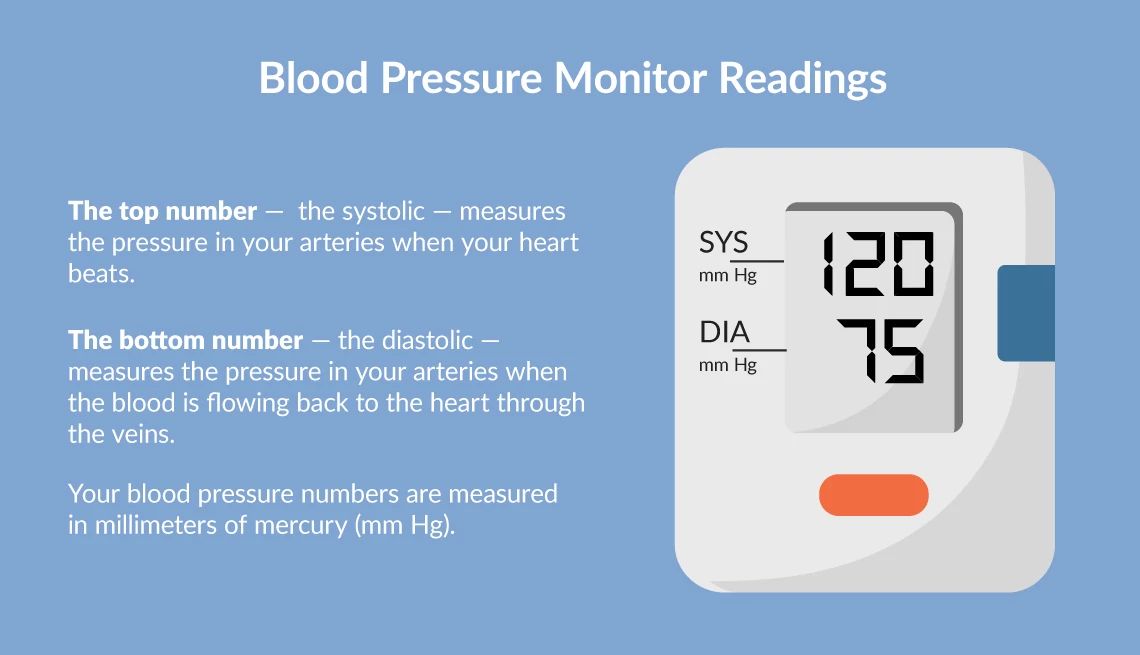
systolic and diastolic blood pressure monitor readings
AARP (Source: Shutterstock)

1. Elevated blood pressure

If your systolic pressure (the top number) is 120–129 mm Hg and your diastolic pressure (the bottom number) is less than 80 mm Hg, you are in the elevated range. The primary risk factors for this stage include a sedentary lifestyle, a poor diet and family history. It’s essential to make lifestyle changes to prevent the condition from progressing.

2. Stage 1 hypertension

Systolic pressure of 130–139 mm Hg or diastolic pressure of 80–89 mm Hg indicates stage 1 hypertension. For those over age 50, this stage significantly increases the risk of cardiovascular disease. Not everyone in this stage will require medication. Many can bring their blood pressure down through regular monitoring and lifestyle modifications, such as reducing sodium intake and increasing physical activity.

For anyone over age 75 — or anyone who smokes or has risk factors for diabetes, kidney disease, high cholesterol or cardiac disease — a blood pressure of 130/80 mm Hg should be your sign to talk to a doctor, says Dr. Jordana Cohen, associate professor of medicine (renal-electrolyte and hypertension) at the Hospital of the University of Pennsylvania. “Under the age of 75 and [with] no other risk factors, 140/90 is when we really start treatment.”

However, 130/80 is still considered elevated, and people should think about lifestyle modifications and ways to try to bring their blood pressure down.

“For my patients, I recommend starting medication if their blood pressure reaches stage 1 … and lifestyle changes, including exercise and nutrition adjustments, are not allowing them to reach their goal,” says Dr. Benjamin Galper, a cardiologist at Kaiser Permanente and chief of cardiology of the Northern Virginia service area. “It is especially crucial for individuals over 50 to manage their blood pressure effectively to significantly reduce the risk of heart disease and stroke.”

3. Stage 2 hypertension

People with a confirmed systolic pressure of 140 mm Hg or higher or a diastolic pressure of 90 mm Hg or higher have stage 2 hypertension. This stage puts them at a higher risk for heart attack, stroke and kidney damage. Immediate and sustained medical interventions, along with lifestyle changes, are necessary to manage this condition. 

If you’ve been diagnosed with high blood pressure, the American Heart Association recommends checking your blood pressure at home with an upper-arm cuff home blood pressure monitor. A list of validated home blood pressure monitors is available from the American Medical Association.

To get an accurate reading of your blood pressure using a home blood pressure monitor, Cohen recommends checking back-to-back readings, about 30 seconds to a minute apart, in the morning and in the evening before going to bed, at least an hour after dinner, for a minimum of three days per month. For more detailed directions on how to check your blood pressure, see AARP’s guide to high blood pressure symptoms and causes and our guide to the best blood pressure monitors.

For stage 2 hypertension, Galper usually prescribes medication to bring blood pressure down and prevent complications.

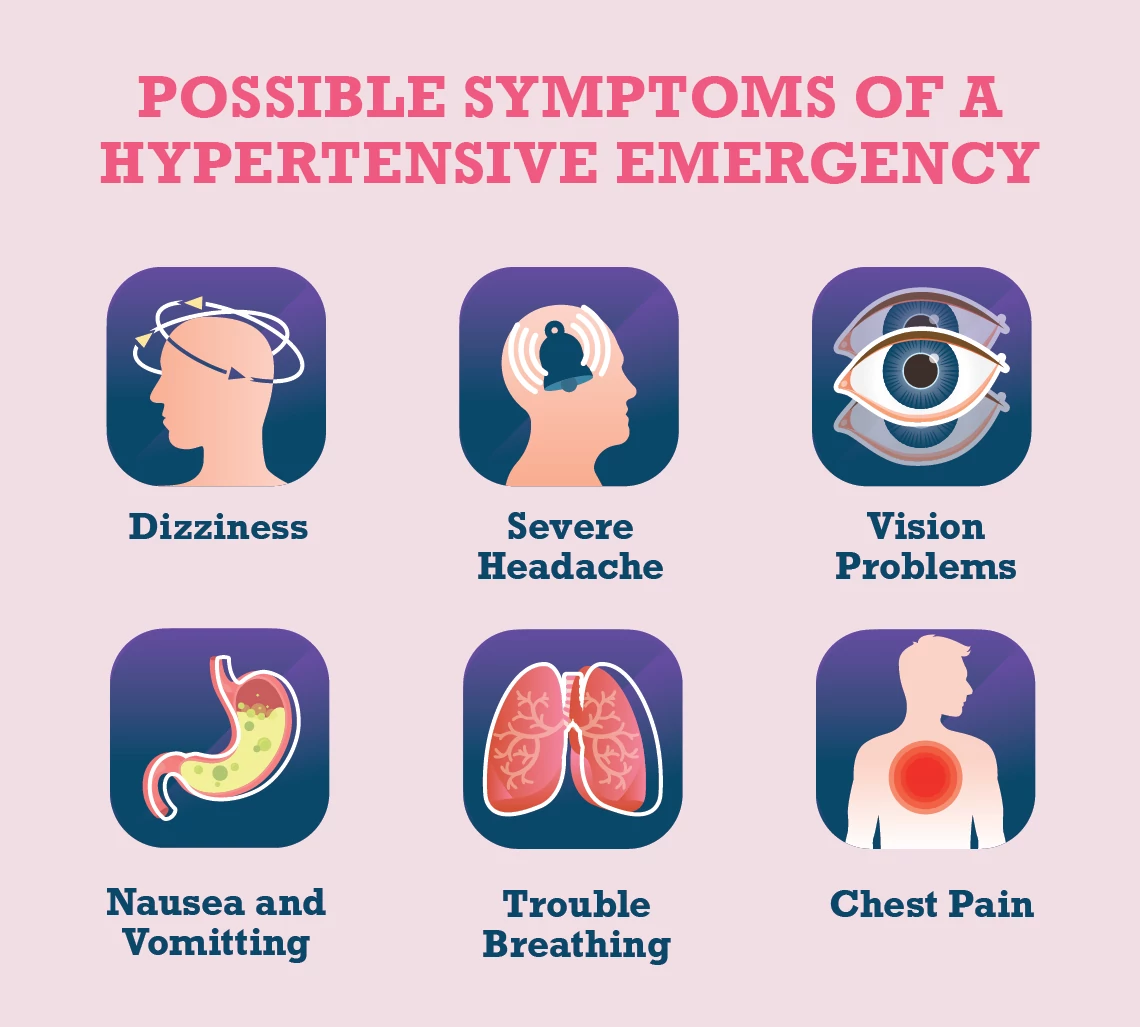
symptoms of hypertensive emergency
Shutterstock

4. Hypertensive emergency and severe hypertension

Hypertensive emergency occurs when your blood pressure exceeds 180/120 mm Hg and you are experiencing symptoms that could be signs of damage to a vital organ, such as your heart, brain, kidneys or eyes. These symptoms include chest pain, shortness of breath, back pain, numbness or weakness, changes in vision or difficulty speaking. Severe headaches can also be a symptom of a hypertensive emergency. The AHA advises calling 911 in this scenario.

Severe hypertension occurs when your blood pressure exceeds 180/120 mm Hg but you are not experiencing symptoms that could signal damage to a vital organ.

If you see these numbers but are not having other symptoms, recheck your blood pressure immediately. If it’s still high, seek medical attention as soon as possible.

“If you find yourself in this situation, please do not panic,” Galper says. Instead, he recommends sitting quietly for five minutes and retaking your blood pressure. If it’s still elevated, contact your health care provider. While this may not be an emergency, you should seek medical attention as soon as you can.

Severe hypertension without symptoms of vital-organ damage should be managed in an outpatient setting by a primary care provider, rather than in an emergency department.

“We don’t want to correct high blood pressure too quickly in this scenario, as rapid reversal … can cause more harm than good by causing a rapid decrease in blood flow to organs that are used to having high blood flow,” Cohen adds.

Other forms of hypertension

Pulmonary hypertension 

Pulmonary hypertension is caused by abnormalities in the lung that make it harder for the right side of the heart to pump blood into the lungs. It is usually seen in people who have underlying conditions such as heart or lung disease.

In a form of this condition called pulmonary arterial hypertension, arteries in your lungs are damaged, which slows blood flow through your lungs. This causes the blood pressure in your lung arteries to rise because the heart is working harder to pump the blood through. Over time, this can lead to a weakening of the heart muscle. This condition is usually diagnosed in people ages 30 to 60, according to the Mayo Clinic.

Primary hypertension

Primary hypertension is the more common form of high blood pressure, previously known as essential hypertension. While a definitive cause is unknown, risk factors can include age, genetics, diet and a sedentary lifestyle. Additionally, smoking, excess drinking, high salt intake, stress and being overweight or obese are thought to contribute.

Secondary hypertension

Secondary hypertension refers to high blood pressure that has a direct, identifiable cause that could be reversed. This type of hypertension occurs in only 5 to 10 percent of high blood pressure cases, but many experts think the number is higher, as many people go undiagnosed.

Underlying causes include adrenal gland disease, sleep apnea, thyroid abnormalities and side effects from medications like birth control pills, stimulants and antidepressants.

Resistant hypertension 

Resistant hypertension is blood pressure that stays over 130/80 mm Hg even when the patient is taking three or more prescribed blood pressure medications (or has a blood pressure that is at goal but is taking four or more blood pressure medications). This may be the diagnosis if a person has hypertension after six months of treatment. Approximately 12 percent of adults who have high blood pressure fall into this category.

As with other types of hypertension, being overweight, being physically inactive, consuming foods high in salt and drinking a lot of alcohol are risk factors for resistant hypertension.

Painkillers, particularly NSAIDs like ibuprofen, and nasal decongestants can also contribute to resistant hypertension.

Can blood pressure get too low?

While older people often tolerate a lower blood pressure well, for people over 50, consistently low blood pressure — below 90/60 mm Hg — can be concerning, since it can lead to dizziness, fainting and an increased risk of falls.

generic-video-poster

“We need to carefully balance your blood pressure management to avoid these risks,” Galper says. “For my patients who experience any symptoms like lightheadedness or frequent falls, I can adjust their treatment plan accordingly.”

Orthostatic hypotension

Orthostatic hypotension, also called postural hypotension, occurs when there is a sudden drop in blood pressure as a person stands up after sitting or lying down. It can cause dizziness or fainting and is more common in older adults. Generally, orthostatic hypotension is mild, but it’s important to talk with your health care provider if you regularly feel lightheaded when you stand up. Dehydration, lengthy bouts of bed rest, and medications including calcium channel blockers that are used to treat high blood pressure can contribute to this condition too. Your health care provider can prescribe different blood pressure medications that may cause fewer side effects. Discuss your blood pressure goals and the risks and benefits of blood pressure treatment with your doctor.

High Blood Pressure: Symptoms, Causes and Tests

Hypertension increases with age, and nearly three-quarters of people ages 65 to 74 have high blood pressure. Understanding the science behind risk factors for high blood pressure, the tools your doctor may use to diagnose the condition and why the disease is often called a “silent killer” can help you improve your health.  

Read more on high blood pressure symptoms, causes and tests.

High Blood Pressure: Treatment and Prevention

Many older Americans see blood pressure levels creep up, putting them at high risk for stroke, heart disease, kidney disease, cognitive impairment and even eye problems. So if your doctor starts talking to you about getting your numbers under control, it’s important to take it seriously.

Read more on high blood pressure treatment and prevention.

High Systolic Blood Pressure

The top number in a blood pressure reading, called systolic blood pressure, is the pressure in your arteries when your heart beats and pushes the blood through them, bringing blood to each part of your body.

For the stages of hypertension, often both the top and bottom (diastolic) numbers may be elevated, but it is common to have just one, usually the top number, elevated. This is called isolated systolic hypertension.

Read more about high systolic blood pressure.

High Diastolic Blood Pressure

The bottom number in a blood pressure reading, known as diastolic blood pressure, measures the pressure in your arteries when the blood is flowing back to the heart through the veins. In rare cases, diastolic blood pressure will be high while the systolic is not. This is called isolated diastolic hypertension.

Read more about high diastolic blood pressure.

White Coat Hypertension

White coat hypertension, also known as white coat syndrome, is when a person’s blood pressure spikes in a doctor’s office, hospital or other medical setting due to anxiety. It’s not uncommon, and while it might seem harmless, it can indicate that blood pressure rises in other stressful situations. People who experience white coat syndrome should monitor their blood pressure at home using a validated device and keep a record of their readings. This data will help their doctor determine if they need treatment at home.

“Many patients at Kaiser Permanente use remote monitoring tools that report changes in their blood pressure to their health care team daily,” Galper says. “This allows doctors to recommend changes to medication or schedule a video visit to help a patient make other changes without taking time off from work or making a trip to the doctor’s office.”

Read more about white coat hypertension.

Types of High Blood Pressure

Discover the stages and types of high blood pressure you may put your health at risk.

Unlock Access to AARP Members Edition

Join AARP to Continue

Already a Member?