
AARP Hearing Center










































How to Avoid Disaster Relief Scams Following Fires, Floods, Hurricanes, and More
After natural disasters, scammers may pose as contractors or FEMA officials to steal your money


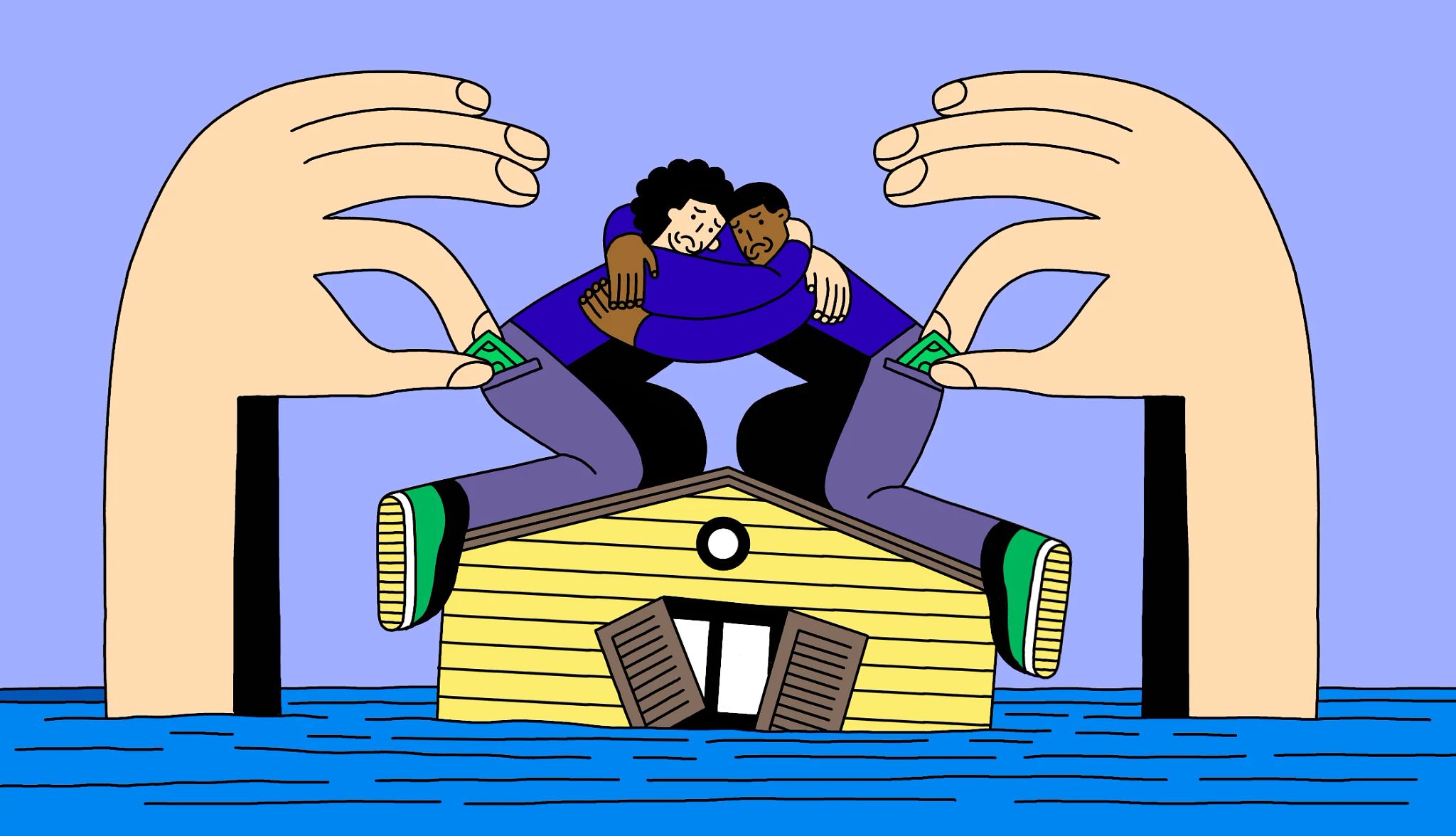
Illustration: Cristina Spanò
About Disaster Scams
Signs to Watch For
- Someone claiming to be a contractor pressures you to pay upfront for repairs or says your property has damage that may not exist.
- Someone claiming to represent FEMA or an insurance company asks for money for their assistance.
How to Protect Yourself
- Contact your insurance company before repairs begin and find reliable contractors so you won’t have to scramble to look for one in times of crisis.
- Slow down and independently verify anyone offering help after a disaster.
Get Help
- Report suspicious activity to the National Center for Disaster Fraud, FEMA, the FBI’s Internet Crime Complaint Center, or your state attorney general.
- Call the free AARP Fraud Watch Network Helpline at 877-908-3360 for support and guidance.
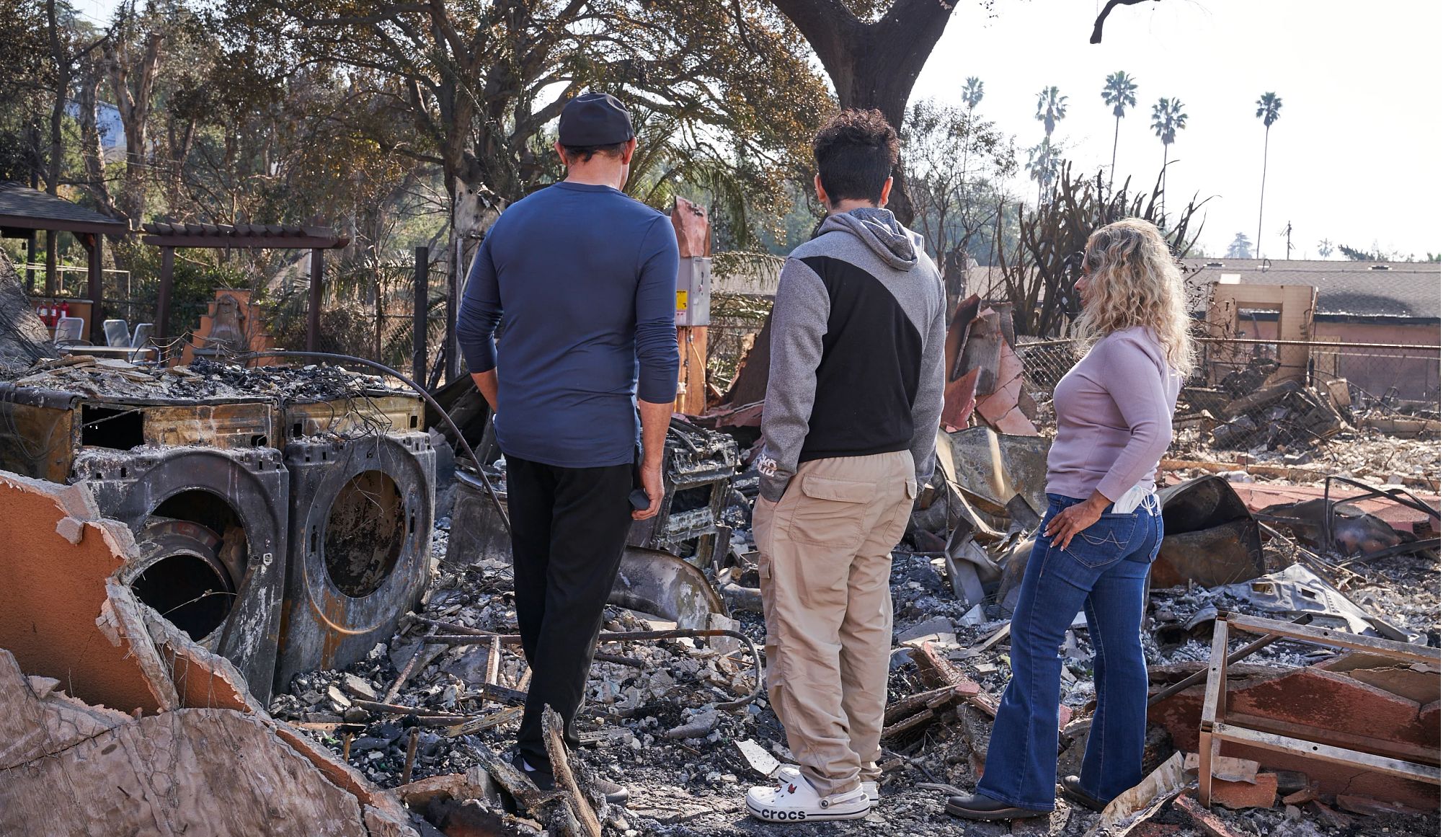
Royce Babcock was desperate after a fire destroyed his Wisconsin home a few years ago. In its wake, while he and his family lived in relatives’ homes (and their garage, for a while). Babcock, an HVAC professional, hired a contractor named Tyler Hansen. It seemed like a safe bet: The guy had excellent reviews and reasonable rates. He got the family a deal for new siding for about $20,000. He just needed to pay half that amount up front, he explains in an episode of AARP’s The Perfect Scam. Babcock paid, and the chaos began: delays, excuses, and bizarre behavior by, they’d learn later, a serial scammer. Hansen had been defrauding homeowners across the state, using different company names to elude authorities and evade scathing reviews.
Babcock says he had $30,000 stolen in the scam, and after rebuilding his house himself with the help of friends, he told host Bob Sullivan that he’s now just trying to pay his debts and stay afloat: “I work eight days a week, and I just throw money at the bank every day of my life.”
More Ways to Benefit
- Related Benefit 1
- Related Benefit 2
- Related Benefit 3
- Related Benefit 4
- Related Benefit 5
It's a sad fact that while disasters can bring out the best in people, as neighbors and strangers roll up their sleeves and open their wallets to help those in need, they also bring out the criminals. For them, others’ misfortune is just a chance to make a fast buck.
“Scammers are also first responders,” warns Steve Weisman, law professor at Bentley University in Waltham, Massachusetts, and editor of Scamicide.com.
How disaster scams work
Some of these criminals take your money and run. Others overcharge for shoddy work. And since they lack local licensing, your homeowner’s insurance might not cover it.
Fake contractors. Two common scams are contractors who use high-pressure sales tactics to push you to pay them money upfront for repairs or rebuilding, then disappear. Or they may tell you there’s damage to your roof when there isn’t.
“They’ll end up … being paid for a whole new roof, even though you don’t need one,” says Joe Brenckle, director of public affairs for the National Insurance Crime Bureau. Brenckle recalls stories of scammers using hammers to smash holes in roofs to imitate hail damage.
Government, utility and insurance impostors. Criminals claim to work for the Federal Emergency Management Agency (FEMA) or other government bodies and contact victims with promises of government grants, building permits or help speeding up insurance claims. Or a supposed government agent asks for payment to conduct an inspection or help you apply for disaster assistance. “No legitimate FEMA employee asks for any kind of funds,” says Weisman.
Scammers may claim to be with the electric company and offer priority reconnection to the grid if you pay a deposit or fee. And some pose as public insurance adjusters, charging high fees for doubtful damage assessments or directing you to disreputable contractors with whom they’re in league.
Bogus charities. Disasters also unleash a torrent of phony charities, which get busy pumping out calls, texts, emails and social media posts soliciting donations for relief work.
As fires or hurricanes bear down on communities, scammers snap up internet domains featuring the fire’s location or the storm’s name and words like “help” and “relief.” Other faux fundraisers imply a connection to well-known aid organizations like the Red Cross or Oxfam.
How to protect yourself from this scam
1. Prepare in advance. Before the disaster, it’s a good idea to understand what’s covered and how. Call your insurance company to clarify any coverage questions you may have. “They will have the bandwidth to spend more time talking to you and explaining your policy and offering tips and assistance,” says Brenckle.
Meanwhile, he adds, “Do your research and collect the names of companies that repair roofs, perform tree removal and other services in your area before you’re hit and keep them in a safe place.”
2. Verify before you pay anyone. Check the vehicle of any contractor who shows up unsolicited for a business name, phone number, and state contractor license number. Get references. Look them up on the Better Business Bureau (BBB) and other consumer review sites. “Don’t get pressured … verify that they’re insured, properly licensed, and there aren’t any complaints against them,” says Weisman.
Brenckle suggests doing your homework in advance. “Do your research and collect the names of companies that repair roofs, perform tree removal and other services in your area before you’re hit and keep them in a safe place.”
3. Call your insurance company. Before beginning any repairs, check with your insurer to ensure any work you are considering is covered and if you need to work with a preferred contractor or auto mechanic. And never sign over insurance checks to contractors or sign documents giving them rights to your insurance claims.
4. Make sure you’re working with genuine insurance agents. Check an agent’s license with your state’s insurance department. The same is true of insurance adjusters.
5. Confirm that FEMA reps are legitimate. FEMA is on the ground to offer assistance and agents do knock on doors to assist survivors, but genuine FEMA staff will have a government-issued laminated photo badge and be happy to show it to you. A FEMA shirt or jacket is not proof of identity. Call FEMA at 800-621-3362 or visit the closest FEMA Disaster Recovery Center to speak to staff. FEMA also has a page that addresses myths and facts surrounding FEMA payments.
6. Give carefully. Research charities through trusted channels such as Charity Navigator, CharityWatch, GuideStar or the BBB’s Wise Giving Alliance. Be cautious when considering disaster solicitations on social media or crowdfunding sites at face value.

What to do if you are targeted
The Department of Justice partners with law enforcement to create the National Center for Disaster Fraud. You can report scams by phone at 866-720-5721 or online.
Call the FEMA Disaster Fraud Hotline at 866-720-5721, FEMA’s Office of the Chief Security Officer at 866-223-0814, or write to FEMA-OCSO-Tipline@fema.dhs.gov. FEMA’s fraud page has details on how to spot suspicious activity and outlines how the agency communicates with survivors. You can also use the FEMA Recovery app to apply for assistance.
Report the scam to the FBI’s Internet Crime Complaint Center (IC3.gov) and your state attorney general. Not every complaint leads to enforcement action, but the information can help officials spot trends, warn the public, and sometimes identify the criminals.
Call the AARP Fraud Watch Network’s toll-free Helpline (877-908-3360), where trained volunteers provide victims and family members with support and guidance on next steps.
Editor’s note: This article, originally published in 2019, was updated with new statistics and expert advice.
The key takeaways were created with the assistance of generative AI. An AARP editor reviewed and refined the content for accuracy and clarity.

AARP Membership
Join AARP for only $15 per year with automatic renewal. Get instant access to members-only products and hundreds of benefits, a free second membership, and a subscription to AARP The Magazine.
More From AARP
What to Do If You Become a Scam Victim
How one woman worked quickly — with help — to avoid being charged through PayPal
8 Ways to Recover Faster From a Disaster
Planning can ease the hardship when extreme weather strikes