
AARP Hearing Center









































‘Moneymaxxing’ After 50: Simple Ways to Make Your Money Work Harder
Social media has given old-school budgeting a makeover
6-minute read

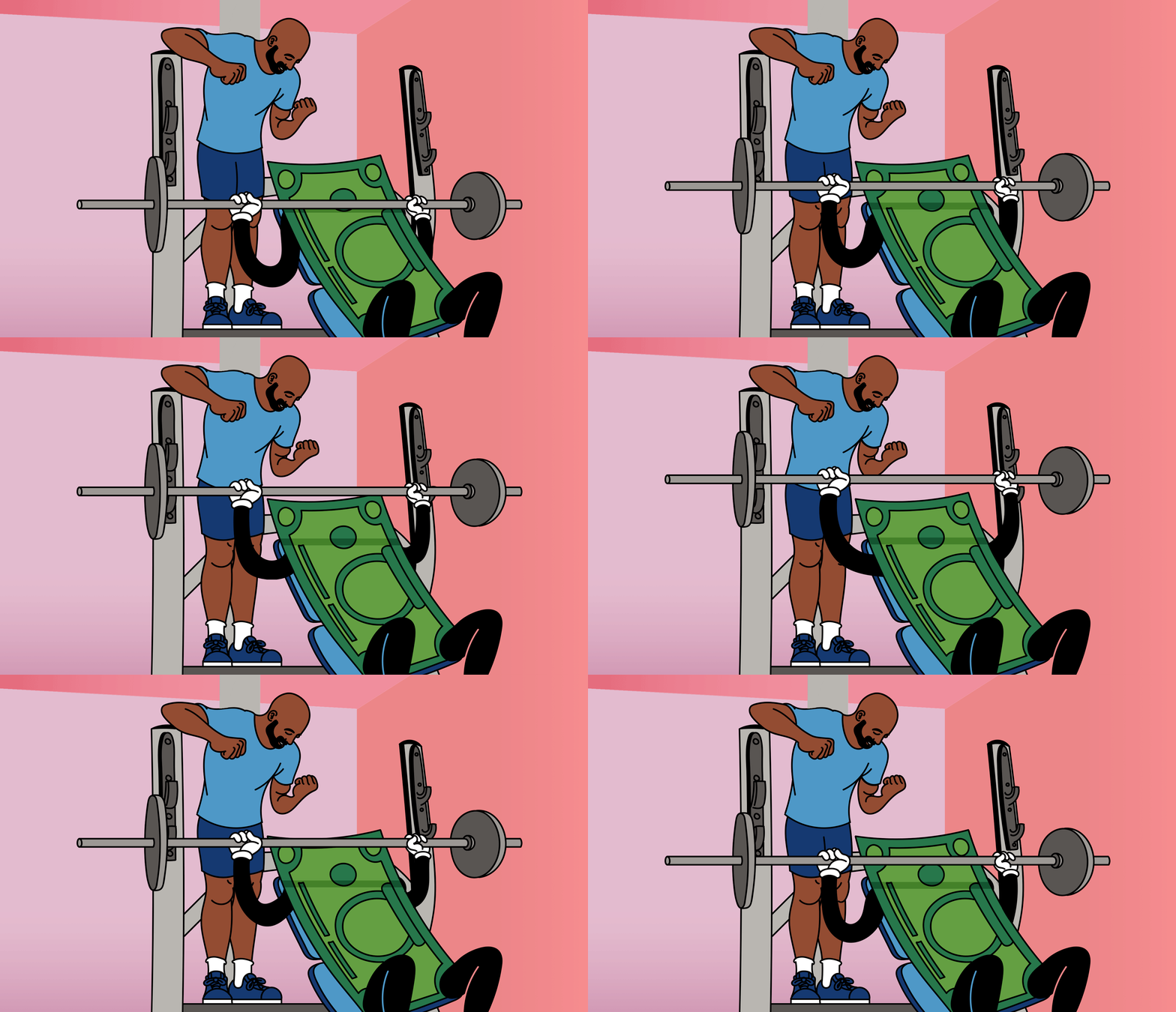
Liam Eisenberg
Key takeaways
- A popular trend on social media, moneymaxxing is focused on squeezing value out of every dollar.
- The goal isn’t simply to spend less but to spend less on the things you don’t value so that you have more to spend on the things you do.
- To start moneymaxxing, experts recommend creating a detailed budget and setting a measurable goal, such as building an emergency fund or paying off credit card debt.
Just when you finally learned what “girl math” and “loud budgeting” meant, social media mints another financial buzzword: moneymaxxing. It sounds as if it requires three monitors, a complicated spreadsheet and the soul of a day trader, but, at its core, it simply means getting more from your money.
While the popular looksmaxxing trend focuses on improving your appearance, moneymaxxing focuses on squeezing value out of every dollar. And with consumer goods prices increasing 3.4 percent from August 2025 to August 2026, stretching your budget is a must. Furthermore, AARP’s 2026 Financial Security Trends Survey found that 69 percent of adults 50 and older said they believe prices are rising faster than their income, and 60 percent said they’re worried about having enough savings to last through retirement.
More Ways to Benefit
- Related Benefit 1
- Related Benefit 2
- Related Benefit 3
- Related Benefit 4
- Related Benefit 5
So yes, the goal of making your money go the distance is a timely one. But after age 50, moneymaxxing is more than just chasing coupons and touting your savings on Instagram — it’s trimming recurring bills, utilizing newly freed-up cash, taking advantage of catch-up contributions to retirement accounts and making other smart financial moves.
The goal isn’t merely to spend less but to spend less on the things you don’t value so that you have more to spend on the things you do.
What is moneymaxxing?
Unlike old-school budgeting, which focuses on identifying expenses and targeting costs that you can reduce or cut, moneymaxxing turns saving into a game: Find the better rate, stack the discount or nab the cash-back offer and then use the savings wisely.
Ashley Feinstein Gerstley, a financial planner and founder of personal finance platform Fiscal Femme, likens moneymaxxing to budget hacking. “I think one of the reasons that it’s resonating is because people are looking for smarter systems, not agonizing over every cent,” she says. “They’re looking to keep more of their money without feeling like they’re constantly sacrificing.”
For example, while budgeting might entail allocating $500 a month for groceries, moneymaxxing might entail using a cash-back app, taking advantage of grocery store coupons and apps, researching the best supermarkets to shop for particular items and planning the most delicious meals you can make with lower-cost ingredients. “It’s stretching that same $500 budget further,” says Feinstein Gerstley.
How to start moneymaxxing
A lot of the moneymaxxing advice circulating on social media is directed at young adults, especially recent college graduates trying to live on an entry-level salary while paying off student loans. For them, retirement may be an abstract dot that’s barely on the horizon, says Isabel Barrow, a financial planner with Edelman Financial Engines in Alexandria, Virginia. But when you’re in your 50s, retirement starts to come into focus.
That shorter runway is no reason to panic, but it is a good time to zero in on making choices and establishing good habits that can materially improve your retirement. These three steps can help you get started.
1. Know where your money goes. Review your previous six to 12 months of bank and credit card statements, sorting expenses into essentials and flexible lifestyle spending. The goal is simple: Get a clear picture of what is coming in and going out.
Barrow says the most common financial mistake she sees people make is failing to get a grasp on their budget before retirement. Crafting a detailed budget “is important for everyone, but especially for someone on a fixed income,” she says. “Unless you plan to return to work or win the lottery … you need to know your boundaries.”
2. Focus on one measurable target at a time. Perhaps you want to build an emergency fund, eliminate a credit card balance or save for a family trip. Consider starting with one goal to help motivate your moneymaxxing.
3. Savor the savings. Five bucks here and there might not seem like a lot of savings up front. That is why Feinstein Gerstley says it’s important to celebrate and capture the win every time you make a choice to reduce your spending — whether that’s literally, such as opening a high-yield savings account and putting the money you saved directly into it, or figuratively, such as tracking your accomplishments in a moneymaxxing journal.
Make Things Easier for Your Loved Ones
Store wills, powers of attorney, trusts and other essential documents in the AARP Digital Vault, making it easier for authorized family members to find what they need when the time comes. It’s just $20 a year as an add-on AARP membership benefit.
Tips for moneymaxxing after 50
Here are eight expert-recommended ways to make your money work more efficiently.
Re-shop recurring expenses. Wireless carriers, cable companies and internet providers don’t send customers letters saying, “Congratulations on your decade of loyalty. We’re lowering your rate!” To ensure you’re getting the best rates, carve out time to solicit competing quotes and ask your current providers to beat them.
Assess your insurance policies. Property and casualty insurance rates are outpacing inflation, says Marguerita Cheng, CEO of Blue Ocean Global Wealth in Gaithersburg, Maryland. Bundling insurance plans and asking for discounts may help cut costs. Cheng saved $60 a month on auto insurance by asking about a discount since her two children attend college without cars.
In addition, raising your deductibles can reduce premiums, but make sure you have enough cash to comfortably cover the deductible if you need to pay it. “Most people don’t have an accident every year,” says Cheng. “Instead of paying more to the insurance company, save that money in a high-yield savings account.”

Stack savings. Whether you’re shopping for groceries, clothing or other purchases, ask about discounts for older adults and, when permitted, combine them with store promotions, loyalty programs, cash-back apps and rewards credit cards, says Feinstein Gerstley. “Earning rewards on the things that you’re already buying is very moneymaxxing,” she says.
Boost your retirement funds with larger contributions. Maxing out your retirement account contributions, especially when you become eligible for catch-up contributions, is “a really great ‘moneymax’ because you are paying less on taxes and having more money in retirement,” says Feinstein Gerstley.
Shore up your cash cushion. Many financial advisers recommend working adults squirrel away enough savings to cover at least three to six months of essential living expenses. Retirees may want to build a larger emergency fund since they don’t have a paycheck to fall back on during market downturns. Make sure the money is accessible — say, in a high-yield savings account or money market account.
Utilize your health savings account. One often-overlooked feature of a health savings account (HSA): You can leave money in the account to grow, allowing you to build a large source of funds for certain health expenses in retirement. HSA contributions are generally pretax, the earnings grow tax-free, and withdrawals aren’t taxed as long as you use the money for eligible health care expenses.
In 2026, you can contribute up to $4,400 if you have individual insurance coverage or $8,750 for family coverage. Contribution limits increase in 2027 to $4,500 for individual coverage and $9,000 for family coverage. You can contribute an extra $1,000 per year if you’re 55 or older.
Pay with points. Many people see credit card rewards as slush money, Feinstein Gerstley laments. To effectively maximize credit card points, she recommends spending them on things you were already planning to purchase, like a flight to visit family for Thanksgiving or a holiday gift for someone on your list. While you’re logged into your card’s rewards portal, see if your credit card offers any new perks that you’re not taking advantage of. Some cardholders overlook benefits like free streaming service subscriptions, monthly credits for food delivery apps and cellphone protection.
Remember, moneymaxxing is not miserliness. Some people need help saving; others become so skilled at it that spending feels dangerous. Barrow has seen well-funded retirees pinching pennies unnecessarily because they struggle to shift out of saving mode. Don’t moneymax the joy out of your life.
“That’s the whole reason why you save that money,” she says, “so that you can eventually get to a point where you’re using it.”

AARP Membership
Join AARP for only $15 per year with automatic renewal. Get instant access to members-only products and hundreds of benefits, a free second membership, and a subscription to AARP The Magazine.
More From AARP
9 Worst Things to Buy Online
Experts share which purchases are worth making in person
Challenge Yourself to a No-Spend Month
Give yourself a financial wake-up call by pressing pause on nonessential purchases
What Is Reverse Budgeting?
This popular strategy automates savings and reduces the temptation to overspend