
AARP Hearing Center









































6 Food Swaps to Lower Your Grocery Bill
Consider these wallet-friendly alternatives to save at the supermarket

AARP (Getty Images, 8)
Key takeaways
- A majority of adults 50 and older say they have changed their grocery purchases to stay within their budget.
- Lower-cost swaps, like replacing beef with poultry, can help you cut spending while keeping meals nutritious.
- Choosing store brands reduces grocery costs without sacrificing quality.
You probably have some favorite foods you shop for regularly. But with grocery prices rising, you might want to consider swapping out pricey mainstays with alternatives.
Many older adults have already made adjustments. A May 2026 CNN poll found that 56 percent of adults ages 50 to 64, and 50 percent of those 65 and older, have changed the groceries they buy to stay within their budget.
More Ways to Benefit
- Related Benefit 1
- Related Benefit 2
- Related Benefit 3
- Related Benefit 4
- Related Benefit 5
Replacing longtime staples with more wallet-friendly choices might be just what the dietitian ordered.
“As we get older, our needs change,” says Kristin Kirkpatrick, a dietitian at the Cleveland Clinic’s Department of Wellness & Preventive Medicine. “We have to look at getting the most for our dollar, but also how to get the most nutritional bang for the buck. Some of the most nutrient-dense foods are some of the most affordable.”
Here are six food swaps that can stretch your grocery dollars while keeping meals enjoyable and nutritious.

Getty Images (2)
1. Swap beef for poultry
Ground beef prices rose 12.4 percent from June 2025 to June 2026, according to the federal government’s Consumer Price Index (CPI). ”If someone is on a budget, red meat is usually not on the menu,” Kirkpatrick says.
Older adults who stop eating red meat need to ensure they’re getting enough protein to maintain muscle mass. Fortunately, red meat isn’t the only option.
“Poultry has the same high-quality protein as beef and has less saturated fat,” says Alice Lichtenstein, a professor of nutrition science at Tufts University in Boston. It’s also a lot cheaper: The average price per pound of chicken breast is less than one-third the average price per pound of steak, according to the Federal Reserve Bank of St. Louis.
Tip: If you’re reluctant to give up red meat, Kirkpatrick recommends buying frozen rather than fresh to save money. For example, as of early July, a package of eight frozen Kroger ground beef patties costs $10, versus $12 for a package of eight fresh beef patties.

Getty Images (2)
2. Swap poultry for beans
Beans are not only inexpensive but also a great source of fiber and protein, Kirkpatrick says. They can be a substitute for chicken or other animal-based proteins.
Lichtenstein recommends rinsing canned beans with water before eating them, or buying unsalted varieties, to reduce your sodium intake.
Tip: If you want to keep some chicken in your diet, consider exploring different cuts to save money. “Using chicken thighs as an alternative instead of breasts will be more economical,” says Angel Planells, a Seattle-based registered dietitian nutritionist and spokesperson for the Academy of Nutrition and Dietetics.

Getty Images (2)
3. Swap deli meat for egg salad
Sliced ham, turkey or other deli meats might be your go-to for lunch, but they’re not the most budget-friendly options. Plus, processed meats are among the foods to skip after 50 because of their high sodium content and association with a higher risk of certain types of cancer.
For a cheaper and healthier sandwich alternative, Planells recommends egg salad. After all, egg prices fell over 40 percent in June year-over-year. Other lower-priced lunch options include tuna salad, pasta salad or a bean spread such as hummus.
Tip: Take further advantage of lower egg prices by finding more ways to incorporate them into your diet. For example, instead of reaching for a bag of pretzels the next time you’re craving a snack, you could make some deviled eggs.

Getty Images (2)
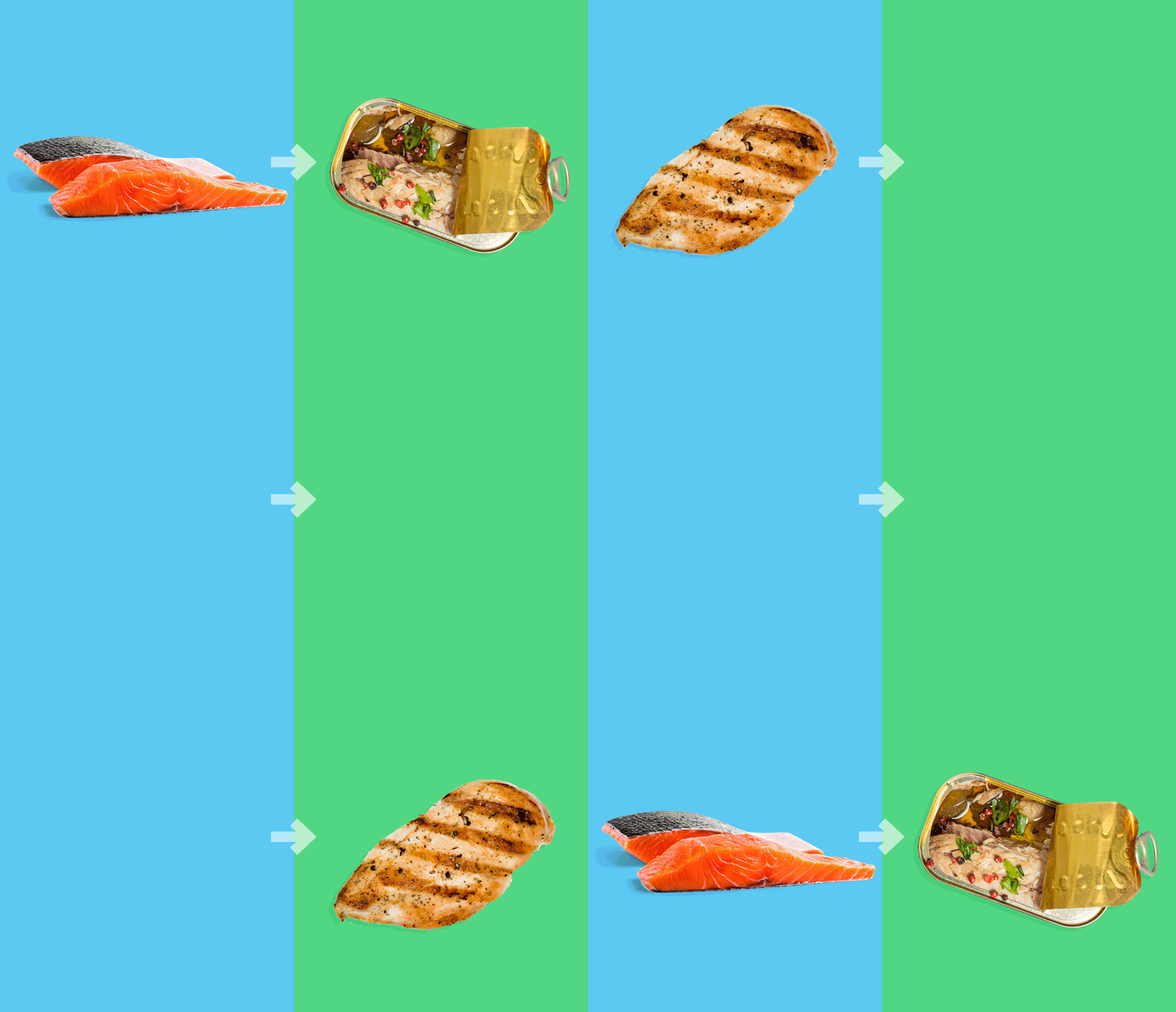
4. Swap fresh fish for canned
Fish rich in omega-3 fatty acids, such as salmon, tuna or sardines, can help improve cognitive function, according to the Global Council on Brain Health’s Brain Food report. However, fresh fish prices are up 6.2 percent from a year ago.

The solution: canned fish. “Getting the canned product is a cheaper alternative,” Planells says. For example, at Albertson’s, a 5-ounce can of Bumble Bee salmon costs $3.29, while a 5-ounce fresh Atlantic salmon filet costs $5.99.
Tip: Worried about the mercury content in fish? Don’t be — Planells says you’d have to consume “an obscene amount of fish” to be at risk. “Most people may consume fish one to two times a week,” he says. “It’s not going to be a concern.”

5. Swap fresh produce for frozen
Fresh fruit prices are expected to increase 2 percent this year, and fresh vegetable prices are projected to climb 7.7 percent, according to the U.S. Department of Agriculture. That comes on top of the significant price increases for fruits and vegetables over the past year.
Swapping fresh produce for frozen is a lower-cost way to keep getting the fruits and veggies needed for a healthy diet. For example, at Safeway, a 48-ounce package of frozen blueberries costs 21 cents per ounce, compared to 50 cents per ounce for an 18-ounce container of fresh blueberries.
Tip: If you’re committed to buying fresh fruits and vegetables, you can save money by purchasing them in season and freezing any leftovers to avoid waste. “The most expensive fruit or vegetable is the one that spoils in your fridge,” Kirkpatrick says.

Shutterstock (2)
6. Swap name brands for generic
“Don’t overlook store brands,” Kirkpatrick says. Many generic foods offer the same quality as name brands at a lower price, she says. For example, Walmart charges $6.96 for a 32-ounce tub of Fage nonfat plain Greek yogurt but only $3.28 for its own Great Value brand.
Tip: When shopping for generic foods, consider buying larger sizes to maximize savings. Take that Great Value Greek yogurt, for instance: a 32-ounce tub costs 10.3 cents per ounce, while a 5.3-ounce cup costs 15.5 cents per ounce.
The key takeaways were created with the assistance of generative AI. An AARP editor reviewed and refined the content for accuracy and clarity.

AARP Membership
Join AARP for only $15 per year with automatic renewal. Get instant access to members-only products and hundreds of benefits, a free second membership, and a subscription to AARP The Magazine.
More From AARP
11 Ways to Eat Well at Home on a Budget
Here’s how to shop smarter, get low-cost meals and find fresh food for less
How to Shop Smarter at the Grocery Store
42 ways to maximize your next trip to the supermarket
14 Surprising Warehouse Club Buys
From caskets to hearing aids, the warehouse retailers sell some out-of-the-box items