
AARP Hearing Center









































.jpg?crop=true&anchor=39,12&q=80&color=ffffffff&u=nkrkrm&w=1926&h=1107)









Is Now a Bad Time to Downsize?
Consider these pros and cons before moving to a smaller home in today’s market
6-minute read


Getty Images
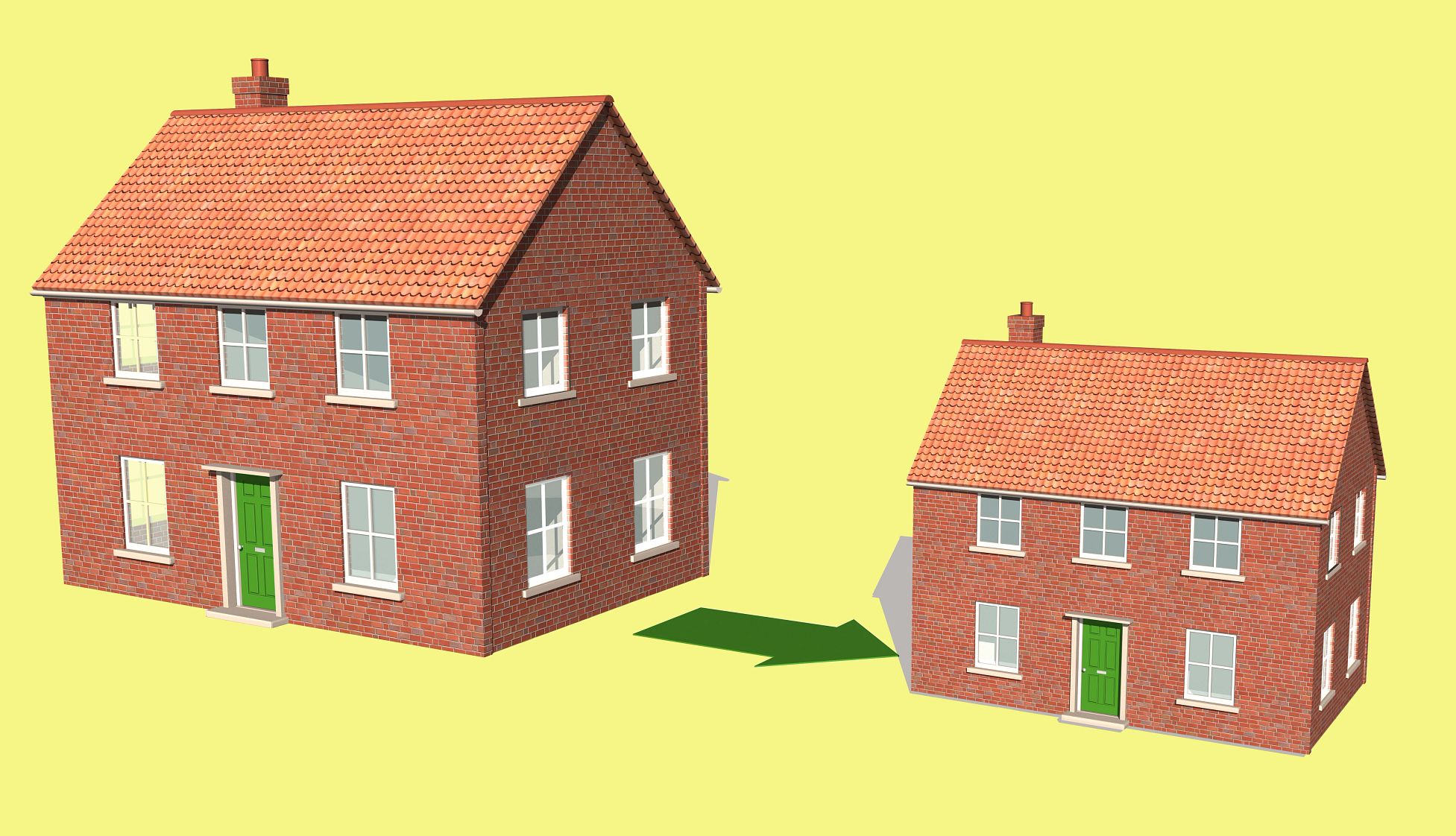
Downsizing to a smaller home, condominium or apartment shortly before or in retirement can reduce your housing costs, free up cash and lessen the burden of home maintenance. But many older adults aren’t eager to move.
Nearly 1 in 3 boomers who own their homes say they’ll never sell, according to a May 2026 survey by real estate company Redfin. And 33 percent of silent generation homeowners don’t even plan to sell.
More Ways to Benefit
- Related Benefit 1
- Related Benefit 2
- Related Benefit 3
- Related Benefit 4
- Related Benefit 5
“One reason homeowners aren’t moving is because they don’t feel financially motivated to do so,” says Daryl Fairweather, Redfin’s chief economist. “They don’t have a mortgage payment hanging over their heads.” Indeed, nearly 60 percent of boomers who own a home have paid off their mortgage.
With 30-year mortgage rates hovering near 7 percent and the median existing home sale price hitting $429,100 in August, staying put might seem like the financially savvy choice. However, several signs indicate that today’s real estate market may offer a great opportunity for some older homeowners to trade in a larger home for a smaller abode.
If you’ve paid off most or all of your mortgage, downsizing now could free up cash at a time when home equity levels are at a record high, according to August’s Intercontinental Exchange Mortgage Monitor report. The average homeowner has $212,000 in tappable equity.

Video: Waiting on Lower Mortgage Rates to Downsize? Consider This
Downsizing in this market can also mitigate other rising costs of homeownership, such as homeowners insurance, property taxes and maintenance.
Wondering whether now is the right time to downsize? Consider these benefits and drawbacks before making a decision.
Pro: It’s not a bad time to buy
After several years of acute housing shortages and soaring home prices, homebuyers are gaining the upper hand. The supply of homes for sale is at its highest level since 2020, and nearly 60 percent of homes sold below their original asking price in August, according to Redfin.
Fairweather says it’s especially a buyer’s market for condominiums in popular retirement destinations such as Arizona, Florida and Texas.
Pro: It’s not a bad time to sell either
Home values in many cities have risen so fast over the past five years that you may have enough equity to sell your home and buy a smaller place with cash, eliminating the need for a mortgage.
“No mortgage means improved and more reliable cash flow for those on a fixed income,” says Rachael DeCosta, a wealth adviser with Sax Wealth Advisors who is based in Bethesda, Maryland. It also provides the freedom to engage in hobbies, travel and pursue other retirement interests. And if you choose to rent rather than buy, you get the added benefit of having a management company maintain your property, giving you back more time and money, she says.
Another reason now could be a good time to put your house on the market? Homes are still selling relatively fast — properties that sold in August were on the market for 60 days on average, the same number of days as the year before.
Pro: You could cut your homeowners insurance costs
Homeowners insurance rates jumped 48 percent cumulatively from 2020 to 2025, with premiums doubling in some states, according to Lending Tree’s 2026 “State of Home Insurance” report.
Moving to a smaller home that requires less insurance coverage, or to a state with lower insurance rates, could significantly reduce your insurance bill.
If you decide to rent instead of buy, you could slash your insurance premium by thousands — the average cost of renters insurance is just $151 per year, compared with an average of $2,395 per year for homeowners insurance.
Pro: You could reduce your property taxes
Your property tax bill has likely risen over the past few years. Median property taxes in the U.S. increased 3 percent from 2024 to 2025, reaching $4,427, according to Realtor.com. Moving to a lower-priced home or condo could cut your tax bill significantly.
Tip: Regardless of whether you downsize now, you might qualify for property tax relief, depending on your income, age, or veteran or disability status. The AARP Foundation’s Property Tax-Aide program provides information on eligibility and how to apply for property tax relief.
Pro: You could save on maintenance costs
Maintaining a larger home becomes more difficult as we age, says Rachel Quittner, a senior real estate specialist in Santa Barbara, California. And with home maintenance costs on the rise, moving to a smaller place might result in significant savings.
The average annual cost to maintain a single-family home rose 2 percent over the past year to $11,196, compared with $9,354 for a townhome and $3,532 for a condo, according to home services site Thumbtack. Downsizing can also help you avoid the cost of renovating your current home if it lacks the features you’ll need to age in place, such as a walk-in shower or a first-floor bedroom.
Con: You could get hit with a hefty capital gains tax
If your home’s value has soared since you purchased it, you might face a big capital gains tax bill when you sell. Home sale profits above $250,000 for single filers and $500,000 for married couples filing jointly are taxed at a 15 to 20 percent capital gains rate, depending on your taxable income.

Nancy Newquist-Nolan, a real estate agent in Santa Barbara and Quittner’s business partner, recently worked with an older couple who wanted to downsize but decided not to once they saw how much they would owe Uncle Sam. The couple bought their house for $30,000 in the 1970s, and Newquist-Nolan says it would now sell for around $2.5 million.
If they sold it, they would have a capital gain of $1.97 million ($2.47 million profit minus the $500,000 exemption). This would be taxed at the long-term capital gains rate of either 15 percent, for a tax bill of $295,500, or 20 percent, for a tax hit of $394,000, depending on the couple’s overall taxable income.
Con: Downsizing might be more expensive, depending on where you want to live
“A lot of people don’t downsize to save money,” DeCosta says. Instead, some move to 55-plus active-living communities for the amenities they offer, such as pools, pickleball courts, fitness centers and golf courses, or to continuing care retirement communities (CCRCs), which provide independent living, assisted living and skilled nursing care on one site, allowing residents to age in place.
She says these communities are often expensive, with homes in some CCRCs selling for more than $1 million and some communities charging new residents high entry fees.
Plus, fees charged by condo complexes for amenities, maintenance and upkeep have risen because of inflation, Fairweather says. This is an additional cost you might not want, especially when you’re living on a fixed income in retirement.
DeCosta says she has a client in her 70s who downsized to a high-end condo in 2006, when the condo fee was $735 per month, but she’s now looking to move because the cost has shot up to nearly $2,000 a month.
Con: Condos typically don’t appreciate as much as single-family homes
If you’re considering downsizing to a condo, be aware that it might not appreciate as much as your single-family home would.
“If you’re worried how much it will be worth when you eventually pass it on, then that might be something to consider,” Fairweather says. However, downsizing could be a way for you to give your kids their inheritance early by sharing the profit from the sale of your home, she adds.

AARP Membership
Join AARP for only $15 per year with automatic renewal. Get instant access to members-only products and hundreds of benefits, a free second membership, and a subscription to AARP The Magazine.
More From AARP
99 Great Ways to Save
Stretch your dollars — and cut costs on groceries, travel, entertainment and more
There's More Than One Way to Retire Abroad
Visa options and extended stays offer multiple paths to an immersive expat experience
4 Ways Homeowners Can Use a HELOC
HELOCs can be a powerful tool — especially when you're older