






















































Javascript is not enabled.

Javascript must be enabled to use this site. Please enable Javascript in your browser and try again.

Skip to content
Content starts here
CLOSE ×
Search
CLOSE ×
Search
Leaving AARP.org Website

You are now leaving AARP.org and going to a website that is not operated by AARP. A different privacy policy and terms of service will apply.

25 Great Ways to Grow a Great Vegetable Garden

Tips and advice for creating a healthy and delicious addition to your yard


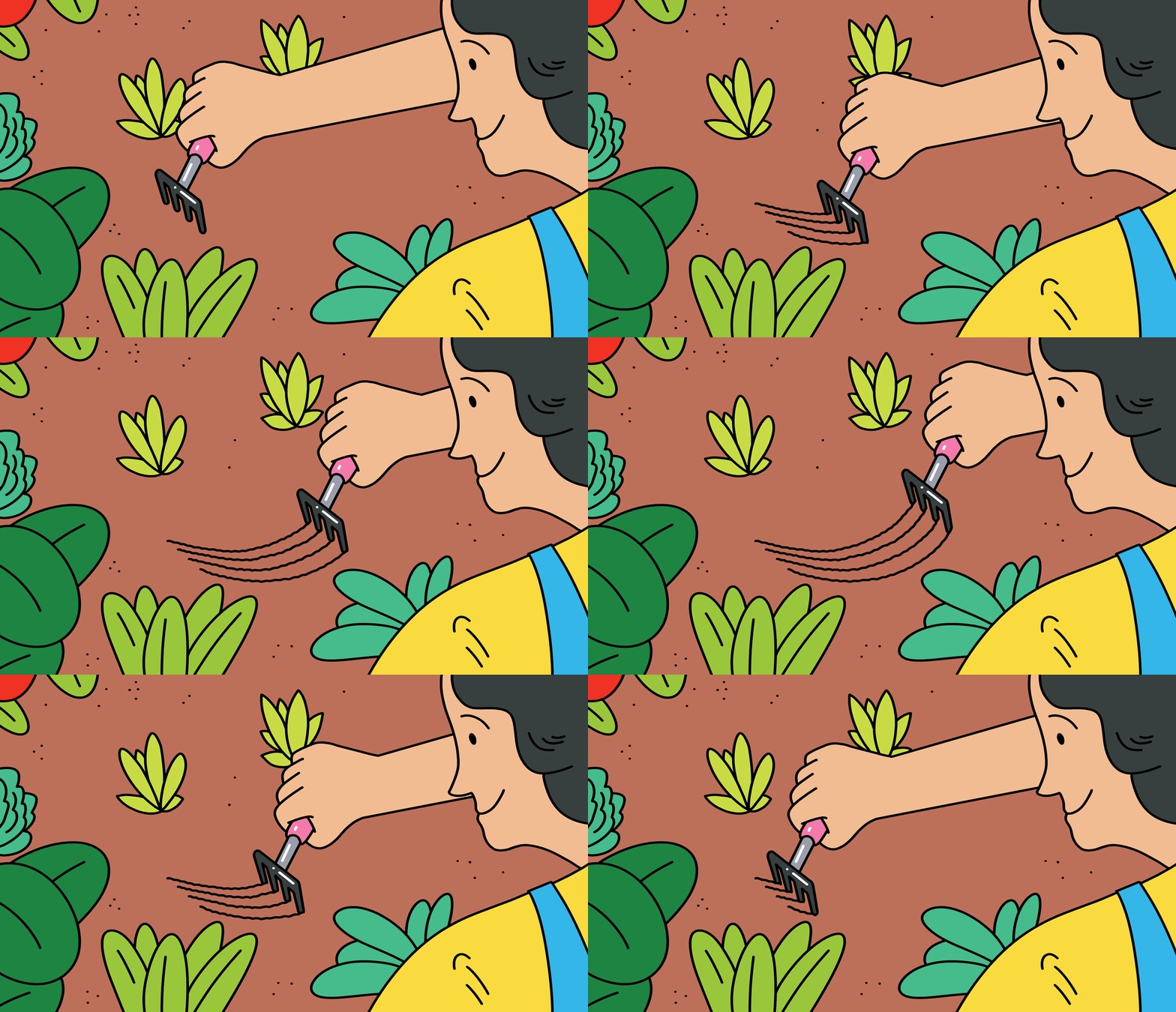
an illustration shows a woman using a gardening to tool to make happy face in the bed of her vegetable garden
Planting a vegetable garden is good for the mind, body and soul. Read on to learn how to make yours grow into something you'll treasure for years.
Sam Island

Key takeways

  • Tending a vegetable garden provides fresh food and is physically and mentally rewarding. 
  • Start small to avoid feeling overwhelmed and grow what you enjoy eating.
  • Sun, healthy soil and proper spacing matter more than garden size.
  • Raised beds, wide paths and ergonomic tools make gardening easier on your joints.
  • Regular watering, harvesting and observation help plants stay productive.

The freshest vegetables you’ve ever eaten could come from your own garden.

The produce we buy at stores often travels hundreds of miles before it reaches our table, says Resh Gala. She’s the author of Vegetable Gardening Made Easy and the founder and owner of Hundred Tomatoes, a company that designs and installs bespoke raised-bed organic food gardens in New Jersey and Pennsylvania. “It does deteriorate significantly in nutritional value as well, and it doesn’t last as long in the fridge.”

Gardening isn’t just about healthy food, though. Physically, it’s almost like outdoor yoga, says Chelsey Lenczyk, organic lead and home and farm market manager with Bejo Seeds, a vegetable breeding company headquartered in Oceano, California. It keeps your body moving, she adds, and the reward of fresh produce makes it worth it.

Gardening is good for mental well-being, too. A 2023 study in the Journal of Environmental Psychology showed that older adults who spent two and a half hours or more per week gardening reported improved mental health. “Gardening, I personally think, is very therapeutic,” says Gala. “There’s something about being in nature. It just silences your mind and makes you feel present.”

Here are 25 tips to help you grow a thriving vegetable garden that’ll produce a bountiful harvest.

1. Know your geographic region

Where you live influences what you can grow and when. “Once you understand what your geography is, then you know what your growing season can be,” says Lenczyk. The U.S. Department of Agriculture’s Plant Hardiness Zone Map shows plants that do well in specific areas, as well as when to plant them. Get familiar with first and last frost dates, too. 

Knowing when the last frost is in spring tells you how early you can plant, according to Lenczyk; the date of the first frost in the fall indicates when you should expect to wrap up your warm-season crops. Peppers, tomatoes and herbs such as basil are cold-sensitive, says Natasha Grosskopf, product manager for PanAmerican Seed, a seed breeder and producer headquartered in West Chicago, Illinois. She adds that they’ll either die or be stunted if it’s too cold outside or if the soil isn’t warm enough. 

2. Choose an accessible location

Plant your garden in an area that you notice as you go about your day, and as close to your kitchen or back door as possible, says Gala. “People tend to push their garden back in a corner that’s really far away, where nobody can see it.” Accessing it becomes a challenge when it’s out of sight, out of mind.

3. Start with a small garden

If you’re new to gardening, consider starting small and building toward a bigger garden. “If you start big, it can feel very overwhelming, get frustrating and then you can’t keep up with it, and a lot of people just give up,” says Gala. “A lot of my clients think they want a big garden, but what they actually want is a beautiful garden.” If you want to grow a good variety of food, two raised beds are a good place to start, she says. 

Matt Mattus, author of Mastering the Art of Vegetable Gardening and senior director of horticulture for the American Horticultural Society in Washington, D.C., likes growing tomatoes and potatoes in felt pots. He prefers the largest sizes he can find: around 24 inches deep so that the roots have plenty of room to grow.

4. Grow what you like to eat

Choose vegetables you enjoy eating or usually buy at the grocery store. Gala suggests planting the vast majority of the garden with your favorites and saving a small section to experiment with different varieties and produce. “I think people might be scared to try new things because they’re scared of failing, but it’s worth trying to see how it goes,” says Grosskopf. If you love tomatoes, try a new variety, such as Midnight Roma. It’s a beautiful green and purple color before ripening, and almost black afterward. 

To help decide what to grow, “What is it that you’re buying all the time? What kind of meals are you preparing?” says Gala. People get excited to grow their own food and sometimes plant things they don’t know what to do with, like pumpkins. “That’s a waste of space,” says Gala, “because garden space is like real estate.”

an illustration with an overhead view shows a woman in her backyard approaching a large beam of sunlight
Make sure to locate your garden in a patch of your yard that gets full sunlight for eight or nine hours a day.
Sam Island

5. Choose a sunny spot

Plants need lots of sun, so choose a location that receives as much sunlight as possible. “Most vegetables do need full sun from 8 or 9 in the morning until 5 at night,” says Mattus. Aim for six to eight hours of sun a day at least, says Grosskopf. 

Some plants won’t grow as well without full sun. Mattus says the tomato plants he’s pushed farther out onto his terrace get two more hours of sun and are doing better than his other tomato plants. If you have a lot of shade, choose cooler-crop plants such as leafy greens. “There are plants that can take shade, like lettuce and greens,” he says.

6. Understand the seasons

Pay attention to seasonality, says Lenczyk. For example, tomatoes and peppers are summer crops that require ample sun and heat. “There’s a lot of really great things that you can grow in the early spring and fall that aren’t tomatoes and peppers,” she adds. Grosskopf suggests planting kale, lettuce or radishes in those cooler months.

7. Use quality soil

Good soil is one of the keys to a successful garden. Quality soil is high in organic matter, such as compost, earthworm castings, poultry manure or animal manure. Over time, that material breaks down and releases nutrients such as nitrogen, phosphorus and potassium, says Gala. For a raised bed or container, fill it two-thirds of the way with whatever garden soil you have, then add bags of compost or manure, says Mattus. 

“If you’re buying any kind of bagged soil from the garden center, make sure you flip the bag and read the ingredients,” says Gala. It shouldn’t be topsoil, because that won’t have enough nutrients, so look for keywords on the soil bags such as “castings,” “compost,” “composted poultry manure,” or “kelp meal” to ensure it’s rich in organic matter.

8. Do a soil test for in-ground planting

If you choose to plant directly into the ground or convert part of your lawn into a vegetable garden, do a test first to learn the type of soil you have — clay, sandy, loamy or a mix — as well as which minerals are present. 

“There are three key minerals — nitrogen, phosphorus and potassium — that your plants will rely on for putting ... on a good fruit harvest,” says Lenczyk. Many state and local extension offices offer soil tests; some may require a small fee. “They send you a little baggie [that] you put a couple of soil samples in, check off that you're a home gardener, and then you get test results shortly after that.” If the test shows you’re lacking specific minerals, increase nitrogen, phosphorus or potassium in your soil by adding organic fertilizers or compost.

9. Grow from seed and transplants

You can launch a garden with seeds or transplants (the latter are also known as starts or starters). Gardening experts recommend that first-time gardeners begin with starts because they’re easier to care for and you don’t have to worry if the seeds germinate or not. Buy a few transplants from the local nursery and plant those in your garden, says Gala. If you have more experience, grow from seeds; Gala says this gives you more access to varieties that aren’t available at the grocery store. 

Choosing to sow seeds also depends on how much time and space you have, says Grosskopf. Some seeds, such as cucumbers, zucchini, pumpkins, lettuce and radishes, can be planted directly into the ground or the container where they’ll grow rather than being started in trays indoors or in a greenhouse. Watering them makes them germinate pretty quickly, she adds.

an illustration shows a woman tending to an elevated gardening bed in her backyard
Waist-high planting beds can reduce bending over, which is gentler on older joints.
Sam Island

10. Use elevated beds

Gardening is a physical activity that often requires bending over. As a result, many older adults feel they’re not fit enough to garden, says Gala. Elevated beds can help by minimizing the need to crouch or bend over to water and harvest your plants. “I use elevated cedar beds now, which are basically a planting bed on four posts that’s waist-high,” says Mattus. “I personally like elevated beds, for the plant health and for my health.”  However, elevated beds can significantly increase the amount of soil you need.

11. Create pathways

When designing your garden, create wide pathways between your beds. Paths should be at least 3 feet wide so a wheelbarrow or wheelchair can pass through, says Gala. Mulch or stone can be used to mark your pathways.  

12. Space out your plants

Think about how big your plants will grow, and follow the guidance on seed packets or transplants for how much space to leave between them. “It can be really tempting to pack the plants in,” says Lenczyk. “More plants don’t necessarily mean more harvest.” Tighter spacing means reduced airflow, which can encourage the growth of bacteria and fungi, she adds. Ample spacing also makes it easier to harvest and to see all sides of your plants to ensure they’re healthy.

13. Lay out plants based on size

Gala designs vegetable gardens with a combination of fruit, vegetables and herbs together in a single raised bed. “I like to plant the tall crops usually in the middle or the back of the raised bed, and the short crops, like lettuces, leafy greens, herbs like oregano and thyme, in the edges or in the corners of your raised beds,” she says. Between the tall and short plants, she puts things like peppers, eggplants, kale and celery.

14. Document what you plant

Draw or write out what you want to plant in your garden. “I personally always recommend having some sort of planting plan,” says Gala. “If you fail to plan, you plan to fail.” The plan can be as simple as drawing a grid and dividing it up based on the size of your garden. 

For example, if it’s a 4-by-8-foot raised bed, get some graph paper and a pencil and plot out what you might plant, along with where and when, she says. Make a list of what is planted as your garden grows and thrives. “I always make a list of what I’m growing so I know what I want to grow next year or what is working well for me,” says Grosskopf. 

15. Water properly

An illustration shows a woman aiming low to water her vegetable garden
When using the hose, aim low to ensure you’re giving your plants’ roots a good soaking.
Sam Island

Watering is crucial for a healthy and successful garden, but you’ve got to do it right. “A common misconception [is] that the actual leaves and the plant need to be watered, but that can actually promote disease,” says Grosskopf. Avoid overhead watering with a hose, adds Gala: “Water at the soil level, because it’s the roots that are absorbing the water.” Water near the stem when the plants are small. Once they grow and the root zone becomes fairly large, watering a few inches away from the stem is fine.

16. Use mulch

Mulch is made from things like dried leaves or wood chips, and spreading a layer that’s a couple of inches deep around a garden has many benefits. (When applying, don’t spread it so thick that it touches the stems or leaves of your plantings.) Mulch ensures a consistent soil temperature and reduces weeds, which in turn minimizes the need to bend over and pull them, says Lenczyk. Mulch also helps retain moisture by blocking direct sunlight from the soil surface. That helps with watering, says Grosskopf. And during hot summer days, mulch helps keep the roots cooler, Lenczyk says. 

Many cities and counties offer free mulch to residents, often generated from collected yard waste, tree trimmings and holiday tree recycling programs. You can also buy bagged mulch from garden centers and big-box stores. Additionally, many organizations such as churches, community centers and schools sell mulch as a fundraiser. 

17. Build a compost pile

Composting creates a closed-loop system by converting your food scraps, yard clippings and dried leaves into rich additives for your soil. “I would highly recommend having a compost pile or a composter to start out,” says Gala, explaining that it can make a huge difference in the quality of your soil. The organic matter in compost boosts plant fertility and helps retain soil moisture. If you’re new to composting, consider buying a closed plastic rotating composter, which is user-friendly and keeps out pests such as rats and raccoons.  

18. Fertilize regularly

Vegetable gardens need fertilizer to thrive. “Use a water-soluble fertilizer,” says Mattus, adding that it could be a seaweed- or kelp-based liquid feed or commercial feed. Grosskopf recommends fertilizer that is 10 percent a nitrogen source, 10 percent a phosphorus source and 10 percent a potassium source (labeled “10-10-10 NPK”). You should add it to your soil every other week. Even if you have enriched the garden soil with compost or added new dirt, Mattus still recommends using fertilizer for your vegetable garden, especially in the heat of the summer. “Certain plants take up more nitrogen when it’s over 70 degrees, so you still need to supplement with a liquid or a granular feed or slow-release feed,” he says. Follow the directions on the bag, but a plant will take up what it needs. “It’s hard to overfertilize in the summer.”

19. Harvest often

“Harvested plants are happy plants,” says Lenczyk. There’s a myth that you should wait until the fruit is completely ripe before harvesting. When you harvest as often as possible, even when the fruit is not 100 percent ripe, Gala says it pushes the plant to produce more flowers and more fruit. And a bigger zucchini or winter squash isn’t always better. “Your plant has one job, and that is to set seed for the next generation,” says Lenczyk. “If your fruit is getting very large and the plant is getting indicators that the seed is setting and ripening within that fruit, your yield actually starts to decrease.” The more you harvest, the more produce you’ll reap.

20. Observe your garden 

an illustration shows a man looking through a magnifying glass to examine his vegetable garden
Keep a close eye on your plants as they grow. It’s a big part of the joy of gardening.
Sam Island

Pay attention to what’s happening in your garden. “A lot of times the plants will tell you what they need, whether it’s water or fertilizer,” says Grosskopf. Or you may catch a caterpillar on your tomato plant before it devours it. Lenczyk recommends getting outside every day in your garden, both for the fresh air and to observe the changes. “It’s so rewarding,” she says.

21. Avoid overwatering

Before you reach for the watering can, check the soil moisture. “Feel the soil to see if it is wet underneath the surface,” says Grosskopf. Do a soil clump test: “Grab a handful of soil and hold it together.” If the soil sticks together, the moisture level is probably good. If it’s more crumbly and not sticking together, it needs some water. “A lot of people overwater and don’t realize it, which can lead to other issues like root rot.”

22. Use ergonomic tools

Ergonomic gardening tools can be easier on your joints, which makes the gardening experience more enjoyable. For example, tools with curved handles can reduce wrist strain, according to NC State Extension. Lenczyk herself noticed a difference once she began using lighter-weight gardening tools designed for women; “I did not realize the strain on my hands from using a full-weighted shovel or trowel handle,” she says.

23. Protect your skin

Work in your garden in the morning or evening to avoid exposure to high temperatures and dangerous ultraviolet (UV) rays. UV rays are most intense between 10 a.m. and 4 p.m., according to the Skin Cancer Foundation, so protect yourself if you go outside during that time frame. Excessive exposure to UV rays is a major risk factor for skin cancer. Lenczyk recommends wearing a wide-brimmed hat, breathable fabrics and sunscreen, as well as drinking copious amounts of water. Penn State Extension suggests long-sleeved shirts and long pants in darker colors for even more protection.

24. Maintain your garden

A garden is alive and full of life, so it’s important to check on it often. “Maintain your garden at least on a weekly or bi-weekly basis,” says Gala. Keep things as clean as possible, so if you see yellowing, browning or decaying plants, clear up the debris, she says.

25. Save seeds

You’ll probably want to plant the vegetables that thrived in your garden again the following year. After a plant fruits, allow it to enter its next cycle, producing seeds you can save. Make sure you plant open-pollinated or heirloom varieties. If you save seed from heirloom varieties, you will get the exact variety that you grew the past season, according to Grosskopf. However, hybrid seeds won’t produce the same plant if you sow them. “Hybrids have two different parents — a male parent and a female parent — and that combination alone will create that hybrid seed,” Grosskopf says. “If you save seed of that variety, it will not be the same variety when you grow it next year.”

The key takeaways were created with the assistance of generative AI. An AARP editor reviewed and refined the content for accuracy and clarity.

Unlock Access to AARP Members Edition

Join AARP to Continue

Already a Member?

Join AARP for only $11 per year with a 5-year membership. Get instant access to members-only products and hundreds of benefits, a free second membership, and a subscription to AARP The Magazine.