
AARP Hearing Center









































25 Great Ways to Create a Calm Morning Routine
Discover the best rituals to start your morning off right, whether it’s drinking water or getting active

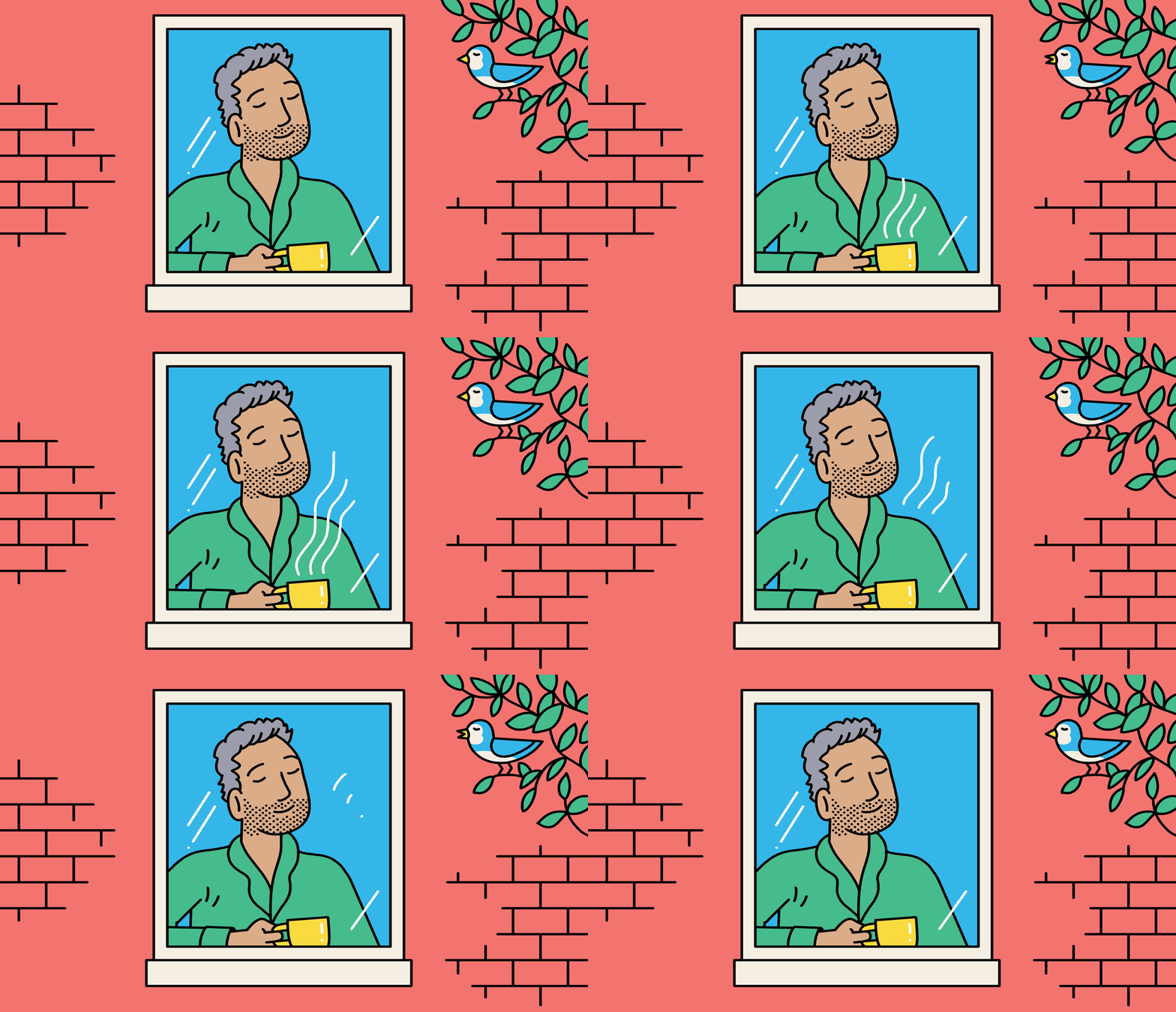
Getting off to a great start in the morning can positively influence your health and mood.
Sam Island
How we begin each morning can set the tone for the rest of our day. A sunrise routine that nourishes your body and eases you into daily life could significantly reduce stress, which is linked to a whole host of health problems in older adults.
“With stress, the body releases a lot of adrenaline and noradrenaline and other chemicals that are stimulants, and it makes us anxious, nervous, and [it’s] difficult to concentrate and be successful at things,” says Dr. Walter Gaman of Executive Medicine of Texas in Southlake, Texas.
More Ways to Benefit
- Related Benefit 1
- Related Benefit 2
- Related Benefit 3
- Related Benefit 4
- Related Benefit 5
A healthy morning routine also helps you figure out what you want to accomplish. This can be especially important for older adults who have retired and transitioned away from the familiar daily rhythms of the working world.
Here are 25 of the best ways to prepare for your day.
1. Don’t look at screens two hours before bed
Unwinding with a TV show or a movie before bed may be your nightly ritual, but experts recommend avoiding screens for at least two hours before bedtime. “The blue light from the screen messes with our melatonin production, and it can interrupt our sleep cycle,” says Robyn Culbertson, a physical therapist with the Medical University of South Carolina Outpatient Therapy Clinic at MUSC Health in Columbia, South Carolina. “People watch TV and scroll on their phone and then wonder why they’re tired the next day and didn’t sleep well,” says Gaman. To unwind a couple of hours before bed, listen to music or an audiobook instead.
2. Avoid too much alcohol before sleeping
For restful sleep, it’s important to minimize your alcohol intake. If you drink too much before bed, you can have a nervous system reaction when the alcohol is metabolized that can affect your gastrointestinal tract, says Dr. David D. Clarke, president of the Association for the Treatment of Neuroplastic Symptoms. Too much alcohol also makes you wake up to use the bathroom. Once you’re awake, it can be hard to go back to sleep because your system is activated by the withdrawal of alcohol. “Be kind to your system in the evening or at night so it has time to digest and process everything,” Clarke recommends.
3. Don’t overeat before going to sleep
Booze isn’t the only thing to avoid before bed. Eating a large meal at dinner, or eating right before hitting the sack, can cause heartburn that disrupts sleep, according to Harvard Health Publishing. (And some foods can be more problematic for sleep than others.) Additionally, when your belly is full from a late meal, you miss out on some of the morning muscle contractions that keep your gut healthy and typically happen on an empty stomach, says Clarke.
4. Don’t hydrate too late in the evening
It’s crucial to stay hydrated throughout the day to maintain good health, but the timing of your liquid consumption can impact your sleep. Culbertson recommends that you stop drinking fluids a few hours before bedtime to avoid constantly waking up to urinate. “Drink water throughout the day rather than waiting till the evening to get all your ounces in,” she says. “You don’t want to be drinking it all at the end of the day when you’re home, and then you’re up all night going to the bathroom.”
5. Sit quietly with your thoughts

Take 15 to 20 minutes in the morning to peacefully reflect on the day ahead.
Sam Island
Quiet reflection is an opportunity to let your mind wander. It’s also a great way to ease into the day. “Just sitting in a chair without distraction and reflecting upon life can provide comfort and grounding,” says Gaman, noting that 15 to 20 minutes should be sufficient. Reflection can also reduce stress and improve decision-making throughout the day, he adds. Gaman finds it helpful to marvel at nature while he’s relaxed and focused.
6. Check for sleep apnea
Snoring doesn’t just interfere with sleep. It often indicates a bigger problem. “If you snore at night ... there’s a good chance you have sleep apnea,” says Gaman. “If you have sleep apnea, you never get the refreshing REM [rapid eye movement] sleep, and you don’t sleep well.” Symptoms of sleep apnea include waking up gasping for air in the middle of the night and feeling tired all day. Gaman recommends talking with your physician about doing a sleep study.
7. Hydrate upon awakening
Drinking water when you wake up may not be the first thing that comes to mind, but it should be. “When you’re asleep, you’ve just done a third of your day without drinking anything, so the chances are when you wake up you’re going to be at the driest point of your day,” says Clarke. Each morning, both Gaman and Clarke drink water after waking up and before their first cup of coffee. Clarke says to bear in mind that people lose some of their sense of thirst as they age, making it easier to become dehydrated, Clarke says. “Aim to drink 16 ounces of water before drinking coffee to get hydrated,” Gaman recommends, adding that staying hydrated helps your joints, brain and entire body function better.
8. Write in a gratitude journal
Take time to write down what you’re grateful for each day. It can make a positive impact on how you feel. “I have a gratitude journal that I use, and when I’m in an appointment with my patients, I pull it out and I show them I have it myself. It’s useful,” says Dr. LaMont Moss, a psychiatrist with Kaiser Permanente in Colorado. What you write down doesn’t have to be prolific. The idea is to acknowledge three to five things in your life you’re grateful for each day. Gaman offers some examples: “I’m grateful for my health. I’m grateful for my wife. I’m grateful for my friend.” And don’t tap on a keyboard, either — use a pen and paper. Handwriting connects the right side of your brain with the left side and creates a muscle memory that’s linked to the gratitudes you’ve written down, Gaman explains. Expressing gratitude has been shown to reduce inflammatory markers in the body, improve sleep quality and boost mental health, he adds.
9. Practice deep breathing
Breathing deeply in the morning can be a calming start to the day, and it provides health benefits as well. For example, it “lower[s] cortisol levels and helps with blood pressure, and it helps with anxiety and stress,” says Gaman. Deep breathing is just what it sounds like: Take a deep breath, hold it, let it out. “Breathe in through the nose, breathe out through the mouth,” adds Gaman, who recommends five minutes of deep breathing exercises after you wake up.
10. Get some sunshine

A few minutes of direct sunlight early in the day offers a ton of mental and physical benefits.
Sam Island
Spending some time soaking up the sun in the morning is a relaxing way to begin the day, and research shows that sunlight is good for us in many ways, including helping our bodies produce vitamin D, which is good for our bones, skin and brain, says Culbertson. But don’t spend too much time out in the sun, because that can raise your risk of skin cancer. If you’re going to be in direct sunlight for more than a few minutes, wear sunscreen, a hat and sunglasses.
11. Try some meditation
Dedicate a few minutes every day to meditation . It can help your body and mind relax. “A two- or three-minute meditation allows us to slow down, think about what’s going on, slow our thoughts and relax,” says Moss. While meditation is typically used in the context of mental health, there’s also a lot of data about how it can help with chronic pain and other physical illnesses. “If we could take a few minutes out of our morning to help us feel better physically, it ends up helping us mentally as well,” Moss says. Many apps and platforms offer age-appropriate meditation programs; check out Calm, Headspace and Simple Habit.
12. Take time to make social connections
The morning is a great time to connect with those you care about and make plans with them. “Social connection is extremely important, especially as we get older,” says Moss. As people age, isolation becomes more common, so it’s important to actively seek out connections. In the mornings, Moss suggests asking, “How am I going to connect with people today?”
Calling or texting someone is an easy way to keep in touch; or arrange to meet in person for a coffee. “You can text-message your close friend and start the conversation in the morning, [or] call them. No matter what’s going on with you physically, you can still stay connected to your friends and family in the world,” says Moss.
13. Stretch your body
“Stretching is important for all ages, but especially as we get older, we start developing osteoarthritis, stiff joints and stiff ligaments,” says Gaman. Some stretches can be done while you’re still lying in bed, such as a lumbar twist or a hamstring stretch, says Culbertson. Once you’re up and moving, she recommends doing some light cardio exercises to warm up your muscles before you begin a more vigorous stretching routine.
There are two types of stretching: dynamic stretching, which involves moving through a full range of motion to warm up; and static stretching, which involves holding a stretch for a set period of time. Culbertson says dynamic stretching can be your warm-up, though most people are used to static stretching. For example, she suggests “neck stretches side to side, forward, back, loosening up some arms [and] cross-body stretches with the shoulders, just to get everything moving.” She recommends back stretches, too: “I like to do some low back stretches because just as we all age, if we’re sitting down a lot during the day, our back tends to get a little tight.”
14. Avoid social media and news for the first hour
If you roll out of bed and your first instinct is to pick up your phone and check social media or the news, reconsider. Getting up and scrolling through your Facebook account, Instagram, a news site or emails isn’t the best way to begin the day. “It doesn’t give the brain a chance to set and be focused whatsoever,” says Gaman. He recommends waiting an hour after you wake up before looking at your news or social media to give your mind a chance to prepare to the day.
15. Do a puzzle

An early-morning puzzle routine stimulates brain activity.
Sam Island
An online or physical puzzle can be a stimulating and immersive activity for the brain. “It helps you focus on what the task is at hand, because you have to pay attention to the pieces and figure out where they fit,” says Culbertson. She likes Wordle and puzzles on the New York Times website: “I do those in the morning to wake myself up.”
16. Do a workout
Exercise is important throughout our lives, and it becomes even more essential as we age. Planning a workout routine in the morning is a great way to get the day started. Plus, when you’ve finished, you know you’ve gotten your exercise in for the day. “Our bodies need exercise more than ever, and the type of exercising we do is going to change,” says Moss. “We’re not taking on the same kind of physical load that we did when we were younger.”
The U.S. Department of Health and Human Services recommends that people get a minimum of 150 minutes of cardiovascular activity every week, which breaks down to 30 minutes a day over five days. “The intensity level is what’s important,” says Culbertson. How can you tell if you’re exercising hard enough? She says you should be able to have a conversation but you shouldn’t be able to sing. Choose your favorite ways to exercise, whether it’s jogging, yoga or riding a bike. “Whatever exercise it is that you like to do, that’s the one you should do,” Culbertson says. “Don’t try to fit something into your life that makes you miserable.”

17. Find something that makes you joyful
Take a moment in the morning to think about what brings you joy. “I work with a lot of patients whose stress levels have reached the point of causing them to have physical symptoms,” says Clarke. He recommends that they start their day with “something that is only about their own joy, their own satisfaction — something that they are doing for themselves.”
18. Eat a nutritious breakfast
Make sure that your first meal of the day has plenty of nutrition and calories. Protein and fiber are key ingredients. Clarke says fiber is good for the microbiome and helps the healthy bacteria in your gut thrive, while protein becomes more important as people age. “Once we’re over 55, especially in men, the muscles start breaking down and get weak, and the only way to prevent that is to eat high-quality protein and do some exercises,” says Gaman, who suggests a high-protein breakfast including foods such as egg whites, Greek yogurt or a protein shake.
19. Stroll outside
Starting off the day with a walk outside can set you up for success. A little stroll in nature is not only good exercise; it also boosts the muscle contractions that help clear waste products from the gastrointestinal tract, says Clarke. “A brief morning walk stimulates the circulation [and] helps your blood pressure,” says Gaman. Exposure to natural light helps your circadian rhythm, too.
20. Listen to music

Whether it's laid-back or upbeat, music can be the perfect food for your mood.
Sam Island
Your favorite tunes can set the mood for the day. Culbertson says her choice of music depends on what she has on her agenda. “Do you need to go into your day a little more relaxed, or go into your day amped up?” she asks. If she has to give a presentation, she’ll listen to laid-back music, but if she’s seeing patients, she wants more upbeat songs to motivate her.
21. Read for pleasure
Reading a novel, a few poems or a magazine article is another healthy morning routine. In a study published in Frontiers in Psychology in 2022, adults between 60 and 79 years old spent eight weeks either reading leisurely or actively doing puzzles. The researchers found that reading each day could help counteract age-related memory loss.
22. Do one thing to put yourself first
Practice an act of self-care as a morning ritual, “a simple act of putting yourself first at the beginning of the day,” says Clarke. Start with a small declaration of what you’re going to do or achieve. “You deserve to be on the list of people you take care of,” he says. It doesn’t have to be bold or big — “It may be something as simple as taking a cup of coffee or tea outside and being in a natural environment for a little while.”
23. Take morning medical prescriptions
Remembering to take prescription medication in the morning is important, especially for drugs you may need to take on an empty stomach, says Gaman. For example, there are drugs for Parkinson’s disease that are best taken an hour before eating or two hours after eating, he says, since the protein in a meal may interfere with absorption. People on thyroid medication generally need to take it half an hour before eating or drinking. Taking your medication at the same time every day can also ensure that you don’t forget to do it.
24. Get dancing
Dancing to a couple of your favorite songs is an excellent way to kick off the day. “The movement is good for your endorphins and just kind of perks your mood up a little bit,” says Culbertson. The best part of dancing at home is that no one’s watching. “It doesn’t matter if you don’t have any rhythm,” she adds. Evidence shows that older adults who engage in dance as part of socializing might benefit from improved cognition, according to a systematic review in the Journal of Cognitive Enhancement published in 2018.
25. Check your blood pressure
“For some of my patients, I always recommend they check their blood pressure in the morning, and keep a journal of how they’re feeling,” says Culbertson. Tracking how you feel provides important information when you see your doctor, especially as fitness levels change. Your blood pressure can fluctuate, so keeping a record over time can be helpful. (Healthy individuals may not need to track it.) And if you start working out, your cardiovascular system will improve and you may lose some weight, which Culbertson says could also lower your blood pressure slightly.

AARP Membership
Join AARP for only $15 per year with automatic renewal. Get instant access to members-only products and hundreds of benefits, a free second membership, and a subscription to AARP The Magazine.
You Might Also Like