



AARP Hearing Center

































































James Yates
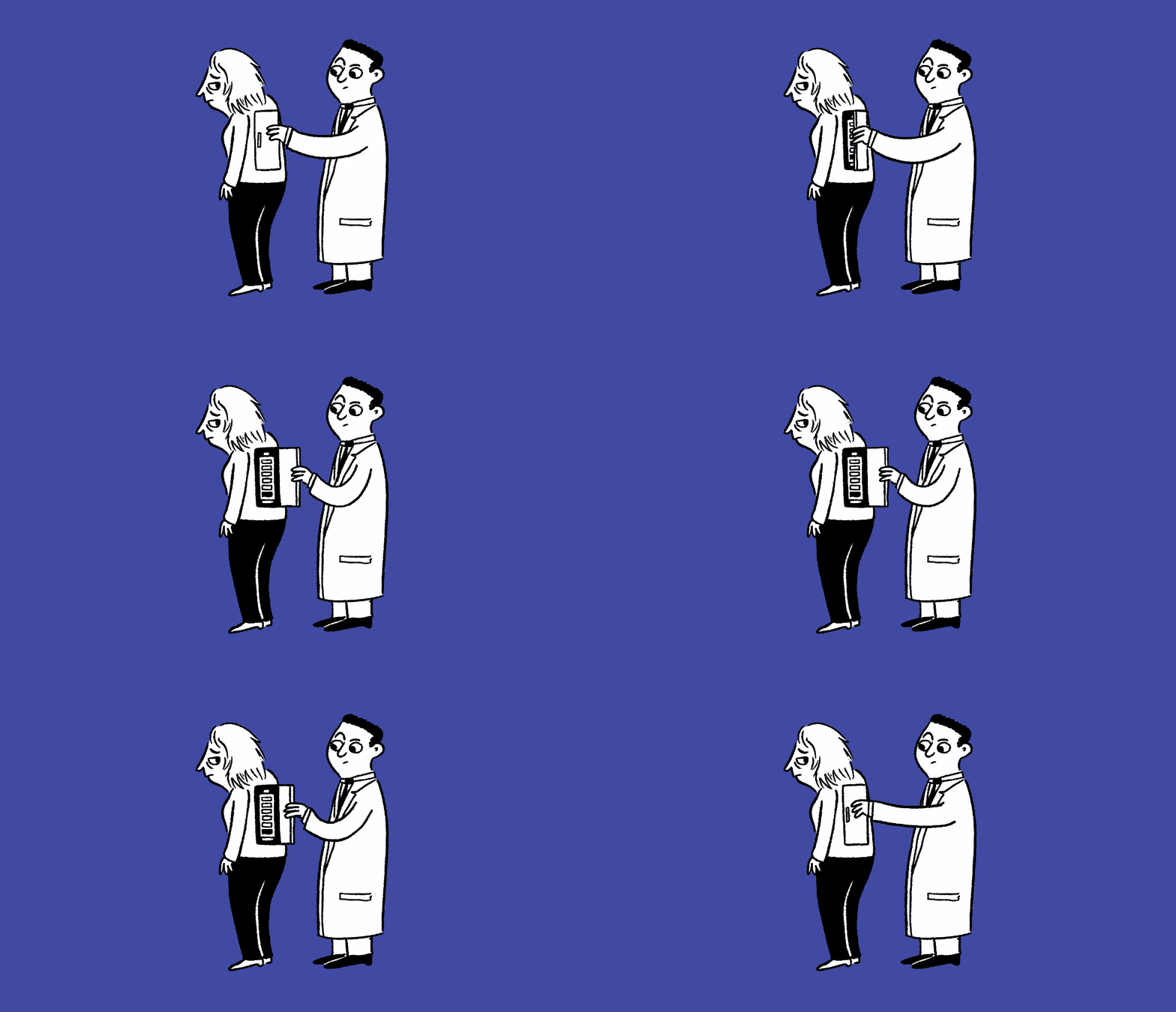
Based on my recent blood test, my doctor told me that my thyroid is sluggish. What can I do to boost it, both medically and holistically?
Just last week, a patient came to my office exhausted and frustrated. “I’m doing everything right,” she said, “but I can barely get off the couch.” Her recent thyroid test told the story. Her TSH level was elevated and indicated hypothyroidism. Your situation sounds similar, so I want to share what I told her: “This is fixable. You have more options than you may think, and you’re not alone.”
Older adults are at an increased risk of developing some form of thyroid dysfunction, so the overall incidence of thyroid disorders is increasing simply because we’re living longer. The good news? Whether your thyroid is overactive or underactive, you can be helped.
Let me walk you through what’s probably happening and what you can do about it.

Ask Dr. Adam
Adam B. Rosenbluth, M.D., is an internist and cardiologist in New York City. Each Monday, he’ll weigh in on your questions about how to make your body work better for you. His AARP book will be published in 2027. Join in on the conversation on social media @dradamrosenbluth to learn to move the needle on your personal health in an achievable way.
Your thyroid is a butterfly-shaped gland at the base of your neck, just above your collarbone. Despite its small size, it’s literally the power manager of your entire body. Your thyroid regulates the speed of your heart rate, your energy levels, body temperature and digestion. For instance, an underactive thyroid can leave you constipated, while an overactive one might cause diarrhea. It affects your mood, weight, skin texture, hair and cognitive function.
When your thyroid isn’t producing enough hormone, it’s called hypothyroidism. Think of it like turning down the metabolic control dial in your body. Everything slows. You might feel perpetually tired, gain weight despite careful eating and exercise, struggle with constipation, experience brain fog or feel freezing cold all the time. Your skin might become dry, your hair may thin, and you just feel low and slow.


You Might Also Like
Could It Be Guillain-Barré Syndrome?
Your risk for GBS goes up with age. Find out how to tell if you have it
Could Stimulating One Nerve Stop What Ails You?
The vagus nerve plays a key role in how the body functions. Here’s how to activate it
I Survived My Colonoscopy (and You Will Too!)
Colorectal cancer is no joke, and a colonoscopy is less horrible than you may think