
AARP Hearing Center









































25 Great Ways to Leave a Legacy That Lasts
Take these steps to ensure you’re remembered long after you’re gone

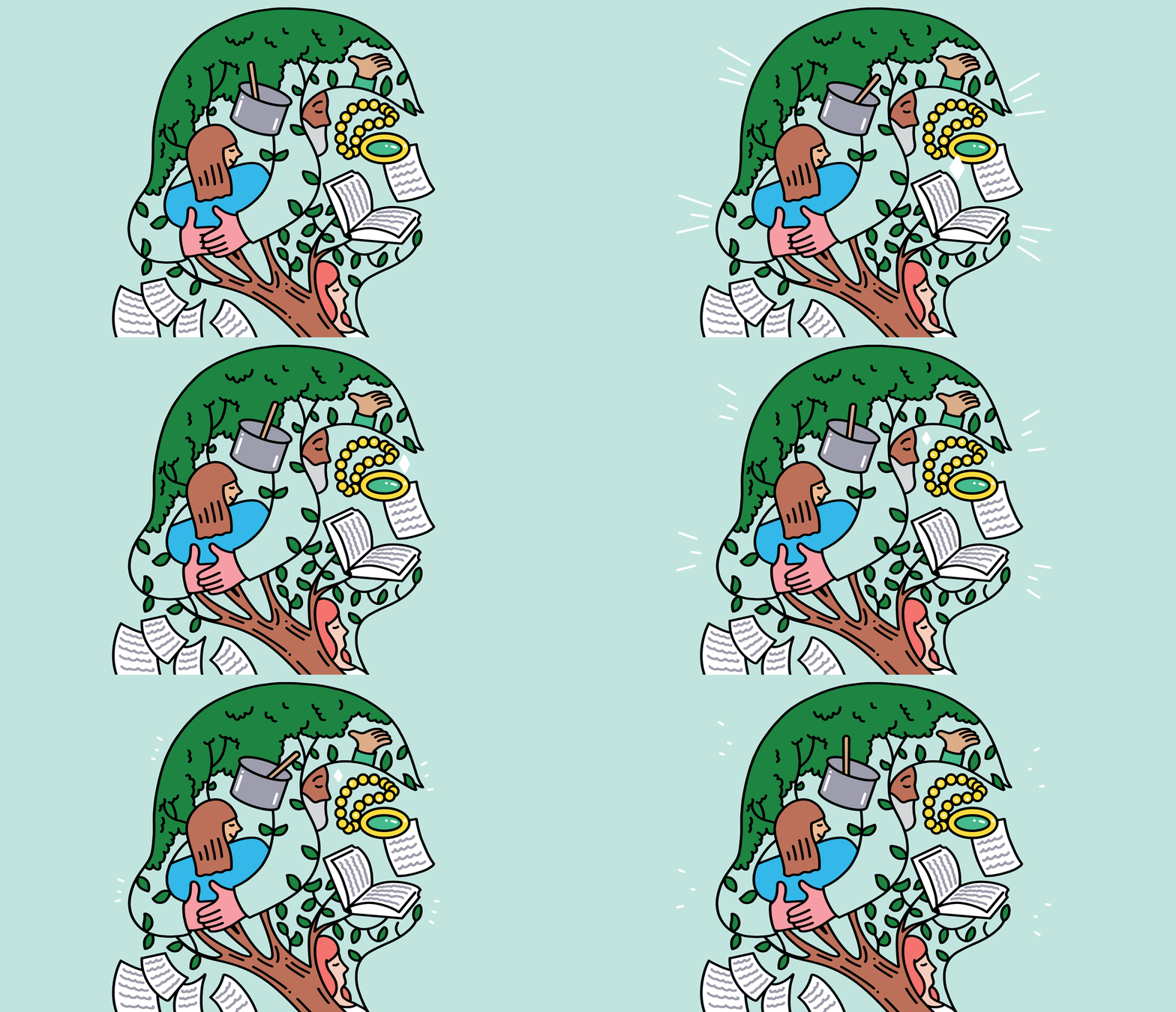
A legacy means different things to different people. Read on to discover what it might mean to you.
Sam Island
Key takeaways
- Explaining the stories and meaning behind heirlooms, photos and records helps future generations value and keep them.
- Many legacy efforts work best when started during your lifetime, so that you can guide decisions and clarify intent.
- Passing along skills, time and attention can shape others’ lives as powerfully as financial gifts.
- Clear planning and documentation reduce confusion and ensure your values are carried forward.
A legacy means different things to different people. For some, it’s an heirloom passed down from one generation to the next. For another, it’s values and guidance shared with future generations. Legacy can also mean a charitable donation, or the gift of being present and supporting others who are important to you. Regardless of how you define it, the desire to leave something meaningful behind reminds us that what we do today echoes long after we’re gone. Here are 25 ways to leave a lasting legacy.
1. Write letters to loved ones
Documenting your thoughts and values for future generations creates lasting emotional connections, preserves memories and offers encouragement. “It leaves a tremendous blessing for the recipient,” says Sarah Neller, McMahan-McKinley Endowed Professor of Gerontology at the University of Tennessee, Knoxville. “It’s a way to have symbolic immortality as you live on in the minds and hearts of others after you’ve gone.”
Neller says you must first get into the mindset of the recipient you’re writing for. But that’s what makes the exercise more relevant, and beneficial, for the recipient.
2. Create a family tree or genealogy record
A family tree or genealogy report preserves your family’s story and values for future generations. Sites like Ancestry, MyHeritage or FamilySearch create a tangible legacy that connects relatives across time.
“It can be very meaningful, and welcomed by members of the family,” says Rebecca Allen, executive director of the Alabama Research Institute on Aging at the University of Alabama in Tuscaloosa. Allen completed such a project for her own family, tracing her late husband’s Sicilian roots and discovering other interesting family connections in Malta, southern Italy and North Africa. “This type of genetic information provides a rich means of connection across the generations,” she says. You can also annotate it with additional family history, lessons and memories.
3. Preserve heirlooms with written explanations
Without context or a story, your uncle’s classical guitar or your grandmother’s pressed flower collection has little significance. That’s why you should document the meaning and narrative behind your heirlooms. It will build a connection with younger generations, which could also ensure that an important keepsake isn’t sold or thrown out.
“I hear people say, ‘Oh, my mom or dad passed away, and there were boxes of photo albums … I wish I knew who all those people were,’” says Ken Dychtwald, psychologist and cofounder of Age Wave, a consultancy based in Orinda, California, that focuses on aging populations. He suggests sitting down with younger family members and explaining the significance of old pictures to them.
More Ways to Benefit
- Related Benefit 1
- Related Benefit 2
- Related Benefit 3
- Related Benefit 4
- Related Benefit 5
4. Mentor colleagues or younger family members
“As we grow older, we wind up having both vocational skills and knowledge,” says Dychtwald, who advises passing those skills along by taking on a mentee. For example, a retiring teacher might mentor brand-new educators by sharing practical advice on classroom management, lesson planning and building relationships with students.
Over time, that guidance can shape how those educators approach their own careers — and how they in turn mentor others. Dychtwald also recommends approaching mentorship from a slightly different angle by becoming a “men-tern.” Basically, “the idea is that I’ll teach you some things from my vantage point, but I also want to learn some things from you from your vantage point,” explains Dychtwald.

Recipes are a great way to honor and celebrate family connections.
Sam Island
5. Pass down traditions or recipes
Perhaps you have an old tin with holiday cookie recipes handwritten by a distant relative. Maybe you and your family gather on the summer solstice for a bonfire and s’mores. Family traditions and recipes provide a rich means of connection across generations, says Allen. Share your tradition of Sunday nature walks, or pass along your special spaghetti sauce recipe.
6. Volunteer regularly
Volunteering for a cause you care about can strengthen organizations, improve communities and inspire others to continue the work after you’re gone. “This is an example of living according to your values and living a purposeful life,” says Allen, noting that completing meaningful work helps “pay it forward.” You can mentor youth, join a group that restores local parks or volunteer at a food pantry. These contributions create ripple effects that impact lives within your community for years to come.
7. Put land into a conservation easement
If you own a lot of acreage or farmland, that property can be a big part of the family story. Start by identifying what part of the land — farmland, open space, forest and/or water — you might want to protect, advises Johnny Klemme, author of American Family Farmland: Preserving Values and Creating Wealth and a principal at Geswein Farm & Land, a specialized real estate agency headquartered in Lafayette, Indiana. “A land adviser can also help you understand current land value, future marketability, and the options you and your heirs will have under an easement,” he says.
Next, connect with a reputable land organization, such as the American Farmland Trust, the Land Trust Alliance or The Farmers Land Trust, to evaluate the property. They will work with you to define what’s allowed and what’s restricted. “Then bring in an attorney who has experience with easements, and a tax adviser to walk through the planning implications,” says Klemme.
While a will transfers ownership of the land, an agricultural conservation easement protects it. That allows you to “keep the land productive, cared for and aligned with your values for future generations,” Klemme says.
8. Start a scholarship
Support education and leave a lasting impact on your community by establishing a scholarship. Start by defining the scholarship’s purpose, the types of students who should receive it and the monetary amount. Decide whether it will be managed by a school, a nonprofit or you personally. Organizations like Bold.org, Scholarship America and Scholarships.com provide clear guidelines to help you set eligibility criteria, define an application process and establish a selection method.
9. Donate creative works or research archives
Personal papers, manuscripts, photographs or research collections don’t have to fade with time; they can become part of the historical record. Donating these items allows your work to educate and inspire future generations. Find an institution that you value and respect, and start the conversation early, recommends Christopher Rambus, an attorney at the High Net Worth Practice Group at Bodman PLC in Detroit. “If you have records of historical significance that you’d like to donate to a library of a university, for instance, that usually entails an agreement that a person enters into while they are alive,” he says. Outline the terms of the gift so you can dictate how it will be used, and in some cases, for how long. “If you leave it to your spouse or leave it to your attorney to follow through with after you die, while they may carry out your wishes, I think most clients like having the peace of mind of having already negotiated the terms of their gift ahead of time,” says Rambus.

Preserve the details of your life in a way that's shareable for future generations.
Sam Island
10. Record your life story as a book or video
Documenting your life story is a powerful way to preserve memories, values and experiences for future generations in an easy-to-share format. Leslie Miller, a retired church administrator from Livonia, Michigan, made an online book for her daughter. “For me, it was a wonderful experience, going back through memories,” says Miller, who created the publication through weekly prompts that her daughter was able to select from.
Platforms like Storyworth, Shutterfly and BookBaby offer guides and tools to create a keepsake book you can share with family. Miller recommends making time for the project. “It’s going to be a process to do it well and do it right,” because you’re sharing stories and memories that matter to you and your family, she says.
11. Be present
Giving time to children and grandchildren can be more valuable than any material gift, because being present shows the people you love that they matter. Listen to a family member. Show up for a friend in crisis. Support someone during an exciting milestone. This is how you create memories and strengthen your bond. “That intergenerational connection is pivotal and part of human development,” says Allen. “It’s something that we need to be more mindful and conscious of investing in, now that we’re all online.” Allen recommends cultivating that mindset now, because being present meets many of our emotional and physical needs.
12. Develop educational resources
Write a textbook or guide to educate students on a timeless topic. Document your training methods for specific business procedures. Record a podcast or an instructional video that teaches a topic or tells a story that educates and inspires a wide audience. Educational resources can leave a lasting legacy because they continue to teach, uplift and shape minds long after you’re gone, says Dychtwald. It can also be nourishing to you as you take the time to “pass along some of what you’ve learned, or some of your resources, or some of your insights.”
13. Create art, music, film, books, essays or articles
Art and storytelling capture moments in our culture and history, and they’re shaped by how we see events unfold and how we experience them. Painting a picture, recording a song, filming a short video or penning a memoir or essay can be fulfilling in their own right, but such activities also create a record of what life felt like at a particular time or place.
And you don’t need to be a professional to share your creation. You can let your legacy live on by posting it on social media, publishing a novel or short story using one of the many self-publishing platforms, or uploading songs or movies to YouTube.
14. Teach skills that outlive you
No matter your life path, you’ve learned skills along the way that are worth passing on to the next generation. Maybe you’re a master woodworker, a long-time farmer or an experienced financial planner. Each of us has a skill we can share, says Dychtwald. He advises seeking out people who would enjoy hearing what you know.
Don’t hoard these skills or keep them to yourself, he recommends, adding that when you share what you know, those skills become a living extension of your influence.

Trees are a living testament to your life, and they also beautify a spot that's meaningful to you or those you love.
Sam Island
15. Plant trees or restore natural spaces
Participate in a tree-planting event, or donate your time and skills to restoring a natural space. Both are great ways to leave a living legacy with an environmental impact.
“We know, psychologically, how important it is to have green space and places to de-stress and connect,” Allen says, adding that nature-based projects create benefits that last for generations. Natural spaces don’t just serve as eco-friendly tributes that loved ones can visit. They also provide high-quality habitat, shade and other benefits to the communities where they’re planted.
16. Set up charitable funds or endowments for a university
By donating to a university or an educational program, individuals can support scholarships, fund research or strengthen programs. These gifts not only open doors for students; they create lasting impact in the fields and communities that matter most to the donor. Unlike a one-time gift, endowments are typically invested, so the funds continue supporting students and programs year after year. That allows a donor’s impact to extend far beyond their lifetime.
If you’re considering “a big gift ... you want to start sooner rather than later while you’re still alive,” advises Rambus. This way, “you can explain your ideas, your goals and your intentions much better than your attorney or a family member can, that you leave instructions to.” Charitable giving can be structured so that it’s factored into your estate plan, which Rambus advocates revising throughout your lifetime to ensure it aligns with your legacy’s needs.
17. Include charitable giving in your estate plan
By designating a portion of your assets to a nonprofit, foundation or community organization, you can support causes that reflect your values and make a lasting impact, says Rambus. For example, you might leave a percentage to a local food bank, fund conservation work in your home state, or support a community foundation that provides grants for education and health programs.
These gifts, whether through a will, trust or beneficiary designation, can help the organizations and missions you care about continue their work for years to come. “Find causes that you truly support, and while you are alive, learn as much as you can about that specific organization or university’s giving policy,” Rambus says. “The earlier you start, the better chance you have to incorporate your wishes as precisely as you envision them.”

18. Leave places better than you found them
Make improvements to the places that matter to you so the benefits continue to flow to others. That idea can take many forms: restoring a historic building, creating a better organizational structure in your company, funding a library or planting trees. Such actions showcase stewardship and may inspire others to do the same.
19. Write a legacy letter
A legacy letter shares your life lessons, values and memories so they’ll benefit family, friends and future generations, according to Neller. “In a will, you say who gets the house, who gets the car,” she says. “But nowhere do you say ... ‘I am so glad that we were able to live in a relationship with each other.’ ” Neller adds that a legacy letter serves as a heartfelt companion to the formal asset allocation or inheritance process.

Teach younger generations how to run the family business. It's good for them — and the company's future.
Sam Island
20. Train and empower successors
Chris Yount, a former CEO and current board adviser to family-run businesses, says that if you own a company, it’s important that you “set clear expectations for your children, and clarify the responsibilities of each role they assume” as you pass along critical knowledge, leadership skills and a long-term vision. For instance, a landowner might gradually involve their children in financial decisions, land management and equipment investments to prepare them to run the operation themselves.
A small-business owner might spend months, or even years, training a longtime employee to manage cash flows, negotiate with suppliers and lead staff. By preparing others to carry the work forward, business owners create a legacy that extends beyond their own careers.
21. Build a community
Select an area in your community where a small gesture might make a big impact. For example, in Delaware, the Sigma Zeta Omega chapter of the Alpha Kappa Alpha Sorority organized a “legacy library” full of age-appropriate books for and about people of color for the Innovative Kids Early Learning Academy. It filled a void in the community and also provided an educational resource. Other things to do include starting a community garden, organizing a fundraising event to support a local charity, or contributing to local projects, such as joining a knitting circle for a cause or donating regularly to a local food pantry.
22. Live your legacy
Start by identifying areas of change or personal growth that will leave a lasting impression on your family, friends and community. Maybe it’s through volunteering regularly in the community. If you’re a corporate executive, you could prioritize fairness and integrity for every business transaction, setting a lasting example for employees and family members.
We often think about legacy as a tangible thing. When we conceptualize it as something that everyone leaves behind, whether it’s a positive legacy or a negative one, it really frees people up to believe in themselves: that they do have something they can leave behind; that they can help construct and craft that memory.
23. Be a role model
Demonstrate integrity, kindness, perseverance or generosity in your daily life. It’ll show others how those values can be lived out in real situations. “At the end of your life, you’ll have two résumés,” says Dychtwald. “One will be your career résumé — what you did, how much money you made, what kind of house you had — and nobody will care about that.”
The other résumé is what Dychtwald calls the “eulogy résumé,” which reflects who you were as a person, what you stood for, what you cared about and who learned from you. “We should all keep that in mind,” he says. “People are taking note of our values, our principles and our priorities,” which become part of the lasting impact you leave behind. Model the behaviors and attitudes you want others to carry forward and repeat.
24. Write, and share, an ethical will
Unlike a traditional will, which distributes assets, an ethical will shares the wisdom behind the life you’ve lived: what you believe in, what you’ve learned and what matters most to you.
Neller says that in her research, “one of the things that I found is that it doesn’t just help the writer, it also helps the recipient.” It’s a document that “tells about the person and how they want to be remembered, but it also [provides a message] to the recipient that says, ‘I love you’ or ‘I’m proud of you’ or ‘when I’m not here anymore, here’s how you should carry on without me.’ ” Use stories, reflections and personal messages to write an ethical will that provides guidance to loved ones and helps them understand not just what you left behind but why. Your insights can strengthen family connections and provide a sense of identity and continuity for generations to come, making your values and experiences part of the legacy they carry forward.
25. Support a public project
Improving public spaces, education or culture can leave visible, enduring marks that remind others of your values and impact. Contribute through donations, endowments or volunteer work. Or sponsor specific features such as a park bench or mural. To get started, reach out to municipal parks and recreation departments, cultural affairs offices or public works departments to see if there are any upcoming projects you can support. Local school districts and community foundations can also be sources for ideas. Start with a phone call or an email to gather information. Then decide if you want to contribute money or time to the effort.
The key takeaways were created with the assistance of generative AI. An AARP editor reviewed and refined the content for accuracy and clarity.

AARP Membership
Join AARP for only $15 per year with automatic renewal. Get instant access to members-only products and hundreds of benefits, a free second membership, and a subscription to AARP The Magazine.
You Might Also Like
AARP's Smart Guide to Genealogy
29 tips to help you discover your roots and leave a lasting family legacy