



AARP Hearing Center

































































Enjoy Winter Activities in These 7 National Parks
Try snowshoeing, cross-country skiing, snowmobiling, ice skating and more — without the crowds
By Lauren David
Published February 5, 2026
Venturing to a national park in the winter often means blankets of snow and winter activities to try, such as snowshoeing, downhill skiing, cross-country skiing, snowmobiling and even ice climbing. One of the great benefits is that you have far fewer people exploring these parks in the winter, and because of the colder weather, you have to deal with how it's different and how you approach it, says Cory Lawrence, CEO of Off the Beaten Path, a company specializing in guided trips in national parks.
Be cognizant of the weather and the park’s conditions before arriving. “I would always recommend either looking online at the park-specific website or calling the visitor center,” says Becky Lomax, author of Moon USA National Parks. In winter, the weather is never static; it’s volatile, she adds. Reserve accommodations well in advance and ensure places are open. Winter lodges, convenience shops and visitor centers can be closed. You need to be prepared to be on your own, and in some places, to expect no cell service, Lomax says.
Then it’s time to pack warm clothing. Think layers, including appropriate waterproof or water-resistant gear, hats, gloves and boots so you don’t get soaking wet, Lomax adds. Bring micro spikes for your boots if you plan on hiking or walking in any park that has freezing temperatures because you don’t want to hit an icy section of trail and fall, she cautions.
In 2024, 55 percent of national parks saw an increase in average visitation in February through June and October through December, according to the National Park Service. Older adults 50 to 69 were more intent on planning a domestic trip than those age 70-plus, while Americans 50-plus expected to average 3.6 trips in 2025, according to AARP’s 2025 Travel Trends survey. With that focus on domestic travel, consider these seven national parks to enjoy winter activities.
Voyageurs National Park, Minnesota

Spanning 218,000 acres of forests, lakes and streams, Voyageurs National Park transforms in the colder months, when the waterways freeze. Ice fishing is a popular activity in the park. People bring or rent an icehouse — often aluminum and insulated with foam — that may be set up for a day or up to a week, while others rough it by sitting on a bucket while fishing through a hole drilled in the ice, says Claudine Arndt, development and communications manager for Voyageurs Conservancy, an official nonprofit working directly with the national park on recreation and conservation efforts.
Explore the park by snowmobile on 110 miles of groomed and staked trails, cross-country ski or snowshoe. By visiting in winter, there’s a possibility to see the northern lights, as the park is a certified International Dark Sky Park, Arndt says. Boreal Stargazing Week, from Feb. 9 to 15, is dedicated to the night sky.
Costs: Rent skis or snowshoes for $10 a pair for adults and $5 for kids 16 and under, at the Rainy Lake Visitor Center. You’ll need a Minnesota fishing license to ice fish. Prices start at $14 for 24 hours for nonresidents to $54 for 14 days. Icehouse registration is also required.
Great Sand Dunes National Park & Preserve, Colorado

When there’s enough snow, snowshoeing, cross-country skiing and downhill skiing are possible on the sand dunes of this park. There’s no ski resort in the park, so you’ll have to climb up the dune with your gear and then ski down. “Unfortunately, there is no gondola to take you back up to the top,” says Kale Mortensen, executive director of Visit Alamosa, the tourism group for Alamosa, Colorado, and the San Luis Valley region. “[But] it can be a good, nice workout for you.”
Winter is quieter, so there is plenty of opportunity to enjoy solitude in nature, he adds. At this International Dark Sky Park, “you get less light pollution in the winter,” and have a clearer sky, Mortensen says.
Costs: Rentals aren’t available in the park, so check this NPS list if you require equipment. There is no fee to snowshoe or cross-country ski.
Kenai Fjords National Park, Alaska
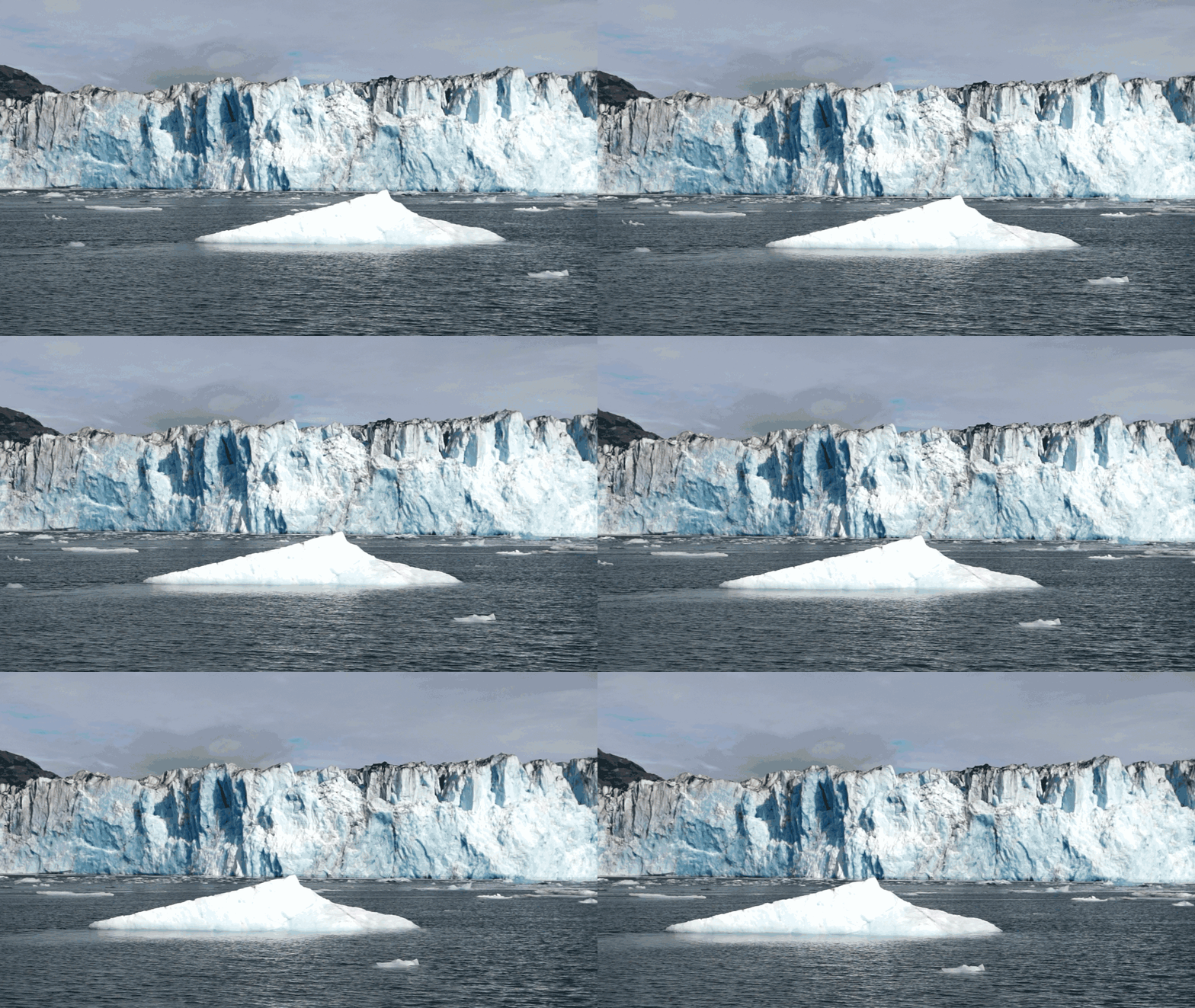
Most people visit Kenai Fjords National Park to see some of the 40 glaciers in the summer months. In winter, it can be hard to see the glaciers with the landscape covered in snow, Lomax says. The park is on the coast of Alaska, and when winter storms come in, she says, “they’re big, they’re volatile, they’re wild.”
The road to Exit Glacier Area, one of the glaciers in the park, is closed in the winter, so it’s perfect for snowmobiling, cross-country skiing and snowshoeing, Lomax adds. Ice climbing on the glacier’s terminus is seasonal from November to March. The National Park Service recommends booking a guided trip.
Snowmobiling depends on snow levels, so check whether it’s allowed during your visit.
Costs: Check the park site for the latest information on gear rentals. A four-hour snowmobile rental is $349 per person with Kenai Backcountry Adventures.
Olympic National Park, Washington

With almost a million acres of diverse ecosystems and hugging 70 miles of the Pacific Coast, Olympic National Park offers downhill and cross-country skiing, snowshoeing, sledding and tubing. Head to Hurricane Ridge, a ski resort within the park, to enjoy these activities. The runs face the interior of the park, so if it’s sunny out, you may get a view of Mount Olympus, at the center of the park, Lomax says.
Snowshoe on your own, join a ranger-led tour or rent a snow tube and relive childhood memories sliding down the hill at the tube park within the ski area.
Costs: $22 to rent shoes; $27 with poles. A downhill package with a helmet is $46. Tubing: $24 for 10 runs; the pass is valid for 30 days.
Mesa Verde National Park, Colorado

This Colorado park is known for the Pueblo people’s cliff dwellings, which are some of the best-preserved in North America. Many visitors tour them, but since the cliff dwellings are closed during the colder season, “most winter visits focus on scenic overlooks and short, walking paths along the Mesa Top Loop and Main Park Road,” says Naaman Horn, a National Park Service spokesperson. “From these areas, visitors enjoy sweeping landscape views, see cliff dwellings from above and explore mesa-top cultural sites.”
When there is sufficient snow, the trails in Morefield Campground are groomed, allowing for snowshoeing and cross-country skiing, Horn says.
Costs: Free snowshoe rentals are available at the park before noon each day.
Yellowstone National Park, Idaho, Montana and Wyoming
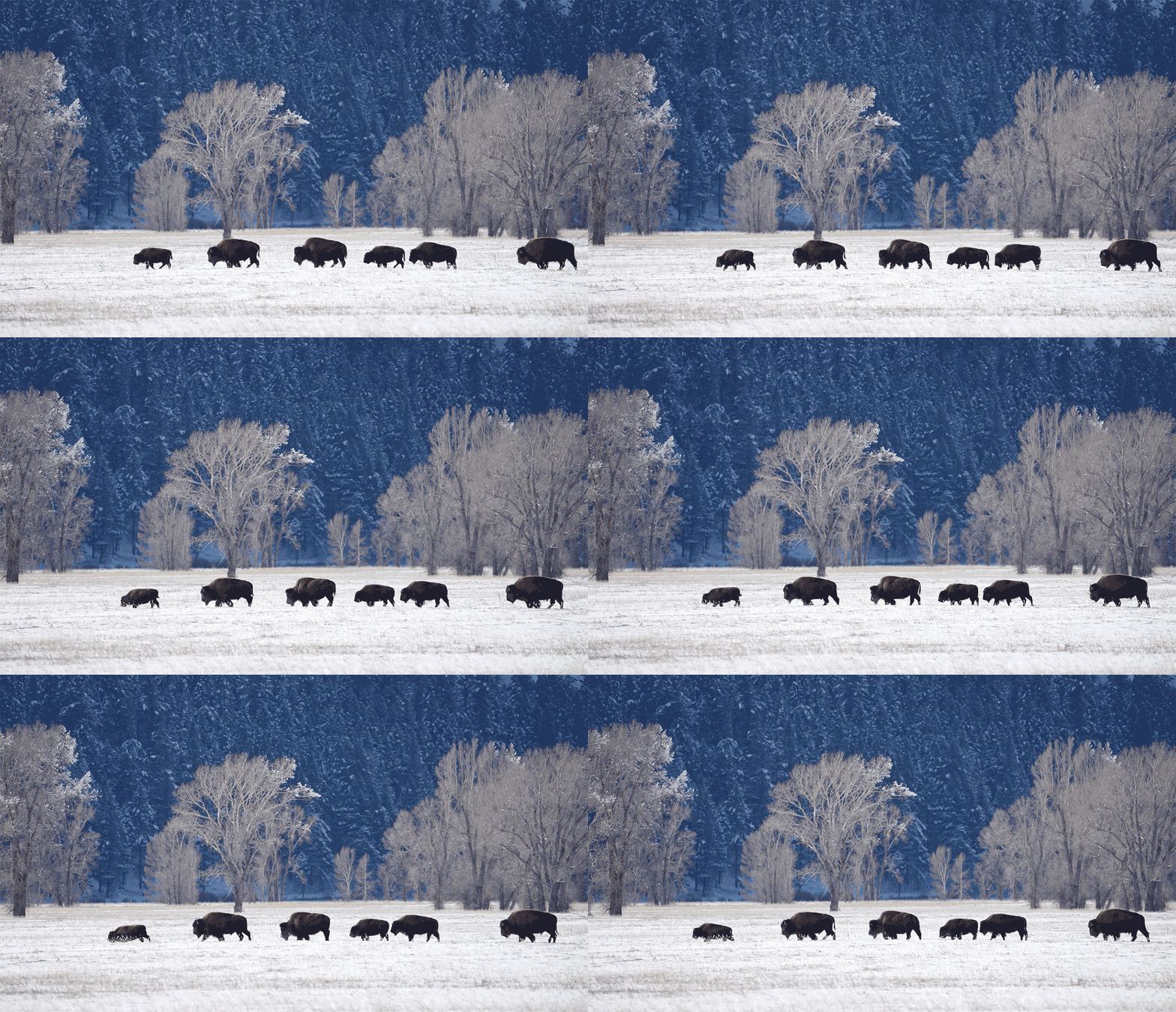
You won’t find traffic jams and huge crowds in the winter in this renowned park. Most roads are closed, except for the road between Mammoth Hot Springs and the north entrance, which is open year-round. The main way to access Yellowstone in winter is via snowmobile or snowcoach, a heated over-the-snow vehicle. Do your research before heading to the park, Lawrence says, because you’re reliant upon the transportation schedules of snowcoaches.
Unplowed trails and roads are available for snowshoeing and cross-country skiing, along with a few of the groomed trails. The boardwalks to the geothermal geysers, such as Old Faithful, are groomed for cross-country skiing and snowshoeing, Lawrence says. Rental gear is available at little ski shops in the heart of the park, he adds.
Spending the night at the Old Faithful Snow Lodge is “the most wonderful and unique experience” to wander around the Upper Geyser Basin, whether skiing, snowshoeing or walking with traction devices on your boots, Lomax says. Instead of 1,000 people in summer, you may be one of 30 people, she says.
Exploring the park via snowmobile requires joining a guided trip with one of the authorized companies.
Costs: A one-way ticket on a snowcoach is $173.66 with Yellowstone National Park Lodges. A two-hour snowmobile rental is $225 with Summit All Terrain Rentals.
Yosemite National Park, California
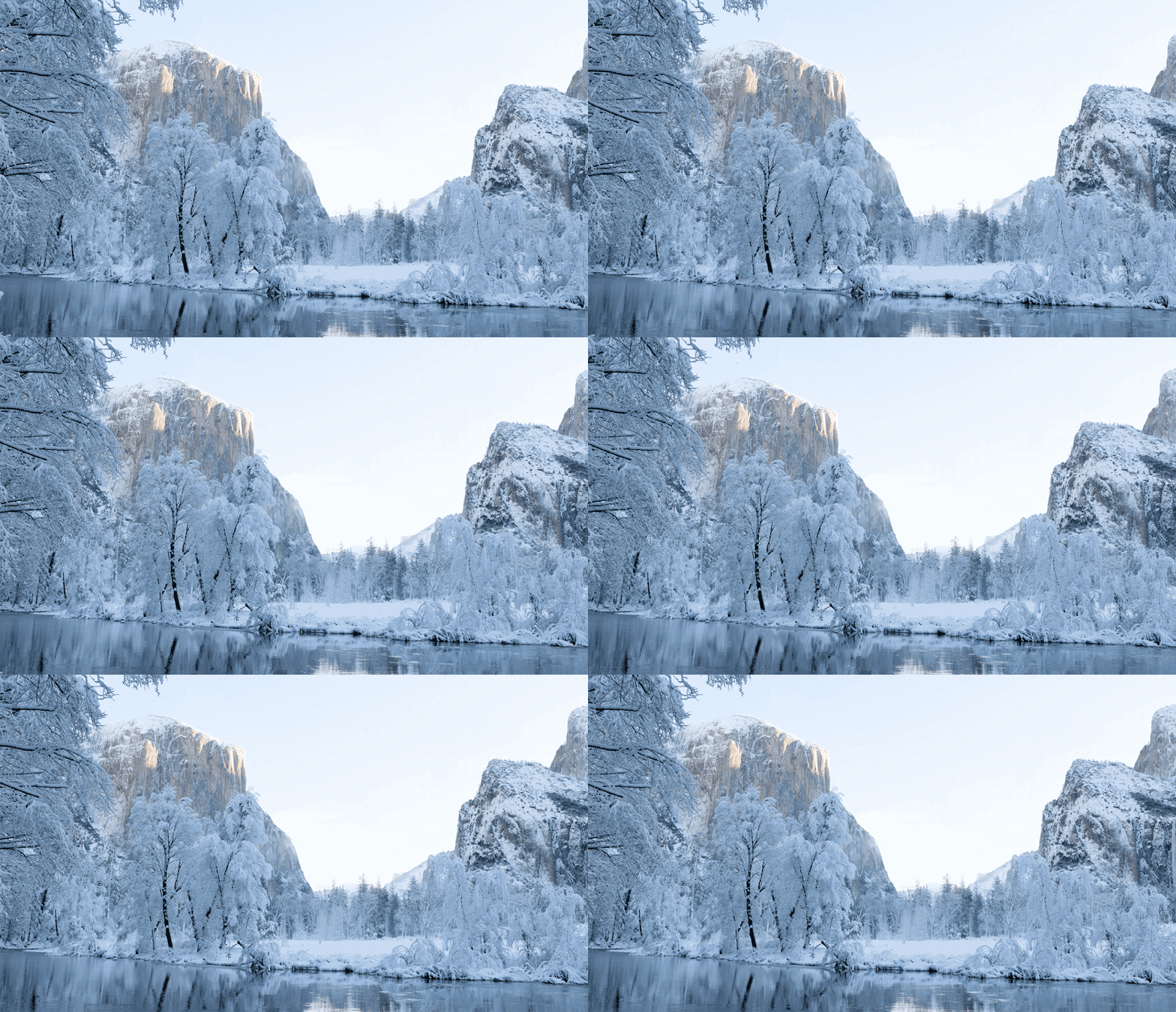
Yosemite, one of the country’s most iconic national parks, becomes a winter wonderland. Stay in Yosemite Valley and take a free shuttle to Badger Pass Ski Area. There you’ll find downhill skiing, snowboarding, lessons and rentals — you won’t have to rent gear from out of town and haul it in, Lomax says. For cross-country skiers, continue up to Glacier Point Road for views at the overlook. On a sunny day, you can see the whole valley and look over Half Dome and El Capitan, she says. Snowshoeing with free ranger-led walks is dependent on weather and staff availability.
Ice skating at the Curry Village Ice Rink has been a tradition since the late 1920s and is open from mid-November to early March, weather dependent.
Costs: For all lifts, an all-day ticket is $64; a half-day ticket is $56; $30 ticket for lower lifts; and $30 ticket for adults 70-plus during the week. A one-ride ticket is $5.50 for all lifts. All-day rentals for skis, boots and poles are $42.50; half-day rentals are $34.50.
Lauren David is a contributing writer who writes about food, gardening and health. Her work has appeared in The Washington Post, Dwell, Southern Living, marthastewart.com and other outlets.
More From AARP
National Parks Admission-Free Days in 2026
Visit a national park on these days and you won’t have to pay $20 to $35 to get in
Explore 5 Parks With Wheelchair Access
These beautiful landmarks have increased accessibility for wheelchair users
Explore 8 Stunning Dark Sky National Parks
See deep into space at these top spots, including Arches, Big Bend and Grand Canyon