
AARP Hearing Center









































10 Foods That Can Help Fight Off the Flu
What to eat or drink to build a stronger defense this winter
7-minute read


Getty Images
Key takeaways
- Plant-based whole foods provide nutrients that help the immune system protect against viruses such as the flu.
- Berries, beans, nuts, seeds and salmon supply vitamins, minerals or fatty acids that can support immune function.
- Water, broth, green tea and electrolyte-rich drinks can help prevent dehydration if you do get the flu.
The saying “You are what you eat” applies to your entire body, but it’s especially important when it comes to your immune system during flu season.
“As we get older, our immunity starts to decline, but if we get the right nutrients, we can help our immune systems do their jobs to protect us against viruses like the flu,” says Samantha Heller, senior clinical nutritionist at NYU Langone.
More Ways to Benefit
- Related Benefit 1
- Related Benefit 2
- Related Benefit 3
- Related Benefit 4
- Related Benefit 5
You can keep your immune system in tip-top shape this flu season if you focus on a plant-based diet rich in whole, unprocessed foods, Heller says.
Here are 10 foods that nutritionists recommend for flu season.
1. Green tea
Whether these particular tea leaves can really fend off the flu has been a source of debate among health researchers for years. But a 2021 meta-analysis published in Molecules involving more than 5,000 participants found that there is ample evidence to believe the beverage — and specifically the catechins that provide its antioxidant power — can help your immune system fight influenza, a.k.a. the flu.
Why Fluids Matter if You Have the Flu
Whether it’s water, electrolyte-rich beverages, broths or green tea (see above), you need liquids if you’re sick with the flu. Not only is it important to combat dehydration, but staying hydrated helps you maintain enough circulating blood volume to treat infection. (Just go easy on the caffeinated sodas and coffee.)
And yes, doctors say chicken soup may help with symptoms such as sore throat and congestion, while also providing water and salt that can help replenish what you lose when you have a fever.
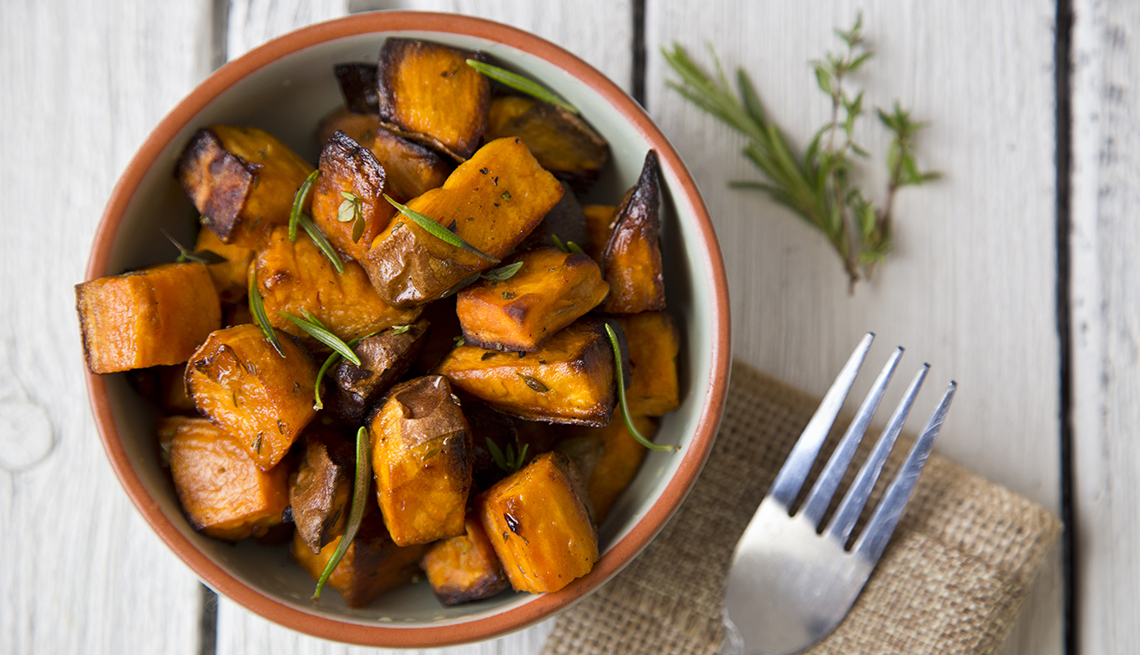
2. Sweet potatoes
They’re a great source of beta-carotene, a phytonutrient that helps your body make vitamin A. It supports respiratory and intestinal health and increases the number of immune cells in the body, says Anna Taylor, a lead outpatient clinical dietitian at the Cleveland Clinic’s Center for Human Nutrition.
This is especially important for older adults because our bodies make fewer immune cells as we age, she adds.
Instead of cooking sweet potatoes with butter or brown sugar, Taylor recommends roasting them with olive oil, oregano and black pepper. “You’ll get additional benefits from the spices, but you’re not loading up on sugar and saturated fat, both of which suppress your immune system,” she says.
3. Berries
They’re a rich source of vitamin C, which stimulates production of infection-fighting white blood cells, Taylor says.
A 2018 study review in Nutrition Reviews found that berries increased levels of disease-fighting cells, such as natural killer cells and T cells, in older adults. They also contain flavonoids, substances that have antioxidant properties and protect all your cells—including your immune system cells — from damage, Taylor says.
It’s easy to incorporate berries into your diet. “Add them to your morning yogurt or oatmeal, or even cook them and throw them on your French toast instead of maple syrup,” Taylor recommends.
Some evidence shows elderberry can ease flu severity and shorten symptoms. The berry contains polyphenols, which can assist your immune system in responding to the virus.
You may not want to nosh on elderberries directly because of their sour taste. Try them instead in a syrup or tea.
4. Beans
Beans are high in zinc, which helps boost your body’s production of white blood cells, according to Taylor. “Zinc deficiency has been linked to immune system dysfunction,” Heller says.
Taylor recommends at least half a cup of cooked beans three times a week. You can throw them into soups, salads or even rice dishes. For a healthy, crunchy snack, roast chickpeas in some olive oil.
5. Nuts and seeds
These foods are rich in vitamin E, which plays a key role in your immune system by supporting the growth of germ-fighting T cells, says Lauri Wright, an associate professor at the University of South Florida.
They’re also a good source of omega-6 fatty acids. Walnuts are an especially good choice, as research shows they have a very positive effect on your gut microbiome, says Kate Cohen, a registered dietitian nutritionist at the Hospital for Special Surgery in New York City.
They also have more alpha-linolenic acid—an essential fatty acid important for immune function—than any other type of nut.
6. Salmon
It’s not plant-based, but this fish is one of the few foods that provides vitamin D, which plays a huge role in regulating your immune system, says Jennifer McDaniel, owner of McDaniel Nutrition Therapy in Clayton, Missouri.
A 2020 study published in JAMA Network Open found that people who had untreated vitamin D deficiency were almost twice as likely to test positive for the coronavirus as patients who had sufficient levels of the vitamin.
A 6-ounce salmon filet has about 600 international units of vitamin D, which is close to the 800 IU recommended daily for people 70 and older. Another bonus: It’s rich in omega-3 fatty acids, which have also been shown to strengthen your immune system.
If you’re not a fan of fish, McDaniel suggests marinating it in brown sugar and Dijon mustard for 45 minutes, then throwing it on the grill. “It mellows out that fishy taste, and it gives it a smoky flavor,” she says.
Canned salmon counts, too. Throw it over a salad for a quick meal, McDaniel says.
7. Garlic
It’s rich with a compound called alliin, which may be the source of its immune-boosting properties, says Libby Mills, a Philadelphia nutritionist and former spokesperson for the Academy of Nutrition and Dietetics.
A 2020 review published in the journal Medical Hypotheses found that garlic seems to stimulate cells related to immune system function. Another study, published in Clinical Nutrition, found that people given about 2½ grams of aged garlic extract for 90 days not only had higher levels of immune system cells but also had fewer symptoms of cold and flu. They also missed fewer workdays because of these respiratory illnesses, compared with a control group.
At the very least, if you eat enough of it, you’ll probably keep people away from you, Mills jokes.
Although there’s probably not enough research to support taking a garlic supplement, Mills recommends cooking with it in the winter months. You can make your own pasta sauce with tomatoes and garlic, and the former’s vitamin C is itself an antioxidant that helps the immune system, she says.

8. Kefir
Recent research, including a 2021 study published in Biomedicine & Pharmacotherapy, suggests that certain compounds found in fermented dairy products such as kefir (which is like a thin yogurt) have anti-inflammatory properties that can help the immune system fight viral infections.
The probiotics found in kefir and other fermented foods also help to calm chronic inflammation, according to Harvard Health. “Fermented dairy is rich in probiotics, which seem to have a positive effect on the immune system,” Mills says.
9. Curcumin
Curcumin is a polyphenol in the turmeric plant that gives the spice its signature orange-yellow tint and is known for its anti-inflammatory and antiviral effects.
In recent years, it’s been the subject of some studies on flu and COVID-19. Most of the studies have been in lab dishes, and large clinical studies in humans are lacking, says Julie Stefanski, a registered dietitian nutritionist and spokesperson for the Academy of Nutrition and Dietetics.
A 2024 study in Virology Journal found that a nasal film spray with curcumin can ease flu severity and enhance production of antimicrobial peptides known to stop the flu. Also, the presence of anti-inflammatory cytokines (proteins that can control inflammation) in curcumin may reduce inflammatory injuries to cells from the virus.
Curcumin may help with cold-like symptoms, which can accompany the flu. In a 2023 study in the Journal of Dietary Supplements, 65 participants took 150 milligrams a day of highly bioavailable curcumin, while 30 participants got a placebo. People on the supplement who got colds had fewer days with symptoms, compared with those on the placebo.
But “the amounts of turmeric or curcumin that may be beneficial while healthy or ill have not been determined yet,” Stefanski says.
And people should be careful about taking supplements, especially when they are sick, because some supplements could interact with your medications or cause problems if you have an underlying health condition.
10. Leafy greens
You may not be in the mood for making a salad or spinach or bok choy when you’re down and out with the flu, but greens can be helpful if you’re battling the virus. A 2022 report in the American Journal of Lifestyle Medicine says that dark green leafy vegetables produce nitric oxide, which can interrupt the virus from replicating in your body. The greens’ nutrients also include antioxidants that can support immune health.
Editor’s note: This story, published Nov. 1, 2021, has been updated to reflect new information.

AARP Membership
Join AARP for only $15 per year with automatic renewal. Get instant access to members-only products and hundreds of benefits, a free second membership, and a subscription to AARP The Magazine.
More From AARP
11 Foods and Drinks High in Polyphenols
Here's why you need more of this nutritional powerhouse
10 Ways to Avoid Getting the Flu
Common-sense things to do to avoid infection.
Smart Guide to Vaccines for Adults Over 50
A comprehensive guide to vaccines and their benefits