
AARP Hearing Center









































Why Power Training May Be More Important Than Strength Training
This type of training is a must to boost function as you age. Here are 10 exercises to get started

VIDEO: Take Your Fitness Further With Power Training
Video Reviewed by Peter Ronai, Clinical Exercise Physiologist
Key takeaways
- Muscle power, not just strength, may better predict health outcomes as people age.
- Fast, controlled movements train muscles and nerves to react quickly to prevent falls.
- Power-focused moves can support everyday tasks like standing up, carrying items and crossing streets.
Weight or resistance training, also dubbed strength training, is critical for older adults. But the force you use to do the exercises — power training — could be just as important, if not more, for healthy aging.
Power training involves moving faster instead of lifting heavier weights. This trains fast-twitch muscle fibers — the ones responsible for explosive movement — that can decline with age, perhaps more quickly than overall strength.
More Ways to Benefit
- Related Benefit 1
- Related Benefit 2
- Related Benefit 3
- Related Benefit 4
- Related Benefit 5
Several studies have confirmed that power training can lower fall risk and improve functional capacity. This translates into better quality of life and more independence for older adults, says Peter Ronai, an exercise physiologist and clinical professor of exercise science at Sacred Heart University in Connecticut.
“The overarching benefits can have lifelong positive effects on health-related quality of life,” Ronai says.
If you lose your footing and are about to fall, for example, being able to quickly respond and regain your stance could literally “save your life,” Ronai says.
Strength vs. power training
Strength is the maximum weight or tension that you can handle, while power is the amount of force you can generate in a period of time. Power training isn’t about moving the heaviest load; it’s about moving a load or your body as fast as possible, says Ronai, who’s also a fellow of the American College of Sports Medicine.
You do the concentric part of the movement (the lift, as with pulling up when doing a bicep curl) explosively and quickly; then you do the eccentric part of the movement slower and controlled. In other words, it’s not just about lifting and lowering a weight faster than normal.
Power training may sound like high-intensity interval training (HIIT), but HIIT involves going at your maximum (or at least a higher) capacity fast for a short burst of time, then easing up intensity for a bit. Power training isn’t about reaching your max, though you need power to do HIIT, Ronai adds.
In a nutshell, you can practice power training by moving a load as quickly as possible with a controlled, explosive movement — while ensuring safety.
How power training measures up
A 2025 report in Mayo Clinic Proceedings finds muscle power is a better predictor of mortality than strength in middle-aged and older adults. Muscle power might decline earlier and more rapidly than strength, the authors say.
Type II, or fast-twitch, muscle fibers that produce force are usually the first ones that start to decay, Ronai explains. Good news, though: You may not lose them as quickly if you keep those muscles and nerves moving (quicker than normal, of course, he adds).
Benefits of power training for older adults
Power is essential to prevent falls, Ronai says. When you trip and are about to fall, your body knows it, but you may not be able to stabilize yourself in time if your limbs aren’t used to moving faster. Power training can boost that skill.
Research shows power training can improve physical function so you stay independent as you age. For instance, you need power to carry groceries and lift them onto the counter, make it from the couch to the front door for a delivery, place a bag into an overhead compartment on a flight or cross a busy street quickly, Ronai says.
Incorporating power training into your fitness routine along with strength training could curb hospitalizations, according to a 2024 report in The Journal of Nutrition, Health and Aging.
Power training can be done with others, so it can check the box for much-needed social connections too. It can also involve props and be competitive, like a drill, Ronai says.
“It can almost be more fun than any other type of training,” he adds.
Pinpointing power
Exercise specialists use several tests to gauge what you can improve on, Ronai says. One of those tests is the gallon-jug shelf transfer test, which involves moving five 1-gallon jugs from a shelf at knee height to a shelf at shoulder height as quickly as possible while keeping your back straight. Exercises to boost power — squats, medicine ball slams, rapid squats and resistance-band rows — may mimic this movement.
“That’s a very functionally oriented task, but it requires power” from your whole body, Ronai explains.
These two tests are a good way to assess body power, he says:
- The 30-second chair stand test: This measures how many times you can rise from sitting and sit back down again in 30 seconds. Typically, fewer than eight repetitions in 30 seconds is considered a risk for falls.
- The 5-repetition chair stand test: This measures how fast you can stand and sit safely in a chair five times. Typically, a time above 12 seconds indicates a need for further fall risk assessments, Ronai says.
During the tests, a professional will be able to get a baseline of where you are from a strength and power perspective, then recommend specific movements to improve your power, he adds.
Researchers are looking at which techniques correlate to functional improvements and how to meet the needs of individuals, as some may have more power in certain areas of the body than others, says Joseph Signorile, a professor in the department of kinesiology and sports sciences, and director of the Laboratory of Neuromuscular Research and Active Aging at University of Miami in Florida.
Speeding up safely
It’s critical to start slow and be safe during power training, Ronai says.
“You have to move faster and more explosively but under control,” he says. “You don’t have to be so fast that you’re not safe.”
Those who may be at greater risk of falling should approach power training with a simple principle in mind: strength first, then speed, says Sabrena Jo, senior director of science and education at the American Council on Exercise (ACE).
Master foundational movements like sit-to-stands, step-ups, presses and light resistance-band rows with a slow and controlled technique. “Once the movement feels stable and supported, you gradually introduce speed only during the lifting, or upward, phase of the movement,” Jo says. This lets you train the velocity component safely without ever needing heavy resistance, she adds.
Choose movements that reflect real daily demands, such as rising from a chair or stepping quickly onto a curb, Jo suggests. “When we train for power in these familiar patterns, we get meaningful, functional transfer to the activities that matter most,” she adds.
Some safety tips:
- Go over your health history with a professional who can help you determine which exercises you may have to modify, based on your health status and any limitations.
- Stick with low-impact exercises, especially if you’re just starting out. Avoid jumping high and doing moves with challenging landings.
- Use a spotter.
- Train in a clutter-free area.
- Work at an intensity that feels comfortable, not breathless.
- Don’t sacrifice form for speed.
- Use a countertop, chair or the wall for balance support.
- Not all machines are ideal for power training because of issues with momentum. Stick with resistance bands, free weights, your body weight or exercise in the water.
- Get the exercise down before revving up your speed, making sure you have the strength to do the moves and gradually increasing speed.
- Minimize inertia, which occurs when you start moving but have a hard time stopping.
How to start power training
Ready to try power training? Ronai and Signorile advise seeking professional support to evaluate your capabilities and determine what you need to do to bolster power. Everyone’s different, so a tailored approach is best, they say.
You can see a personal trainer at a gym or a physical therapist, Ronai says. Check out local colleges with exercise programs, as an exercise physiologist there may be able to advise you; if they’re doing research on power training, you may be able to get some pro tips free of charge by participating in a study, Signorile says.
Look for professionals with accredited organizations like the American College of Sports Medicine, ACE and the National Strength and Conditioning Association, Ronai suggests.
You can try adding more speed on your own, but a professional will be able to pinpoint what you need and give you specific moves to accomplish it, Signorile says. They also can ensure you’re safe when doing the exercises, he adds.

Essentially, any exercise can become a power training move, even walking, Signorile says. While power training revolves around weights or resistance, walking at a higher speed means you’re moving a load (your body weight) faster and may be a good start for those without access to personal trainers, Signorile says.
Try exercises that work multiple muscle groups, like leg presses or squats, which work several muscles in the lower body. Likewise, chest presses work your pectoral muscles but also your anterior deltoids and triceps, Signorile explains.
If you use hand weights for home workouts, you can move them faster to create and work your power capacity, emphasizing the lift or push part of the move. If you opt for resistance bands, make sure the resistance level of the band provides enough of a challenge.
Power training exercises
Here are a few exercises to try:

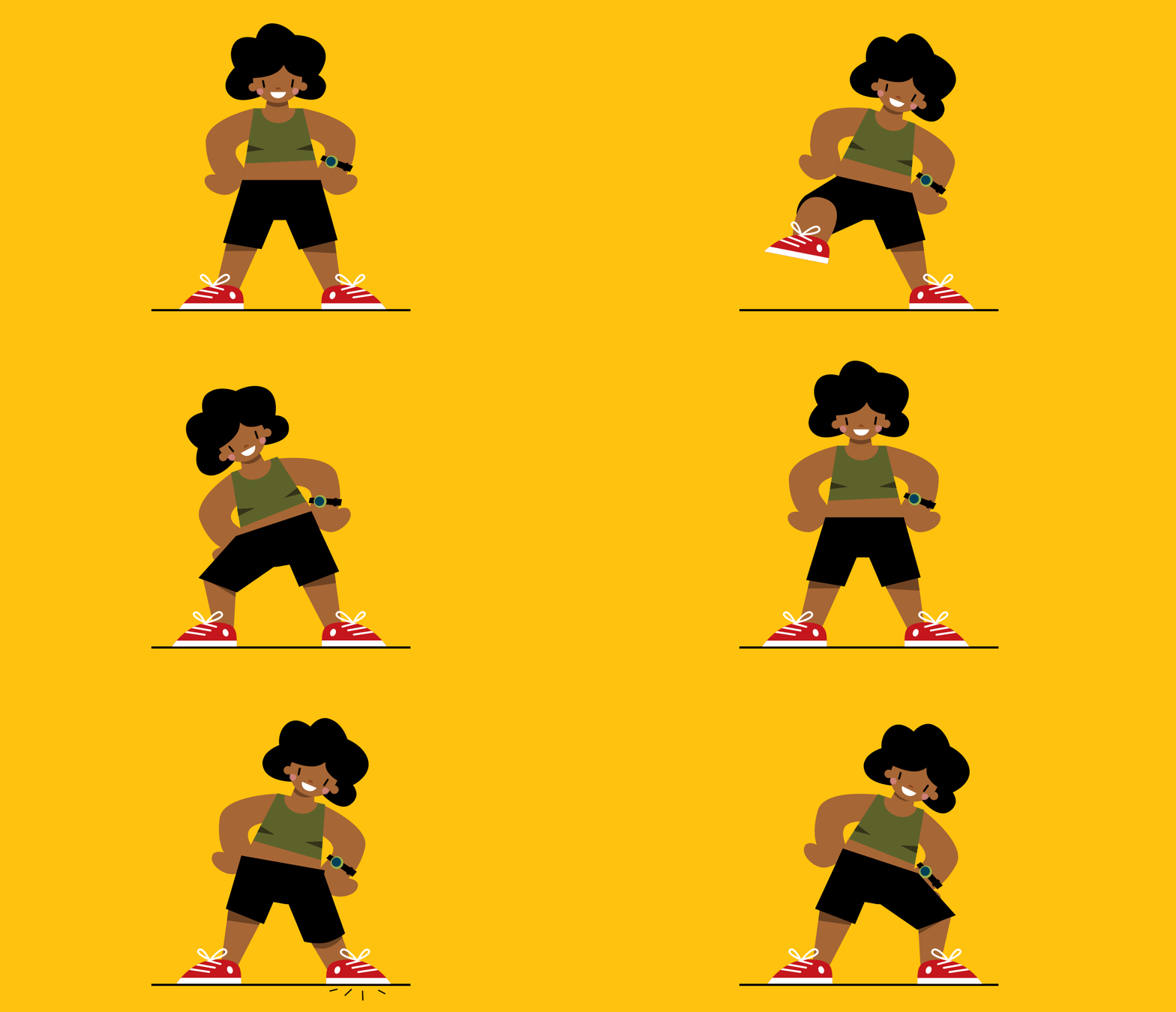
Bug Stomp
Martin Gee
1. Bug stomps
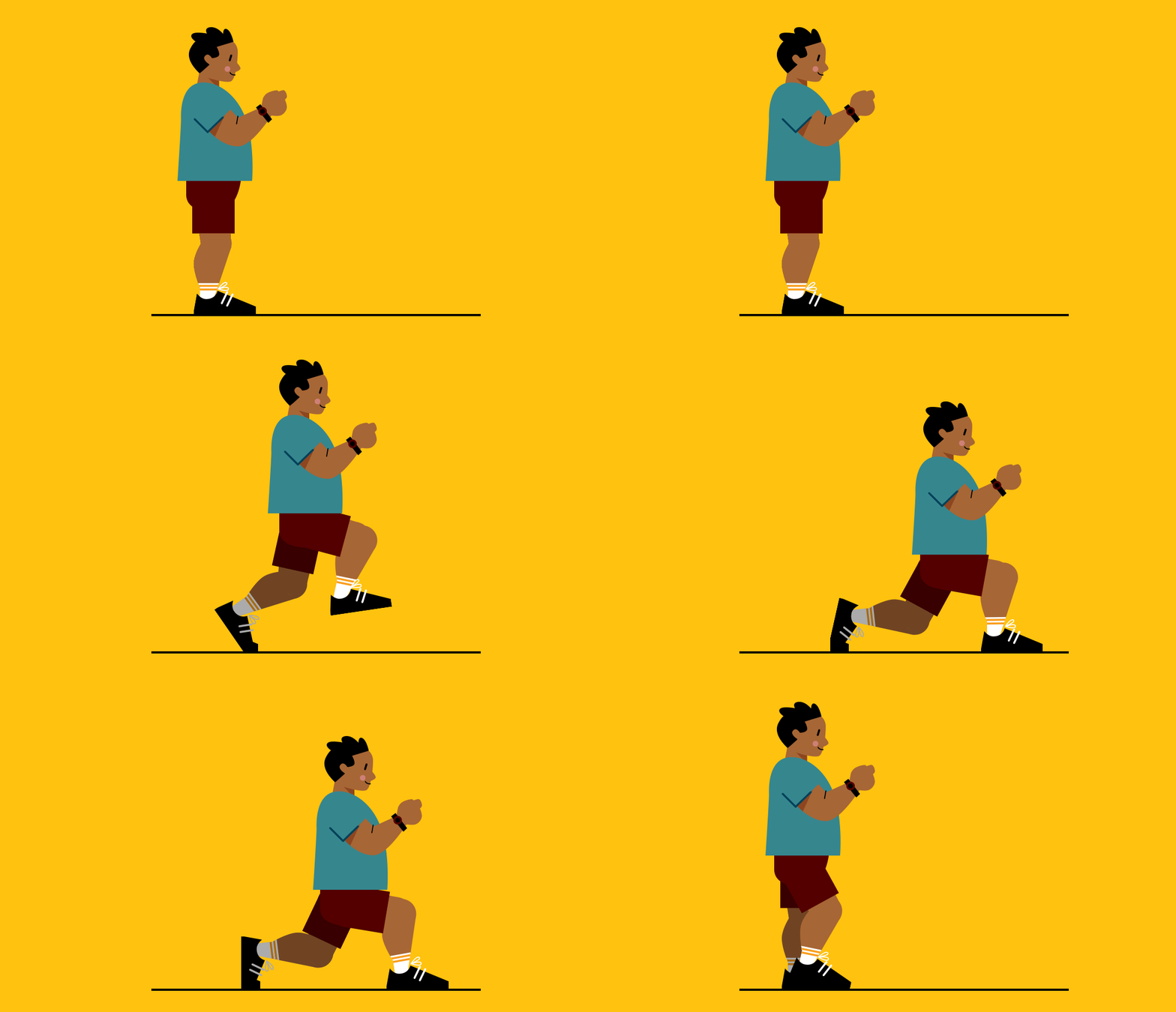
This exercise is great for beginners, ACE reports. When you’re standing, step one foot out as if you’re stomping on a bug with force. Return to the position and repeat with the other leg. You can put your stomping foot in different places, so long as the weight goes on your stomping foot.
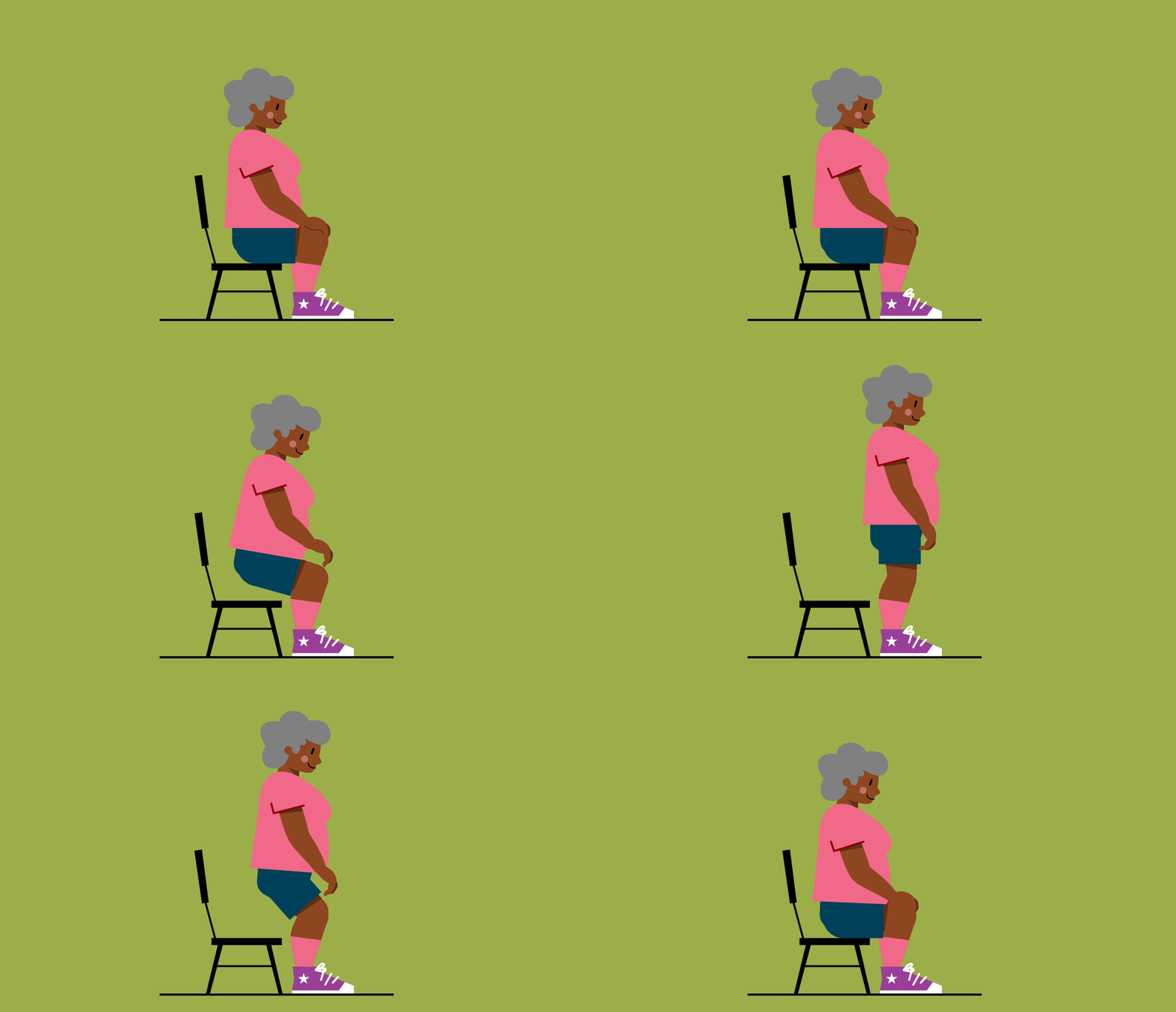
Sit to Stand
Martin Gee
2. Sit-to-stand
Sit in a chair but not far back into it. Stand up as quickly as possible, then sit back down. Ronai suggests using a cushion or foam pad so you don’t have to go as far down as you would in a standard chair until you work up to that position. Or replicate the movement without a chair, crouching down as far as comfortable, then rising to stand as quickly as you can, Ronai says.
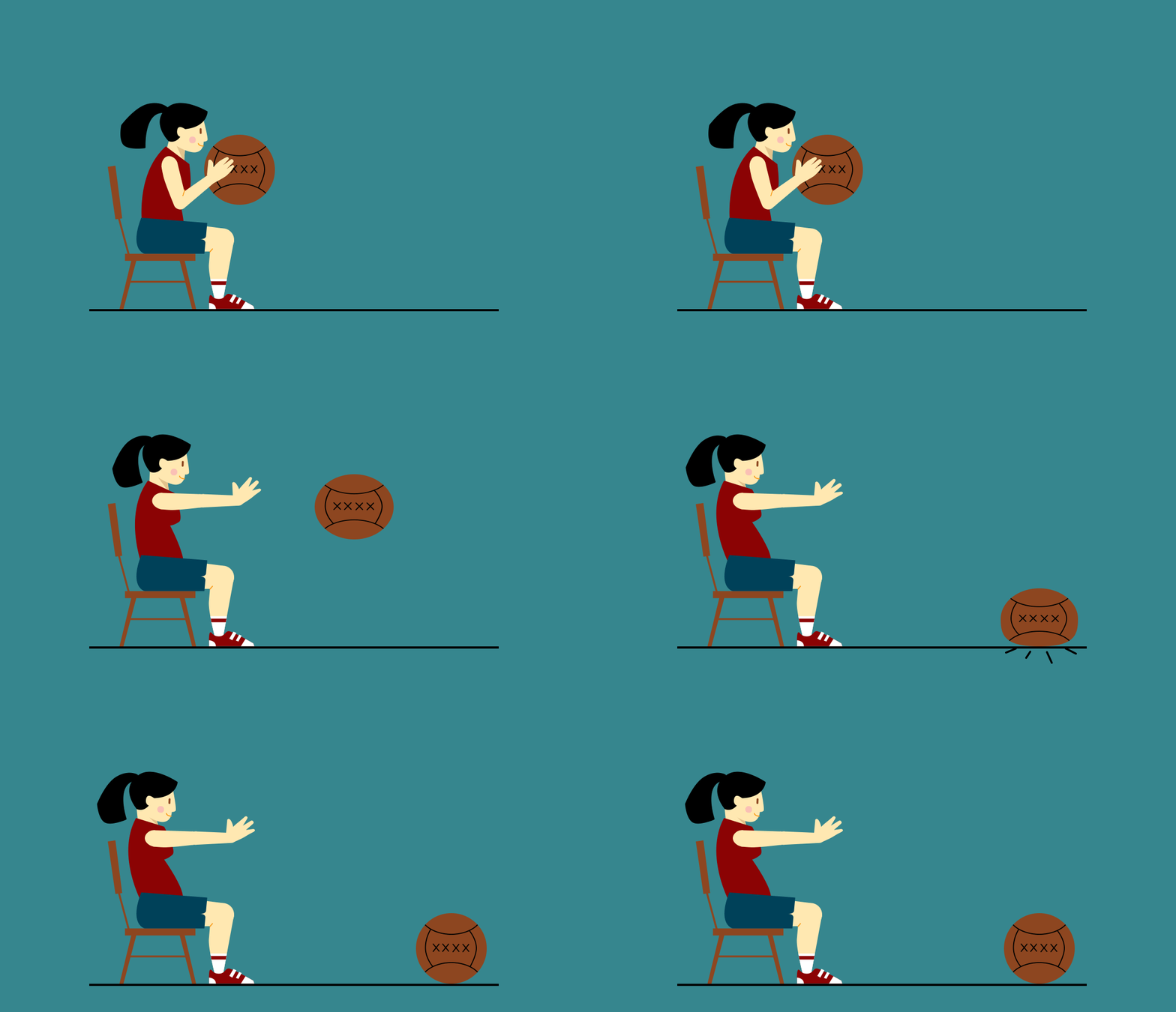
Medicine Ball Toss
Martin Gee
3. Medicine ball toss
Sit firmly in a chair with a back, with your feet straight out before you. Grab a weighted medicine ball and hold it, with your hands on both sides, against the center of your chest. Then throw the ball as far straight as possible while keeping your back against the surface. You can also do this standing up with the ball in front of your chest, then slamming or pounding it into the floor — that’s called a medicine ball slam, Ronai explains.
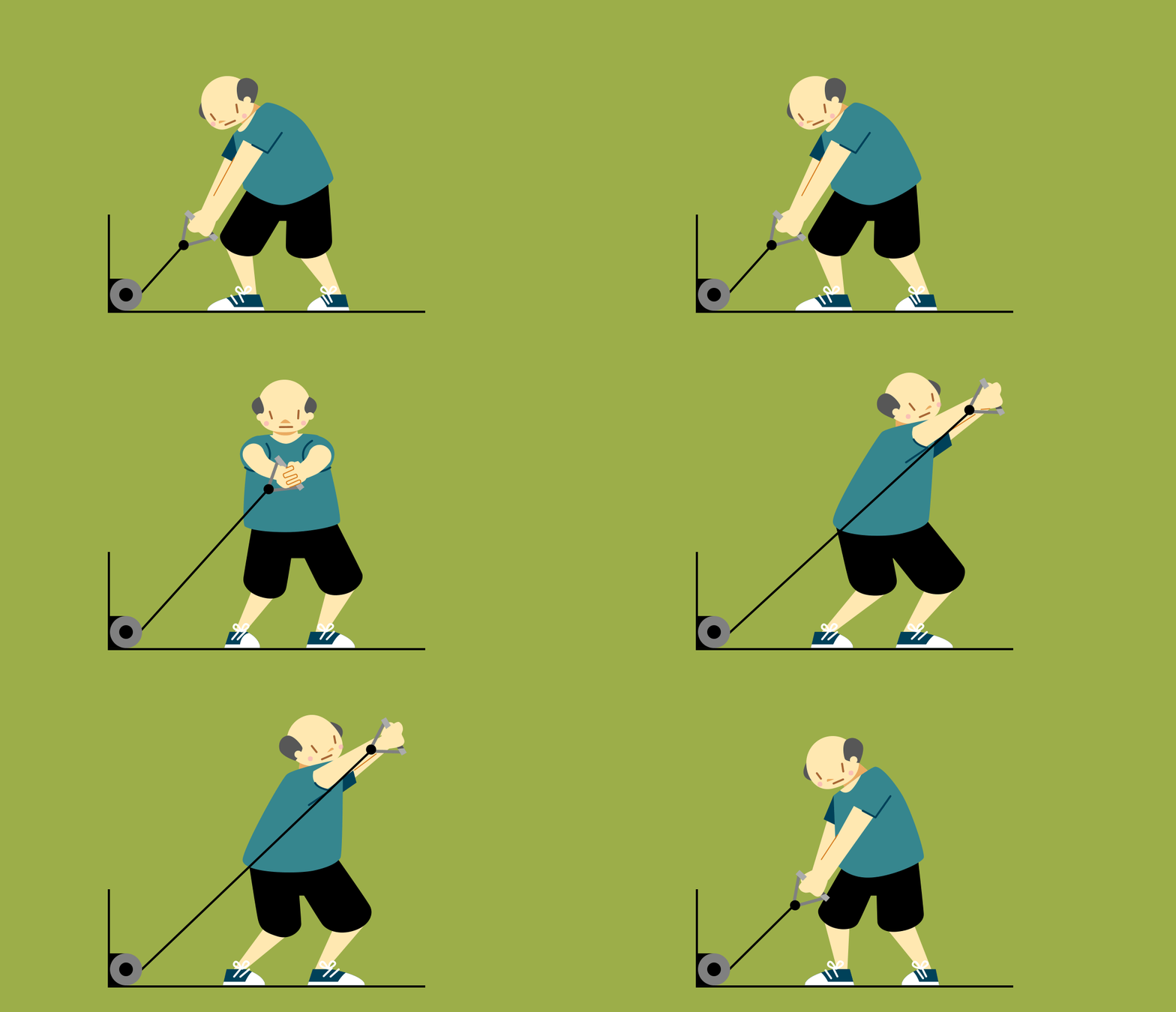
Trunk Rotation
Martin Gee
4. Trunk rotation
On a cable machine with pulleys, bending down on one side below your knees and lifting the pulley across your body and up over the opposite side shoulder can mimic lifting something. You can improvise at home with resistance bands secured at a lower point, or with free weights.
Overhead Press
Martin Gee
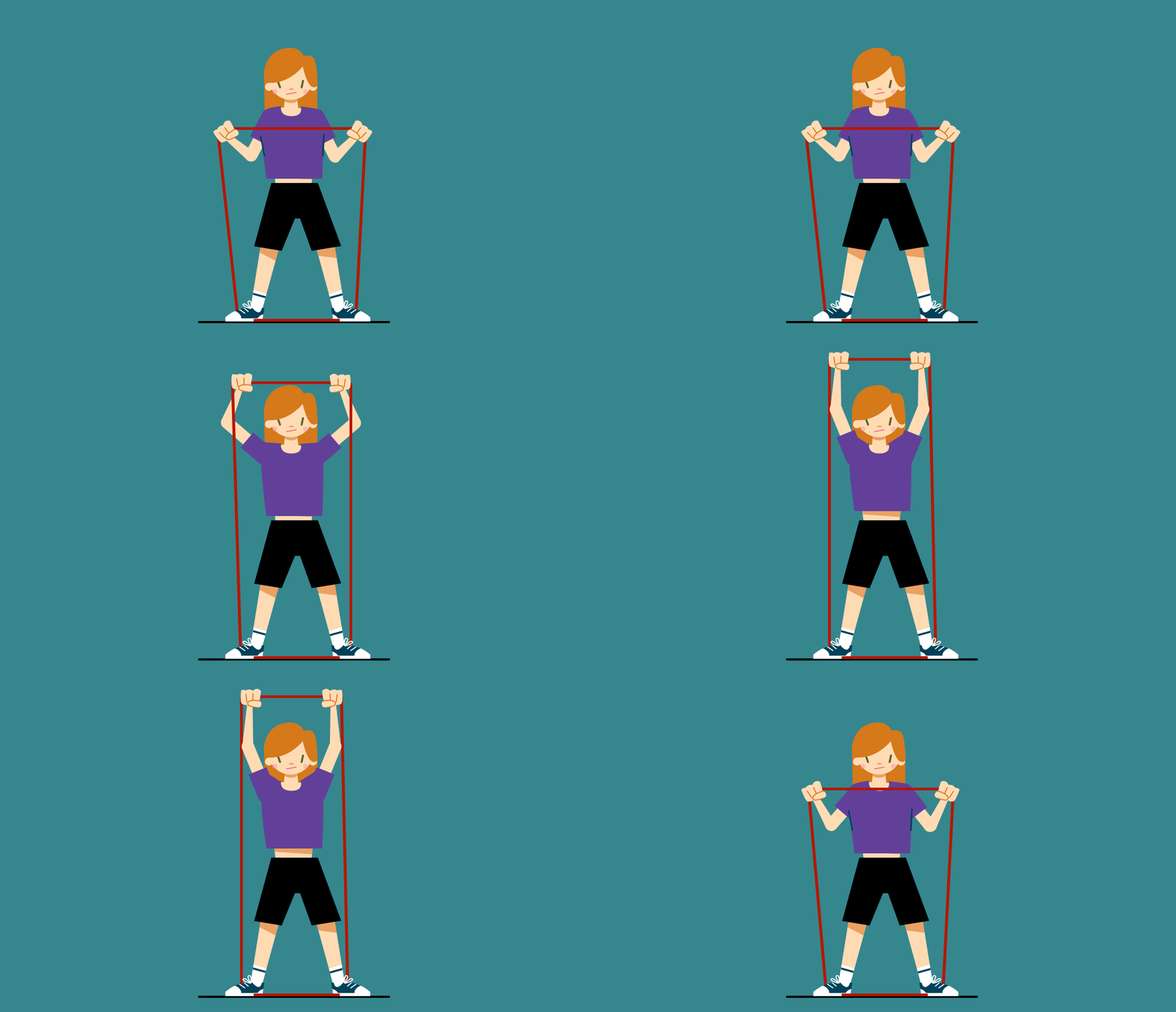
5. Overhead press
Stand on top of a resistance band, with the handles just above your shoulders. Press upward, lengthening your arms overhead. Return to standing position. You can do this on a cable pulley machine or with weights as well.
Chest Press
Martin Gee
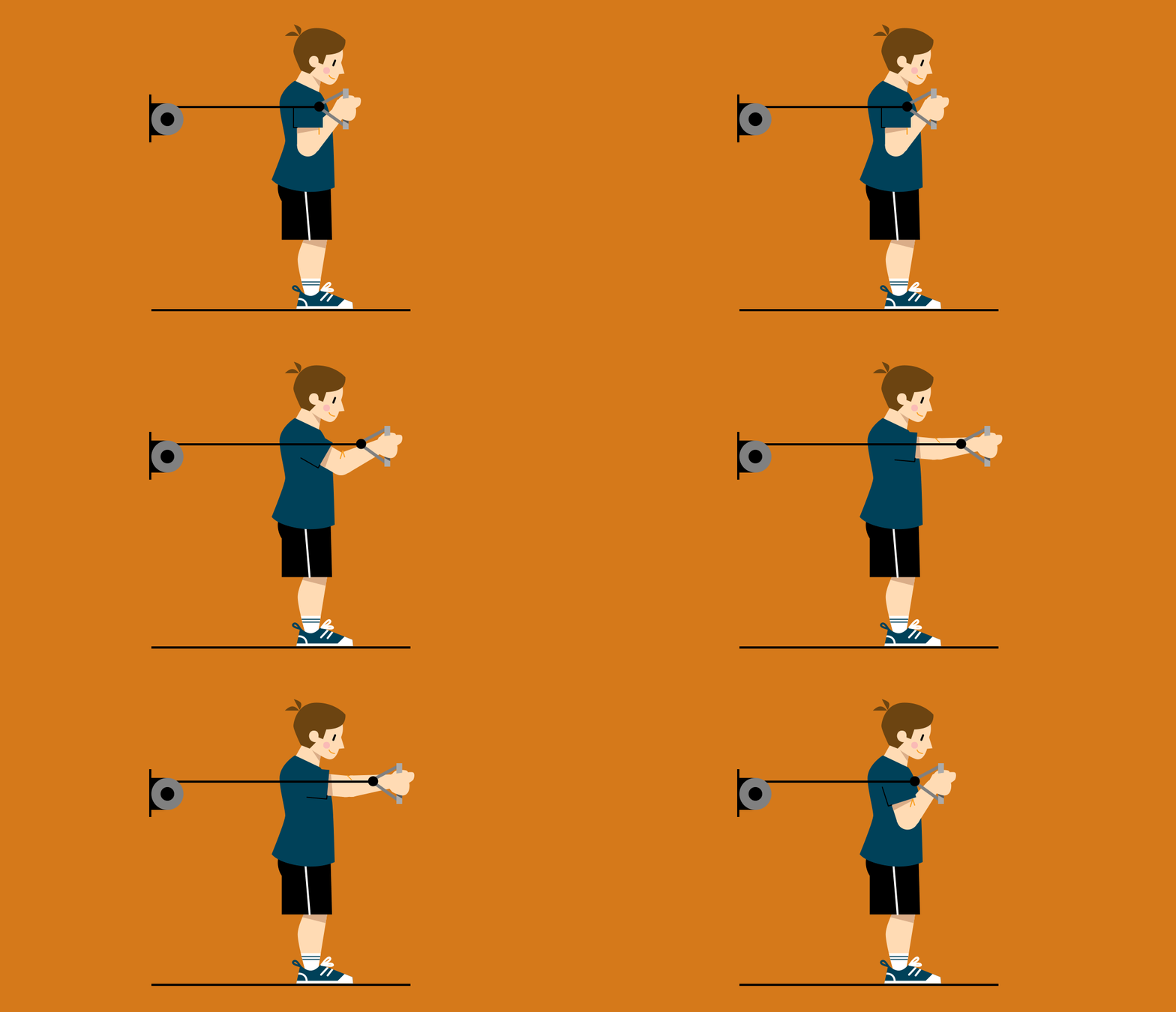
6. Chest press
On a cable pulley machine or with a resistance band or weight, stand up with the weights in front of your body at your chest. Press straight forward. Return to original position. You can do this lying on a bench too.
Scapular Row
Martin Gee
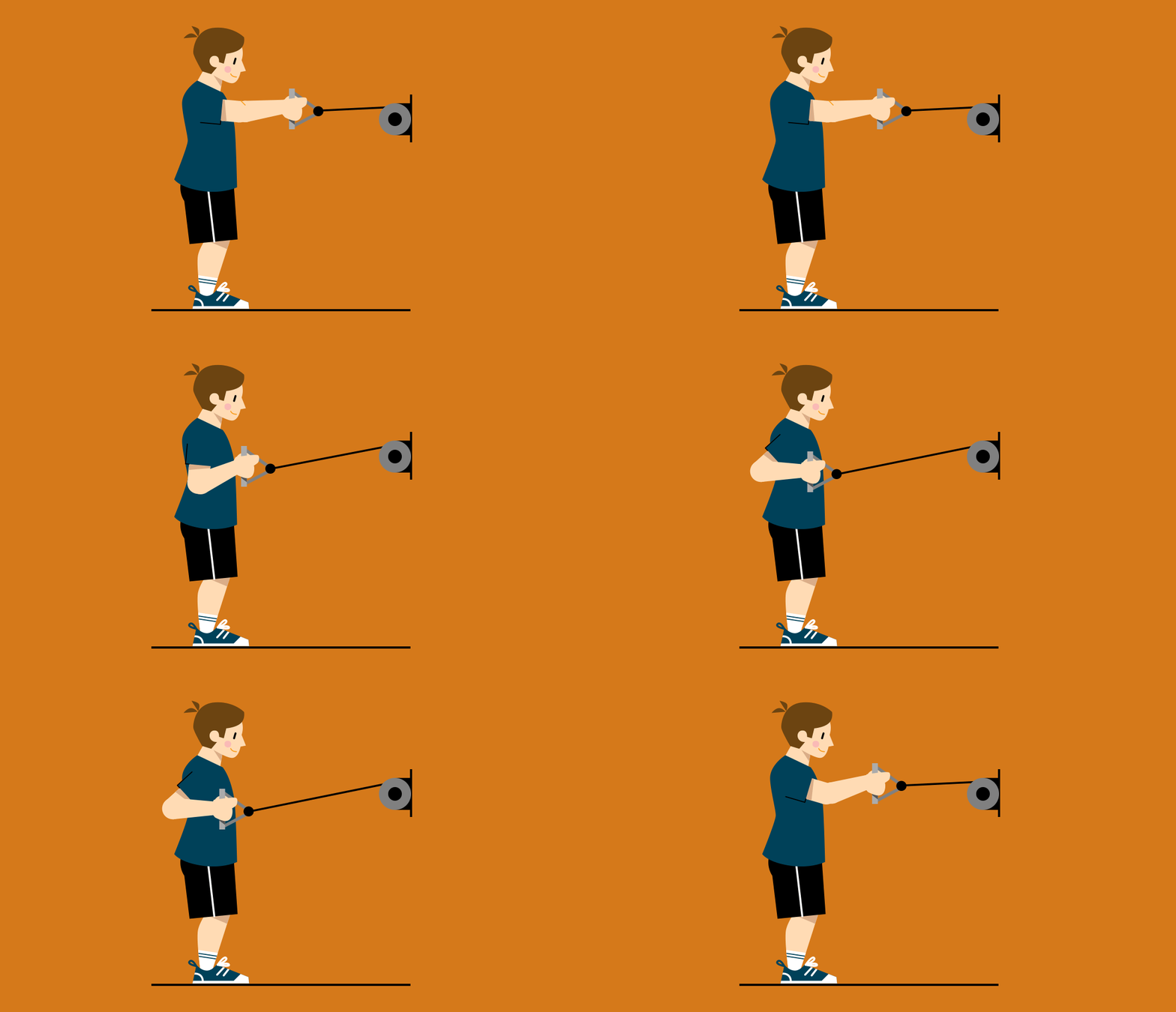
7. Scapular row
With a cable pulley machine or resistance band, stand up with hands at chest height and elbows fully extended in front of the body. Pull straight back toward the ribs rapidly, bending at the elbow. Return to original position slowly.
Power Lunge
Martin Gee
8. Power lunges
People with moderate to high power levels should try this move. Similar to the bug stomp, step farther away into a full lunge, pushing off the lead foot and then returning to the starting position.
Lateral Jump
Martin Gee
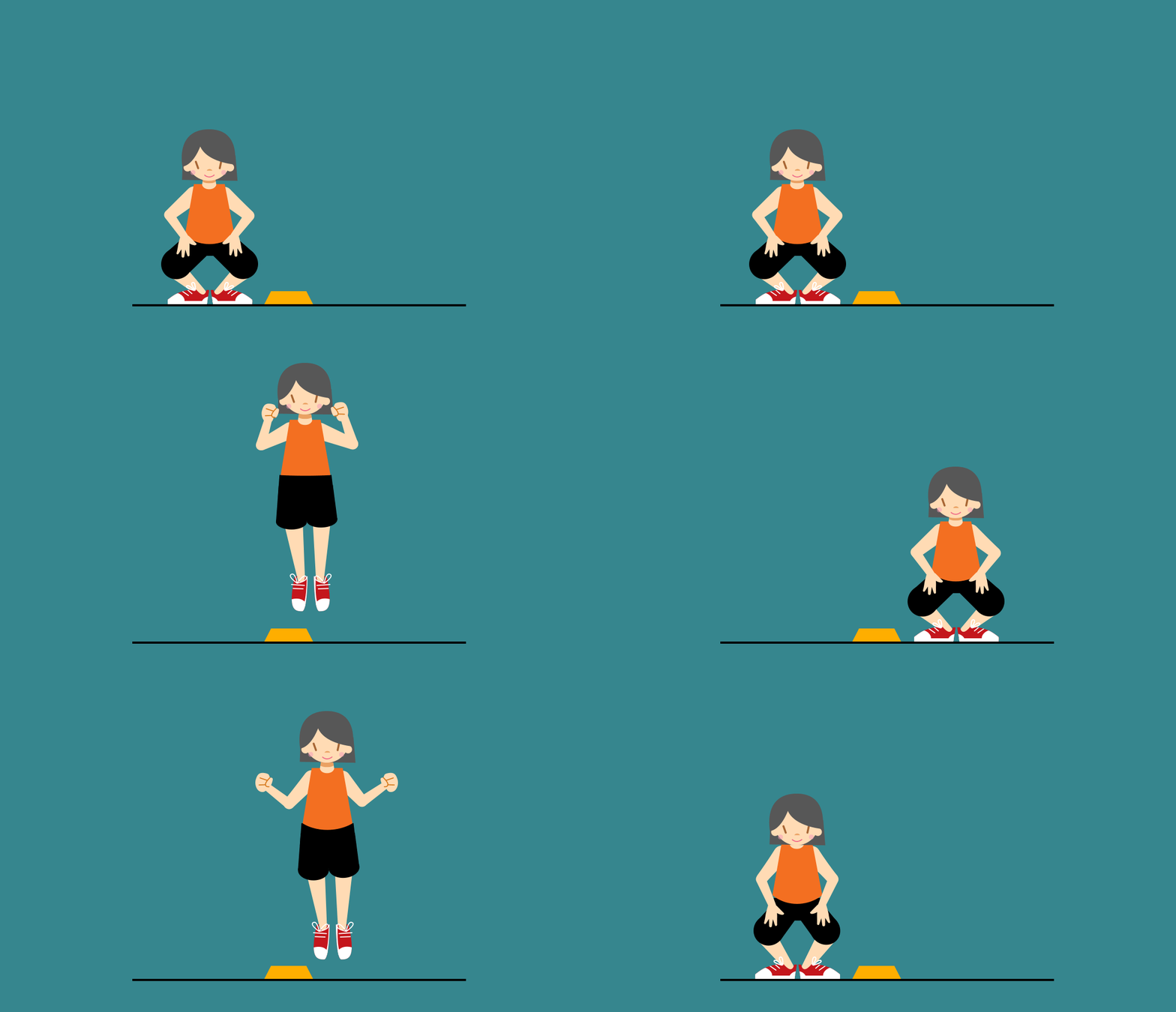
9. Lateral jump
This one may be best for those with moderate to high power levels or those who currently exercise. Stand tall with both feet together. Lift your right foot and jump to the right as if you were hopping over a dog bowl, letting the left leg follow. Go back and forth to both sides, Ronai suggests. You can use a nearby wall for support.
Red Light, Green Light
Martin Gee
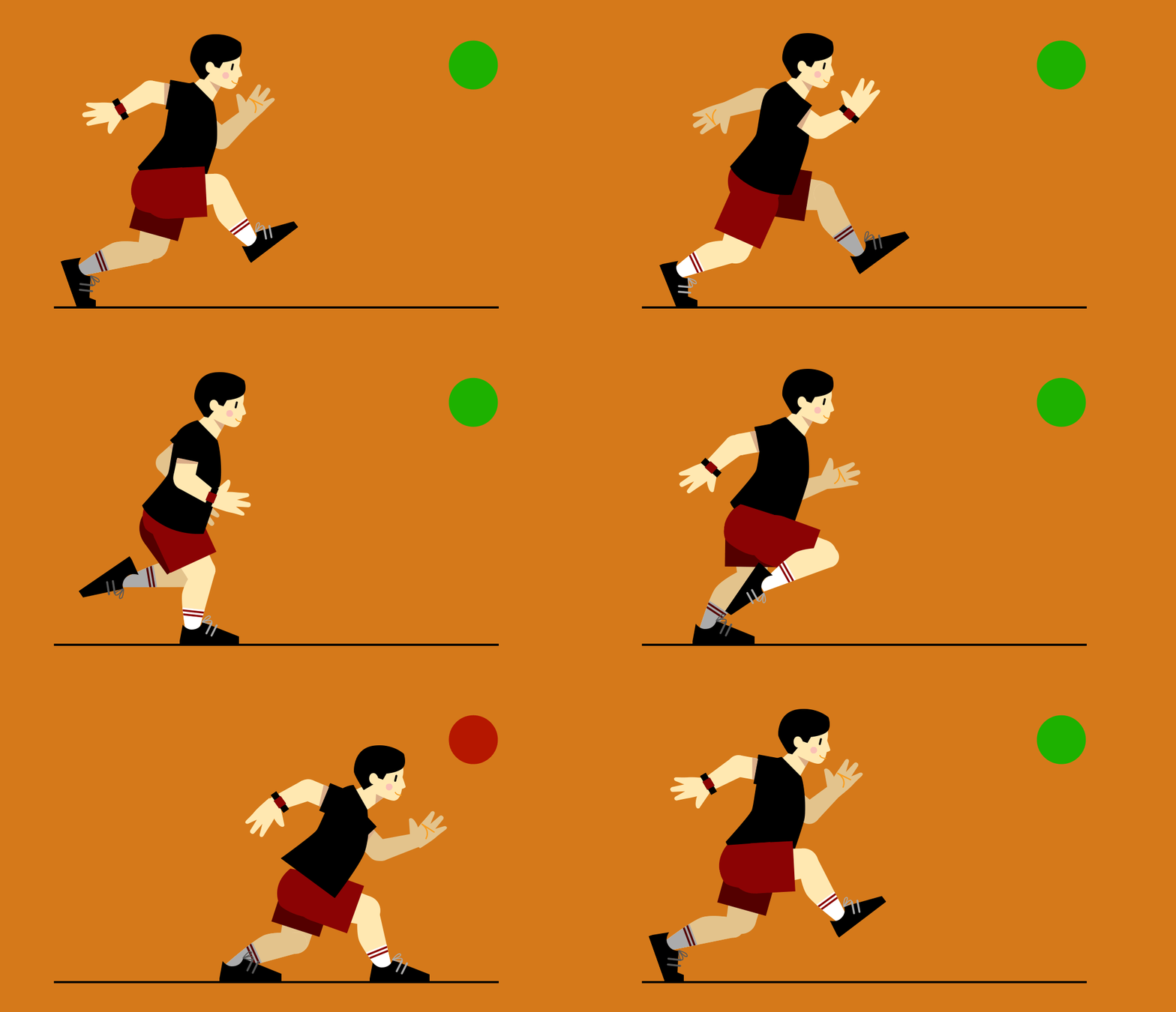
10. Red light, green light
This is ideal for all levels. Choose a starting point with space to run. Start running (“green light”) and stop suddenly (“red light”).
Spreading the Message About Power Training
Researchers started publishing evidence about power training in the 1990s, Signorile notes. That said, the message about the importance of power training largely hasn’t gotten out to older adults.
“I don’t think that older individuals have really been exposed to it the way they should,” Signorile says.
“It’s important for people to learn about this,” Ronai adds.
We tend to think of exercise as one-dimensional, but it needs to equip us to handle functional activities, not just isolated muscle improvements, Signorile says.
If you’re a regular walker, that’s great for your muscles and cardiovascular system, but it doesn’t prepare your body to move in multiple directions quickly to avoid a fall, or to move around people walking down a sidewalk, Signorile explains. The limitations of power are neuromuscular, so training that system is imperative, he says. “This is where power training comes in,” he says.
If you don’t use your muscles, you will lose muscle tone, but if you don’t use them in a certain way to produce power, you will lose that too, Signorile points out.
The key takeaways were created with the assistance of generative AI. An AARP editor reviewed and refined the content for accuracy and clarity.

AARP Membership
Join AARP for only $15 per year with automatic renewal. Get instant access to members-only products and hundreds of benefits, a free second membership, and a subscription to AARP The Magazine.
More From AARP
4 Key Exercises for Aging Well
Experts share the four exercise types that support healthy aging
Why VO2 Max Matters More as You Get Older
This measure of oxygen use is linked to stamina, mobility and independence, and it can improve with the right mix of training
The No. 1 Exercise for Balance
This simple practice can help prevent falls and improve how well we age