



AARP Hearing Center


































































Roll With the Punches: Boxing With Parkinson’s Disease
Rock Steady Boxing is one way to improve balance, strength and agility for people with the neurodegenerative condition
By Sophia H. Moten
Photography by Sage Russell
Published February 4, 2026
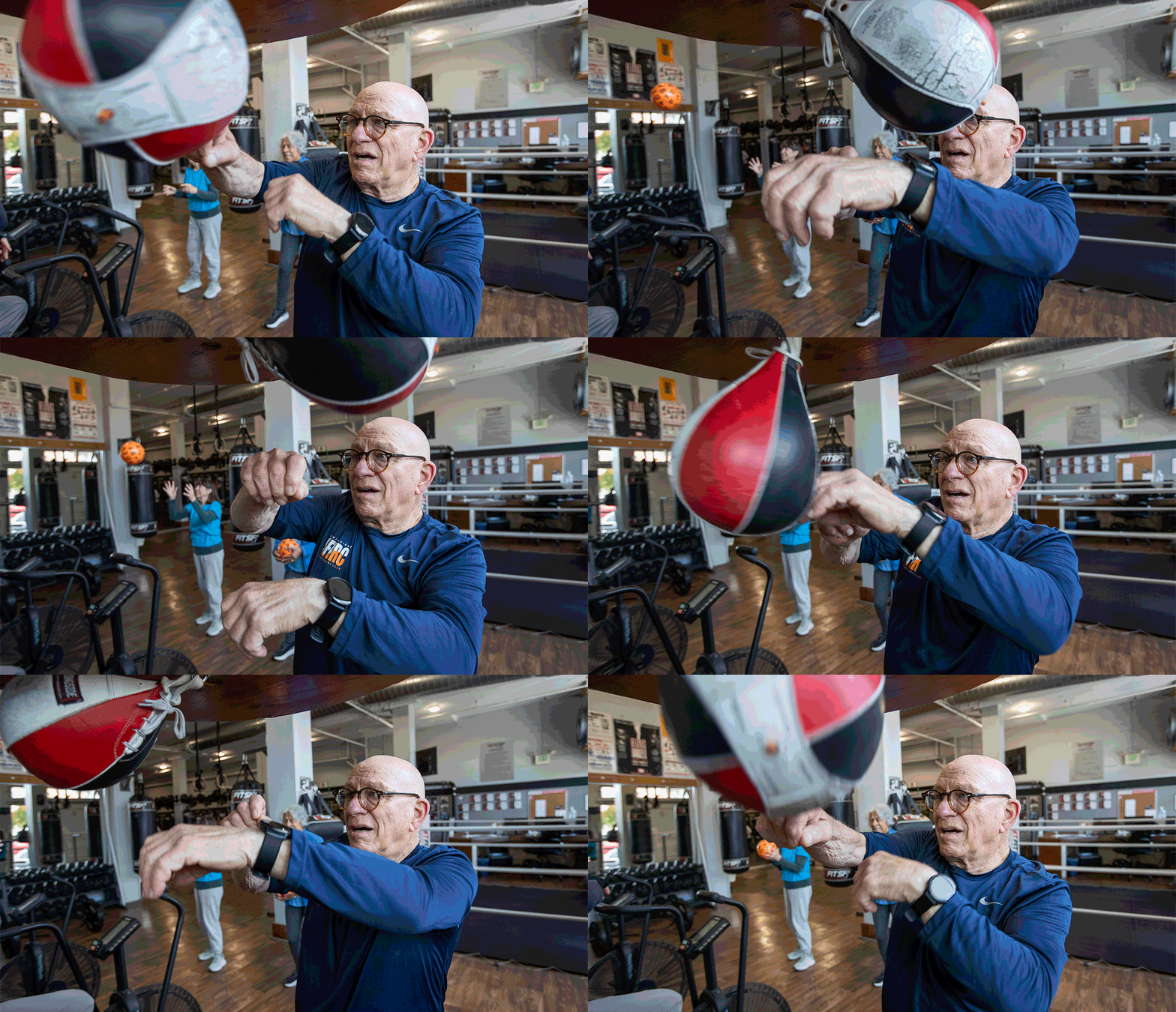
When Russell “Rusty” Cohen walked into his local Rock Steady Boxing gym in February 2025, he already had something in common with the head coach: Both were living with Parkinson’s disease, and both thought Cohen might not be a good fit for the program.
After recovering from bladder cancer, Cohen had spoken with his doctors about experiencing some random falls. He was officially diagnosed with Parkinson’s in autumn of 2024. Given his waning mobility, his speech therapist recommended Rock Steady Boxing, a fitness program specifically designed for people with Parkinson’s.
Cohen was excited to follow in the footsteps of his childhood idol, boxer Muhammad Ali, but he was also skeptical. “I did not think I could do what they’re doing,” he says.
Veronica Garcia-Hayes, the head coach and co-owner of Rock Steady’s San Francisco location, was concerned about Cohen’s balance issues. She decided he would need a support partner to join him. The support partner, also known as the corner person, attends classes with the participant to assist with balance. Cohen began bringing his wife, Anita.
Why boxing for Parkinson’s?
Parkinson’s disease (PD) is a brain disorder characterized by inflammation and the loss of dopamine-making neurons.
Studies show high-intensity interval training (HIIT) can help patients reduce inflammation and spark neuroplasticity, or the brain’s ability to rewire and strengthen itself.
HIIT consists of a short burst of high-intensity exercise followed by a short recovery period, repeated in a set. Workouts can include strength, cardio or full-body exercises like jumping rope, kettlebell swings, push-ups or, in Cohen’s case, boxing.

“It turned out to be really an enjoyable hour and 20 minutes,” Cohen says. It was so much fun, he adds, that he started attending “three or four times a week.”
Almost a year later, Garcia-Hayes is overjoyed with his progress. A few months after he started, Cohen’s balance was much improved and he no longer needed Anita to serve as his corner person.

Rocky, rock steady
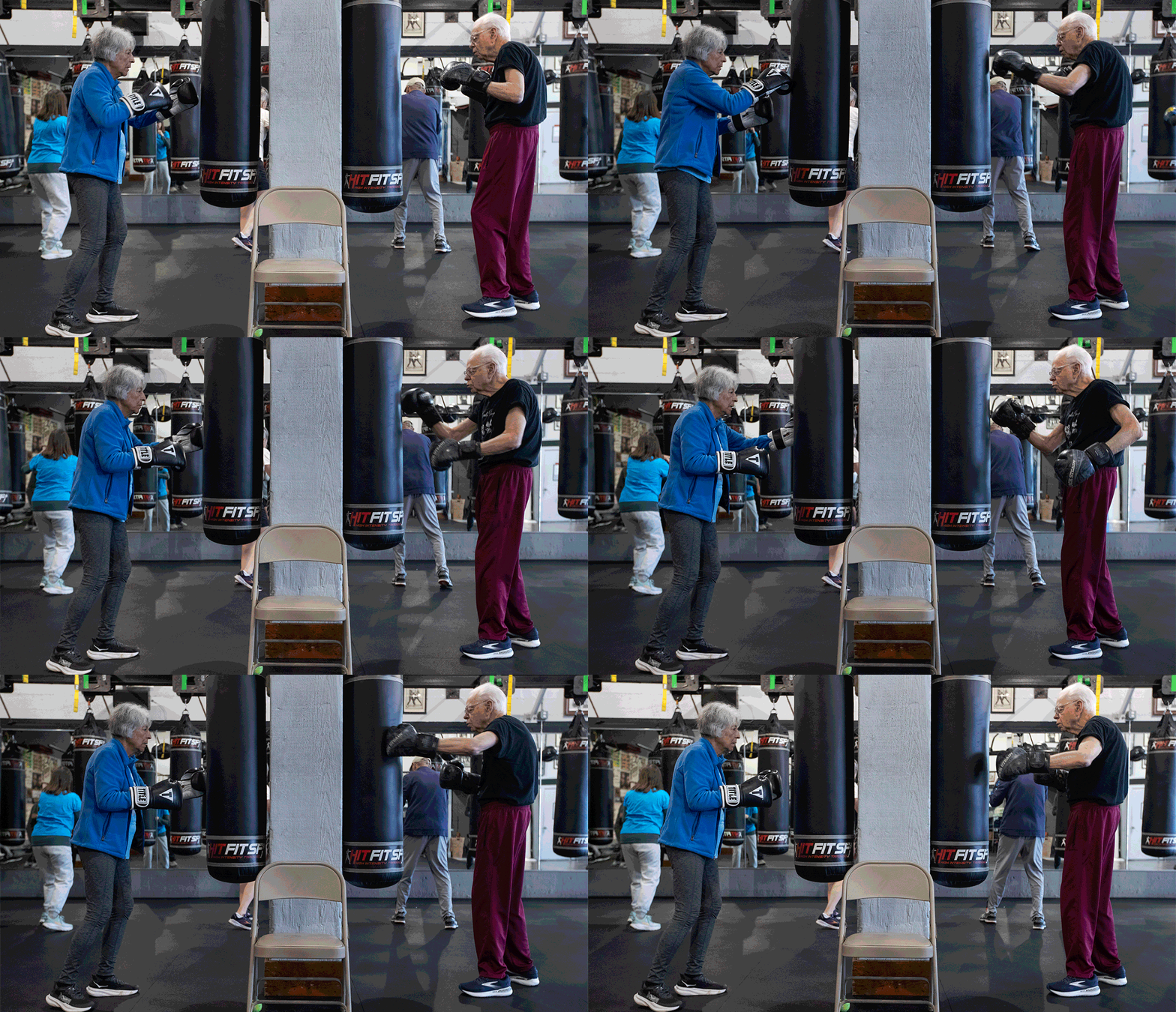
Rock Steady Boxing incorporates the physical exercises recommended for people with Parkinson’s by the Parkinson’s Foundation, the American College of Sports Medicine and the American Physical Therapy Association. Participants work on their strength, flexibility, balance and agility in every session, says Connie Fiems, Rock Steady’s chief scientific officer and a board-certified neurologic clinical specialist. “Classes are delivered at moderate to high intensity, consistent with evidence showing this level promotes neuroplasticity and may slow disease progression,” she says.
Rock Steady’s programs “are adaptable for all ability levels and specifically target PD-related symptoms such as reduced [range of motion], imbalance, stiffness and posture changes,” Fiems adds. “[The] exercises emphasize upright posture, large movements [and] balance through boxing footwork, and respiratory muscle strength — critical for speech and swallowing.” The full-body workout in a boxing environment, she says, “naturally integrates breath control and vocalization.”

Like Rock Steady, other exercise programs designed (or adapted) for people living with Parkinson’s are available both in person and virtually. Dance for PD, a research-backed program, hosts seated and standing dance classes in English, Spanish and Mandarin. Parkinson Wellness Recovery (PWR!) offers research-driven exercise in workshops and retreats, in addition to a directory of physical therapists, exercise instructors, occupational therapists and wellness services. PD-Connect and Power for Parkinson’s both offer exercise and education programs, all for free online.

Physical and social benefits
Cohen first noticed improvements in his balance. “I wasn’t falling down as much, and I was getting a lot more confident [in] my motions,” he says. Things like tying his shoes, standing on one foot and putting on a jacket became incrementally easier.
“Two weeks ago, I was writing on the whiteboard,” Cohen says, “and I wrote [my] name in perfect, perfect letters, totally framed. That’s just mind-boggling. I can’t believe I did it.” Before his diagnosis, Cohen’s writing and walking were “all over the place,” he says. Now he describes himself as “proud” and “happy.”
After his first few months with Rock Steady, he had improved enough to explore other exercise options. He’s taken up rock climbing and modern dance and does ballet once a week, on top of his boxing class. Still on his list to conquer is getting back in the pool for a swim.
One more big gain goes beyond the physical. “Camaraderie is the most valued benefit,” Garcia-Hayes says. “Our participants range in age from mid-40s to mid-80s.… We are a team.”
Cohen agrees. “Whenever we come, [we] talk about grandkids, trips,” he says. “Most people [there] have Parkinson’s, so we have a lot in common.”
For people with Parkinson’s who might be skeptical of a boxing program, Cohen suggests stopping by to watch a class. “You’re not boxing to hurt anybody,” he says with a smile. “You have a group of people supporting you.”

More From AARP
Get the Most From Parkinson’s Doctor Visits
Smart ways to prepare for appointments and improve your care
12 Tips for Parkinson’s Disease Self-Care
Practical ideas for physical, mental and emotional well-being
Caregiving Tips for Parkinson’s Support
Experts share ways to support a loved one whose needs will change over time