
AARP Hearing Center















































How to Scan a QR Code With Your Smartphone or Tablet
The camera on your Apple or Android device can read it automatically


GETTY IMAGES
In this story
30-year-old technology • Older adults wary • How to scan • Scammers glom on
QR codes seem to be everywhere these days — printed on brochures and in magazines, stuck on windows and billboards, even designed into résumés and business cards.
QR (short for “quick response”) codes have been around for 30 years. In 1994, the Japanese company Denso Wave, formerly a part of Toyota Motor Corp., developed the idea of a square-shaped grid of pixels while looking for a way to squeeze more information about auto parts inventories into the space available on existing barcodes, like the ones you see on grocery items.
More Ways to Benefit
- Related Benefit 1
- Related Benefit 2
- Related Benefit 3
- Related Benefit 4
- Related Benefit 5
You probably noticed QR codes early in the pandemic as restaurants jettisoned paper menus because of fears of COVID-19 contamination. Other businesses also thought that cutting down on paper was safer — and saved them money.
Menus are back at most full-service restaurants, according to a 2023 University of South Carolina study. But you may find QR codes remain at your favorite take-out spots.
Many older adults are hesitant to use QR codes
Almost two-thirds of adults age 60 and older are not comfortable using QR codes to look at menus, order and pay for food, a March 2023 survey from Chicago-based William Blair Equity Research found. Among survey takers younger than 60, about 7 in 10 were at least somewhat comfortable using QR codes in the same circumstances.
“People like the technology when it is functional, utilitarian,” says Ali Iskender, a doctoral student who conducted the University of South Carolina research. “That is the main motivation behind technology acceptance.”
QR codes give you an instant link to a specific webpage, a boon if you want to get to a spot within a website rather than its more general home page. If you’ve been to a convention or even a craft fair lately, you’ll find fewer brochures and more displays with QR codes to lead you to additional information about a company or artist.
Your smartphone has a built-in QR code reader

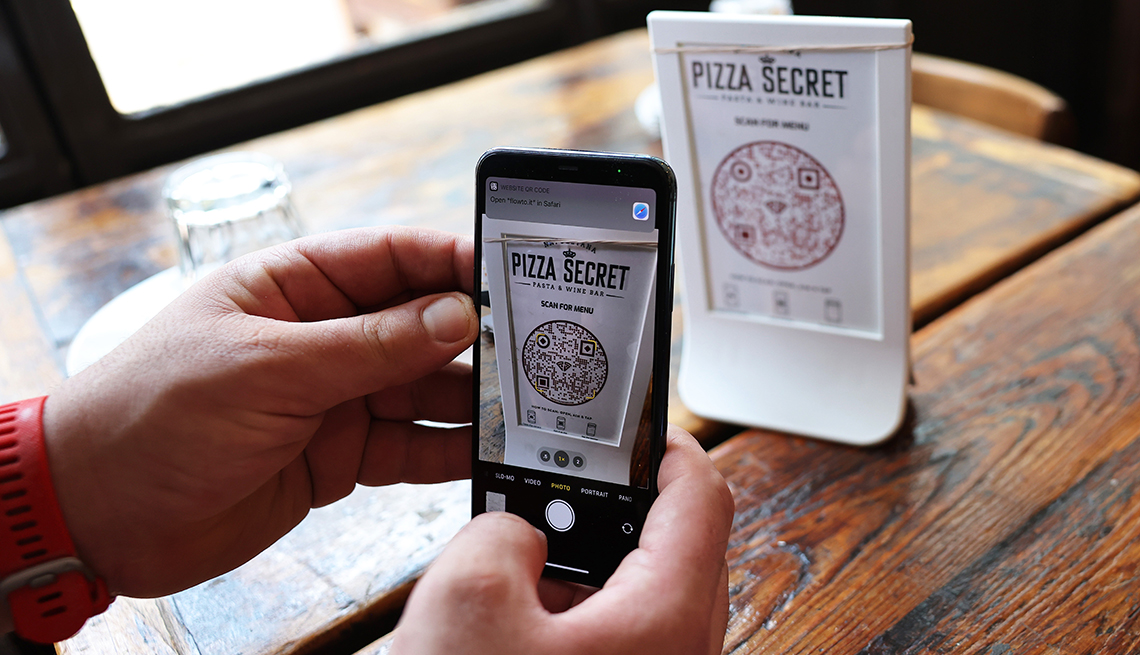
When you use your smartphone’s camera to scan a QR code, a link to a website will pop up on the screen. Tap on the link to go to the website and see additional information.
Courtesy of George Petras
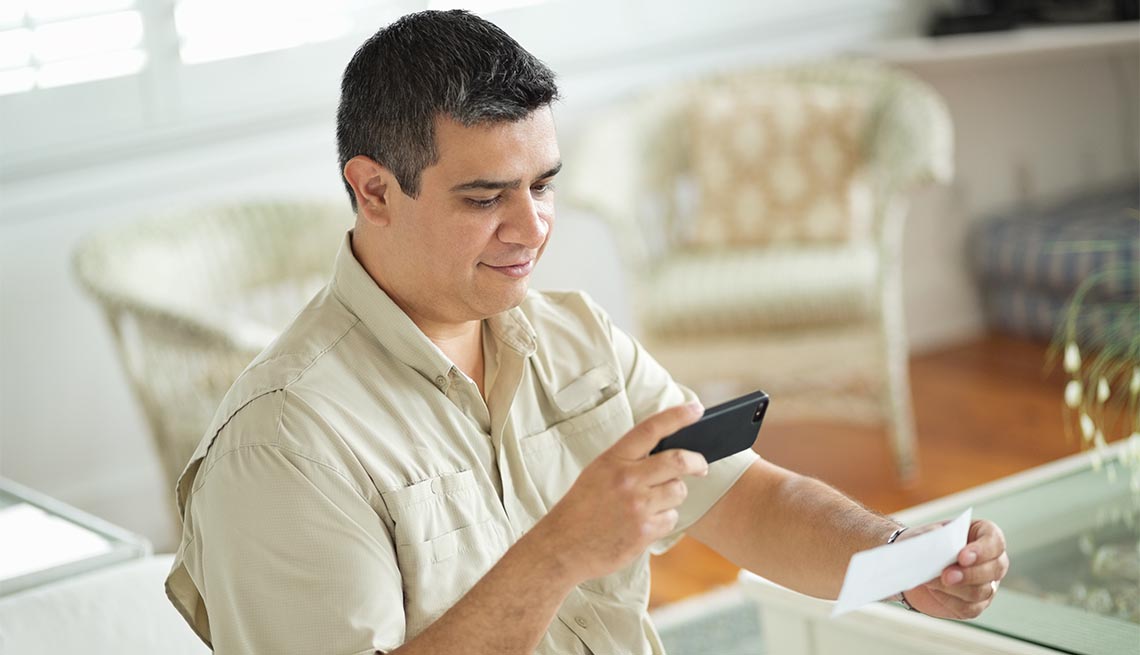
When you encounter a QR code, you’ll have to pull up your smartphone or tablet camera to find out more information. But you don’t — and shouldn’t — take a picture.
1. Point your camera at the code. It doesn’t matter whether you’re holding your phone vertically or horizontally. Your phone can even read the code upside down if you see a piece of paper that’s not facing you.
2. When your camera scans the QR code, you’ll see an icon or web address on your screen near the code. Tap it.
3. You’ll go to the associated website via your phone’s web browser, which should launch automatically.
If your smartphone or tablet operating system is up to date, you should be able to read a QR code and navigate to its website without additional software. Although free QR reader apps are available in the Apple and Google Play app stores, you won’t need them, and some could expose you to malware. Apple built a QR reader into iOS 11 in 2017, and Google followed with its Android 9 operating system, also known as Android Pie, in 2018.
Before you scan, be aware of where the QR code is coming from and whether it looks as if it’s been tampered with. The web address you see as you hover over the code should be something expected, such as a company’s website for job information or a restaurant’s site for a menu.

Video: 3 Things to Never Do With a QR Code
QR codes’ pervasiveness gives scammers ideas
As people of all ages became more familiar with QR codes, scammers stepped in to take advantage, according to the FBI.
Identity theft is the intent. Altered or completely fake QR codes lead consumers to fraudulent websites with the goal of taking their usernames and passwords, installing malware on their devices and stealing their identities. Check Point, a cybersecurity company based in Tel Aviv, measured a nearly sevenfold increase in QR code phishing attacks between August and September 2023, a scam that’s been dubbed “quishing” for “QR phishing.”
A common version of this scam is a request, sent via email, for the recipient to scan a QR code within the email using a smartphone camera, Check Point says in its blog. Your smartphone and any security software on your devices have a tougher time detecting a malicious QR code, considered an image, than an embedded phishing link in text.
Does a request pass the smell test? A need to scan your email with another device is puzzling if you think about it. When you’re reading email, you’re already online and could click directly to any webpage with an embedded link.
Scammers are not just trying to entice you with an exotic-looking QR code. They also are trying to evade any of your email service’s safety features. Be especially wary if you’re asked to make a financial transaction using a QR code.
This story, originally published Feb. 13, 2023, has been updated to reflect older adults’ uneasiness with QR codes and the increased scams involving them.

AARP Membership
Join AARP for only $15 per year with automatic renewal. Get instant access to members-only products and hundreds of benefits, a free second membership, and a subscription to AARP The Magazine.

More From AARP
Stream Shows Abroad: Tips for Traveling
What’s next? Tech expert Ed Baig gives you pointers
Secure Your Data: 5 Key Habits to Adopt
Creating unique passwords for accounts isn’t the end
Smartphones: 16 Ways They Changed Our Lives
Influence has been mostly positive