
AARP Hearing Center









































Be Your Own Pilates Instructor by Learning These Simple Moves
Bring home the benefits of this core-strengthening routine — no studio required

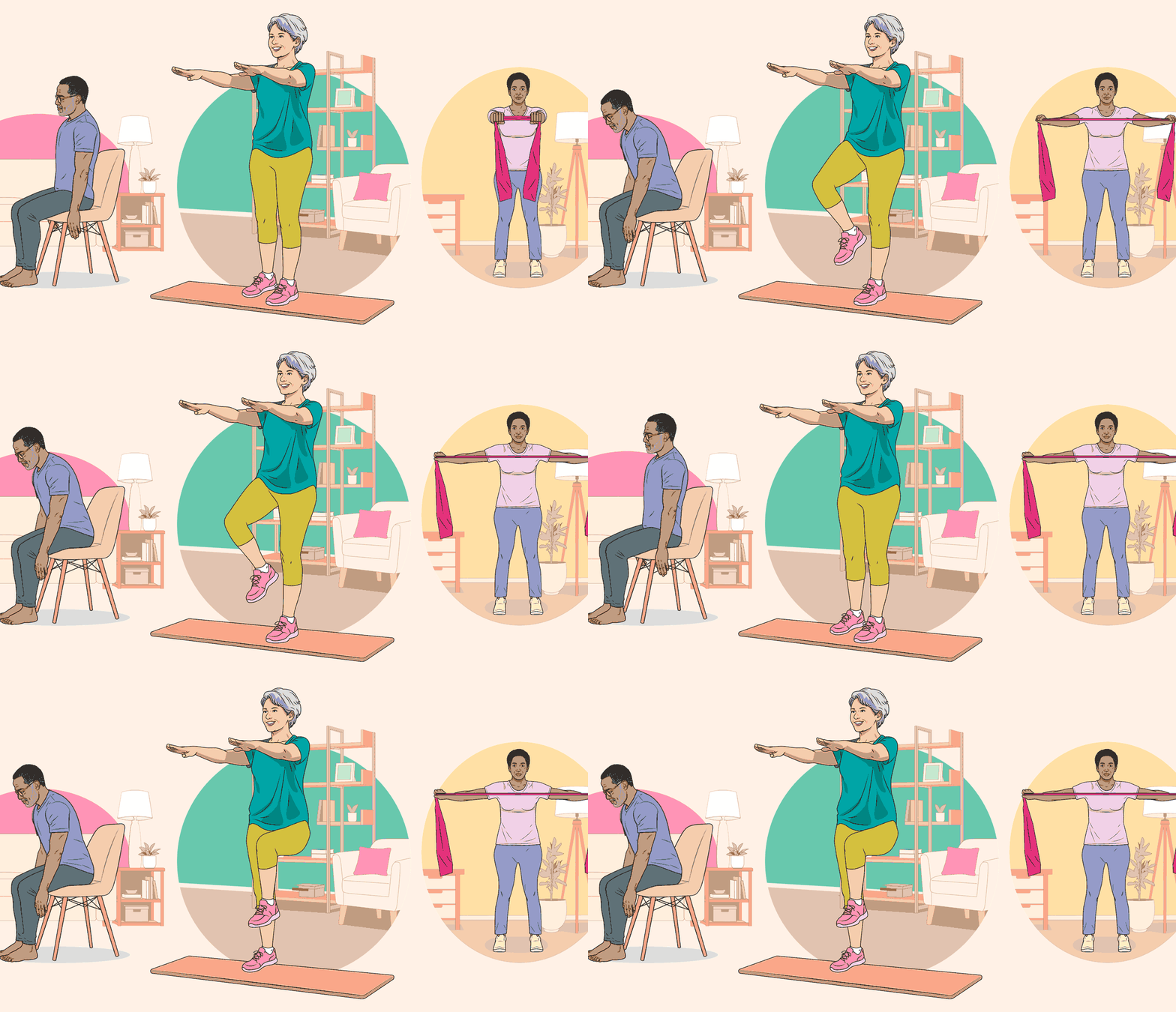
Pilates is great for adults 50 and older, and a practice you can easily do at home.
Remie Geoffroi
If it seems like there’s a new Pilates studio popping up on every corner, you’re not imagining it. The low-impact workout is experiencing a massive surge, with good reason: “Pilates is a great option for those 50 or older because it is a low-impact exercise that will help with your flexibility, mobility, posture and strength,” says Natalie Camardo, an exercise physiologist with the Cleveland Clinic. You won’t believe the many benefits this form of exercise has to offer. And you don’t have to sign up for a class or studio membership to partake.
Here are 10 Pilates-inspired moves to try at home. (Click here for dozens of Pilates videos you can follow along to.)
More Ways to Benefit
- Related Benefit 1
- Related Benefit 2
- Related Benefit 3
- Related Benefit 4
- Related Benefit 5
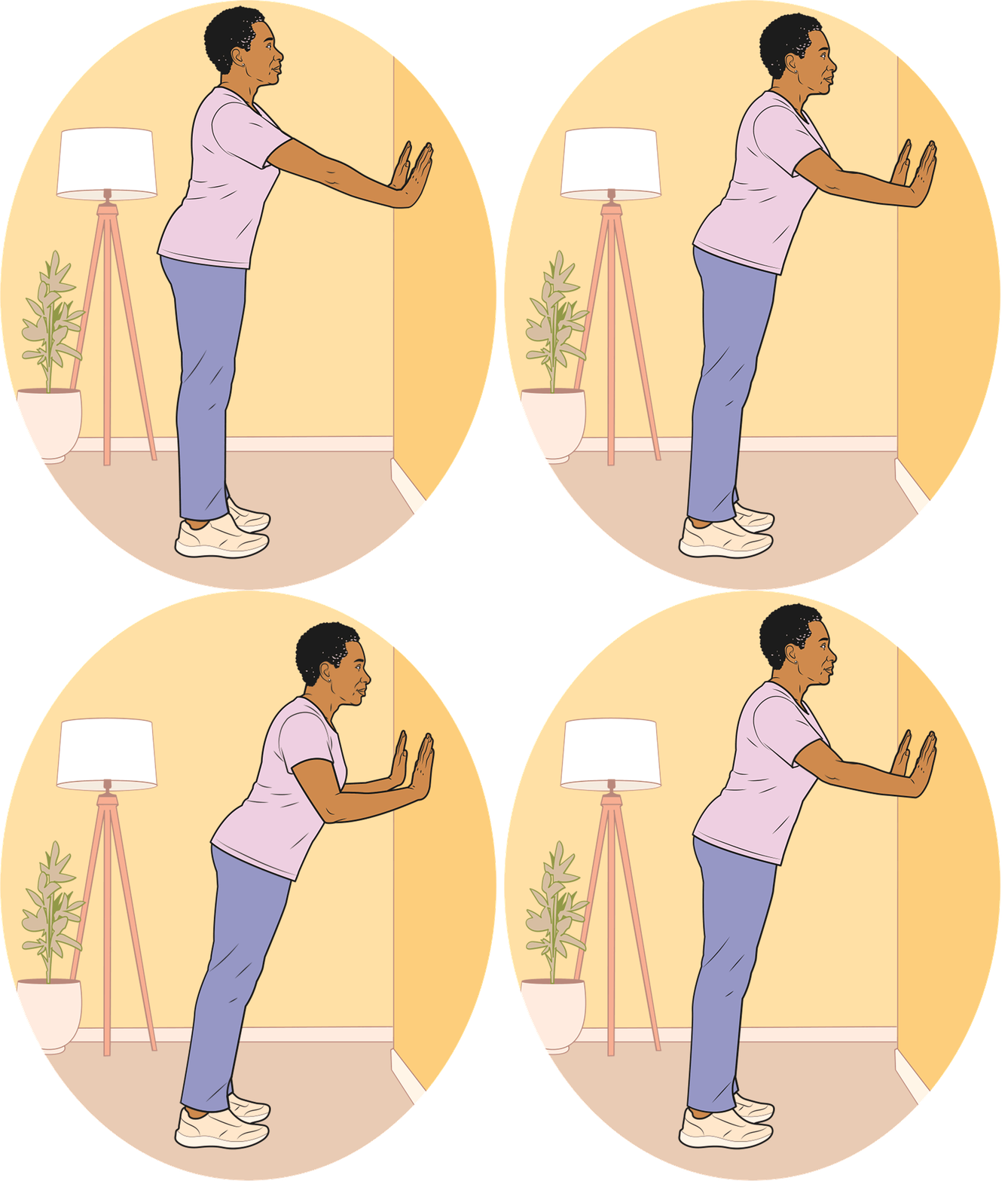
Do this Pilates variation of a push-up standing, using a wall for support.
Remie Geoffroi
1. Wall push-up
Improves upper-body strength and core stability; supports bone density.
- Stand an arm’s length from the wall with your palms on the wall, shoulder-width apart at chest height.
- Bend your elbows to bring your chest toward the wall, then straighten your elbows as you push against the wall to press your body back to the starting position, says Liz Hilliard, owner of Hilliard Studio Method in Charlotte, North Carolina.
- To make it easier, step closer to the wall.
Begin with 2 sets of 10 to 12 reps.
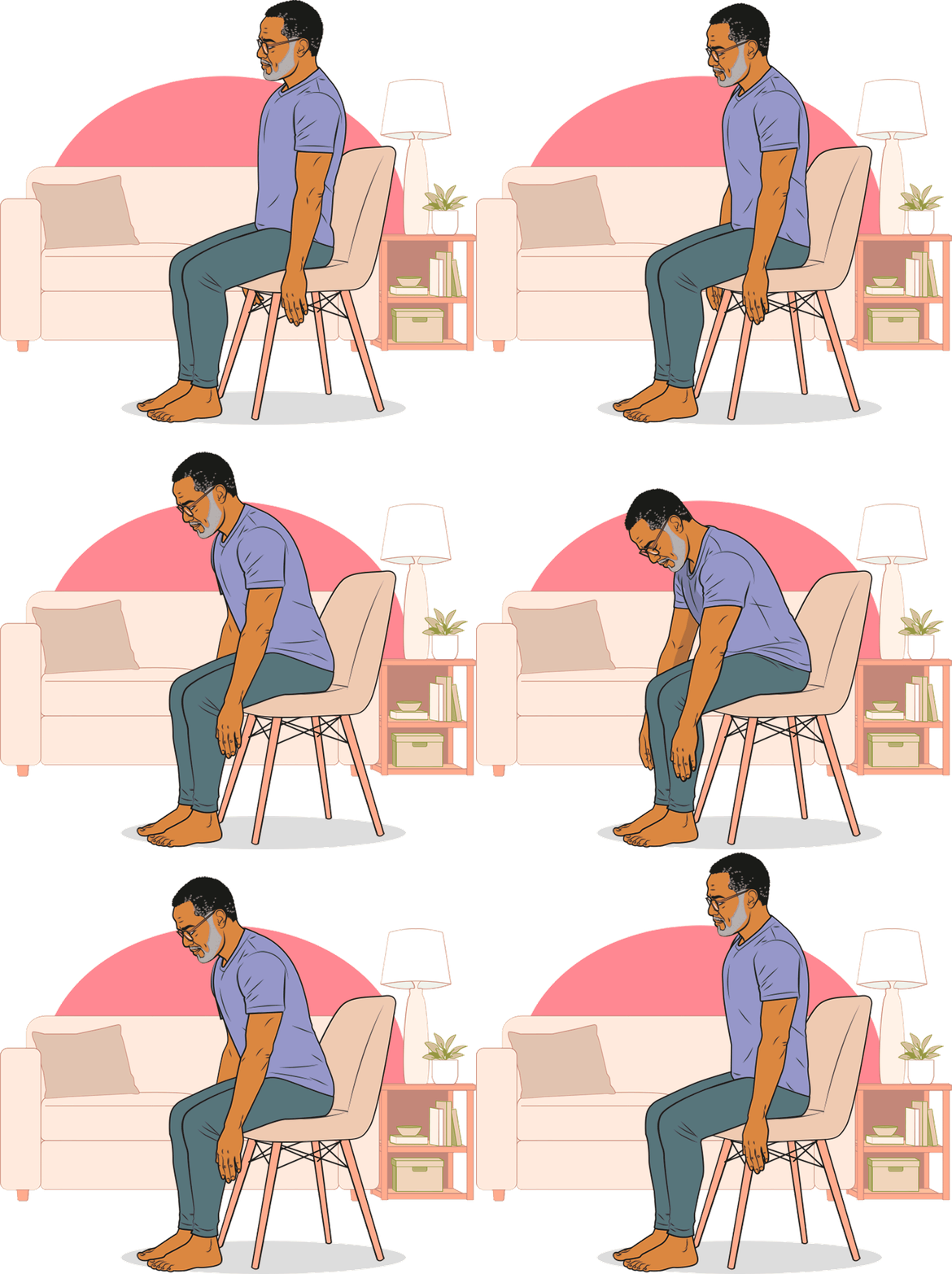
A seated spine stretch encourages the spine to lengthen and flex while also promoting better posture.
Remie Geoffroi
2. Seated spine stretch
Helps lengthen and stretch the spine while promoting core strength.
- In a sturdy chair with no arms, sit with your spine straight and your feet flat on the floor. Allow your arms to dangle toward the ground. Inhale as you lengthen through the crown of your head.
- As you exhale, gently round forward from your upper back, allowing your arms to reach toward your knees or shins. Pause, then inhale as you return to a tall seated position.
Perform 5 to 8 reps.
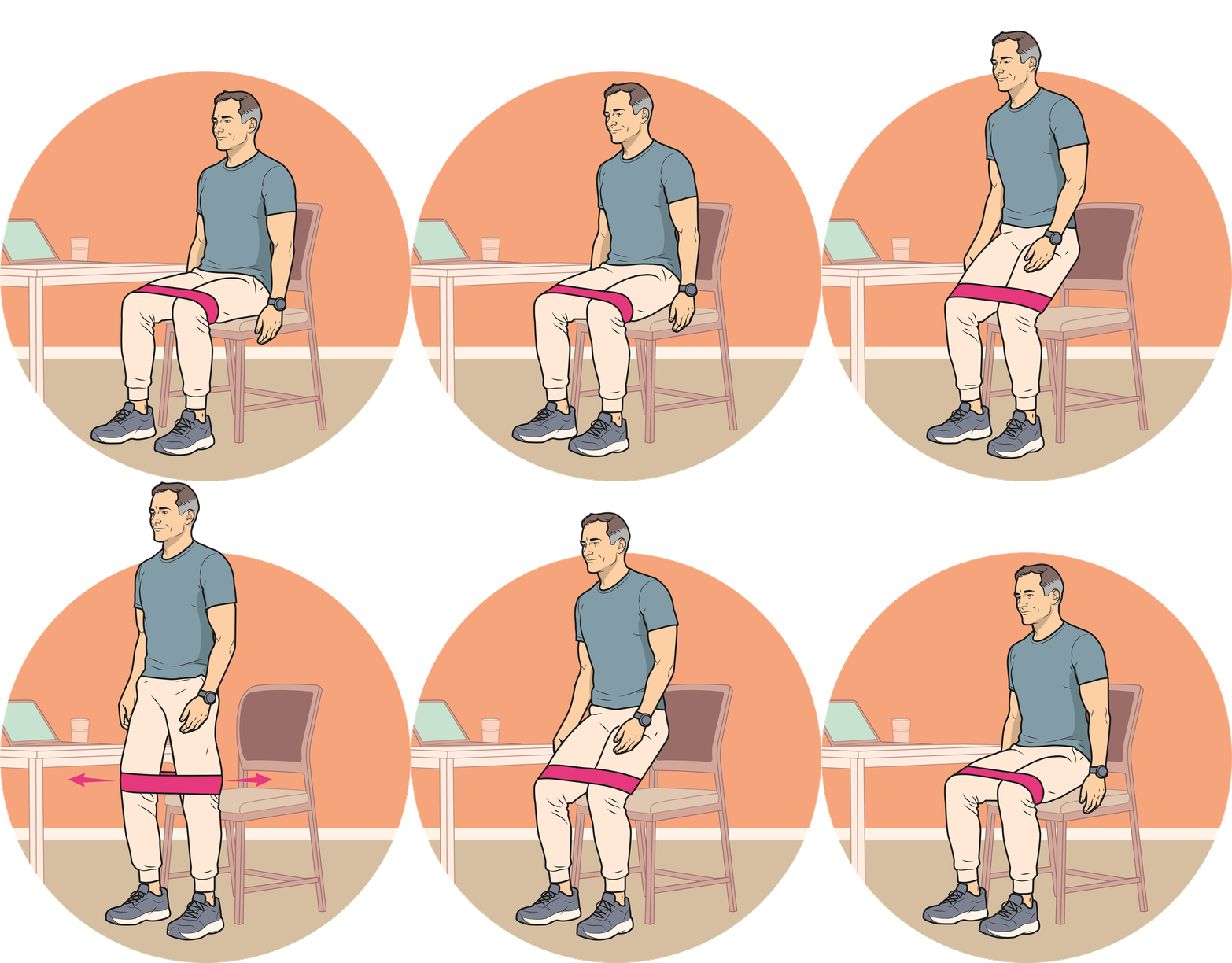
Use a band for the sit-to-stand move to strengthen your thighs, hips and glutes.
Remie Geoffroi
3. Sit-to-stand with band activation
This move strengthens the thigh, hip and glute muscles, helping you stay strong and independent as you age.
- Sit on a chair and wrap a resistance band around your thighs, just above the knees.
- Stand up, gently pressing your knees outward into the band to activate the hips and glutes, recommends Nofar Hagag, founder of Nofar Method, with studios in New York City and Miami.
- Slowly sit back down with control, maintaining the outward resistance.
Try 2 sets of 15 repetitions.
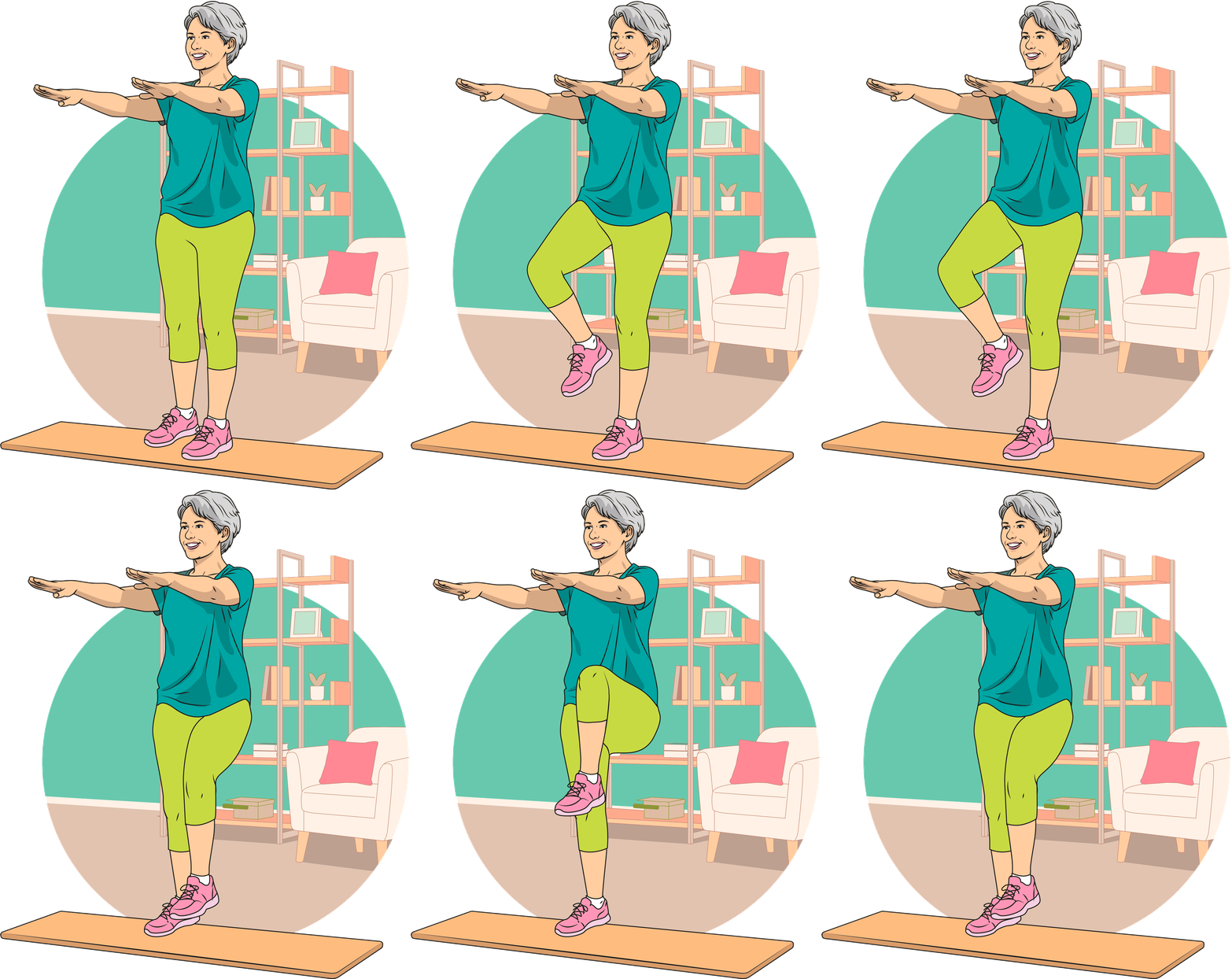
The standing march builds core strength to make everyday moves, such as getting out of a chair, bending down and carrying groceries, easier.
Remie Geoffroi
4. Standing march
Helps build a strong core to enhance balance and stability and improve posture.
- Stand with your feet hip-width apart, knees slightly bent, ribs over your hips.
- Keeping your hips level, lift one knee after the other to march in place. “To add an extra balance and core challenge, extend your arms forward or overhead,” suggests Jill Drummond, vice president of fitness at Bodybar Pilates in Fort Worth, Texas.
Start with 30 seconds and work your way up to 1 minute.
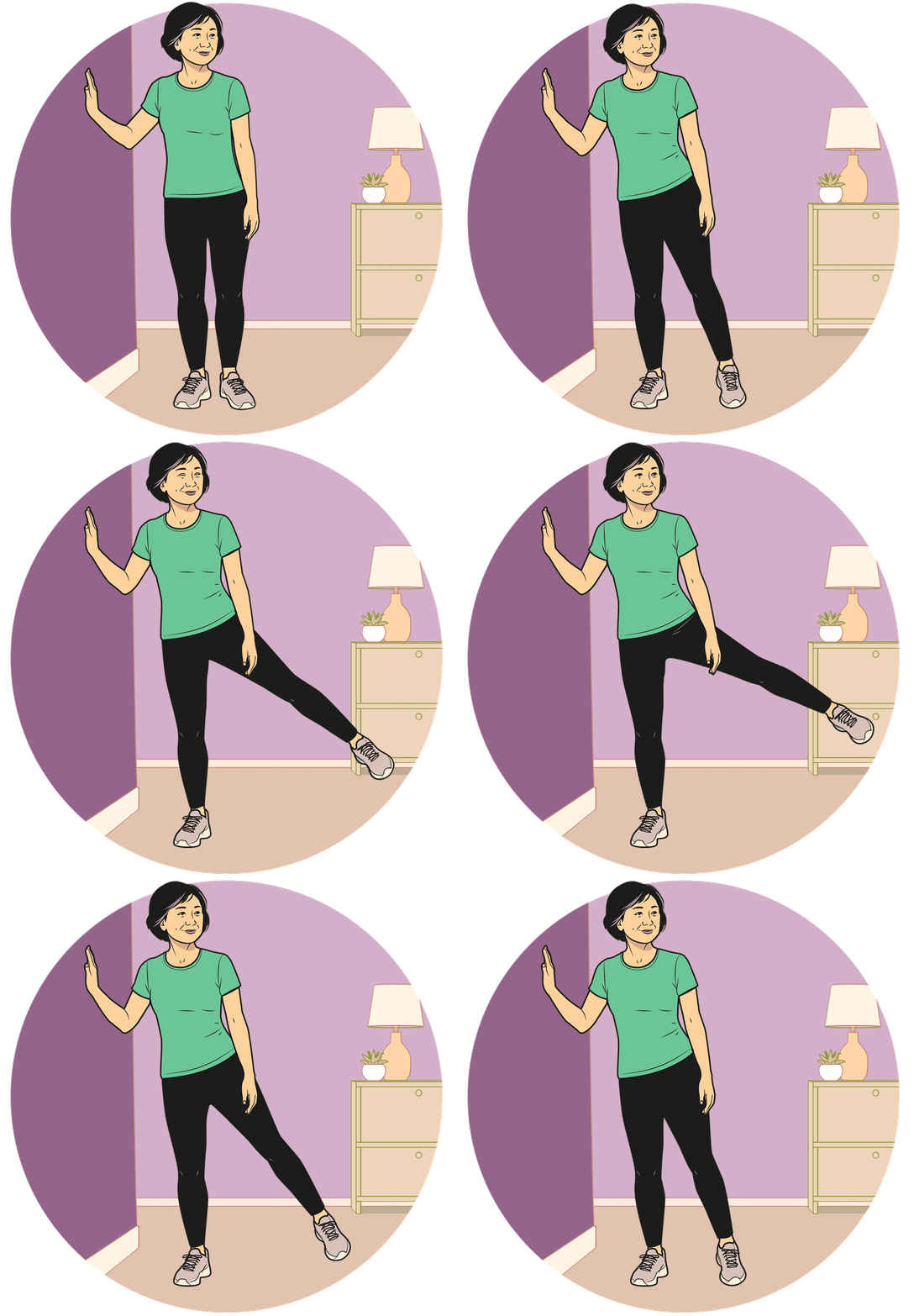
5. Supported side leg lift
Balance can decline with age, but it is important for fall prevention. “This targets the outer hip muscles, which play an important role in stability,” says Kevyn Zeller, founder of New York City’s KZ Pilates.
- Hold on to a wall with your right hand. Shift your weight onto your right leg.
- Lift your left leg straight out to the side. Lower it back down slowly, then repeat.
Do 5 to 8 reps on each side.
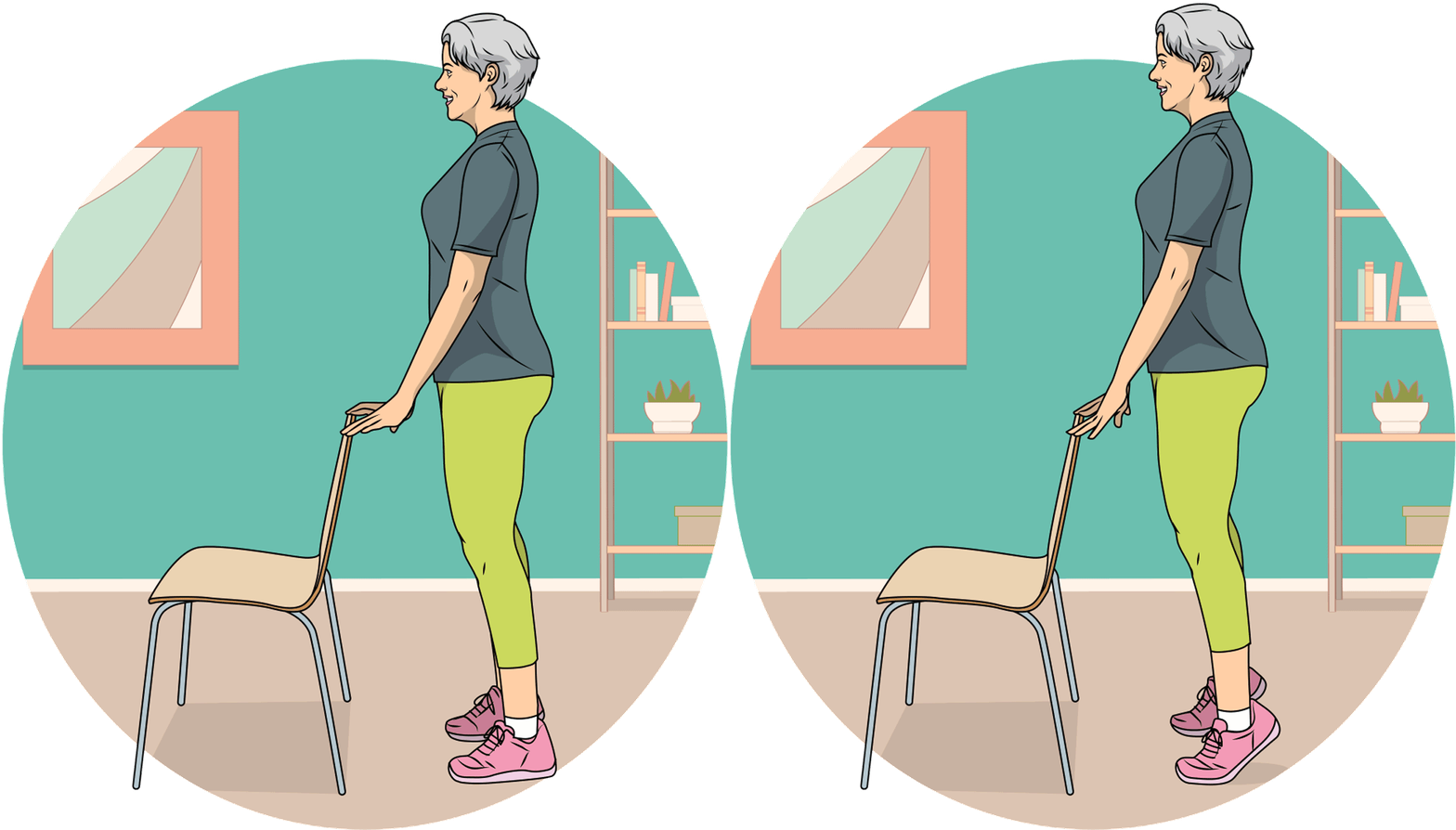
Standing heel raises boost foot and ankle strength, both of which are important for balance.
Remie Geoffroi
6. Standing heel raises
“Foot and ankle strength are the absolute foundation of our balance and play a massive role in fall prevention,” says Adefemi Betiku, a physical therapist and an instructor at Club Pilates in New York City.
- Stand facing a wall or the back of a sturdy chair, lightly resting your fingertips on it for balance. Have your feet parallel and hip-width apart.
- Inhale to prepare, and as you exhale, press evenly into the balls of your feet to lift your heels off the ground, growing as tall as possible.
- Inhale to slowly lower your heels back down with absolute control — do not let gravity drop you.
Perform 2 sets of 15 repetitions.
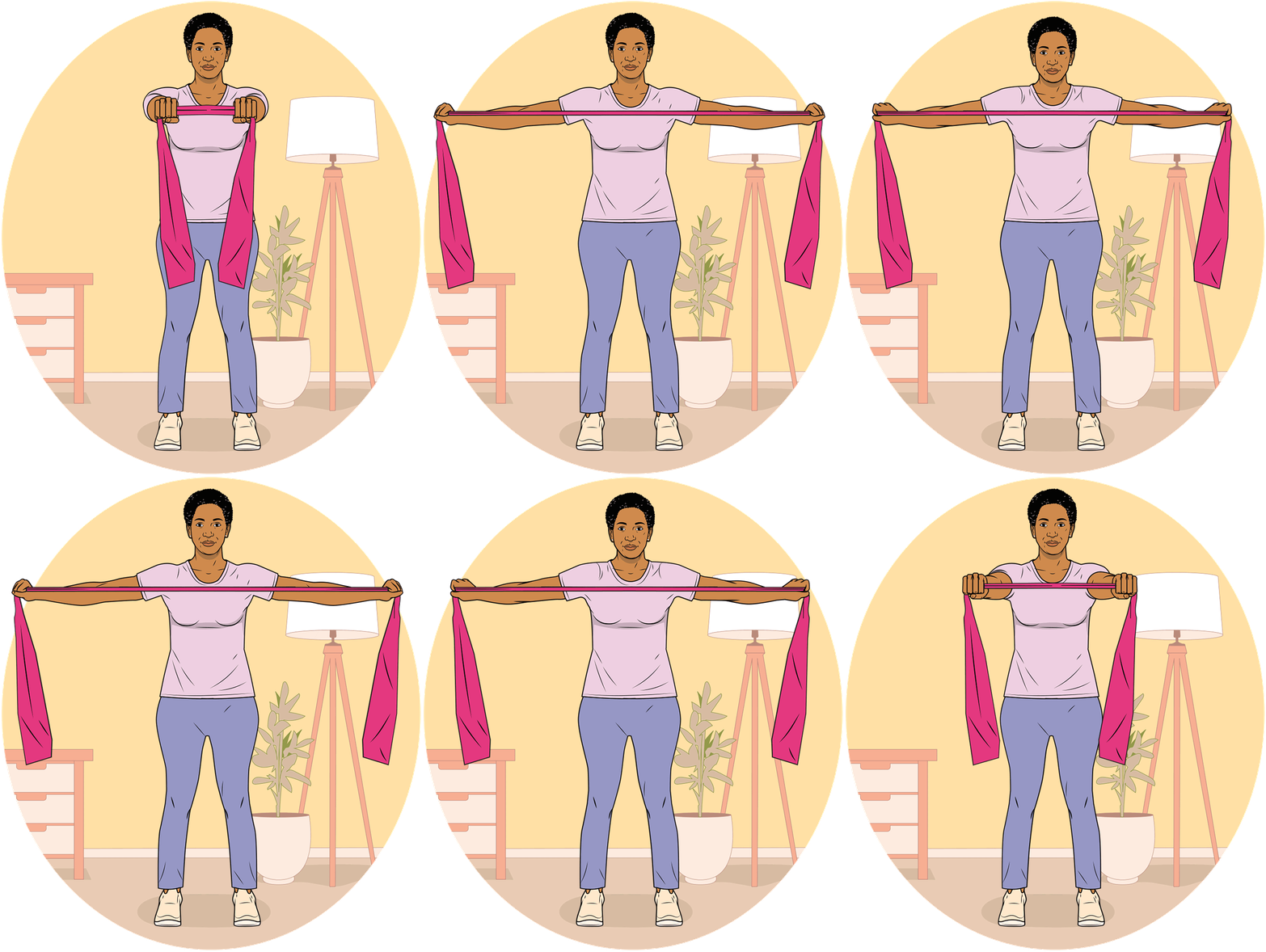
Band pull-aparts help keep you upright and improve posture.
Remie Geoffroi
7. Band pull-aparts
Poor posture can lead to neck, back and spinal pain, and affect your breathing, mobility and even your mood. This move helps to keep you upright by strengthening the upper back, shoulders and postural muscles while opening the chest and improving spinal alignment.
- Stand tall, holding a light resistance band in front of you at shoulder height.
- Open your arms wide, so your body is in a T-shape, then add 5 to 8 small controlled pulses backward, feeling your shoulder blades gently draw together.
- Slowly return to the starting position, focusing on keeping your chest open and your neck relaxed.
Do 2 sets of 15 repetitions.

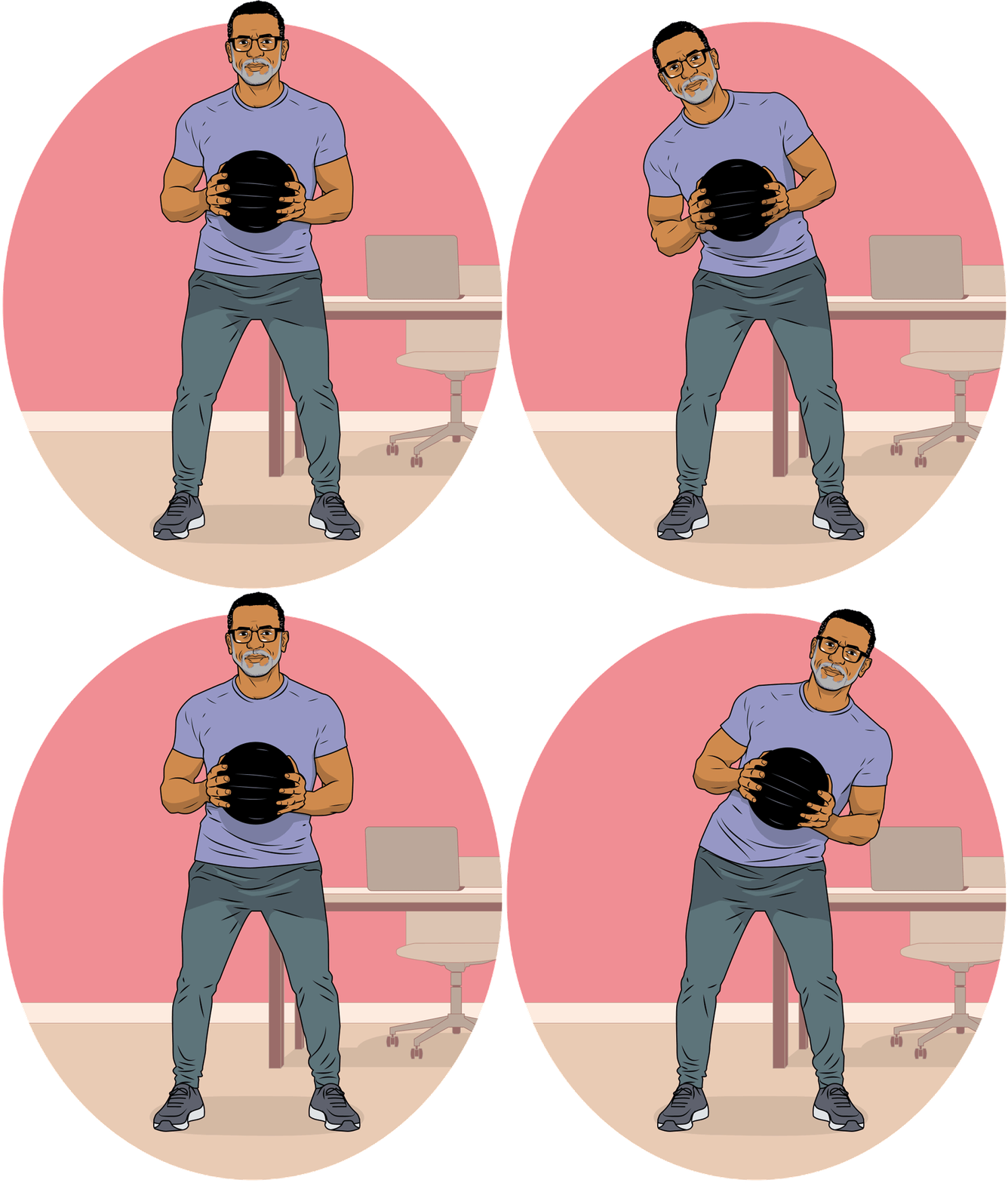
Wide side bends foster oblique strength and flexibility.
Remie Geoffroi
8. Wide side bends
Your obliques, the muscles along your sides, help with stability and enable your trunk to twist and turn. Try this move to give them some TLC.
- Stand feet wider than hips, toes turned out.
- Hold a pair of light weights at your chest. Keeping your hips square and core engaged, bend side to side from the waist with controlled movements. “The wide stance keeps you grounded, while the obliques do the work,” Hilliard says.
- You can perform this move without weights; you can also place your hands behind your head or at your waist, depending on what makes you feel more stable. As you advance, increase the weight or slow the tempo for deeper oblique engagement.
Do 2 to 3 sets with 10 to 12 on each side.
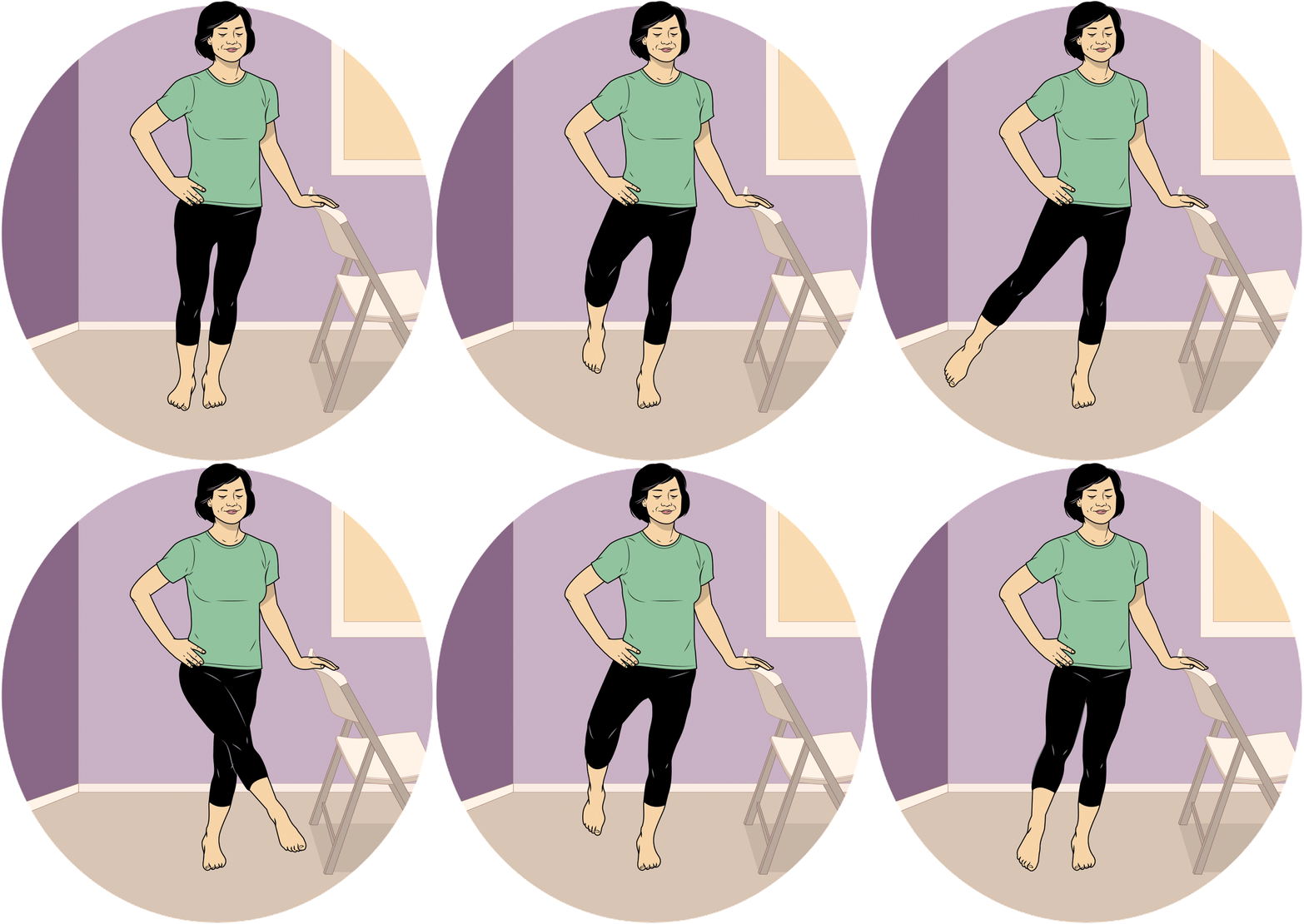
9. Standing leg circles
A standing Pilates leg series helps build lower body strength through the hips, glutes, hamstrings, quads and calves, says Drummond.
- Place one hand on the back of a chair, a wall or another stable surface for support. Shift your weight into the leg closest to your support so the opposite leg can move freely.
- Begin with a standing outer-thigh lift, targeting the abductors and gluteus medius. Stand tall and lift your leg out to the side with a flexed foot for 30 seconds.
- Next, progress to leg circles to layer in an inner-thigh challenge. Keep the leg lifted and draw small, controlled circles, completing 30 seconds in one direction and 30 seconds in the other. When finished, repeat on the opposite side.
- Throughout each movement, keep your core gently braced and your posture tall.
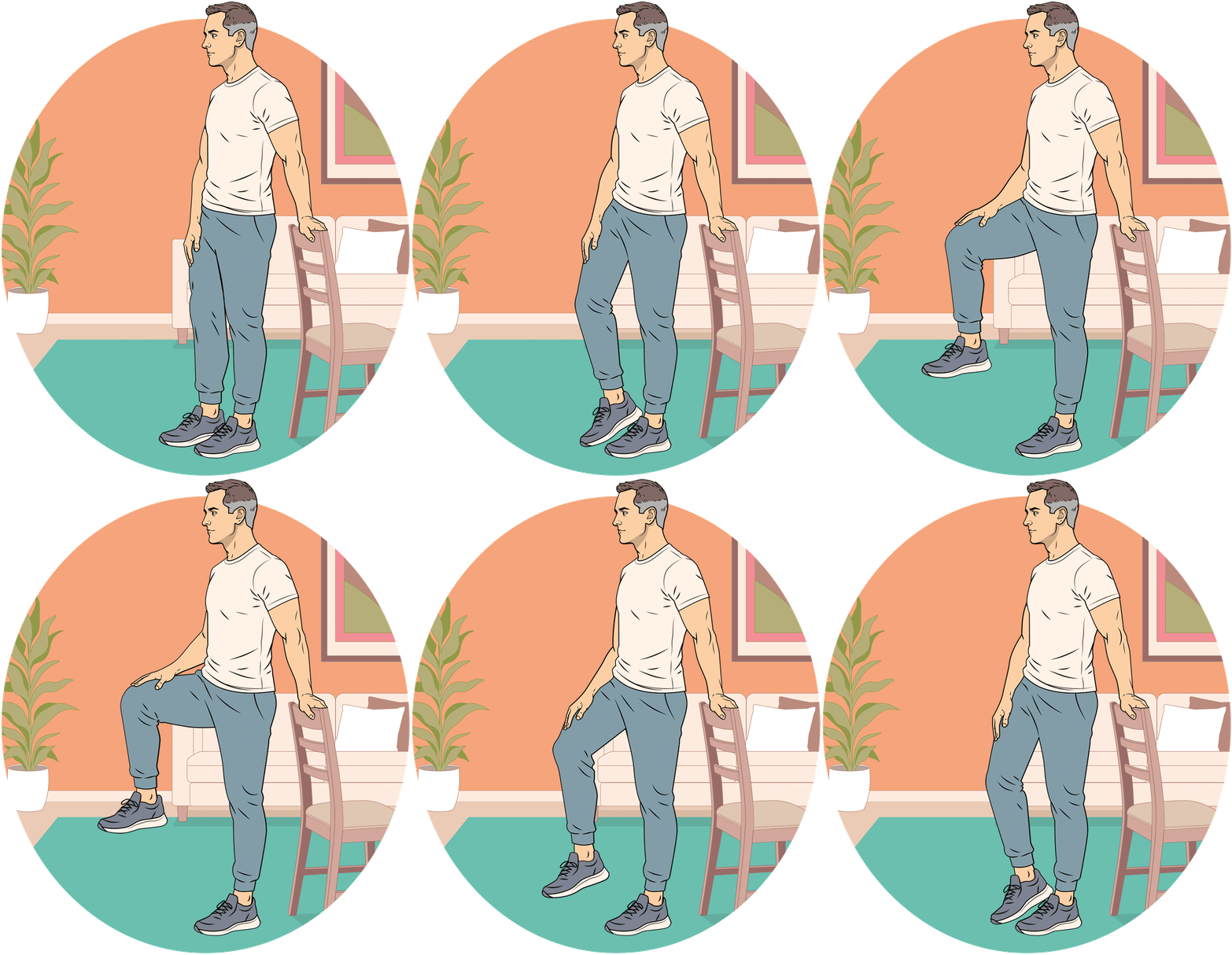
Try the standing leg stretch, a full-body Pilates move.
Remie Geoffroi
10. Standing single-leg stretch variation
This full-body Pilates move engages the wrists, arms, back, abdominals, hips and legs.
- Stand with your feet parallel, toes facing forward. Hold on to a stable chair or a countertop for balance if necessary.
- Lift one leg up with your knee bent at a 90-degree angle, and press your hand toward your thigh and your thigh into your hand, creating resistance for your leg with your arm, recommends Brynne Billingsley, founder of Progressive Pilates in Williamsburg, New York. Hold for 3 to 5 seconds.
- Slowly lower your leg back to the floor and change legs, repeating on the other side.
Repeat each leg 4 to 6 times total.
Ready for more? Try dozens of free on-demand Pilates classes led by certified instructors from Pilates Anytime.

AARP Membership
Join AARP for only $15 per year with automatic renewal. Get instant access to members-only products and hundreds of benefits, a free second membership, and a subscription to AARP The Magazine.
You Might Also Like
AARP Smart Guide to Limited-Mobility Fitness
Great ways to get moving, even when it’s challenging
The Top Exercise to Lower Blood Pressure
Adding exercises like wall sits to your workouts can make the heart muscle stronger
25 Health Mistakes That Age You
Every day we make choices that can either protect us or accelerate the aging process