
AARP Hearing Center









































Will Gallbladder Surgery Change My Life?
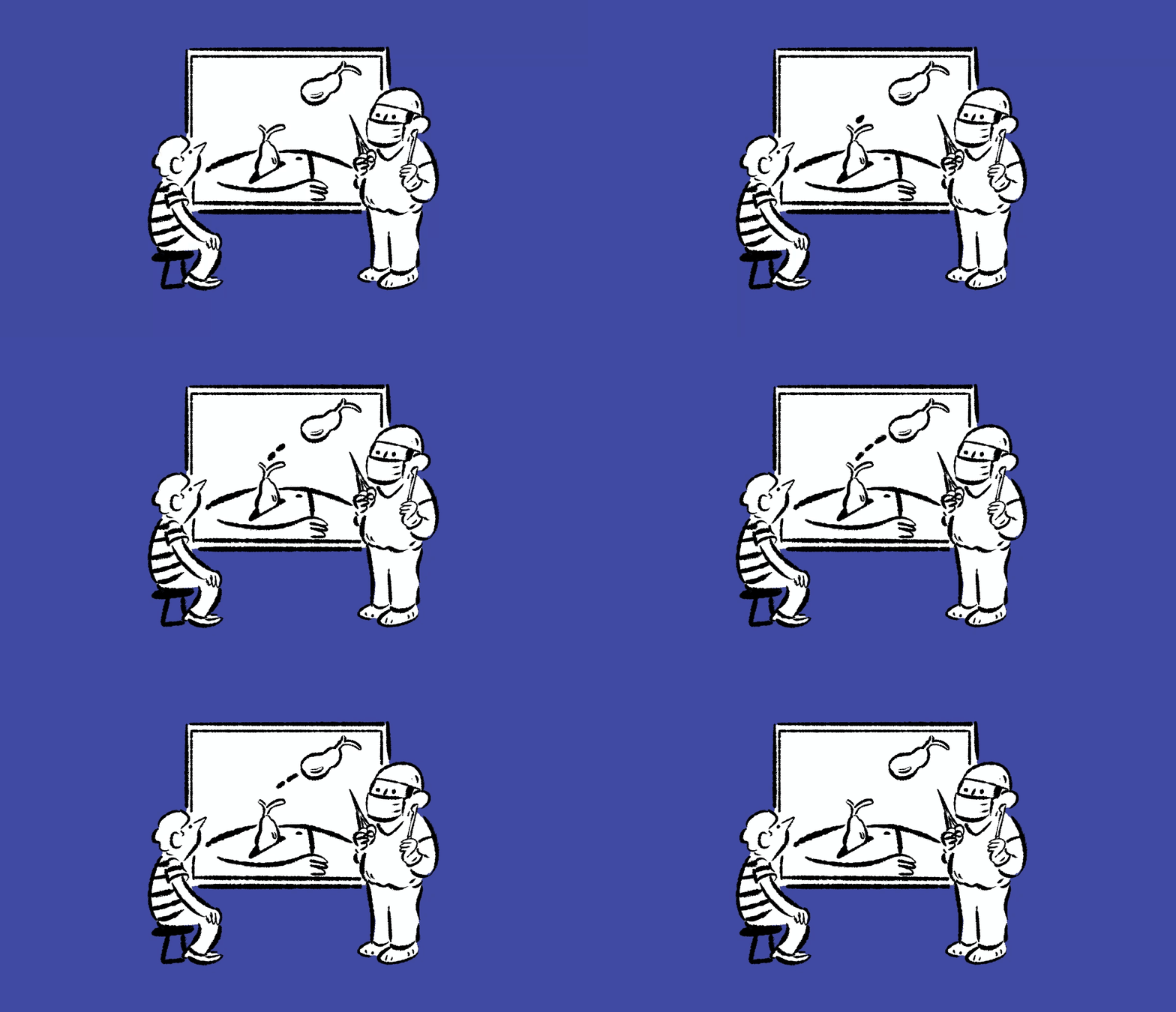
Dr. Adam explains what the gallbladder does, why it may need to be removed and what to expect during recovery

James Yates
I may have my gallbladder removed. How will that change my life?
The short answer is that for most people, life after gallbladder removal is remarkably normal. In fact, if your gallbladder is causing symptoms, there’s a good chance you’ll feel a lot better after it’s gone.
More Ways to Benefit
- Related Benefit 1
- Related Benefit 2
- Related Benefit 3
- Related Benefit 4
- Related Benefit 5
But I think it’s helpful to begin our discussion by explaining what a gallbladder does. Your gallbladder is a small, pear-shaped organ that sits in the upper right section of your abdomen, tucked directly underneath the liver. Your liver produces bile, a digestive fluid that helps break down fats. The gallbladder acts as a storage tank, holding that bile until you eat a meal, especially when a meal contains fat. When the gallbladder contracts, bile is released into your small intestine to aid with digestion.
Problems arise when gallstones form. These stones develop when certain substances in bile crystallize and harden. Many people have gallstones and never know it. But once those stones begin blocking the flow of bile, things can change quickly.
The classic symptom is severe pain in the upper right side of your abdomen, under your ribcage, often after a rich or fatty meal. The pain can be sharp or intense, and sometimes radiates to your back or right shoulder. If a stone causes inflammation of the gallbladder, a condition called cholecystitis, the situation can become serious enough to require hospitalization and urgent treatment.
Gallbladder problems become more prevalent with age. Research shows that approximately 1 in 10 men has gallstones by age 60, while more than 25 percent of women older than 60 have them, making gallbladder disease one of the most common reasons older adults have abdominal surgery.
The good news is that gallbladder removal, known as a cholecystectomy, is a relatively simple procedure. Today, more than 90 percent are done laparoscopically through several small incisions. Most patients go home the same day and return to many normal activities within a couple of weeks.
What surprises many folks is that you don’t actually need a gallbladder to digest food. Remember, the liver makes the bile. The gallbladder simply stores it. After surgery, your liver continues producing bile, but instead of being stored and released in bursts, it flows directly into your intestines.
For most patients, this transition causes little or no long-term difficulty. So you’ll be able to eat, travel and exercise normally and never give your missing gallbladder another thought.
Having said that, your body may need a little time to adjust. For the first few weeks after surgery, I generally recommend a low-fat, high-fiber diet. Think grilled fish instead of fried, and baked chicken instead of wings. Smaller meals spread throughout the day, instead of three big, heavy meals, can make recovery easier. The goal is to give your digestive system time to adapt to the new flow of bile.
Some people notice temporary digestive changes, such as bloating, gas or loose stools. A small percentage develop persistent diarrhea because bile is continuously entering the intestines rather than being stored. If that happens, don’t suffer in silence. We have highly effective treatments. An older medication called cholestyramine, which binds excess bile acids, often completely solves the problem.
You should also know that healing takes time. While the incision may look good within a few weeks, your body continues to recover for at least a month. Be patient with yourself.
If surgery is recommended because you’re having recurring gallbladder attacks, inflammation or complications from gallstones, the operation is usually far less disruptive than the disease.
And that’s the point I’d like you to remember. Having your gallbladder removed doesn’t mean you’re giving up a normal life. In many cases, it’s the step that allows you to feel like yourself again.

AARP Membership
Join AARP for only $15 per year with automatic renewal. Get instant access to members-only products and hundreds of benefits, a free second membership, and a subscription to AARP The Magazine.

You Might Also Like
25 Great Superfoods to Help You Live Longer
These delicious foods can help us stave off disease and keep us healthy as we age
Are You Ready to Turn 50? Take Our Quiz and See
Review AARP’s Smart Guide on this important topic, then test your knowledge
Do Dogs Make Us Healthier?
How pups can help us lower stress, improve heart health and live longer