
AARP Hearing Center









































How Can I Lower My Risk for Pancreatic Cancer?
Why quitting smoking, maintaining a healthy weight and knowing your family history matter

James Yates
How can I lower my risk of pancreatic cancer?
The pancreas is an organ located behind your stomach. Its job is to help the body break down food for digestion and create hormones that control sugar levels. Pancreatic cancer starts when abnormal cells develop in this organ and create a tumor. The disease mostly affects people over 65
More Ways to Benefit
- Related Benefit 1
- Related Benefit 2
- Related Benefit 3
- Related Benefit 4
- Related Benefit 5
Although there are typically no early warning signs for pancreatic cancer and there’s no guaranteed way to prevent it, there are several things you can do to lower your risk.
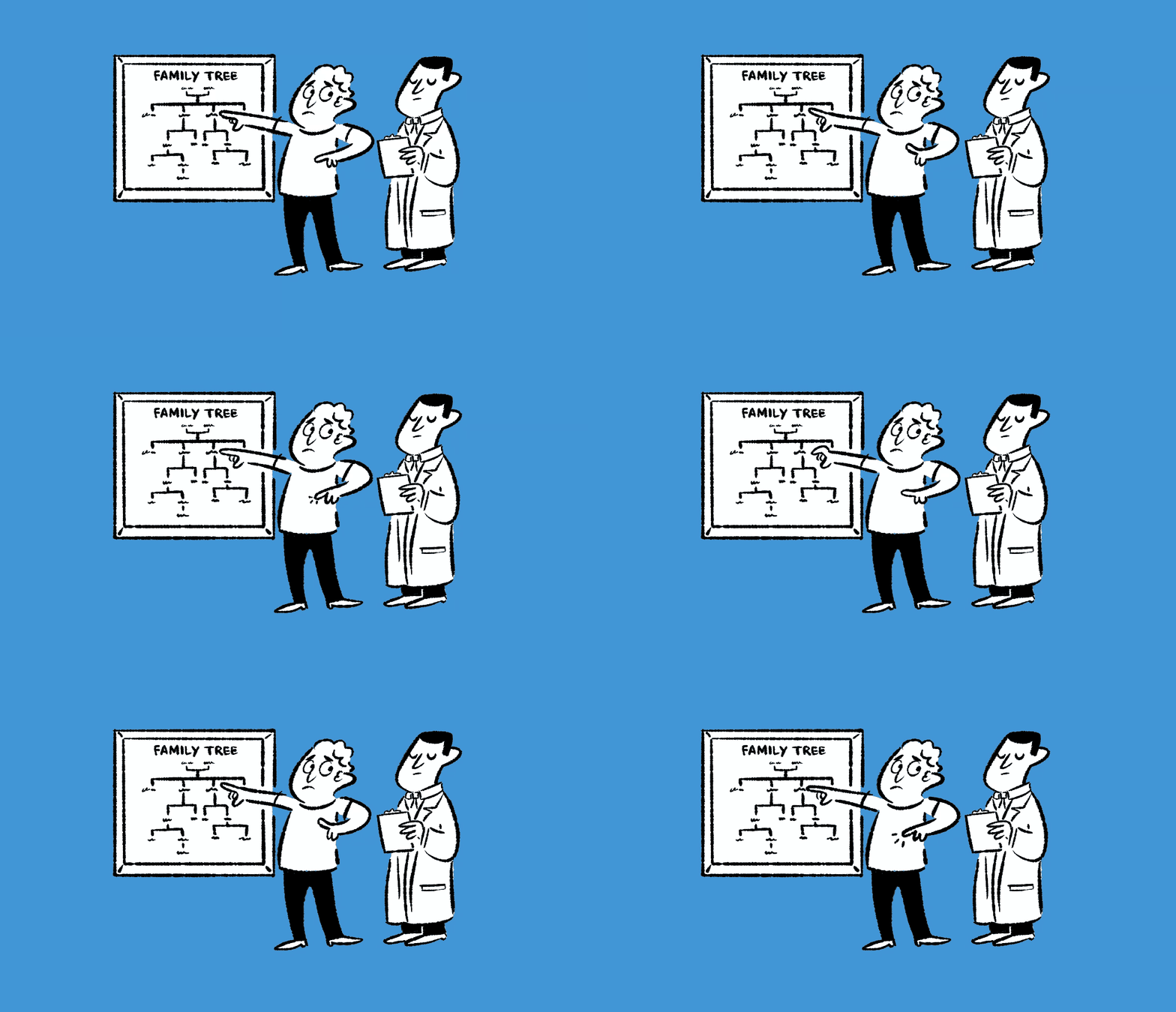
Let’s start with your family history. If one of your parents, siblings or other close relatives has had pancreatic cancer, tell your doctor. Family history sometimes signals an inherited genetic risk, and you should be monitored accordingly. Certain inherited mutations, including changes in the BRCA genes, are associated with an increased risk of pancreatic cancer. People with a significant family history or a known genetic risk may need more specialized surveillance.
This is not merely theoretical for me. In my own family, my wife’s father died of pancreatic cancer, and genetic testing showed that she carries a gene that increases her risk.
Because of this, she gets an annual MRI of her pancreas and a blood test. This is an example of why your family history is such an important place to begin.
If you don’t have it in your family, then prevention becomes much more about things you can control. The first is smoking. I consider it the single most important modifiable risk factor for pancreatic cancer.
A 2023 study offers a compelling look at why quitting matters so much. Researchers analyzed more than 182,000 participants and identified 1,831 pancreatic cancer cases over an average of 19 years of follow-up. Those who smoked a pack a day for 50 years had a 91 percent higher risk of pancreatic cancer than people who had never smoked.
But there’s also encouraging news. According to that same study, every year after quitting was associated with a 9 percent decrease in the excess pancreatic cancer risk that’s linked to previous smoking.
Weight is another factor, and I want you to pay special attention if you have excess weight around your middle. People with obesity are about 20 percent more likely to develop pancreatic cancer, according to the American Cancer Society, while other research finds that carrying excess weight around the middle may increase risk even for people who don’t otherwise have a lot of excess body weight. There is no magic diet for pancreas health, but I recommend minimizing your intake of highly processed foods, refined sugars, excess alcohol and large amounts of red meat. Those choices also support metabolic and heart health. The goal is to achieve a healthier weight in a sustainable way.
Physical activity belongs on the list too, as exercise helps people maintain a healthy body weight. It’s also associated with a lower risk of many cancers, and a 2024 analysis of 25 studies found that people with the highest levels of physical activity had a lower risk of pancreatic cancer than those with the lowest levels of exercise.
People with type 2 diabetes have a higher risk of pancreatic cancer, so controlling your blood sugar, taking prescribed medications and staying physically active all go a long way toward minimizing your risk.
Chronic pancreatitis, or long-term inflammation of the pancreas, also increases the chance of pancreatic cancer. Heavy drinking and smoking are both linked to this condition.
I don’t want you to feel that pancreatic cancer is something you have to spend your life fearing. Some risk factors — age and inherited genes, for example — are outside your control, but you can know your family history, stop smoking, work toward a healthy weight, move your body, eat sensibly and manage diabetes. These steps do not guarantee you’ll avoid pancreatic cancer. But they can improve your odds — and your overall health.

AARP Membership
Join AARP for only $15 per year with automatic renewal. Get instant access to members-only products and hundreds of benefits, a free second membership, and a subscription to AARP The Magazine.

You Might Also Like
The Financial Toll of Cancer, and How to Cope
From chemotherapy and surgery to travel, cancer care can strain finances for years
Insider Secrets on Integrative Medicine
Dr. Victoria Maizes shares 21 ways a holistic approach to health can heal what ails you
How Can You Reduce Your Cancer Risk?
Learn how to take control of your health