
AARP Hearing Center























.jpg?anchor=17,8&q=80&color=ffffffff&u=8wsalu&w=375 "Fall Movie Preview 2026")
















Doctor, I Think My Partner Is Having Memory Problems
Advice on what to do when a loved one may need a cognitive test

James Yates
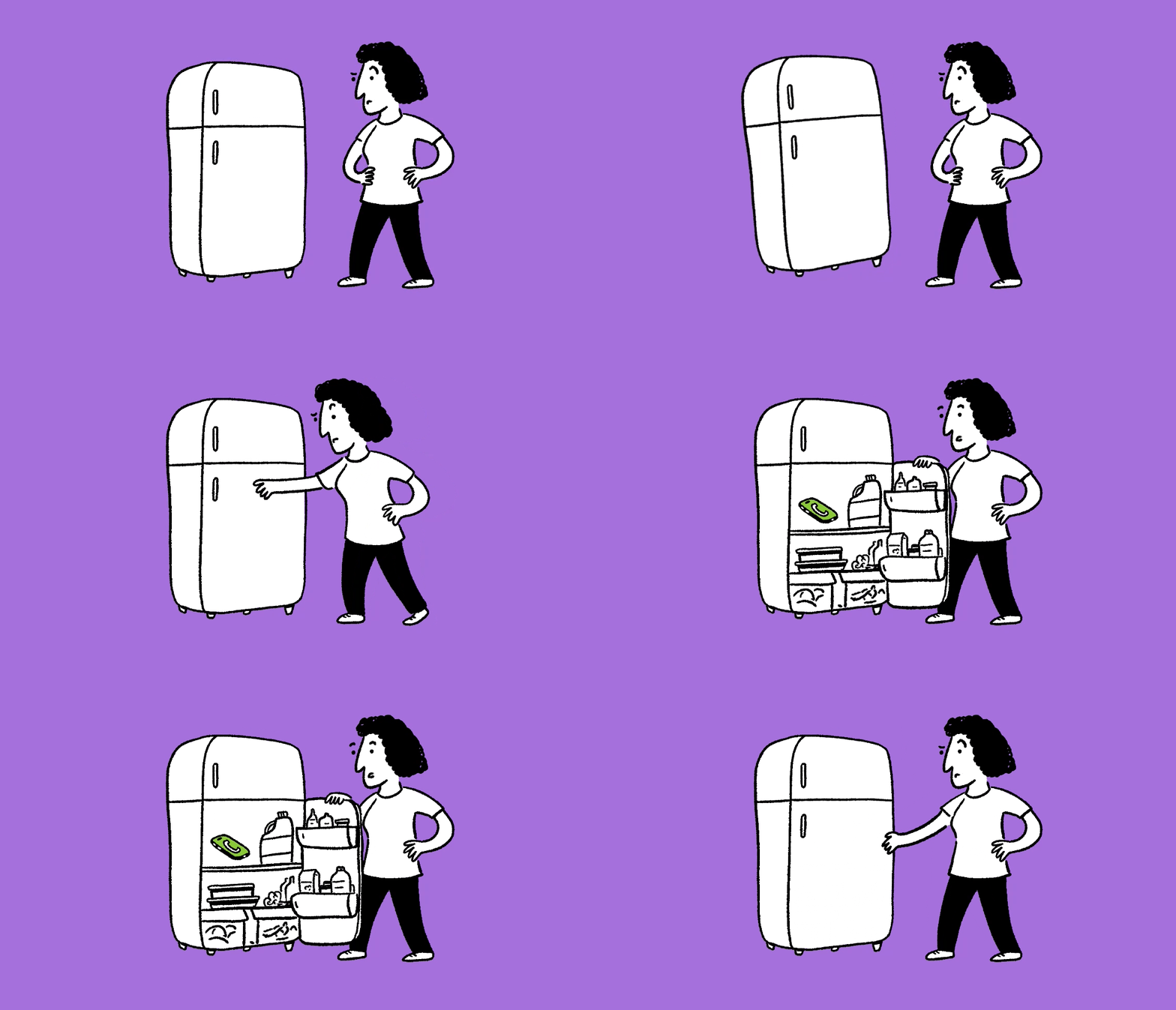
Yesterday I found my partner’s phone in the refrigerator. He is becoming more and more forgetful, but if I suggest he get screened for memory loss, he refuses and gets defensive. Any suggestions?
My medical practice is generational, so I encounter this issue regularly, and it’s a difficult one. Memory gets to the fundamental idea of who we are as human beings. Unlike other health problems such as hypertension or high cholesterol, memory loss may make us feel as if our very selfhood is in peril.
More Ways to Benefit
- Related Benefit 1
- Related Benefit 2
- Related Benefit 3
- Related Benefit 4
- Related Benefit 5
When people are diagnosed with memory loss, they may fear that their rights will be taken away. They worry that friends and family will think differently of them. Some may be concerned about job security. Most are terrified of dementia. All this dread may play into hesitation around taking a cognitive function test.
There are other possible reasons behind your partner’s forgetfulness. Sometimes stress, anxiety or depression affects our thinking, as can a vitamin deficiency. Even a urinary tract infection can cause sudden confusion and memory problems. The good news? All these issues can be treated. But if your partner is one of the nearly 10 percent of Americans age 65 or older who has some type of dementia, the earlier he seeks medical attention, the more doctors can do to help slow the progression of the disease. This includes appropriate medications and lifestyle modifications for memory.
What’s your next step?
The AARP Brain Health Resource Center offers tips, tools and information:
- Staying Sharp, including an online assessment of reasoning, memory and attention.
- Advice on diet, exercise, sleep and more.
- Explainers on dementia, stroke and other brain illnesses, and the latest news on brain health.
To begin, I would not say anything to your partner about the refrigerator incident if this is the first time. But I would make a note of it. In fact, I suggest you keep a diary with dates marking these types of events. People with memory issues will often say, “Oh, that never happened before.” If you have your diary, you can reply factually and without judgment, “Well, as a matter of fact, it has. This is the fourth time this month.”
It’s also important to avoid saying anything in a harsh or accusatory tone. Instead, speak with your partner in a kind and gentle manner. With the same calm voice, remind him that memory issues aren’t necessarily the result of dementia. This could ease his anxiety around a possible diagnosis.
But be honest about being worried. If you’ve already spoken with other family members about his forgetfulness, let your partner know they are also concerned.
If he continues to be resistant, I suggest you talk to your doctor. Recently, one of my patients told me he was worried about his wife’s memory but didn’t have the heart to bring it up. I suggested they make back-to-back appointments. While they were sitting in my office, I said, “As part of your regular care, I want you both to get a memory test.”
His wife was defensive. “Why? I’m fine,” she said.
“Because I think it’s a really important part of your primary care,” I said matter-of-factly. “You get your blood pressure checked and your thyroid checked; why wouldn’t you get your memory checked?” Eventually, they both agreed, and my office staff made appointments for them to see a neurologist.
The less resistant your loved one is, the earlier you may be able to intervene. My late father was dealing with this problem as he got older, and our family took proactive and protective steps. For example, we got him a simple GPS watch so he wouldn’t get lost in the neighborhood. We took a lot of stuff out of his wallet and gave him only one credit card to use, with a limit on how much he could charge.
It’s important to understand that there’s no blanket answer for everyone showing memory issues. One person may say, “Thank goodness you noticed. I’ve been really nervous about what’s going on and would appreciate your help.” The other 9 out of 10 people could angrily say, “You’re wrong!”
If this continues to be your partner’s reaction, the most helpful thing you can do is remain supportive. Approach his forgetfulness with understanding and patience. Encourage him to maintain social connections and help him to continue to engage in activities he enjoys.
Love and patience may be the most effective way to eventually get your partner to agree to a cognitive test.

AARP Membership
Join AARP for only $15 per year with automatic renewal. Get instant access to members-only products and hundreds of benefits, a free second membership, and a subscription to AARP The Magazine.

You Might Also Like