
AARP Hearing Center





































The Great Gen X Rewatch Guide
Which of your TV favorites deserve another look, and why they mean more to us now
9-minute read

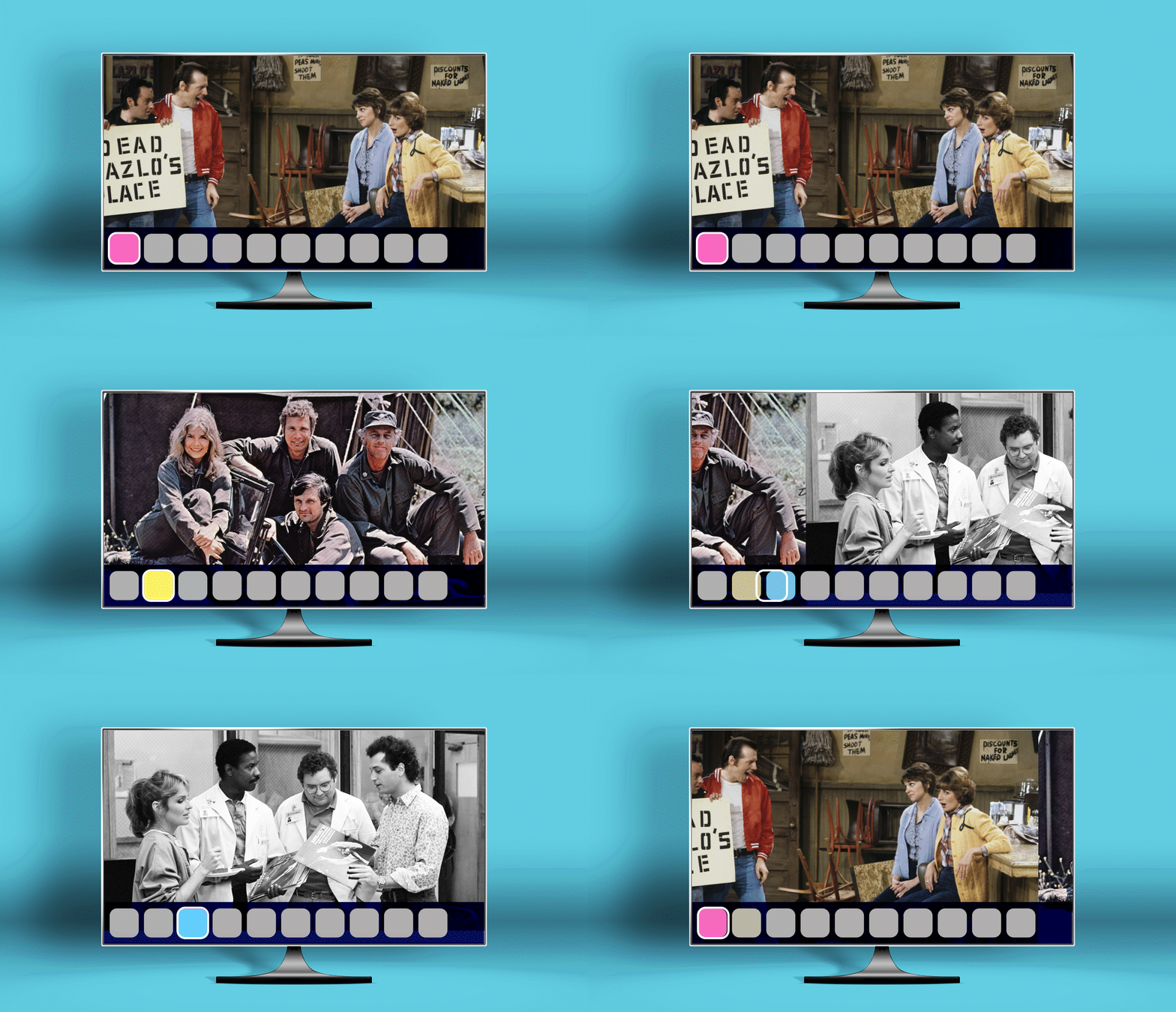
Come for the nostalgia of “Laverne & Shirley,” “M*A*S*H” and “St. Elsewhere.” Stay because you finally understand why all the adults looked so tired.
AARP (Getty Images, ABC Photo Archives/Disney General Entertainment Content via Getty Images, Keystone/Getty Images, Frank Carroll/NBCU Photo Bank)
During a recent dinner with friends, one guy mentioned that he’d started rewatching Good Times, the sitcom from the ’70s.
“It’s better than I remembered,” he said. “I mean, I was 5 when it came out, so most of it went right over my head.”
“Seriously?” I asked. “The show with the ‘Dy-no-mite!’ guy?”
“It’s so much more than that. They were tackling actual issues, like poverty and racism. I just watched one about a rent party for somebody who couldn’t afford her rent. It’s better than 90 percent of what’s on TV right now.”
More Ways to Benefit
- Related Benefit 1
- Related Benefit 2
- Related Benefit 3
- Related Benefit 4
- Related Benefit 5
That’s a bold statement, and it was enough to get my wife and me watching again. What I remembered was J.J. (Jimmie Walker) strutting into the room and shouting his catchphrase. What I’d forgotten was everything happening around him. Florida (Esther Rolle) and James (John Amos) were trying to raise three children, and a single lost paycheck could throw the entire family into crisis.
The jokes still land. This time, though, James’ anger makes more sense. He knows how little room the family has for one more financial setback.
With more television available than we could watch in several lifetimes, why do we keep returning to shows that stopped making new episodes when our parents were still paying the cable bill?
Cristel Antonia Russell, a marketing professor at Pepperdine University who has studied how people consume and revisit stories, initially expected nostalgia to explain why people returned to their favorite childhood shows. “But the satisfaction came from rediscovering the stories, picking up on new things or even understanding and interpreting things in a totally different way just because you’re a different person,” she says. Some people returned to the same show repeatedly and “still got something new every time.”
We all know the usual rewatch suspects — Friends, The Office, Seinfeld — but plenty of other shows deserve another turn. Here’s where to find them.

The Monkees dress for four completely different television shows in a scene that somehow belongs to just one.
Michael Ochs Archives/Getty Images
The Monkees
During its two-season run from 1966 to 1968, The Monkees followed four struggling musicians who kept getting mixed up with spies or gangsters. Songs could interrupt the action at any moment, launching a fast-cut chase that played like a music video, years before MTV.
As kids, we came for the songs and the slapstick. Watching it today, it’s easier to see how often the series was playing with TV itself, long before that kind of self-awareness became common in sitcoms.
Standout episode: “Mijacogeo,” the series finale directed by Micky Dolenz, in which an evil wizard uses television to hypnotize the world.
Where to watch: The Monkees

Don Adams, as Maxwell Smart, answers his shoe phone in “Get Smart,” proving that unreliable technology was funnier before we depended on it.
Warner Brothers/Getty Images
Get Smart
Created by Mel Brooks and Buck Henry, the spy spoof Get Smart ran from 1965 to 1970. Don Adams played CONTROL agent Maxwell Smart, a man whose confidence far exceeded his competence. His shoe doubled as a telephone, and the famously useless Cone of Silence could turn any secret conversation into a bureaucratic mess.
During the show’s initial run, we laughed at all those goofy gadgets that never seemed to work as promised. But today, weird and unnecessarily complicated tech that makes life more difficult seems … oddly familiar.
Standout episode: “Mr. Big,” the black-and-white pilot in which Smart answers his shoe phone for the first time.
Where to watch: Get Smart

The laugh track told us “M*A*S*H” was a comedy. A rewatch reveals how much pain it was trying to cover.
Keystone/Getty Images
M*A*S*H
From 1972 to 1983, the doctors of the 4077th used jokes to get through the Korean War. The early episodes leaned on pranks and insults, but the series grew more reflective as the years passed. Hawkeye’s (Alan Alda) wisecracks once made him seem like the funniest guy in camp. Now they sound like his way of remaining sane.
That change happens gradually, which makes watching the series in order especially rewarding. It’s still funny; we’re just more aware of what the laughter was covering up.
Standout episode: Season 3’s “Adam’s Ribs,” in which Hawkeye becomes fascinated with getting barbecue ribs shipped from Chicago to Korea, only to be called into surgery when dinner finally arrives.
Where to watch: M*A*S*H

James Garner’s Jim Rockford spent much of his day listening to people explain how their problems had become his problems. Adulthood makes this very relatable.
Bob Nese/NBCU Photo Bank/NBCUniversal via Getty Images
The Rockford Files
Jim Rockford was a private investigator who lived in a trailer near the beach and charged $200 a day, plus expenses, when he could collect it. Over six seasons from 1974 to 1980, James Garner played him as a man who would rather talk his way out of a fight — and usually regretted it when he couldn’t. Each episode opened with a new answering machine message, often from a creditor or a client ducking payment.
Back then, the Firebird and car chases grabbed us. These days, Rockford’s constant struggle to get paid may be the most relatable part of the show.
Standout episode: “The Kirkoff Case,” the first regular episode, in which a young James Woods offers Rockford $20,000 to clear him of murdering his parents.
Where to watch: The Rockford Files

Barney Miller
Most of Barney Miller took place in one shabby squad room, where the detectives of Manhattan’s 12th Precinct spent more time arguing and filling out forms than chasing bad guys. The series ran from 1975 to 1982, trusting long conversations and small reactions to carry the comedy.
The eccentric people hauled into the station got most of our attention the first time around. Watching now, we may recognize ourselves in the detectives instead. After enough years spent managing coworkers and keeping a workplace running, Barney’s patience becomes the funniest part of the show.
Standout episode: Season 3’s “Hash,” in which Wojo (Max Gail) brings brownies containing hashish into the precinct. Soon, Yemana (Jack Soo) is dunking one in his coffee and admiring how “mooshy” it has become.
Where to watch: Barney Miller

Lenny and Squiggy unveil Dead Lazlo’s Place while Laverne and Shirley wear the expressions of women who already know they’ll be doing all the work.
ABC Photo Archives/Disney General Entertainment Content via Getty Images)
Laverne & Shirley
Laverne DeFazio (Penny Marshall) and Shirley Feeney (Cindy Williams) shared a basement apartment in Milwaukee and worked on the bottling line at Shotz Brewery. From 1976 to 1983, they chased better jobs and better boyfriends while Lenny (Michael McKean) and Squiggy (David L. Lander) kept barging through the door uninvited.
The slapstick got our attention the first time around. Nowadays, the friendship may be the best part. Jobs disappeared, dates went badly and big plans fell apart, but Laverne and Shirley could always count on each other to help pick up the pieces.
Standout episode: Season 5’s “The Diner,” in which Lenny inherits a greasy spoon called Lazlo’s Place. After he and Squiggy rename it Dead Lazlo’s Place, Laverne and Shirley take over the kitchen and quickly find themselves buried in orders.
Where to watch: Laverne & Shirley

At WKRP, Jennifer Marlowe (Loni Anderson) made competence look effortless. Arthur Carlson (Richard Sanders) made management look exhausting.
Courtesy Everett Collection
WKRP in Cincinnati
WKRP was a struggling AM station that switched from easy listening to rock and hoped the ratings would follow. During its four-season run from 1978 to 1982, the station’s employees spent almost as much time managing one another as they did putting anything on the air.
DJ Johnny Fever (Howard Hesseman) may have seemed like the coolest person in the building when we were younger. Now, you may feel more sympathy for station manager Arthur Carlson (Gordon Jump), a decent boss who rarely knows what his employees are doing and usually learns about their mistakes too late.
Standout episode: Season 1’s “Turkeys Away,” in which WKRP’s news director, Les Nessman (Richard Sanders), reports live as a Thanksgiving promotion goes horribly wrong.
Where to watch: WKRP in Cincinnati


Betty Thomas as Officer Lucy Bates on “Hill Street Blues.” The action got our attention back then. On a rewatch, it’s the toll of reporting for another shift that stays with you.
Courtesy Everett Collection
Hill Street Blues
Each shift began with roll call inside a crowded urban precinct and Sergeant Esterhaus sending everyone out with “Let’s be careful out there.” From 1981 to 1987, cases stretched across episodes and conversations overlapped, while the camera moved through the station as if it were trying to catch up.
The street action may have held our attention when the show first aired. Years later, Captain Frank Furillo’s (Daniel J. Travanti) job looks just as difficult. He spends much of his day settling arguments and calming people down, only to discover that another crisis has started while he was busy with the last one.
Standout episode: “Hill Street Station,” the pilot, which begins with a chaotic roll call and ends with officers Bobby Hill (Michael Warren) and Andy Renko (Charles Haid) walking into an ambush.
Where to watch: Hill Street Blues

Long before prestige television, “St. Elsewhere” gave its doctors complicated lives, questionable judgment and no guarantee that everything would be resolved by the credits.
NBCUniversal via Getty Images
St. Elsewhere
St. Eligius was the rundown Boston teaching hospital where other hospitals sent the patients they didn’t want. From 1982 to 1988, its doctors made mistakes and sometimes faced the consequences for years. The ensemble included a young Denzel Washington as the ambitious Dr. Philip Chandler.
The doctors may have seemed like grownups in charge when the series first aired, but after enough years spent in hospitals ourselves, their uncertainty looks more familiar.
Standout episode: “The Last One,” whose snow-globe ending suggests that St. Eligius may have existed only inside the imagination of Tommy Westphall (Chad Allen). Then return to the pilot and see how the revelation changes it.
Where to watch: St. Elsewhere

We once watched “Cagney & Lacey” for the crimes. Now the real drama is watching two very different women survive the same demanding job.
CBS via Getty Images
Cagney & Lacey
Christine Cagney (Sharon Gless) and Mary Beth Lacey (Tyne Daly) were NYPD detectives with very different lives. Cagney was single and determined to advance. Lacey was raising children with her husband, Harvey (John Karlen), while doing the same dangerous job. From 1982 to 1988, the series followed them through criminal investigations and the daily resistance they faced in a department run mostly by men.
They looked like tough cops when we were younger. Watching now, the real strength is in their partnership. They argued, disappointed each other and occasionally said unforgivable things. Then the next crisis arrived, and they still showed up for the other.
Standout episode: Season 6’s two-part “Turn, Turn, Turn,” in which the death of Cagney’s father forces her to confront her own alcoholism, while Lacey refuses to look away.
Where to watch: Cagney & Lacey

Paul Reubens built a world on “Pee-wee’s Playhouse,” where the furniture talked, robots gave vocabulary lessons and nobody asked unnecessary questions.
John Kisch Archive/Getty Images
Pee-wee’s Playhouse
From 1986 to 1990, Pee-wee Herman (Paul Reubens) spent Saturday mornings in a playhouse where the furniture talked back and the day’s “secret word” sent everyone into screaming fits. Laurence Fishburne dropped by as Cowboy Curtis, and Phil Hartman played the gruff Captain Carl. The whole place looked as if a toy box had exploded inside an underground comic.
Children didn’t need any of this explained. We just accepted it. Watching now, it’s easier to see the quiet rebellion beneath those primary colors. The Playhouse treated weirdness as ordinary and difference as nothing that needed interpreting. Plenty of jokes sailed over our heads, but somehow the larger idea got through: Everyone belonged there.
Standout episode: “Ice Cream Soup,” the first episode, in which Pee-wee prepares the questionable dish after rain ruins everyone’s plans for a swim.
Where to watch: Pee-wee’s Playhouse

“The Wonder Years” understood that childhood memories arrive softened by sunshine, even when living through them felt terrible.
ABC Photo Archives/Disney General Entertainment Content via Getty Images
The Wonder Years
Kevin Arnold (Fred Savage) spent six seasons remembering his suburban childhood, with an adult narrator giving each crush and humiliation the weight it deserved at age 12. Airing from 1988 to 1993 but set two decades earlier, the series understood that a kid’s small crisis could unfold while the rest of the country was coming apart.
We once saw the Arnold family from Kevin’s side, which meant dad Jack (Dan Lauria) and mom Norma (Alley Mills) usually stood between him and whatever he wanted. But during a rewatch as an older adult, you suddenly realize that the parents aren’t just obstacles. Kevin rarely understood the worries they were carrying, though the show left plenty of clues.
Standout episode: “My Father’s Office,” from Season 1, in which Kevin visits Jack at work and begins to understand why his father comes home angry and exhausted.
Where to watch: The Wonder Years

AARP Membership
Join AARP for only $15 per year with automatic renewal. Get instant access to members-only products and hundreds of benefits, a free second membership, and a subscription to AARP The Magazine.
You Might Also Like
MTV at 45: The Moments That Raised Gen X
How MTV turned videos, live performances and breaking news into events we watched together
The Lost Joy of Watching TV Together
We revisit our favorite shared spectacles from television’s communal days
How Your Favorite TV Shows Shaped Your Identity
The television you loved as a kid was a blueprint for your adulthood