
AARP Hearing Center









































What if I Don’t Want to Get Weighed at the Doctor’s Office?
Our medical correspondent gives advice on what to do if you are stressed about stepping on the scale at appointments

James Yates
How do I politely decline being weighed at the doctor’s office?
I understand why you may be uncomfortable having your weight taken at your doctor’s office. It’s not uncommon to be anxious, especially if you’ve been trying to lose weight and fear your efforts haven’t paid off. You’re not alone in this experience.
More Ways to Benefit
- Related Benefit 1
- Related Benefit 2
- Related Benefit 3
- Related Benefit 4
- Related Benefit 5
In a survey about their most recent health visit taken by 384 women of all different body sizes, more than half said that being asked to step on the scale made them feel bad about themselves. They reported that it negatively affected their self-esteem, mental health and emotional well-being.
Even though it may be uncomfortable, unless you have an eating disorder or a distorted body image, I suggest that skipping the scale may not be such a good idea. I consider knowing my patients’ weight to be a vital sign of their health. It’s as important as taking their blood pressure or sending their blood work to a lab.
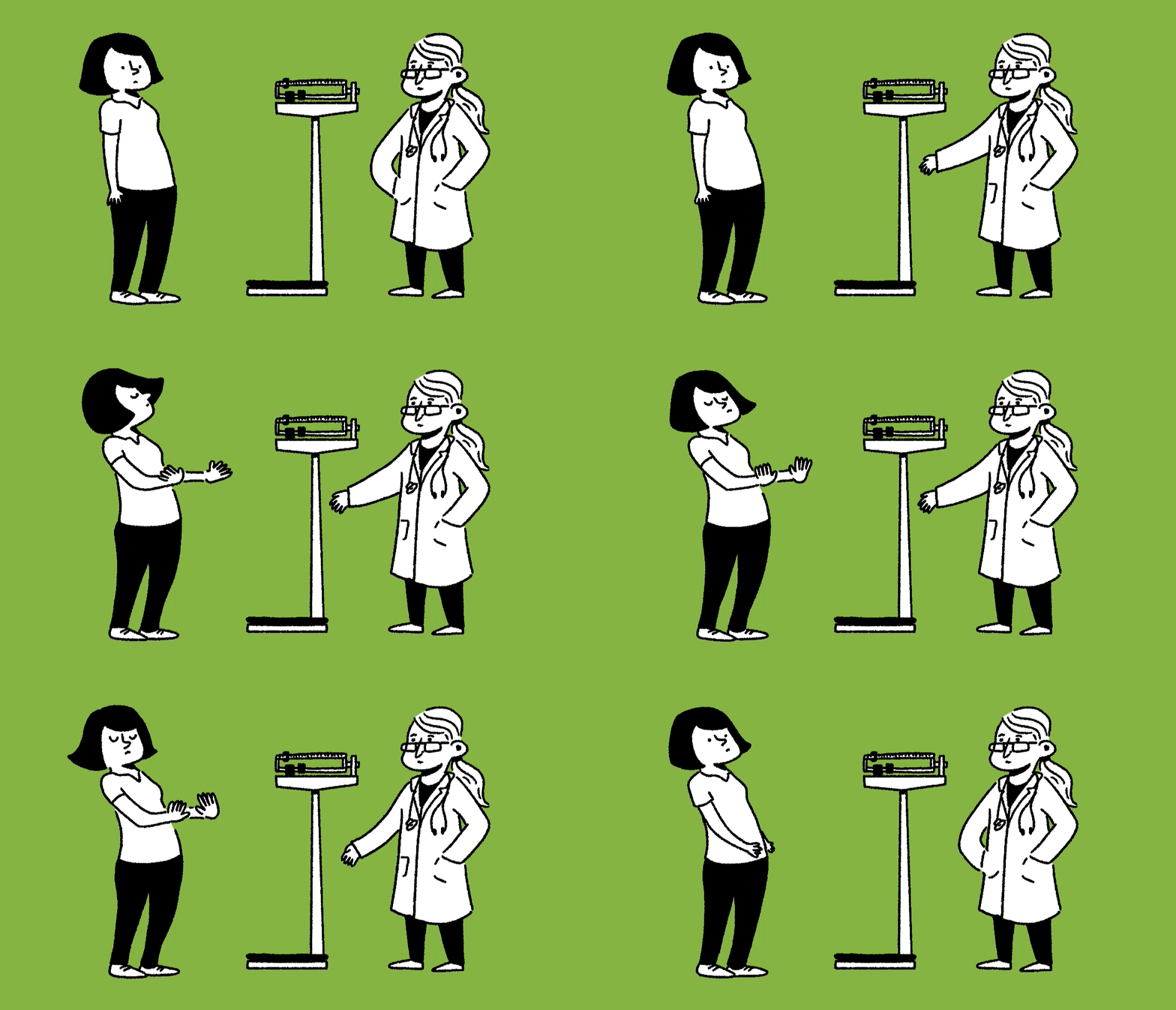
If hearing your weight makes you feel uncomfortable, there are ways to get around it. For example, it’s appropriate for you to say to your doctor, “I don’t want to know the number. Please don’t tell me, and I don’t want to look at it either.”
When I have a patient facing the scale and they say, “Adam, I just don’t want to do this. I feel too embarrassed.” I turn to them and say, “That’s fine. You can close your eyes, or we’ll put you on the scale backwards. I promise I won’t tell you what it says.”
Of course, I can’t pick anyone up and put them on the scale, but I will reassure my patients that I never look at their weight as a cosmetic issue. I explain that I need to know how much they weigh to help interpret their blood work or to decide how much medication to prescribe.
There are also medical reasons behind weight gain or loss that have nothing to do with how much you’re eating. A few weeks ago I had a patient who came to my office complaining about feeling lightheaded. I put him on the scale and found out he had lost 10 pounds. As a result, his blood pressure had dropped, and the medication he was prescribed to keep his pressure low was now making him feel dizzy.
If you’ve lost weight unexpectedly, it could be a sign of illness such as an overactive thyroid (hyperthyroidism) or even cancer. It might be an indication of depression or issues in your gastrointestinal tract.
Being underweight, particularly as we get older, can be a risk factor for several health problems. Let’s say there’s an 88-year-old woman who should really be 130 pounds, but now she’s down to 120, and her body mass index (BMI) is low. If she gets sick, she’s at a higher risk for severe illness and even death because she’s underweight.
On the other hand, if you’ve gained a significant amount of weight, it could be a sign of a hormonal disorder called Cushing’s syndrome or an underactive thyroid (hypothyroidism). It can also mean you’re now at risk for several medical conditions, including high blood pressure, heart disease, type 2 diabetes, joint pain and sleep apnea.
But I want to be clear: The decision regarding whether your doctor weighs you is entirely your own. It’s every patient’s legal and ethical right to be in charge of what happens to their body — and that includes getting on the scale. Even if your doctor tries to convince you of its importance as I have just done, you can simply say, “No thank you. I prefer not to do it."

AARP Membership
Join AARP for only $15 per year with automatic renewal. Get instant access to members-only products and hundreds of benefits, a free second membership, and a subscription to AARP The Magazine.

You Might Also Like
Help! My Doctor Won’t Listen to Me
Tips for engaging your doctor during appointmentsAARP Smart Guide to a Healthy Heart
Easy, expert-endorsed ideas to help you care for your heart