
AARP Hearing Center









































Do I Need an Annual Exam?
A doctor explains why a yearly wellness visit is important for your mental and physical health

James Yates
I usually see my doctor a few times a year. Is it still necessary to make an appointment for an annual checkup?
Absolutely. There’s a big difference between visiting your doctor when you’re feeling sick and seeing your health care provider for an annual wellness examination. In the first instance, your provider is focusing on your illness. An annual exam gives your doctor a fuller picture of your overall health and well-being, and it sets the stage for suggestions for preventive health care.
More Ways to Benefit
- Related Benefit 1
- Related Benefit 2
- Related Benefit 3
- Related Benefit 4
- Related Benefit 5
I recommend a yearly wellness visit for everyone, but it’s especially important for older patients, because they have an increased risk of developing some conditions that become more common with age, such as lung diseases, heart issues, osteoporosis and Alzheimer’s disease. Even so, a recent study found that only 24 percent of Medicare recipients who are eligible for an annual exam actually complete their wellness visit.
The tests and physical exam doctors do during a well visit give us a baseline for taking care of you when you are sick. Another perk: In many doctors’ offices, you are more likely to get an appointment when you are sick if you’ve had a well visit within the last year, because you won’t be considered a new patient.
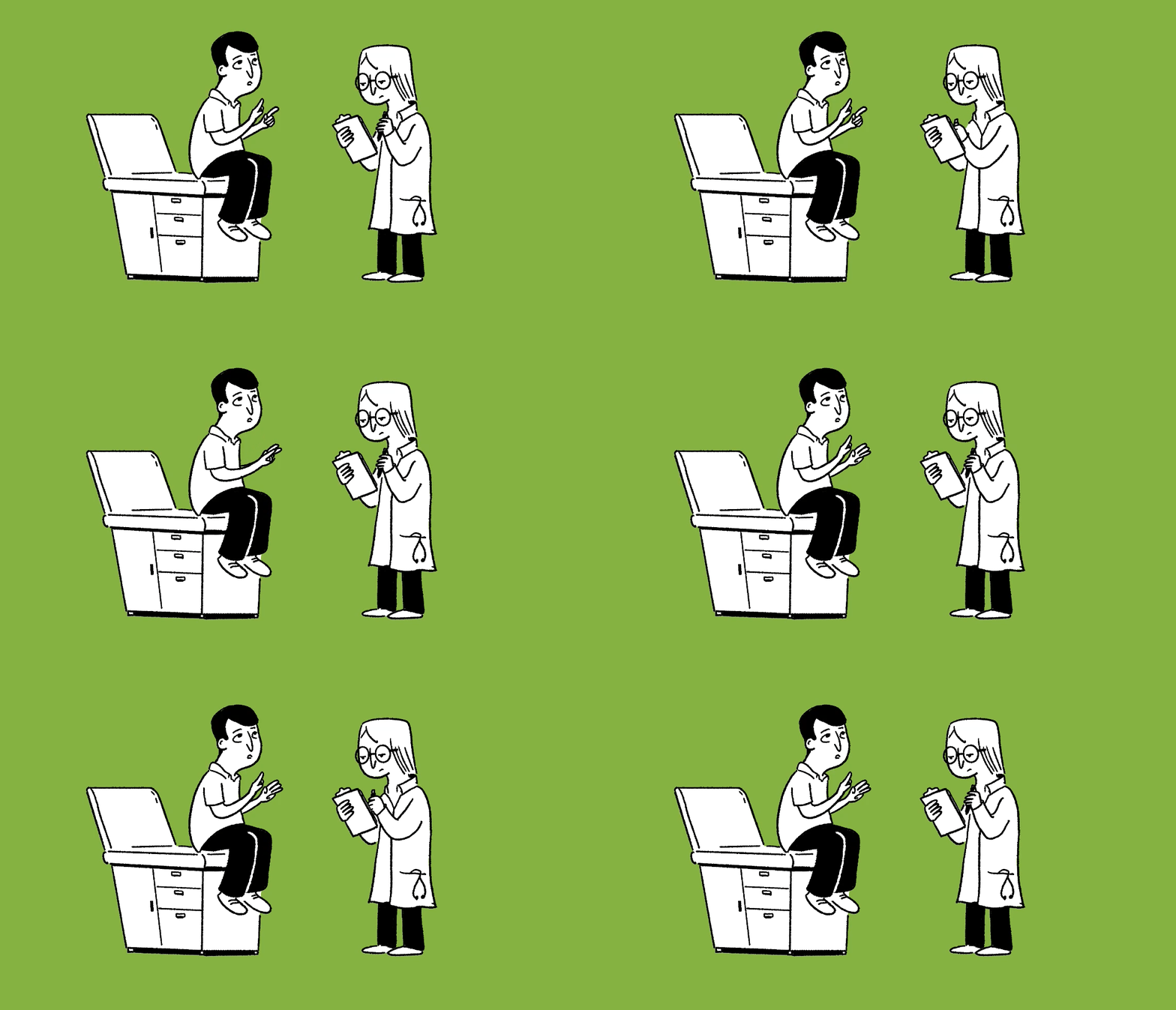
In my office, we schedule at least a full hour for an annual exam. This gives me time to first have a relaxed chat in my office with the patient. My dad, who was also a doctor, always said: “Adam, 90 percent of a physical exam is listening to your patient.”
I ask a wide range of questions such as whether stress, anxiety or depression is interfering with their ability to enjoy life or if they’re experiencing memory problems. I’ll also be sure to refer to issues they were dealing with during their previous visit. It might be something like: “You said you were having trouble sleeping. How’s it going now?”
On your end, it’s a good idea to prepare for your annual examination by bringing along a list of issues you want to discuss, as well as a list of all the medications and supplements you are taking.
On my side, I’ll run through a checklist, which could be something like: “Have you seen your dermatologist, eye doctor, urologist? Have you had a colonoscopy, your mammogram, or a bone density test?” I’ll ask whether your shots are up to date, which includes the current COVID vaccine, as well as those for flu, RSV, pneumonia, shingles and hepatitis A and B. If someone doesn’t want to get vaccines, I never demand they change their mind, but at least I’ve offered an opportunity to think it over. Before we meet again in the examination room, the nurse will draw my patient’s blood. If you’re sick when you see your doctor, blood work can be thrown off. That’s why during a wellness visit, we do a full panel that includes measures like thyroid and cholesterol levels, inflammatory markers for the heart, and high-sensitivity C-reactive protein, which is a marker for inflammation of the blood vessels. There’s no reason to evaluate the health of arteries and the heart if something could be falsely raising them.
At the same time, I test for iron and B12 levels because as patients get older, they’re sometimes deficient in these vitamins and minerals. Since sexually transmitted diseases are on the rise, I’ll also ask if the patient wants to test for STDs.
While we’re in the examination room, I check vital signs like temperature and heart rate, blood pressure, height and weight. I’ll look into their eyes, ears, nose and throat, then I'll press different areas of the body to feel the size of their organs and look for lumps or other changes. I examine lymph nodes on the neck and shoulders and under arms.
I’ll also check reflexes by tapping with a small rubber hammer. Older patients can lose sensation in their feet. If they don’t feel a light touch at the tip of their toes or the soles of their feet, there can be an increased risk for wounds, balance issues and falling.
An annual physical examination is not only a great way to check on your health, it’s a wonderful way to build rapport with your doctor. I understand that nowadays some patients feel they don’t have enough time to be with their doctor and/or their doctor doesn't have enough time to spend with them. This kind of exam is an opportunity to build your relationship.
One more thing: Before leaving the office, be sure to make an appointment for next year’s annual examination.

AARP Membership
Join AARP for only $15 per year with automatic renewal. Get instant access to members-only products and hundreds of benefits, a free second membership, and a subscription to AARP The Magazine.

You Might Also Like
Doctor, Are You a Fan of Dry January?
Advice for taking a month-long break from alcohol
Easy Winter Moves for People 50-Plus
Stay active with simple exercises for winter wellness