



AARP Hearing Center


























































Key takeaways
- Forgetful Friends Chorus brings people with dementia and caregivers together through shared music.
- Familiar songs can spark memories, lift spirits and encourage participation.
- The chorus offers community, support and connection beyond regular rehearsals.
Summary
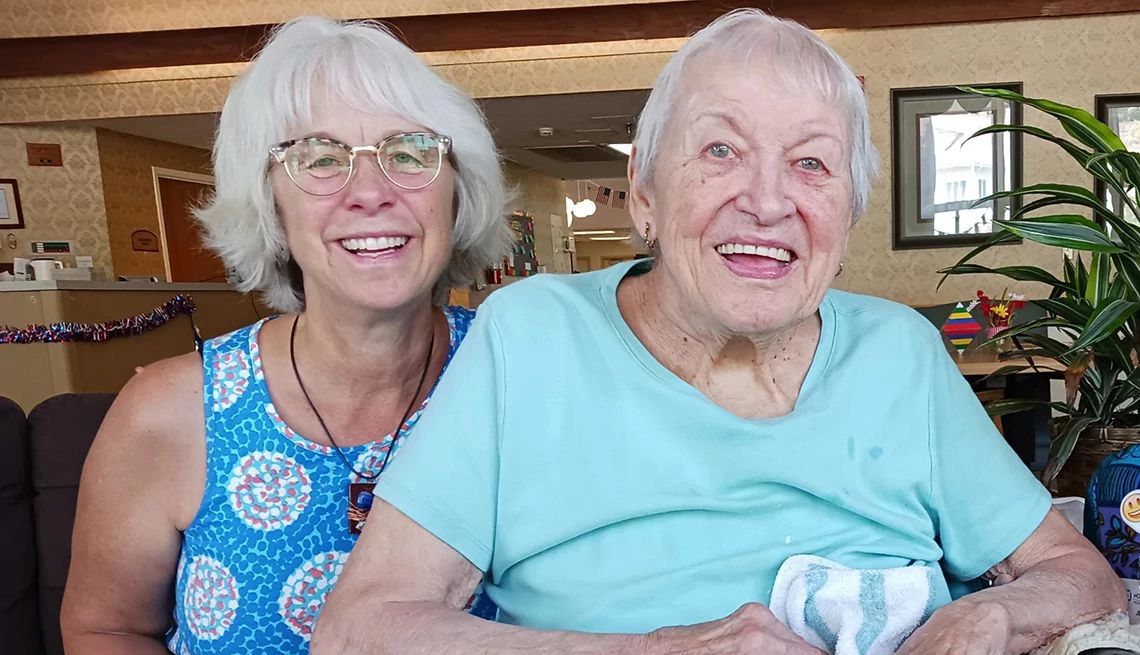
Forgetful Friends Chorus uses music to create connection, comfort and joy for people living with dementia and their loved ones. Founded by Susan Dommer and Connie Young, the group was inspired by personal experiences with dementia and a belief in music’s ability to reach people when other forms of communication become difficult.
The chorus meets twice a month and performs in care settings while fostering a strong sense of community among members. Participants and caregivers describe finding belonging, support and meaningful connections through singing together. Leaders also highlight research showing that familiar music can help evoke memories, elevate mood and reduce feelings of isolation.
The key takeaways and summary were created with the assistance of generative AI. An AARP editor reviewed and refined the content for accuracy and clarity.
Full transcript
[0:00:09] Susan: It can be challenging to have a choir with people with dementia.
[0:00:14] Some days are bad days and some days are good days.
[0:00:17] But when they’re here, they respond to the music, and that’s a gift to everyone here.
[0:00:22] Connie: Having Alzheimer’s is tough.
[0:00:24] You know, your whole world isn’t making sense anymore, and somehow when
[0:00:28] they start singing, it starts making a little bit more sense to them.
[0:00:32] Both of my parents ultimately got dementia.
[0:00:35] A few days before my mother passed away, we all went in to sing to her.
[0:00:39] We must have sung for 20 or 30 minutes.
[0:00:42] Her eyes were closed, and then all of a sudden she sang along with
[0:00:46] two songs, “Jesus Loves Me” and the Louisiana State University fight
[0:00:50] song, where she went to college.
[0:00:54] Susan: I love that.
[0:00:56] Connie: A few years after, I saw this posting of the Giving Voice Chorus in Minneapolis-St.
[0:01:01] Paul, where they had a chorus made up of people with dementia and their caregivers.
[0:01:07] It hit me that music meant so much to my mom and that it would
[0:01:10] mean a lot to other people.
[0:01:12] So I immediately forwarded that to my friend Susan.
[0:01:16] Susan: My mother-in-law had Alzheimer’s dementia when she died, so
[0:01:20] it’s been part of my life.
[0:01:21] In addition, I was a middle school choral director for 35 years.
[0:01:25] So when Connie reached out to me, I said something like, “I’m in.”
Connie: Yeah.
[0:01:30] Susan: Pop, pop, pop, popcorn.
[0:01:32] Susan and choir: Pop, pop, pop, popcorn. Pop, pop, pop, popcorn.
[0:01:39] Susan: I feel strongly that everybody needs a place to belong, and for those
[0:01:44] living with dementia and their loved ones, Forgetful Friends Chorus can
[0:01:48] be a place where they find community.
[0:01:51] Connie: We meet twice a month, and we perform at assisted living
[0:01:55] facilities, memory care units, any
[0:02:00] sort of long-term care facility.
[0:02:02] Susan: I am the choral director.
[0:02:04] I rehearse them as I do all of my choirs.
[0:02:08] Now, the music that I choose is different from what I might use for another chorus.
[0:02:13] There is a lot of research out there about music and the brain.
[0:02:17] If you find a song that you sang when you were a teenager, say 50, 60
[0:02:22] years ago, it will come back to you.
[0:02:24] Endorphins are produced, and it starts to lift your spirit.
[0:02:32] Having dementia is isolating.
[0:02:35] They feel like everything is wrong.
[0:02:38] That does cause anxiety and depression.
[0:02:41] But when you’re in a chorus, your heartbeats start to synchronize,
[0:02:44] your breathing synchronizes.
[0:02:46] You have that connection with the people around you.
[0:02:54] People with dementia can still build new memories.
[0:02:59] They can still find joy in what they’re doing at the moment, and I believe
[0:03:05] that happens to everybody that comes through the door to rehearse with us.
[0:03:09] Penny: I like coming here because I love to sing, and it makes me feel better.
[0:03:15] I’ve been singing since I was probably 2.
[0:03:18] My mother would play the piano, and we would sing together, and
[0:03:22] now I’m back to singing again.
[0:03:25] Jennifer: My mom got diagnosed with Alzheimer’s last May.
[0:03:27] First time we came, I cried almost the whole chorus because I was like,
[0:03:30] “We kind of found our place here.” After the diagnosis, you, you have
[0:03:34] to find your place, and we found it.
[0:03:37] David: After chorus, a batch of us go over to the IHOP.
[0:03:40] It’s senior night, 50% off entrees, and then we play cards, sometimes till 11:00.
[0:03:45] Unseen person: Y’all are wild.
[0:03:46] I’m in bed by 10.
[0:03:48] David: My wife was diagnosed with Alzheimer’s disease in January of 2019.
[0:03:53] It’s been a year ago today since she passed away.
[0:03:56] I thought about what I wanted to do to meet that anniversary, and I decided
[0:04:01] the best thing to do would be to come here, because this group of people has
[0:04:05] been a, a great deal of support to me and a, and a community that’s more
[0:04:08] than just a chorus every two weeks.
[0:04:12] And I thank them every day.
[0:04:18] Susan: “You’ll Never Walk Alone,” we sing this at the end of every single rehearsal now,
[0:04:22] because you feel like you’re just all by yourself sometimes, but the reality is
[0:04:27] that there are people walking with you.
[0:04:29] And so this is our little reminder to all of the choir members that this
[0:04:33] is a journey that we’re on together.
[0:04:35] Connie: Dementia is really hard for both the caregiver and the person with dementia,
[0:04:41] and the only thing that makes it better is when you can do something
[0:04:45] that helps make it easier for them.
Connie: Yeah!


