Join AARP Today!
Join for Just $16 A Year
- Discounts on travel and everyday savings
- Subscription to AARP The Magazine
- Free membership for your spouse or partner
Last chance! Play brain games for a chance to win $25,000. Enter the Brain Health Sweepstakes
Submit a complaint to AARP's consumer advocate
Find the resources you need to start
or grow your own business
The 22-member volunteer AARP Board of Directors — the governing body of our organization — approves all policies, programs, activities and services for AARP. Read
Meet the members of our Executive Team, their backgrounds and their leadership responsibilities. Read
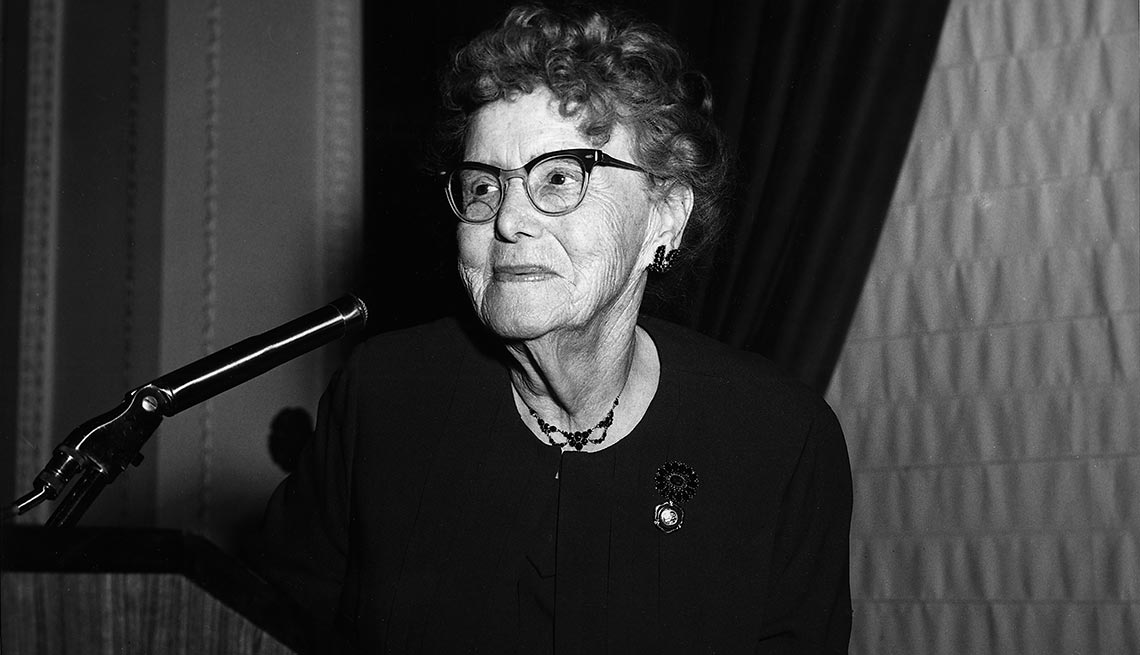
Learn more about the history of the organization and our founder, Dr. Ethel Percy Andrus. Read

Learn more about AARP's efforts to champion diversity and inclusion. More
Find out about opportunities to volunteer with AARP. Read
Get the latest news and read our blog, shAARPsession. Read
Learn about AARP's positions on public issues and how we develop them. Read
Read AARP’s annual report and consolidated financial statement for the current or previous year. Read
Learn more about job opportunities at AARP and what makes this a great place to work. More
Our Code of Conduct sets forth the highest ethical standards for our employees, volunteers, board members and those who do business with us. Read

At AARP, we represent nearly 40 million Americans over 50, including workers and retirees, people living alone or with families, and people of various financial means. Using our expertise, research and input from members, AARP develops public policies that reflect our members' concerns and interests. These policies are published every two years in The Policy Book: AARP Public Policies and in regular supplements to The Policy Book.
To see where AARP stands on a wide range of issues, check out The 2012 Policy Supplement and The Policy Book: AARP Public Policies 2011-2012. The 2012 Policy Supplement reflects updates to The Policy Book approved by the AARP Board of Directors in 2012; The Policy Book is an in-depth compilation of AARP public policy expertise and positions. The 2012 Policy Supplement should be used in conjunction with The Policy Book: AARP Public Policies 2011-2012.
See where AARP stands on the issues in The Policy Book: AARP Public Policies 2011-2012.
On February 24, 2011, the AARP Board of Directors approved the National Policy Council's recommended changes to AARP's public policies to help guide the organization's advocacy over the next two years. AARP updated its policies concerning health care, including important elements of the new health care law such as guaranteed access to insurance for those with preexisting conditions, the expansion of home and community-based long-term care services and the strengthening of Medicare. We also added new guidance on policies related to Social Security solvency and strengthened policy on key issues affecting Americans over 50, including protecting the savings and investments of older persons; setting up the new consumer financial protection bureau to strengthen consumer protection; reforming the nation's housing finance system, and making our communities more livable.
The Policy Book: AARP Public Policies 2011-2012
Use the links below to download sections in Adobe PDF format. You will need the free Acrobat Reader to access these files.
Table of Contents(42k)
Introduction(67k)
Setting Public Policies(103k)
Chapters
1 - Government Integrity and Civic Engagement(129k)
2 - Budget and the Economy(227k)
3 - Taxation(267k)
4 - Retirement Income(297k)
5 - Employment(232k)
6 - Low-Income Assistance(203k)
7 - Health(723k)
8 - Long-Term Services and Supports(455k)
10 - Utilities: Telecommunications, Energy and Other Services(384k)
11 - Financial Services and Consumer Products(408k)
12 - Personal and Legal Rights(257k)
Accompanying References
Acronyms and Abbreviations(195k)
Glossary(147k)
Index(278k)
In 2012, The AARP Board of Directors approved changes to AARP’s public policies to help guide the organization’s advocacy agenda. These changes include changes to our policy on pensions, employment discrimination and housing finance, among other issues and are contained in The 2012 AARP Policy Supplement. The 2012 AARP Policy Supplement should be used in conjunction with The Policy Book: AARP Public Policies 2011-2012 to get the full context as to where AARP stands on a wide range of issues.
You will need the free Acrobat Reader to access the PDF.
The Priorities Book offers a brief overview of AARP policy positions, reflecting our mission to make things better for society and our goal of playing a positive role in communities of all kinds.
We believe that fair, balanced public policies — reinforced by a spirit of shared as well as individual responsibility — can support economic and health security for everyone, even in a time of fiscal limits. We place a premium on fairness and quality of life across the lifespan. And we believe all generations benefit from the right priorities.
The Priorities Book explains AARP's positions on our top policy priorities and serves as a companion piece to The Policy Book, a more complete, in-depth compilation of AARP public policy expertise and positions on a wide range of issues. The Priorities Book is not a substitute for The Policy Book, the official guide for determining AARP's policy on a particular issue.
Read more about specific AARP priorities by topic:
To order print copies of The Priorities Book, please contact the AARP Office of Policy Integration at npc@aarp.org or 202-434-3720. You can also download The Priorities Book (171KB) in PDF format. You will need the free Acrobat Reader to access the file.
Read more about other AARP priorities.
AARP policies reflect our members’ desire that we work toward a better world for them and future generations. We conduct regular surveys of older Americans and carefully monitor members’ letters, calls and emails so that we can understand their concerns.
Our National Policy Council, which conducts in-depth studies of issues, includes expert AARP volunteers, who listen to our members as well as independent authorities with a balanced range of views and work with our own staff specialists to make policy recommendations to AARP’s Board of Directors. Official policies are approved by AARP’s independent, all-volunteer Board of Directors.
As one of the leading voices for an aging America, AARP regularly monitors its members' needs, concerns and opinions. AARP develops its public policies through a consistent, ongoing process that begins with member input and policy analysis. The National Policy Council, an advisory committee to the AARP Board of Directors, recommends the policies that eventually appear in The Policy Book and form the basis for all its advocacy efforts.
National Policy Council
The AARP National Policy Council (NPC) is composed of volunteers who represent a diverse cross section of AARP members and have a proven record of public policy experience and interest. The NPC helps the board perform its governance responsibilities in setting policy and strategic policy direction for the Association. The presence on the NPC of five regional representatives, three board members and AARP's president-elect facilitates integration among AARP's state offices, national staff, volunteers and the board.
Members of the council develop and make public policy recommendations to the board regarding AARP's federal, state and local legislative and regulatory issues. In making public policy recommendations for the board's consideration and approval, the NPC studies public policy options and considers opinions of members, guidance of staff and analysis from nationally renowned policy experts.
NPC Responsibilities
Throughout the year, council members are asked to participate in a variety of activities including maintaining ongoing relationships with states, hosting AARP policy forums, and representing the council before AARP members and the public. NPC members are expected to attend all NPC meetings held throughout the year. Meetings are generally held at the AARP national office in Washington, D.C.
Some of the major responsibilities of an AARP National Policy Council member are the following:
The AARP Office of Policy Integration coordinates the activities of the NPC. For more information, call 202-434-3720.
The AARP National Policy Council (NPC) is a 25-member all volunteer policy analysis and advisory body to AARP’s Board of Directors. The NPC is charged with leading efforts to integrate member and public opinion with careful study of policies, and making policy recommendations to AARP’s Board of Directors. NPC members serve on one of three policy committees: Consumer and Livable Communities; Health and Long-Term Services and Supports; or Economic, Employment and Low-Income Issues.
Jeannine English, NPC Chair
Jeannine is chair of AARP's National Policy Council. She was elected to be AARP President–elect in 2012 and will become President in 2014. She has a long career in state government including as a founding partner of the legislative advocacy firm Lehman English Kelly and O’Keefe and Principal Legislative Advocate for Robinson and Associates.
She led the Commission on California State Government Organization and Economy. She currently holds leadership roles in the Open Primary Initiative, the Board of Governors of the State Bar of California, and Pride Industries, one of the leading employers of people with disabilities. Jeannine serves on the AARP Board's Governance and Compensation Committee and the Compensation Subcommittee, and as a trustee of the AARP Insurance Trust.
Currently the general manager and former government and community relations director for the Port Authority of New York and New Jersey, Richard brings over 27 years of experience in transportation and urban planning. He served the American Planning Association as President and Board member.
In addition to a long career as a law enforcement officer, Dennis has held elective office in South Dakota, including Mayor of Pierre and Chairman and member of the Public Utilities Commission where he worked on the deregulation of the telecommunications industry. Dennis is State President of AARP South Dakota and the NPC’s Midwest Region Representative.
An expert in communications law and policy, Tedson serves as a member of the Alabama Executive Council and Capitol Advocacy team. During the course of his distinguished career, he was appointed by the President to the DC City Council and served as the assistant to the chair of the Federal Communications Commission and to the director of the Peace Corps. He founded the National Center for Bicycling & Walking and currently chairs the Boards of Smart Coast and the Arthur C. Clarke Foundation.
Ann’s professional work has involved a focus on the needs of lower-income persons and social justice. A nationally recognized expert on affordable housing and community development, she has fostered important policies and practices in these fields as a private attorney, a housing court judge, and general counsel for a large public agency. Ann is also the founder and past President of the Housing Preservation Project, a national public interest law firm and advocacy organization headquartered in Minnesota. Ann serves on the advocacy volunteer team for AARP in her home state of Colorado.
In addition to completing a long career in naval aviation and starting his own fiduciary practice, Bob has been a certified long-term care and Medicare counselor, a chair of the Advisory Council of San Diego County Aging and Independence Services, and a manager of a Meals-on-Wheels program. He is a member of AARP California’s State Executive Council and received the California AARP State Andrus Award for exceptional volunteer service.
Joan serves on the AARP Board of Directors. After serving as a lawyer in private practice, Joan became head tax attorney for an oil and gas company and later served in executive management at Zurich Financial Services and H&R Block. For the past four years, she has served on the AARP Foundation Board of Directors. Joan’s board and volunteer work includes service with Mid-Continent Girl Scouts and the Kansas City Red Cross.
Through his work at the Government Accountability Office, Bill helped make policy recommendations to Congress and federal agencies to increase efficiency and effectiveness in government programs dealing with housing and community development, energy and natural resources, transportation, and consumer protection. He also has experience at the local level advising on community development and planning with special consideration to issues of cultural sensitivity. Bill sits on AARP Virginia’s Executive Council.
As Support Service Manager/Board Secretary of a major public water district in Southern California, Lynn developed management policy that became the model for other water districts throughout the state. Her background also includes public utilities advocacy, the development of a school accountability reporting system, and testimony before the Idaho Public Utilities Commission and the Idaho Legislature. Currently retired, she is on the AARP Idaho Executive Council and is the NPC’s Mountain Region Representative.
Charles E. Reed (Board Member)
Michael is an expert developer and manager of programs and services that address prevention and health promotion within diverse and marginalized populations particularly the American Indian and Alaska Native people. He was the first American Indian to serve as President of the American Public Health Association (APHA) and also served as the executive director of the National Native American AIDS Prevention Center (NNAAPC).
For over a decade, Carlos was the Administrator of the Nevada Division of Mental Health and Developmental Services, developing and implementing the policy on community-based mental health residential services throughout Nevada. Carlos served as President of the Board of the National Association of State Mental Health Program Administrators. He is the Nevada AARP State President.
A Senior Research Associate at the Institute on Aging at Portland State University, Chad’s current research is focused on teaching chronic disease self-management skills to Latinos through a community-based process. He has over 30 years of health and long-term care policy experience, including as Director of the Oregon Office of Health Policy. He is State President of AARP Oregon and the NPC’s West Region Representative.
Sally was counsel at the National Senior Citizens Law Center, the Center for Medicare Advocacy, and the Arizona Center for Disability Law, as well as a private law firm specializing in elder law issues. With over 40 years experience working primarily on Medicare, Medicaid and long-term care issues, Sally has served on CMS’s Medicare Coverage Advisory Committee, the National Academy of Elder Law Attorneys, and national and state legal aid associations.
A recognized leader in aging issues and in long-term care systems, Neal has served in a number of national organizations such as the American Society in Aging, the National Association of State Units on Aging, and the New York State Office for the Aging. He is currently a partner and analyst at Optimum Partners Consulting in Albany, NY. Neal serves on AARP New York’s Executive Council and recently was awarded New York AARP State Andrus Award for exceptional volunteer service.
An expert in health care reform and former Vermont state Senator and Chair of the Senate Health and Welfare Committee, Jim was the lead sponsor of Vermont’s Health Care Reform Legislation of 2006— perhaps the most comprehensive health care legislation enacted by any state thus far. From 1980 to 2000 Jim directed the largest non-profit social service agency in northern New England. Jim is the NPC’s Northeast Region Representative.
Charles E. Reed (Board Member)
An AARP Board Member, Charley is currently a long-term care consultant with his firm, C.E. Reed and Associates. An expert in long-term services and supports, Charley served as Washington State’s Aging and Adult Services director and as deputy secretary for Social and Health Services. His public policy expertise includes welfare reform and services for children, the mentally ill and people with disabilities.
Barbara is a retired nurse and a former commissioner of the New York City Human Resources Administration. She also served as president of University Research Corporation, a for-profit multi-disciplinary firm providing training and health education; as Executive Deputy Commissioner of New York Department of Social Services; and as Secretary of the Kansas Departments of Health and Environment and aging. Barbara also worked for 13 years as a program director for the W.K. Kellogg Foundation.
Eric Schneidewind (Board Member)
Yash is an attorney, academic, and community activist. A former member of AARP’s Board of Directors, he retired from MetLife as a financial planner and risk manager, and had a successful career in the field of seismology. He has worked exhaustively to foster better relations between the US and India, and for the main stream integration of Asian Americans.
Mary spent her career in the social and public service arenas and as an advocate for women. She has extensive experience in policy development and implementation as well as in facilitation and planning. For 30 years she has run her own business providing consulting services to political campaigns, governmental agencies and nonprofit groups in planning and management. Mary recently ended her term as Arkansas AARP State President. Mary is the NPC’s South Central Region Representative.
As Ohio’s Tax Commissioner for seven years and as founding partner and President of Limbach and Associates, a consulting firm specializing in state and local taxes, Joanne brings extensive tax-based knowledge. Joanne served as AARP Ohio State President and she is the NPC’s Midwest Region Representative.
Tom brings substantial international experience to AARP, having served nearly three decades as an American diplomat, including being appointed as United States ambassador three times. In his current position as President of International Executive Service Corps, he has engaged in issues affecting older workers. Additional experience includes leading the United Nations Association of the USA and serving as CEO of Plan International, a child-focused $750M international charity working in 66 countries. Tom also serves as Chairman of the Board of the International Commission on Missing Persons.
A long-time civic leader, Alice is a former Illinois State Senator from Chicago. Her tenure in the state senate included service as the Ranking Member on the Senate Revenue Committee. Alice has led international efforts on race and xenophobia and guided the Illinois State Universities Retirement System as a board member. She was executive director of Chicago Cities in Schools and founding Director of the Chicago Metropolitan YMCA Youth and Government Program.
John is currently the principal of a consulting firm which provides research and policy analysis focused on state tax, budget and fiscal policy, health care access and affordability, and voting rights and redistricting. He was the founding executive director of South Carolina Fair Share, an organization working to advance the health, safety, and well-being of everyday people. As part of his work he has provided expert testimony on racial polarization in voting and racial disparities in socioeconomic indicators. John is the NPC’s South East Region Representative.
Eric Schneidewind (Board Member)
A current AARP Board Member and former AARP Michigan president, Eric devoted 15 years to public service. He was chairman of the Michigan Public Service Commission for six years and also worked for the state Housing Authority and Insurance Bureau. He currently practices law in a private, energy-related firm. Eric served as counsel to the board of Energy Michigan Inc. and as secretary for the Great Lakes Renewable Energy Association.
Cathy brings 30 years of experience in policy analysis, development, implementation, and management in state government. She helped to craft Washington State’s response to the 1996 welfare reform legislation. She also served as Executive Policy Advisor to the Governor regarding human services including senior issues, disability issues, welfare reform, long-term care, and services to persons with mental illness and developmental disabilities.
From companies that meet the high standards of service and quality set by AARP.
Members save up to 45% on their Angie's List memberships.
Information on saving for education from AARP® College Savings Solutions from TIAA-CREF.
Members get 25% off of rail packages & 15% off train tickets on Grand Canyon Railway.
Members receive exclusive member benefits & affect social change. Join Today