

The Dreams and Realities of an RV in Retirement
Thoughts from owners, experts and would-be buyers of recreational vehicles
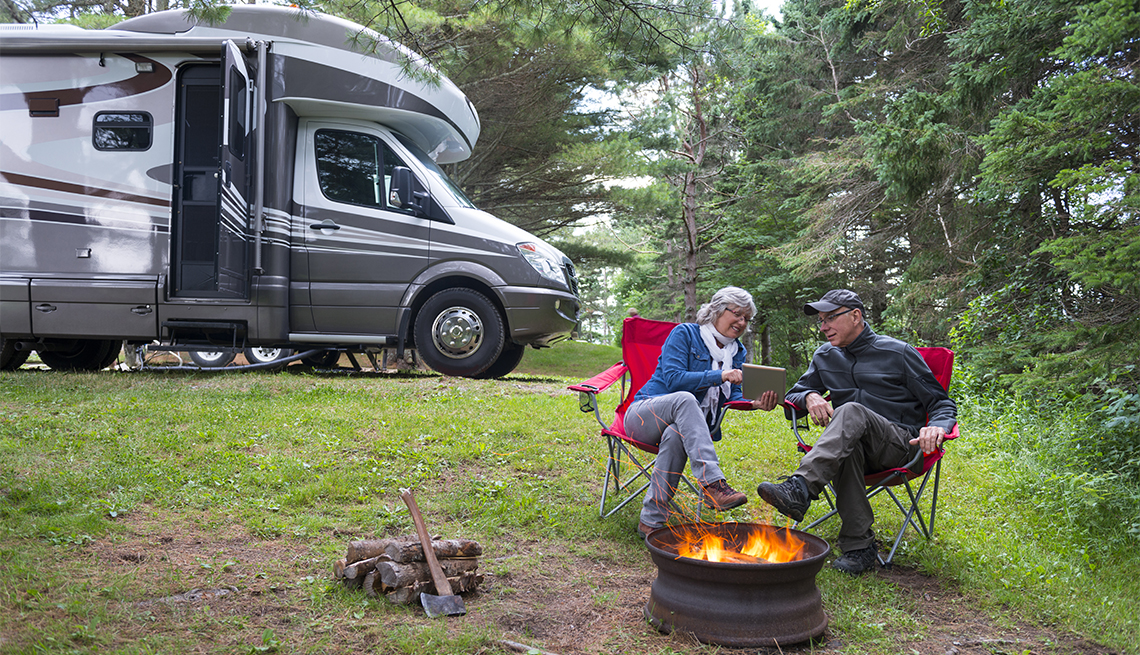
pchoui/Getty Images
En español | Many retirees quip that they often find themselves busier in retirement than ever before. One way some retirees (and near-retirees) are staying busy is hitting the road in recreational vehicles.
About 10 million U.S. households own RVs, and the majority of those owners have traditionally been over 50, according to the RV Industry Association (RVIA).
Ownership rates by age group cited by RVIA are highest among Americans ages:
- 45-54 (11.4 percent)
- 55-64 (11.1 percent)
- 35-44 (11.0 percent)
- 65-74 (8.8 percent)
- 75-plus (5.5 percent)
- 18-34 (4.9 percent)
Sales of RVs have grown steadily since the Great Recession, hitting an all-time high in 2017.
If you are getting close to retirement — or already there and looking for new ways to spend your retirement — here are some considerations from others in the RV world about purchasing a house on wheels.
The RV lifestyle
"RVers are friendly people. When you go to a campground, if you don't know people, you will,” says Jeremy Puglisi, an author of books about RVing and cohost of the RV Travel Atlas podcast. “Everyone introduces themselves. Everybody's friendly."
In response to the increase in RVers, the number of campgrounds around the country is growing from today's 18,000. RVers’ expectations are also growing.
"The RV industry is pushing to continue to expand, improve and upgrade campgrounds in national parks and on federal lands,” says Kevin Broom, director of media relations for RVIA. “A lot of those campgrounds were constructed in the 1950s and ‘60s and haven't really kept pace with the modern RVs.” Dump stations, often found at campgrounds, are essential for RV owners, who need to empty waste holding tanks.
Parking is another ever-present challenge for RV owners, especially when campgrounds are few, full or far between. But it's part of the lifestyle. Some truck stops, big-box retailers, churches, hotels, movie theaters, casinos, rest stops and other roadside locations will allow overnight parking. To be sure, check with the specific location so you won't get a ticket or a surprise knock on your door. Websites including RV Camping and Free Campsites can help find places to camp and park.
Price ranges for new RVs
Towables
• Folding camping (pop-up) trailers:
$6,000-$22,000
• Truck campers: $6,000-$55,000
• Conventional travel trailers:
$8,000-$95,000
• Fifth wheel trailers:
$18,000-$160,000
Motor homes
• Types B and C: $60,000-$150,000
• Type A: $60,000-$500,000
Source: RV Industry Association
Freedom of the road
David Schaum, 53, of Reston, Virginia, is a new empty nester, and as he and his wife approach retirement, they want to find new activities together.
"We both enjoy the outdoors. We both have really started working out, getting back into shape and hiking. So the places where we go hiking in the mountains has brought about an interest in possibly having a camper that allows us to stay out in the mountains for a few days,” Schaum says. “The funny thing is, I'm in the hotel business, so I can get a hotel wherever I go for free."
For many, the most attractive part about owning an RV is being able to travel where you want, when you want. Kathy Dolan, 67, a longtime RVer from Haymarket, Virginia, says she and her husband “like to go to the campgrounds, go gallivanting in the towns and meeting people. Then we take it to another place."
Naturally, an RV makes the nomadic life easier, since you already have your stuff with you, perhaps even your pets.
"You have more mobility,” says James Mercer, 60, of The Plains, Virginia, “and if you want to go somewhere, everything you need is packed right into that vehicle. All you need to do is buy food, and just get in and go fill up with gas.” Mercer and his wife, Raejean, 57, are retired and looking into possibly buying an RV.
"Most people have the dream to see the country and all the things they couldn't while they were busy with their working lives,” says Tom Dewalt, a sales consultant for Airstream, a manufacturer of travel trailers. “We represent the opportunity to explore the country, see everything: art, all the heritage and historical sites, all the natural wonders of the United States. And there's plenty of them."

Realities behind the dream
Mike Miles, 70, a Maryland resident, says he and his wife would like to buy an RV to drive cross country and visit their kids. He's hesitant about making a purchase because “there's a lot of stuff on the internet saying things break easily, you can't get it fixed."
Dolan, the veteran RVer, can't dispel that fear. “When you have a motor home, you spend a lot of time in the repair shop,” she admits. “Get used to that."
At the same time, don't let mechanical concerns and the seeming complexities of an RV be a deterrent from the lifestyle if it is something you'd really like to take on, says Puglisi, the RV author and podcaster.
"Don't be afraid to ask for help at a campground,” he says. “Campers are friendly people. A lot of RV owners are handy people."
As for the expense, though the initial purchase price and ongoing maintenance certainly add up, it's also important to calculate the potential savings on travel and vacations that can come with an RV over time.
"You don't have to pay for airfare. Campgrounds average in price at $40 a night,” says RVIA's Broom. “You don't have to eat in restaurants three meals a day. You can eat out when you want, but you can also prepare your own foods."
A study by CBRE Hotels Advisory Group, commissioned by RVIA, estimated that a couple vacationing in an RV could save between 8 percent and 53 percent, depending on the type of RV. The study weighed the costs of traditional travel such as airline tickets, hotel rooms and meals out, versus the unique costs of RV travel, such as fuel. Pop-up camper trailers offered the most savings, while large Class A and Class C motor homes offered the least.