
Best Places to Live and Retire Now
Whether to work or retire, these communities deliver on the qualities we most want in a hometown
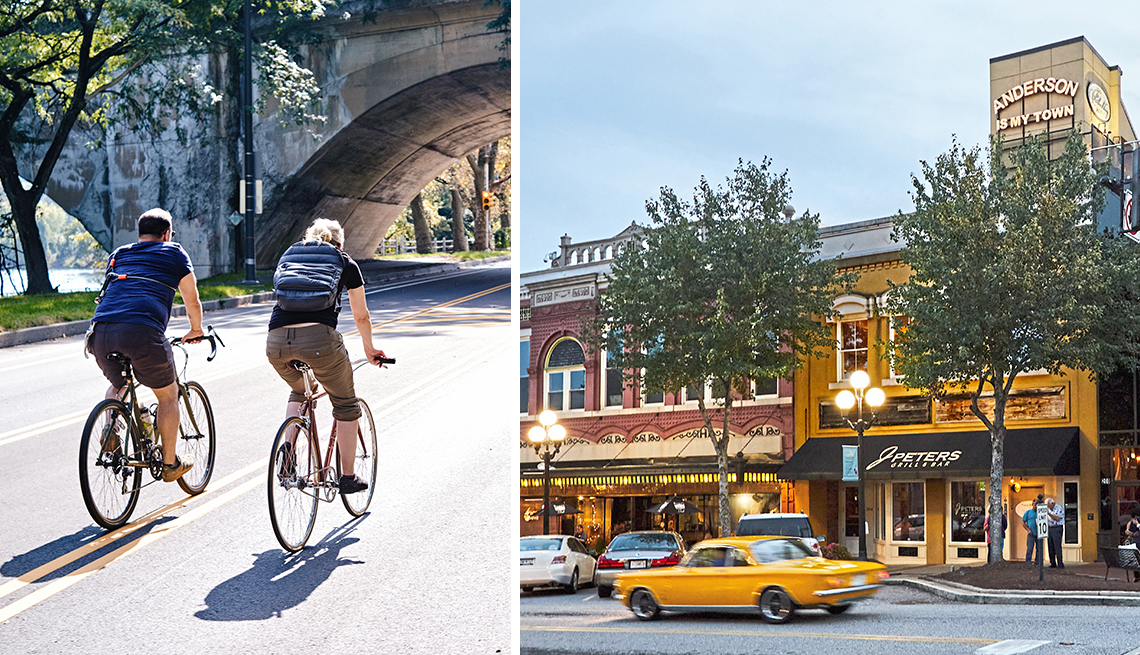
Ted Nghiem / Peter Frank Edwards
Call it the Great Reassessment. Nearly two years of pandemic living have given Americans so much time to reconsider what makes a house a home and a zip code a neighborhood worth living in.
What many of us have concluded is that our criteria are changing. Amid months of social distancing, we learned that space matters. According to a University of Vermont survey, 59 percent said the pandemic taught them that nature is integral to their well-being. At the same time, our reliance on technology and the internet has surged, and so broadband access has become even more important to daily life. More generally, trends show we want larger and more flexible homes, calmer environments, a palpable sense of community, but also 21st-century infrastructure.
Over the years, AARP The Magazine has regularly reported on great places to live on a modest income. But in our first assessment since the pandemic began, we knew we had to amend the criteria. AARP’s Livable Communities team — which provides support to local leaders to help make cities and towns best-suited for people of all ages — and the AARP Public Policy Institute — which publishes the popular Livability Index used by real estate agents and home shoppers nationwide — worked with our editors to come up with 14 objective points of data by which to assess American communities in this new reality. From them, a set of communities emerged. It was full of surprises: a few big cities you might not expect to be retirement-friendly, and smaller towns that are hardly known outside their region.
Of course, numbers don’t reveal the intangibles that make communities special. So we gathered input from AARP’s state offices as well as from regional journalists. Ultimately, this process yielded a handful of communities that represent much of what we all look for in a place to call home: a comparatively low cost of living, great access to nature and recreation, relative ease of getting around, quality health care systems, and a strong sense of community. These are draws even if you aren’t nearing retirement; all of the featured communities have strong job markets or are good candidates for remote work.
“We know that older adults and younger generations want similar things in the places they live,” says Mike Watson, director of AARP Livable Communities.
Consider these a sample of what the good life could be in America, now and far beyond the pandemic. 
Kathryn Gamble
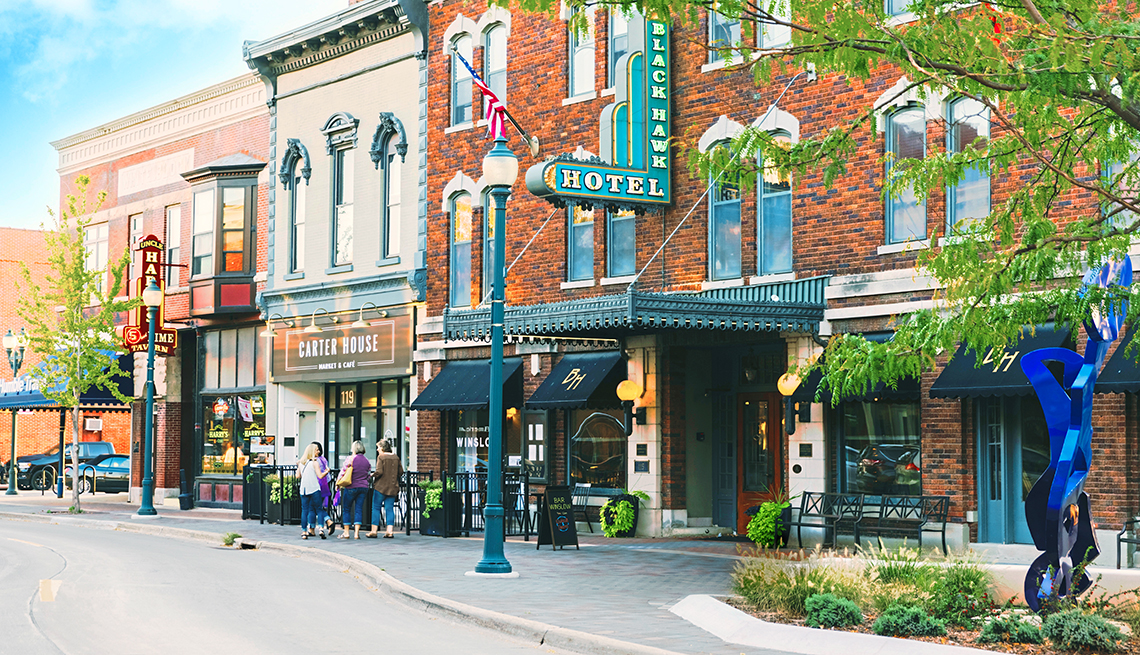
Downtown Cedar Falls, Iowa
Small-town charm hides a cutting-edge secret in Cedar Falls. Every home and business is connected to fiber broadband. These lightning-fast connections are possible because internet service is provided by community-owned Cedar Falls Utilities. The combination of old and new makes the city an attractive place.
“We have a nice mix of respecting and preserving our historical buildings and remembering our history, but I think we’re also still pretty progressive,” says retiree Kim Manning.
The city is bike-friendly and walkable, with shops and restaurants filling the downtown district. Festivals, farmers markets and activities in local parks take place throughout the year. And the crown jewel is the Sturgis Falls Celebration, a free festival in June that spans four parks, with parades, concerts, stage shows and food vendors.
Cedar Falls is also the home of the University of Northern Iowa, which injects arts, athletics and educational programs into the community. “There’s a vibrant feel with all the young people around because of the university,” says Manning, 63.
Despite development, Cedar Falls has not lost its connection to nature. More than 100 miles of paved, multi-use trails pass through bucolic areas and connect to the bustling downtown. Many are groomed for cross-country skiing or fat-tire biking in winter.
“If a person wants to go for a 4-mile walk, there’s a loop for that,” retiree Bob Manning says. “If they want to go for a 25-mile bike ride, there’s a loop for that. You can design it as you go.”
Water routes on the Cedar River and local lakes, as well as expanded riverfront access, extend the outdoor options to kayaking, canoeing and water skiing.
“The community is apple pie and Americana,” says Kris Hansen, CEO of Western Home Communities, which provides continuing care. “It’s a city, but we’ve done a good job of hanging onto the culture of a small town.”
— Kathleen Armentrout
Kathryn Gamble
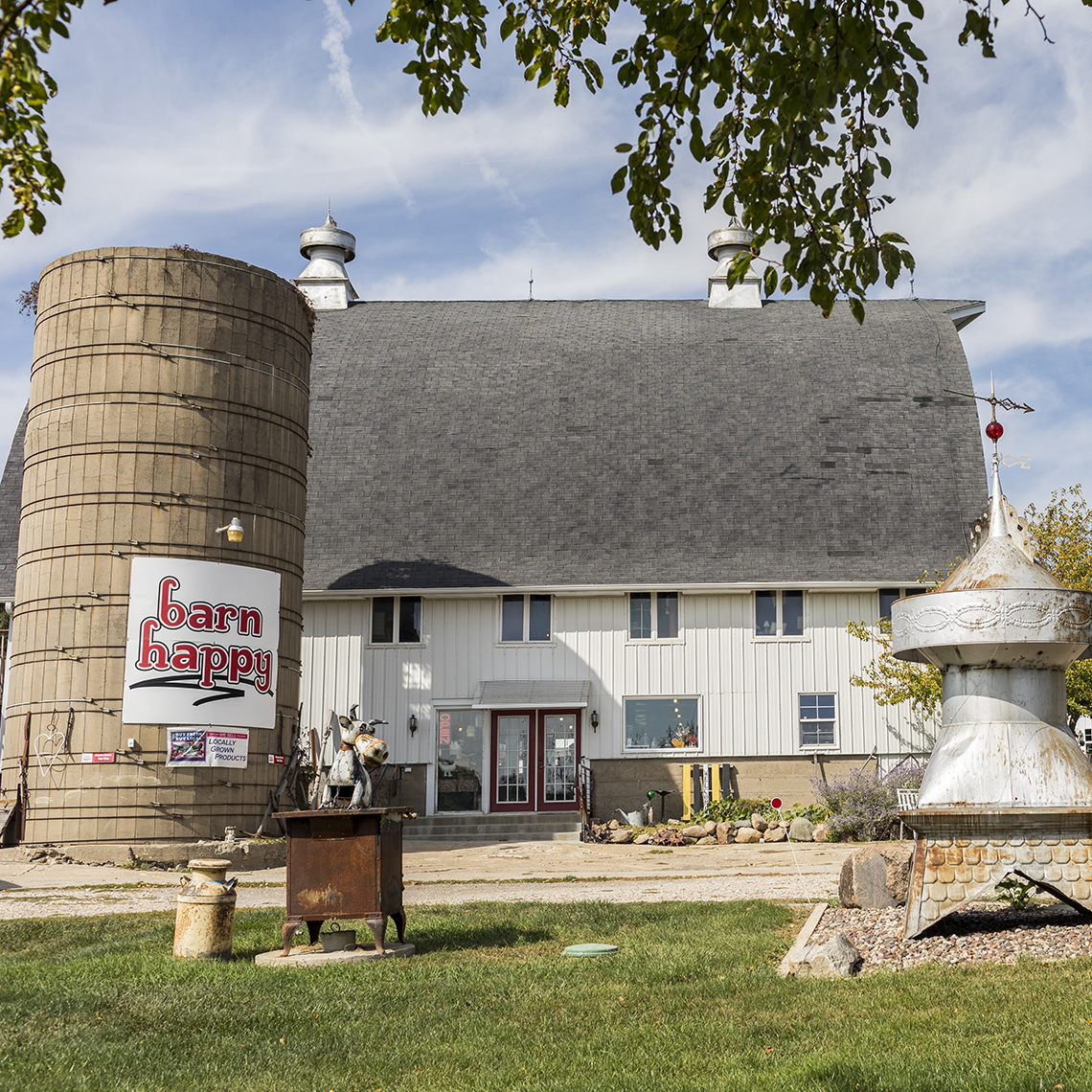
Barn Happy on University Ave. All food is made locally, and a great selection of fine arts and crafts are also sold here.
Population
40,713
Median housing costs
$1,238 per month
Median housing cost burden
24.2 percent of income spent on housing
Access to exercise
80 percent live near parks and recreational facilities. (Those who live within a half-mile of a park and within a mile of a recreation facility.)
Vibe
Old meets new
Andy Bardon
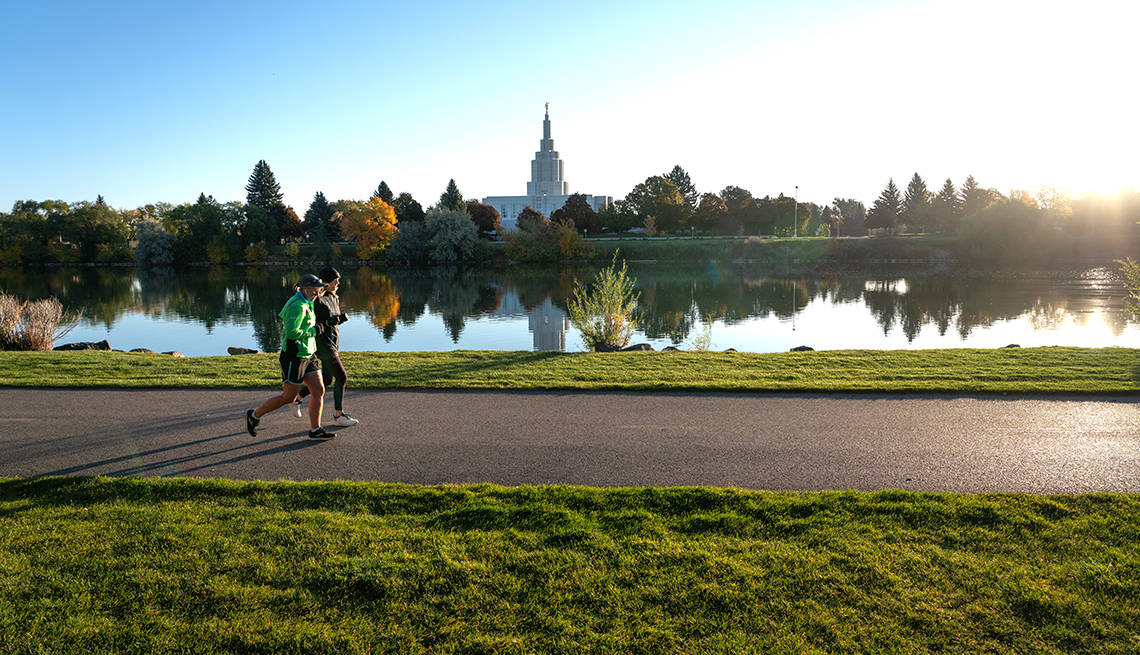
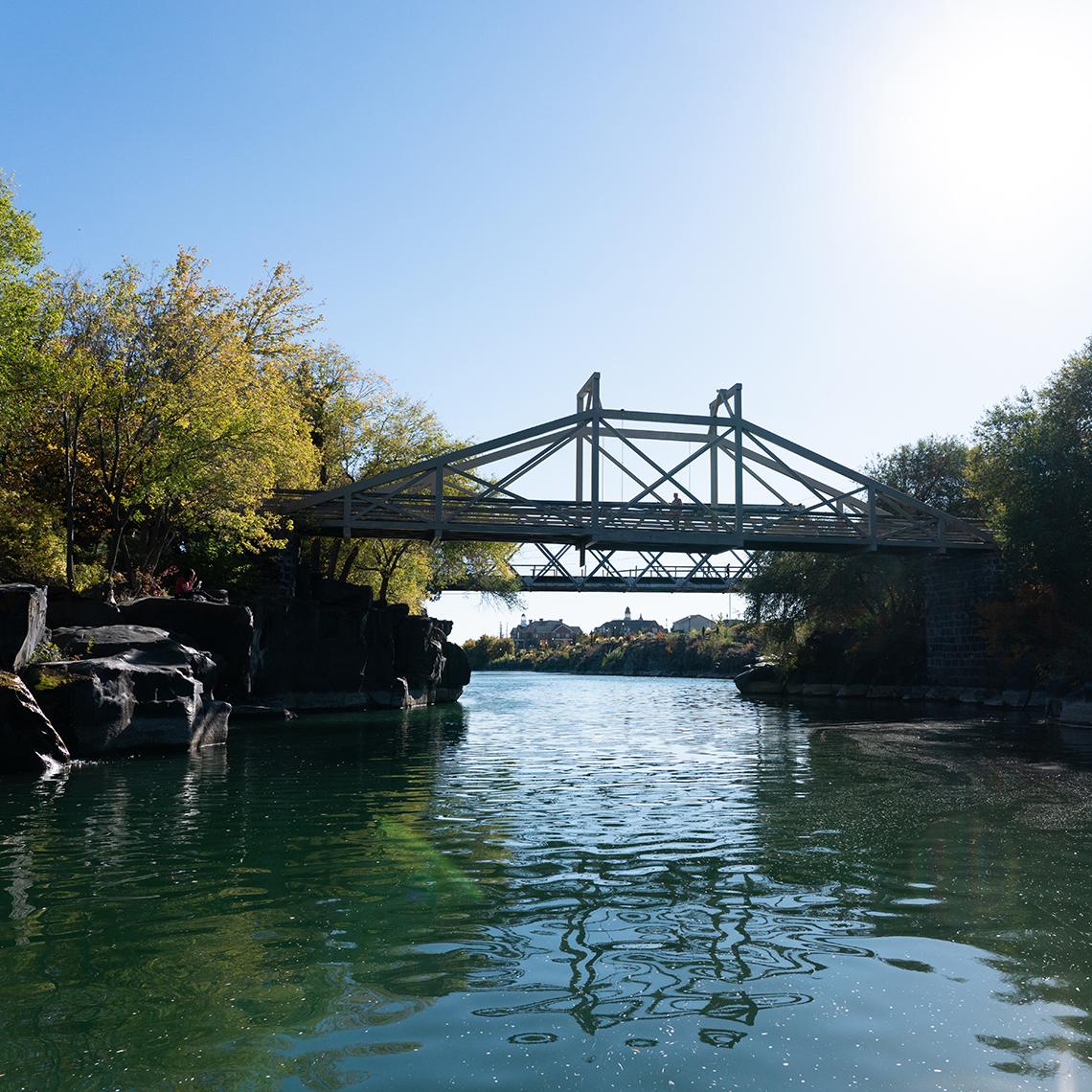
Miles of well-paved pathways line the banks of the Snake River. On any given day you'll find walkers, runners, bicyclists enjoying the expansive views and natural scenery.
The Snake River runs right through downtown Idaho Falls. So this community has built a 14-mile River Walk, featuring a floating bridge, majestic trees and the falls for which the city was named. It connects to the Snake River Landing, 450 acres of riverfront property where shops, restaurants, businesses and parks coexist harmoniously.
But the Snake River isn’t the only spot in town to experience nature. Including the River Walk, there are over 30 miles of trails and pathways throughout the city for biking and walking.
Outdoor lovers can also get their American West fix at nearby areas popular for camping, hiking and fishing. With winter come snowmobiling, snowshoeing and skiing. Two ski resorts are roughly within an hour’s drive, and famous Jackson Hole, Wyoming, is about two hours away.
Chip Schwarze, 60, moved to Idaho Falls from Seattle in 1993 and plans to stay put after retirement: “The lifestyle is unbeatable, and we’re right in the middle of everything. This is home.”
Indoor life also flourishes in Idaho Falls. Sculpture, painting and learning opportunities can be found at The Museum of Idaho and The Art Museum of Eastern Idaho, both of which have discounted admission for older people. Plus, Idaho State University’s Friends for Learning provides additional learning opportunities like creative writing, fitness and a variety of beginner tech courses, all available to older residents for only $20 per semester.
One issue in Idaho Falls, as with much of the nation, has been housing cost. Median home prices are below $350,00, according to real estate aggregators, although the overall cost of living in this community is about 11 percent lower than the national average. One way the city is addressing housing costs is by loosening zoning codes to allow for more one-level, no-basement homes, attractive to retirees. “There are also rental communities going in that offer single-level living with attached garages and no basements,” says Chris Pelkola Lee, a real estate broker and owner of SimpLee Home. New age-restricted developments for older residents are also cropping up.
— Lisa Jensen
Andy Bardon
Natural areas such as Sportsman Park are linked together with foot traffic bridges.
Population
64,818
Median housing costs
$1,015 per month
Median housing cost burden
22.9 percent of income spent on housing
Access to exercise
79 percent live near parks and recreational facilities.
Vibe
Mountains and fresh air

Jeff Nelson
Mr. Joseph of Jamaican and African Cuisine a small restaurant off Interstate 40 serves his signature dish, which includes Oxtail, steamed cabbage, yellow rice and plantains.
Charles Blalark had his pick of places to retire after 37 years as a street supervisor for the town of Elgin, Illinois. But he returned to the place where he grew up: Jackson, Tennessee. “At the end of the day, it’s still got that hometown feeling,” the 72-year-old says. “And the cost of living is fantastic.”
Its status as a majority-minority city is a big draw for retirees looking for a diverse place to live. Jackson also prides itself on being gridlock free; drivers can zip through town in 15 to 20 minutes. Even with the relaxed pace, Jackson was among the first cities in Tennessee to get ultrafast internet with download speeds of 1 gigabit per second.
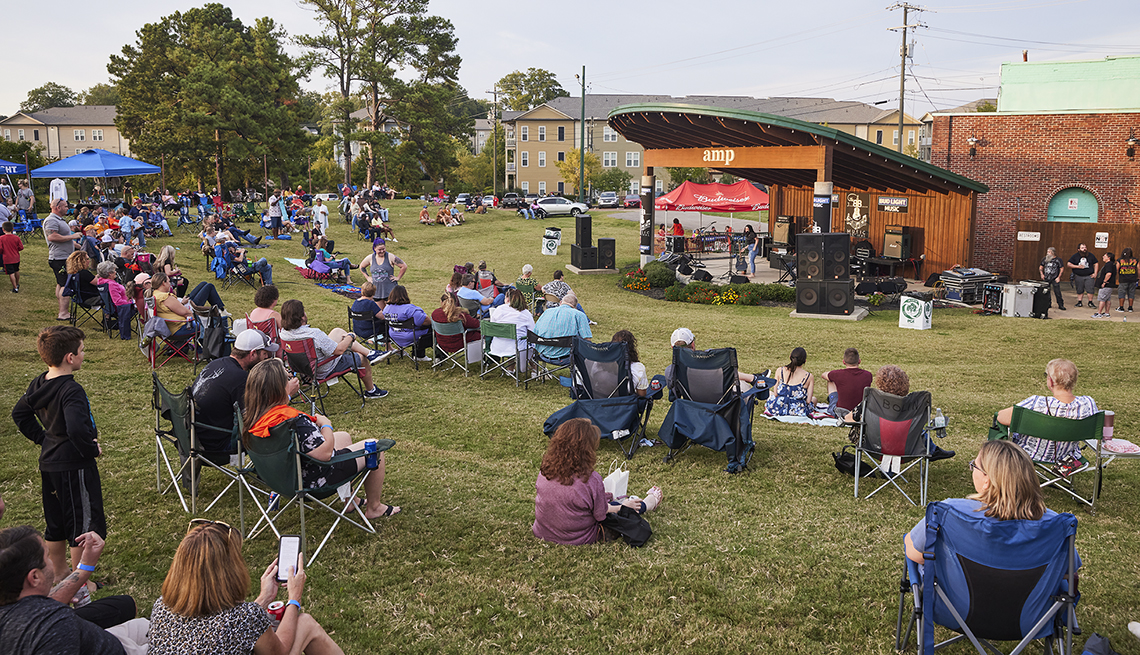
Jackson has abundant parks, greenways and walking trails. And retirees will find plenty of opportunities for golf, fishing and hiking. There are numerous fitness centers, including Lift, an 84,000-square-foot facility with a medical clinic, three indoor pools and a healthy café. Jackson offers free concerts at the Amp, an outdoor amphitheater next to the farmers market. And retirees can see musicals and plays at the performing arts center that locals call The Ned.
Blalark yearns for a blues club like the type he left behind in Chicago, but there’s more to a great retirement locale than entertainment. Blalark says he’s never felt safer than living in Jackson. “I have left this house and left the doors unlocked for hours,” he says. “That’s something unheard of where I came from. But here I feel safe.”
— Sheila Burke
Jeff Nelson
On this beautiful fall afternoon, The Jackson Amphitheater known as The Amp, showcases local performers for the residents.
Population
68,205
Median housing costs
$1,071 per month
Median housing cost burden
29.5 percent of income spent on housing
Access to exercise
74 percent live near parks and recreational facilities
Vibe
Affordable and accepting
Peter Frank Edwards
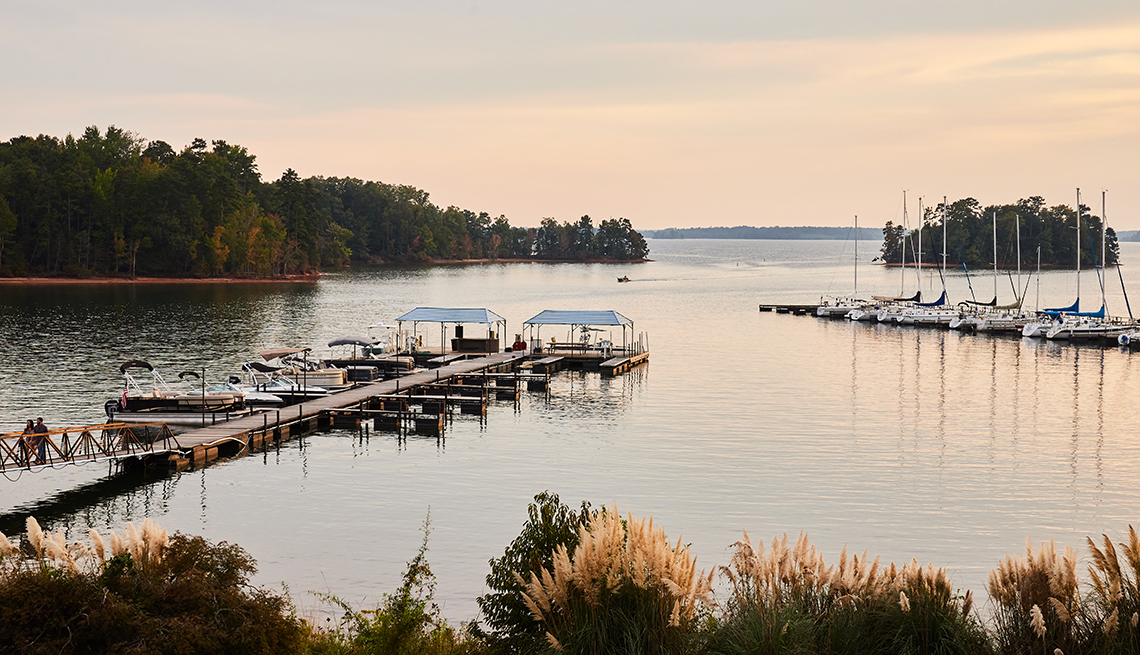
The docks behind The Galley Restaurant at the Portman Marina in Anderson, SC
Anderson has a median house price of under $250,000. But residents don’t have to sacrifice big-city services, such as health care. Officials credit the AnMed Health system, which includes clinics and private practices on one campus.
At Anderson County’s Jo Brown Senior Center, Program Director Kelly Jo Barnwell says she helps older people “put down rich roots by doing what they love to do.” She coordinates 20 program leaders who guide peers through line dancing, bridge, quilting and more.
To those who value creativity, the city boasts a surprisingly vibrant arts community. A converted railway building called the Warehouse serves as the Anderson Arts Center headquarters. It draws myriad residents to its gallery, as well as classes in pottery, ceramics, painting and mixed media. “We also started a wine dinner last year, and try to have one in the fall and spring,” says executive director April Cameron. Beyond the arts center, colorful murals and sculptures dress up an architecturally diverse downtown, where locals have also loyally supported the Electric City Playhouse for nearly 40 years. And then there’s recreation, most notably at Lake Hartwell. With 962 miles of shoreline, it stretches from Anderson into Georgia. “I was living in New Jersey,” says retiree Herb Nymark, “and we looked at maps to find places in the South with boating opportunities. The lake is a wonderful, quiet place.”
— Libby McMillan Henson

Peter Frank Edwards
Strawberry cake at The Galley Restaurant at the Portman Marina, Anderson, SC
Population
28,106
Median housing costs
$898 per month
Median housing cost burden
32.3 percent of income spent on housing
Access to exercise
65 percent live near parks and recreational facilities.
Vibe
Lazy days on the lake
Mariah Tyler
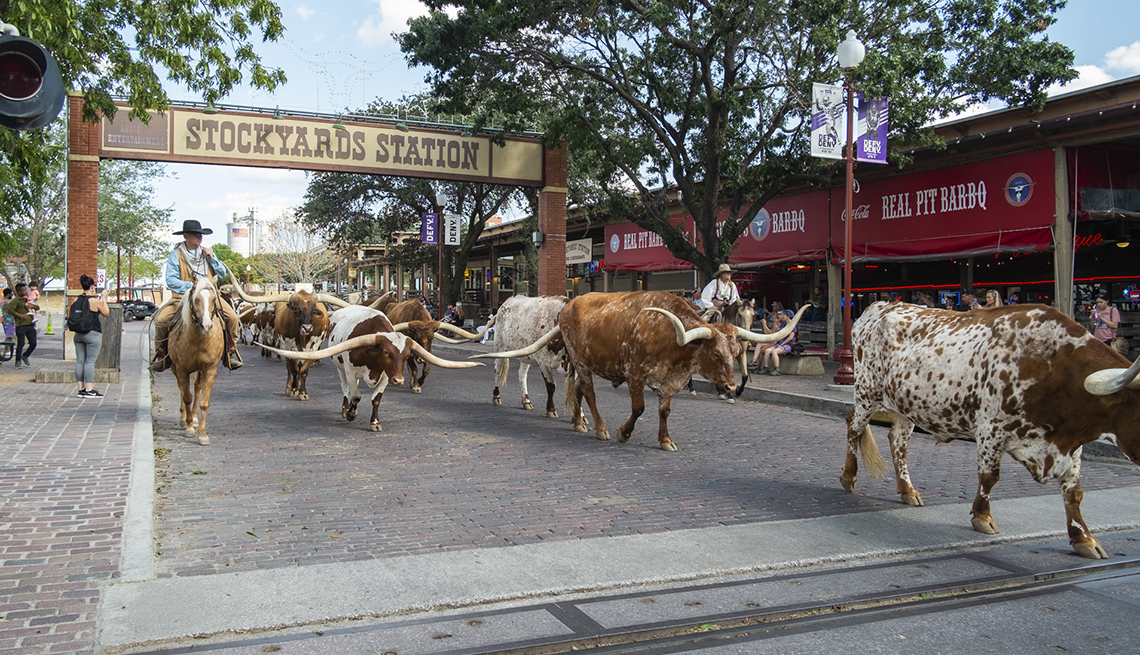
Real Texas cowhands, from the Fort Worth Herd, drive a herd of Texas longhorns down East Exchange Avenue in the Stockyards National Historic District every day at 11:30 a.m. and 4 p.m.
Dallas and Fort Worth may share the Trinity River, but the two cities are distinctly different. Although it is the 12th-largest city in the U.S., Fort Worth is known for a slow pace and a safe and lively downtown. The city also boasts 89 miles of paved bike trails and year-round tennis and golf.
In 2020, ex-Californians Chris Miller, 74, and Gary Glaser, 77, decided to relocate here. With no prior ties to Fort Worth, they made a purely lifestyle move. They love music,
cycling and discovering new restaurants.
Their timing may have been spot-on. In 2017 the city launched the Age-Friendly Fort Worth Action Plan, which has resulted in improvements to parks; expansion of the TexRail public transportation service, as well as new bus routes; new agreements with developers for affordable housing; the promotion and adoption of standards for accessory dwelling units; and websites to connect older residents with social activities. “We’re continually building Fort Worth into a stronger community where people can thrive in every phase of life,” says Mattie Parker, the city’s mayor.
Miller enjoys the sense of community. “When you walk around, everybody is very friendly. That’s a big plus.”
— Barry Shlachter
Mariah Tyler
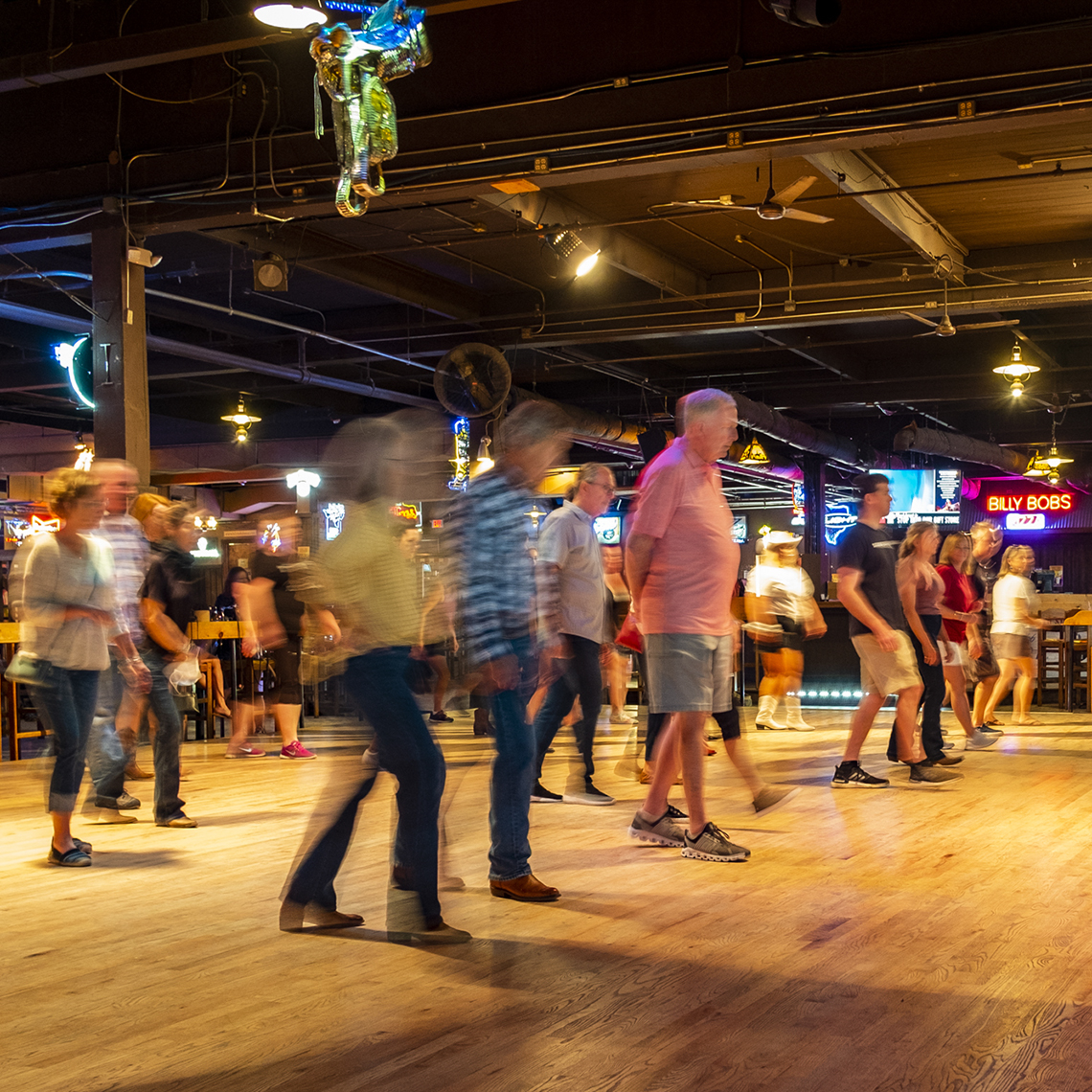
Every Thursday night and Saturday afternoon, Billy Bob's Texas hosts line dancing lessons for all-ages.
Population
918,915
Median housing costs
$1,364 per month
Median housing cost burden
26.3 percent of income spent on housing
Access to exercise
97 percent live near parks and recreational facilities.
Vibe
Cool community
Albert Yee
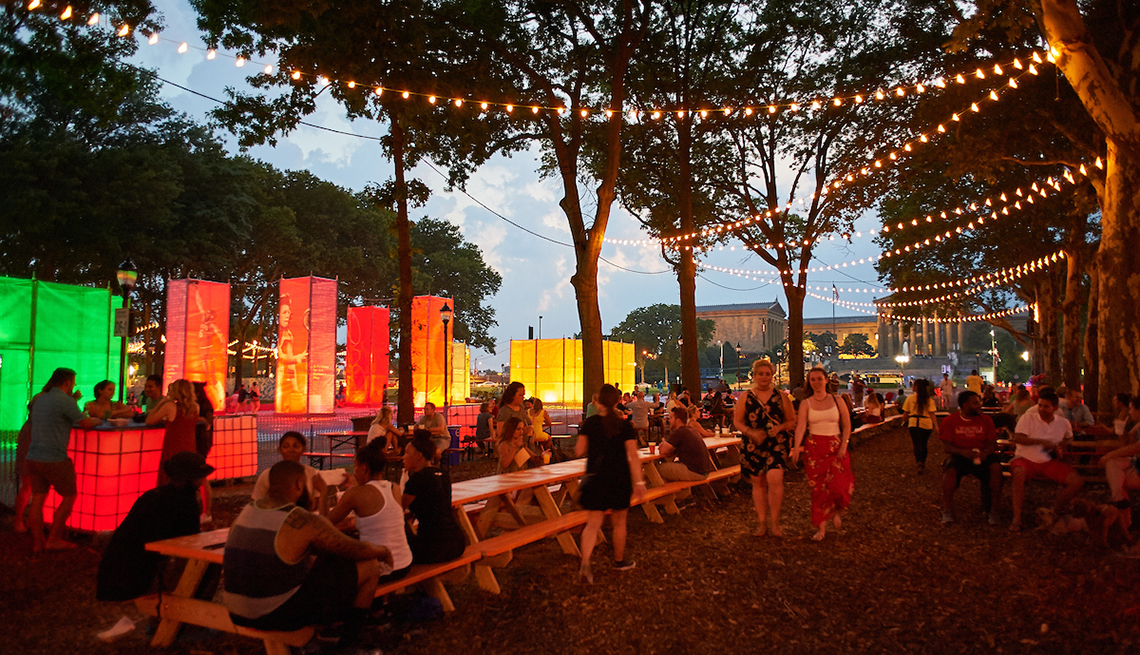
The Oval, for Fairmount Park Conservancy. July 20, 2017
Philadelphia may not seem like the most obvious place to settle down into retirement — the big, old, noisy East Coast city is as famous for its grumpy sports fans as for its history. But Philadelphians know their city as a green, welcoming, community-minded place.
Of Philly’s 1.6 million residents, 300,000 are over 60. Their living costs, while slightly above the national average, are lower than in most East Coast cities, especially for housing. And the city offers notable access to health care, parks and culture.
Philadelphia has four neighborhood networks that connect older people with the city’s offerings. These nonprofit groups provide a range of support and household services for a small annual fee; one group charges $125 a year. The typical neighborhood network also organizes social events.
“I’ve gotten to know some really fine people,” says Lois Kauffman, a retired schoolteacher. “Those are the valuable things. Helping me change a light bulb — that’s nice. But I need a friend more than I need a light bulb.”
Changes are happening throughout the city. Last year, Mayor Jim Kenney adopted an “age-friendly action plan,” developed with the help of community groups and AARP. Priorities include safer streets, more accessible transit, low-interest home-repair loans and improved access to parks and libraries.
Like any American city, Philadelphia contends with its share of crime and poverty. But AARP surveys found that almost 70 percent of Philadelphia’s older residents rate the city as “good” to “excellent.” Among America’s 10 biggest cities, only New York outscores Philadelphia on the AARP’s “livability index.”
— Bill Hangley Jr.
Ted Nghiem
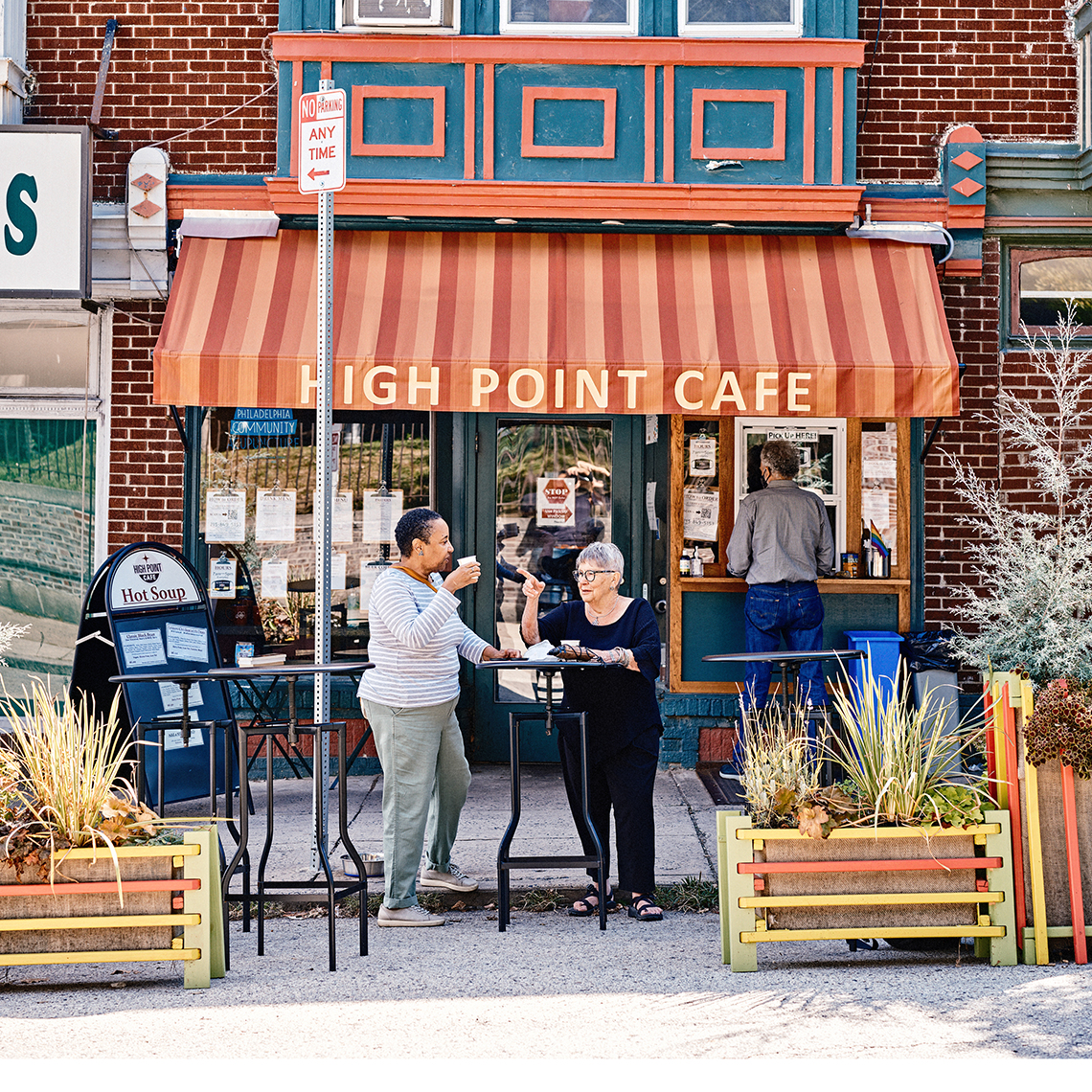
Lois Kaufmann (r) and Claire Robinson having coffee outside High Point Cafe in their neighborhood, on Carpenters Lane.
Population
1.6 million
Median housing costs
$1,196 per month
Median housing cost burden
31.2 percent of income spent on housing
Access to exercise
99.6 percent live near parks and recreational facilities.
Vibe
Brotherly and sisterly love
Kevin Miyazaki
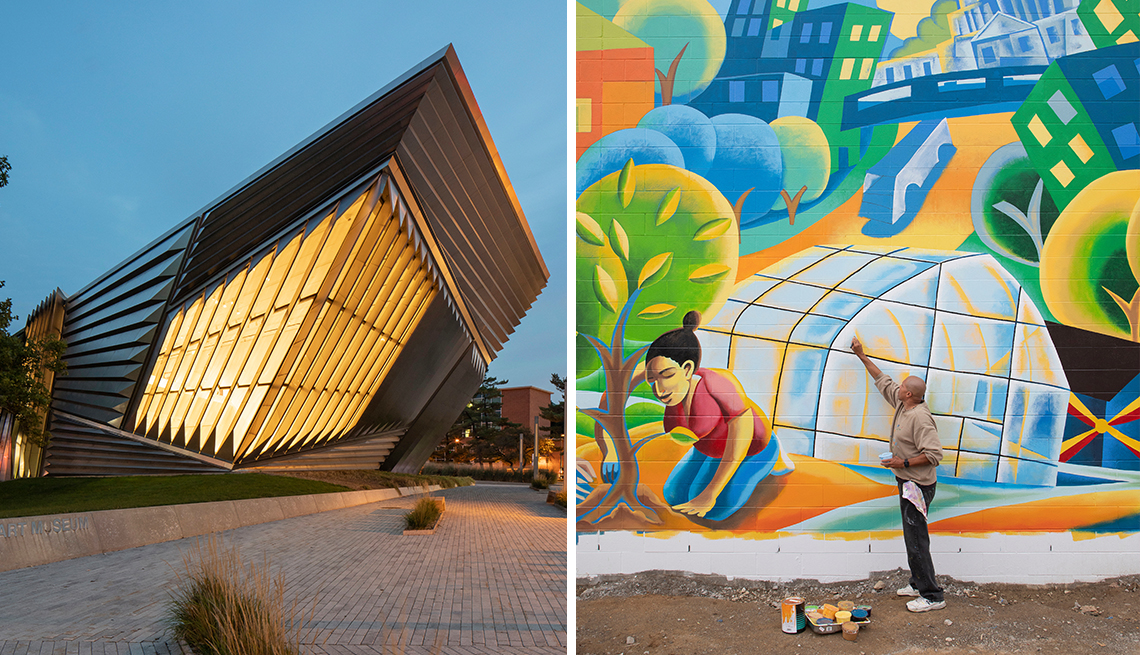
L: The Eli and Edythe Broad Art Museum in East Lansing, Michigan. R: Artist Brian Whitfield paints a mural at the Allen Neighborhood Center in Lansing, Michigan.
Vallary Harris, 73, enjoys public parks in the day and jazz at intimate clubs at night. But not in New York City, where she spent her 40-year career in human services.
In 2017, Harris moved back to her hometown of Lansing, to be near cousins and childhood friends — and to enjoy a more affordable lifestyle.
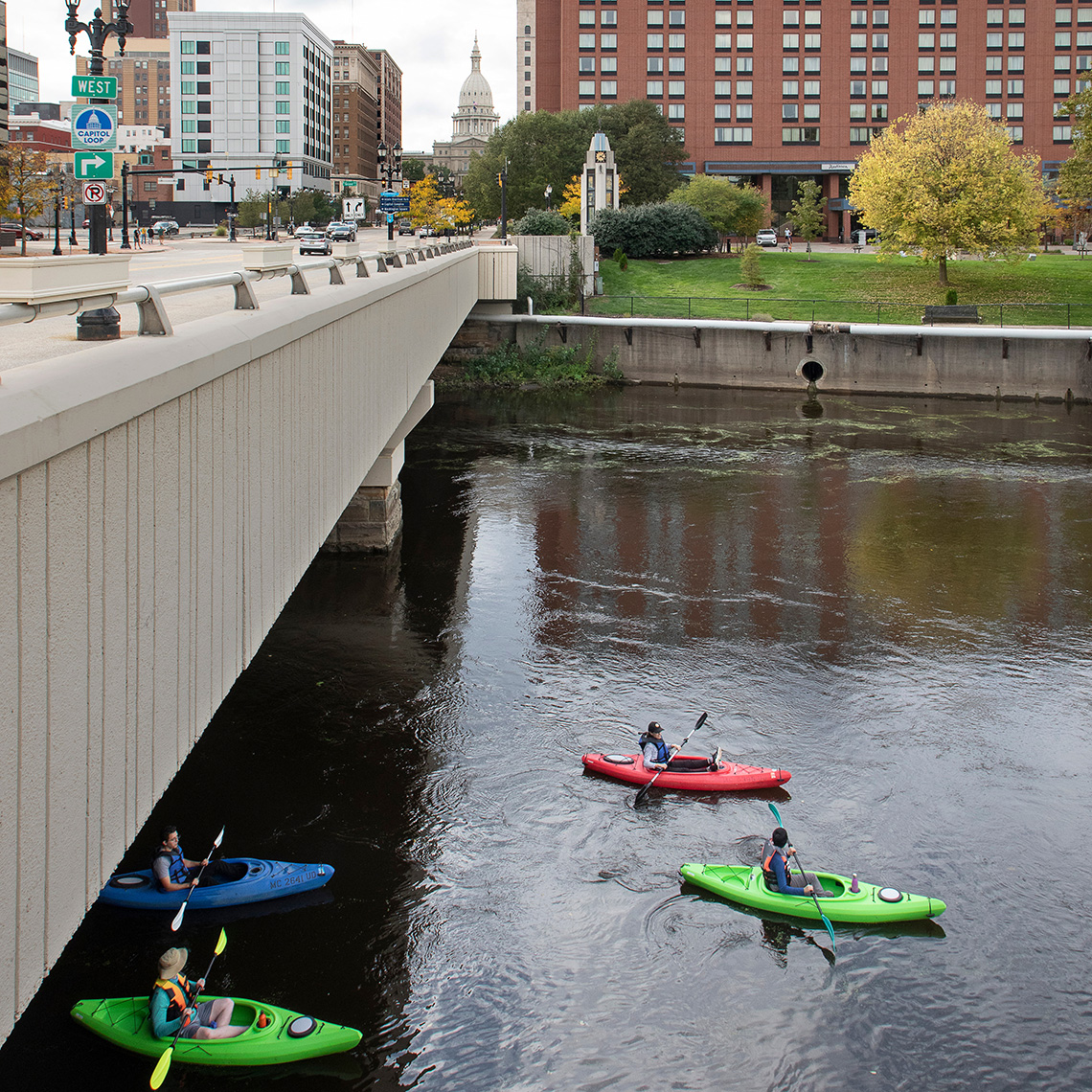
This historic riverside town offers city amenities at budget-friendly prices and with a relaxed small-town vibe, entwined with some of the Midwest’s finest year-round outdoor recreation. Rent a kayak, paddle around downtown, tour the state capitol, check out a landmark museum and take a selfie with a rhino at the zoo — all in the same day.
Lansing boasts 111 parks within its 36 square miles, and nearby county parks offer wildlife observation areas, pet-friendly trails, beaches and by-the-hour rentals of paddleboats, cross-country ski gear and other equipment. The highlight is the Lansing River Trail, with more than 20 miles of paved pathways for bicycling and walking, branching from downtown along the area’s waterways.
“You can get on a bike or walk and be on this wonderful trail that goes all through the city and to the suburbs and the Michigan State campus,” in East Lansing, says retiree and longtime resident Marna Wilson, 71. “There are lots of access points.”
Infrastructure is robust, with two large health care systems, a large public library network and reliable internet service.
“Ninety-nine percent of residents have access to multiple broadband providers; 69 percent have at least one ultrafast fiber option,” says Tyler Cooper of BroadbandNow, an analytics firm. “Connections range from $20 to $50 per month; it’s one of the more affordable areas in Michigan.”
Harris misses the many public transportation options from her days living on the East Coast, though Lansing does have a city bus service. Restaurants may tend toward meat-and-potatoes meals.
But residents appreciate the affordability, safety and access to health care, culture and community support. “And there are many farmers markets and a festival of some sort just about every weekend,” says Wilson. “I wouldn’t live anywhere else.”
— Melissa Preddy
Kevin Miyazaki
Kayakers on the Grand River in downtown Lansing, Michigan.
Population
112,644
Median housing costs
$910 per month
Median housing cost burden
26.2 percent of income spent on housing
Access to exercise
89 percent live near parks and recreational facilities.
Vibe
Urban nature
Sean Pavone / Alamy Stock Photo
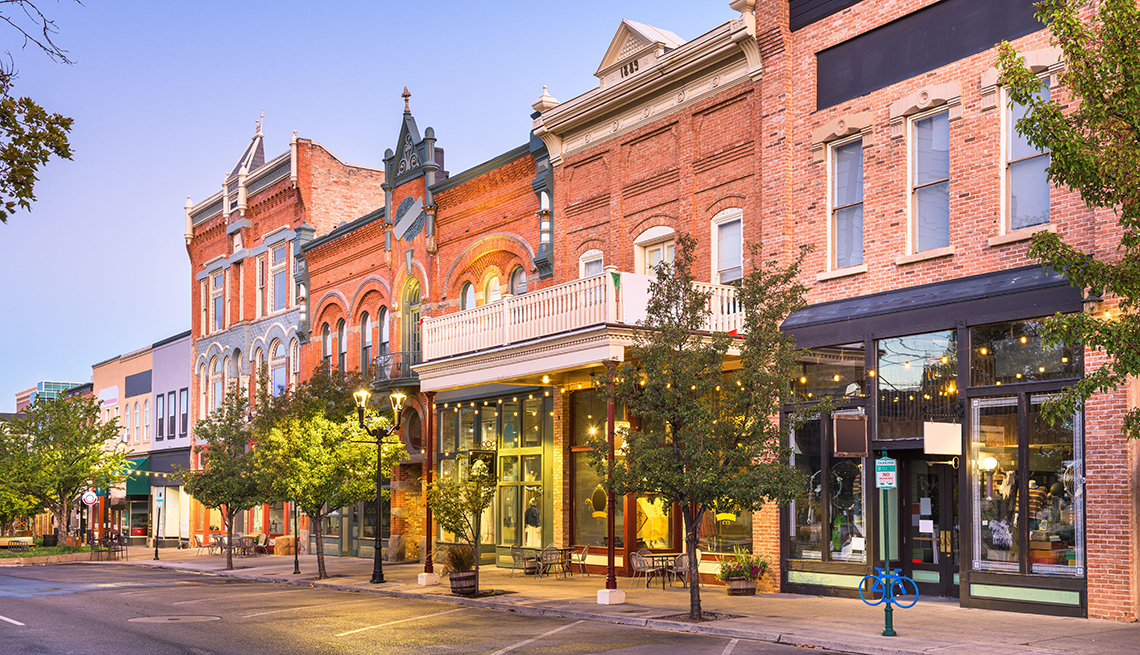
Downtown Provo, Utah on Center Street at dusk.
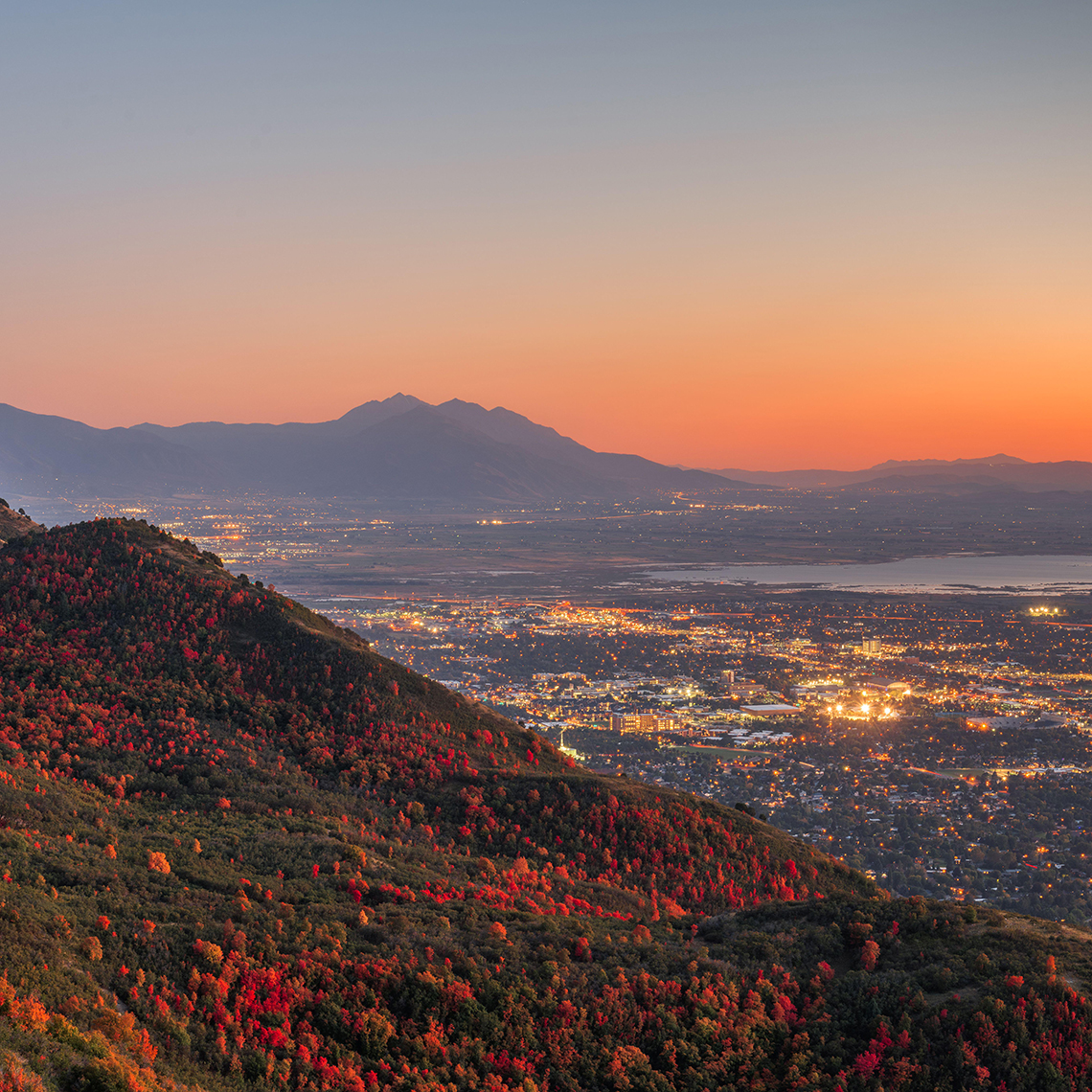
Nestled between Utah Lake and the Wasatch Range, Provo offers watersports, hiking, fly fishing and skiing within a short drive of the antique shops, bookstores and restaurants along Center Street.
The nearby Uinta-Wasatch-Cache National Forest features more than 1,700 miles of hiking trails, and more than 500 miles are open to easier-to-pedal electric bicycles and electric trail bikes. “We’re known as the forest next door,” says public affairs officer Loyal Clark. “Most residents can either walk right out their back door or take a very short drive to access the national forest.” About 30 minutes from Provo, Timpanogos Cave National Monument invites visitors to explore three spectacular limestone caves on ranger-led tours. Provo is also just a half-day’s drive from all five of Utah’s national parks.
The area’s outdoor beauty attracted the actor Robert Redford decades ago to purchase property in the North Fork of Provo Canyon. Redford championed conservation while building a mountain recreation resort and staging the Sundance Film Festival in Park City.
Provo residents also take pride in the community’s public safety, economic growth led by a burgeoning tech sector, volunteerism and healthy living. Given the influence of The Church of Jesus Christ of Latter-day Saints, which eschews alcohol, bars have been scarce and nightlife is tame (although that scene has been changing in recent years). Provo has struggled with health-care access, but Utah Valley Hospital finished a major expansion to 395 beds in 2019.
— Ed Carter
Sean Pavone / Alamy Stock Photo
Provo, Utah, view of downtown from the lookout during an autumn dusk.
Population
115,162
Median housing costs
$1,110 per month
Median housing cost burden
27.3 percent of income spent on housing
Access to exercise
85 percent live near parks and recreational facilities.
Vibe
Mountain recreation
David Hintz / Alamy Stock Photo
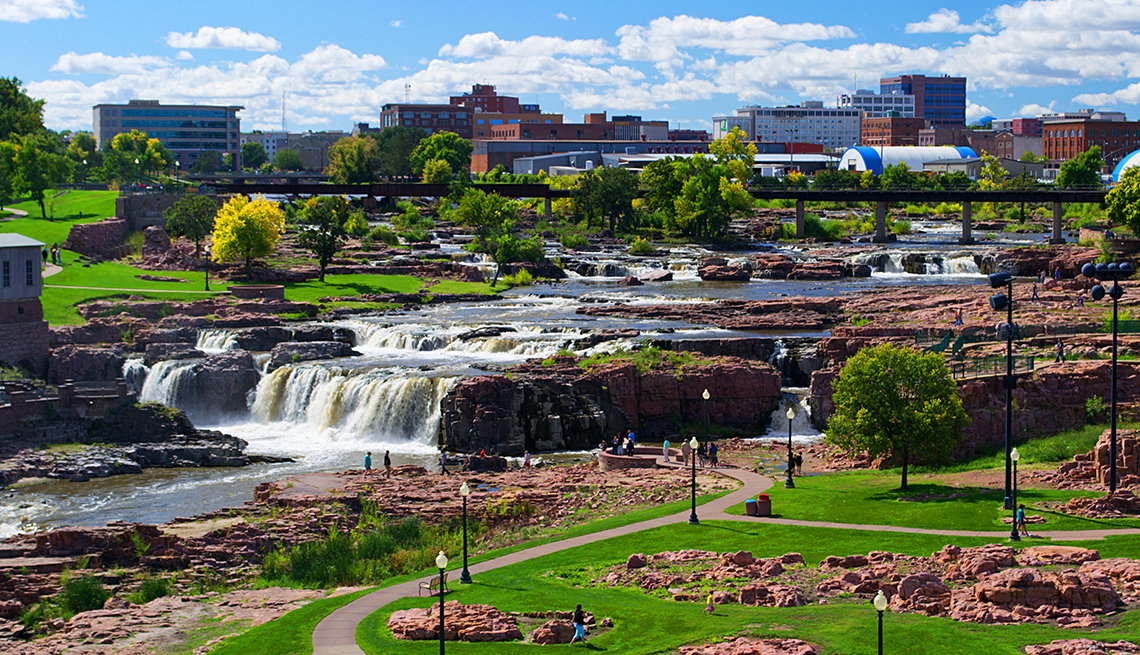
Falls Park Sioux Falls, South Dakota
Suzanne Miller recalls making childhood visits in the 1960s to Falls Park, the site of the raging waters that gave Sioux Falls its name. “You had to know how to get there back then,” says Miller, 67, a former U.S. State Department resource officer who returned to her hometown in 2019 after nearly 50 years. “There were all these warehouse buildings and salvage yards and not much else.”
Today, Phillips Avenue’s entry to the Falls is lined with restaurants and trendy shops, not to mention Levitt at the Falls, an outdoor music venue whose summer lawn-chair crowds include many older people enjoying the groove.
Such scenes help illustrate Sioux Falls’ transformation from flyover outpost to emerging destination for retirees seeking affordability and open spaces without sacrificing cultural opportunities and social connections.
Miller, who lived in California for two decades and worked in far-off locales such as Egypt and Ukraine, has joined a book club in Sioux Falls and plays pickleball through Active Generations, a nonprofit organization that provides activities and other support for about 15,000 older residents of Sioux Falls. “Social engagement is critical to people’s health,” says Active Generations president and CEO Gerald Beninga. “And you can’t enjoy retirement if you’re not healthy.
One of the city’s drawbacks is something no one can fix: frigid and enduring winters, which account for 161 days with low temperatures below freezing each year, according to BestPlaces.net. But with no state income or estate tax and a cost of living below the national average, well-timed getaways are often part of retirees’ plans. But on sunny days, residents can enjoy more than 80 parks within city limits and nearly 30 miles of paved bike paths that also accommodate walkers in a metro area that made the American Lung Association’s “cleanest cities” list for particle pollution for 2021.
— Stu Whitney
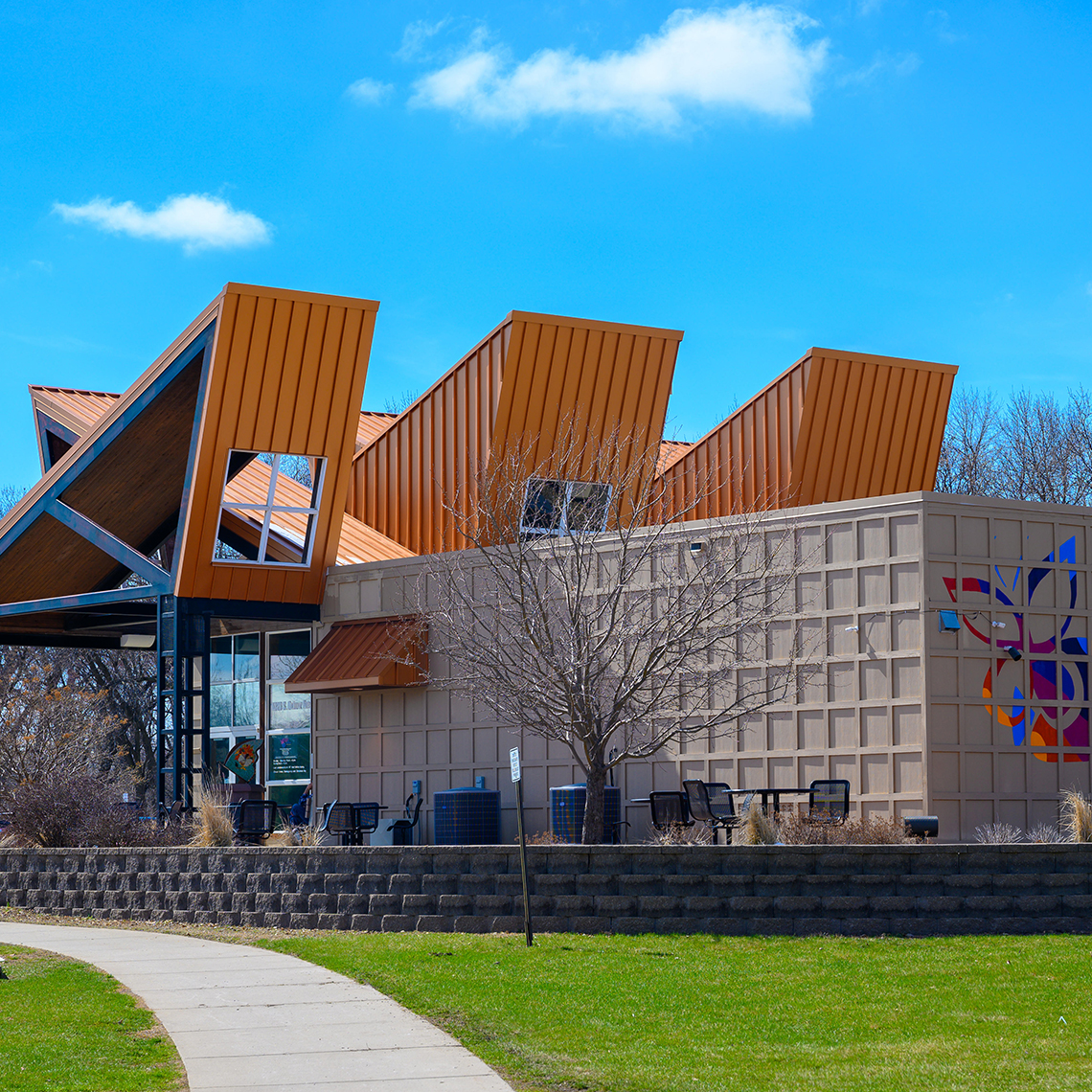
Alamy Stock Photo
Sioux Falls, South Dakota butterfly house and aquarium
Population
192,517
Median housing costs
$1,152 per month
Median housing cost burden
23.1 percent of income spent on housing
Access to exercise
87 percent live near parks and recreational facilities.
Vibe
Rejuvenation
Communities worth living in
AARP is committed to being a resource to both community leaders and their residents in creating homes and neighborhoods that let older Americans live their best lives. Among our programs are:
Scores communities across the country on services and amenities that affect life most.
This free book offers over 100 ideas to make each room in your house safer, more comfortable and suitable for decades to come.
Network of Age-Friendly States and Communities
So far, 573 communities have made a formal commitment to this AARP program to work toward making their region a great place to live at any age.
Since 2017, AARP has funded 804 quick-action projects, from adding bike lanes to expanding parks to launching gardens.
Staff and volunteers work with elected officials and local organizations to advocate and create age-friendly communities.