
Striking a Balance to Avoid Dangerous Falls
It's a hidden epidemic, but there's a lot you can do to avoid a severe injury
Getty Images
En español | The thing most likely to keep you from enjoying life after 65 is a fall.
Falls are the leading cause of both fatal and nonfatal injuries to older Americans. Every 11 seconds, an older adult goes to an emergency department to treat an injury from a fall, according to the National Council on Aging. The Centers for Disease Control and Prevention found that death rates from falls among adults 65 and older increased more than 30 percent between 2007 and 2016.
So what’s the best way to prevent a fall? Finding the correct balance — with our minds as well as our bodies.
Tell Us What You Think

Write to Catherine Alicia Georges at AARP, 601 E St. NW, Washington, DC 20049, or email volpresident@aarp.org.
We need to steer a course between, on the one hand, never thinking we might fall and taking no preventive steps and, on the other hand, being so fearful of falling that we stop moving and, ironically, make ourselves less agile and therefore more likely to fall.
As Charlotte Yeh, M.D., AARP’s chief medical officer, puts it: “Too many people develop a fear of falling — and that can make you stop moving. It’s important to keep using the brain-body connection.”
A critical part of keeping that balance in our lives is staying active. So, what steps can you take?
- Work on strength and resistance training. Consider lifting weights and doing Pilates and exercises such as push-ups, which build muscle.
- Walk and use stairs if you can. Join or start a walking club if it will help motivate you.
- Strengthen your quads. One way to do that is by leaning against a wall, sliding down into a squat, then standing again — and doing repetitions.
- Improve your balance. Yoga can help older people. So can martial arts training such as tai chi.
- Have your vision and hearing checked regularly. Clouded vision or impaired hearing can greatly boost your chances of falling.
- Talk with your doctor. Or ask your pharmacist about medication side effects that could increase fall risk.
- Wear the right shoes. Find a pair that won’t make you slip.
- Remove tripping hazards. Check your home for what can cause a fall.
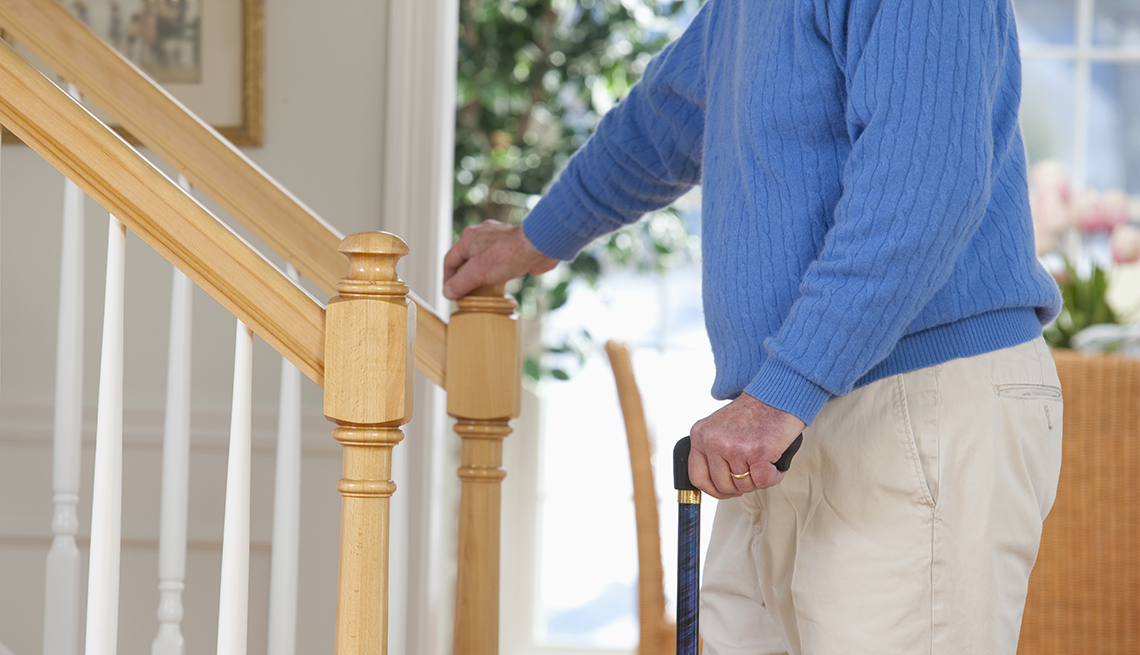
The National Institute on Aging says 6 out of 10 falls occur at home. So use slip-resistant mats rather than throw rugs, tuck electrical cords out of the way, opt for door handles with levers instead of knobs, and use railings and grab bars to navigate your home. Finally and critically, place slip-resistant mats in the tub or shower.
Falls are a hidden epidemic, but there’s a lot we can do to avoid them without slowing down. Let’s strike the right balance through exercise and sensible steps to stay safe.