



















Alert
Close

Last chance! Play brain games for a chance to win $25,000. Enter the Brain Health Sweepstakes

Donate

Be part of the solution.

Help AARP Foundation win back opportunity for struggling Americans 50 and over.

Charity Ratings

AARP Foundation earns high ratings for accountability and transparency from two leading charity evaluators. Read

Sign Up for Our
Newsletter

View Current Issue

The AARP Foundation Litigation Update, our quarterly email newsletter, provides information about our current activities and cases.

Connect with the
Foundation

Email:

foundation@aarp.org


Toll-free Nationwide:

888-OUR-AARP

(888-687-2277)


Toll-free TTY:

877-434-7598

American Express v. Italian Colors Restaurant

AARP Asks Supreme Court to Ensure Arbitration Does Not Eliminate Rights


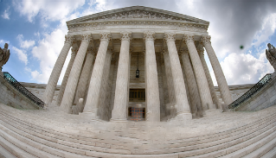
The U.S. Supreme Court will hear arguments in a case where enforcing an arbitration clause will eliminate important statutory rights. Its ruling will have wide-ranging implications for consumers, employees, borrowers, and nursing home residents — just to name a few.

Background

A number of small businesses filed a class action lawsuit against American Express, arguing that it violates antitrust law by forcing merchants who accept American Express charge cards to also accept all American Express branded credit cards, which have higher fees than MasterCard and Visa credit cards. American Express sought to force the dispute into arbitration, with no class-action possible. While a class action spreads the expense of bringing a claim across a large number of people, each claimant must bear the full expense of proving the case in individual arbitration. The merchants in this case provided uncontroverted evidence that if forced to arbitrate individually, it would cost them hundreds of thousands of dollars each to prove their cases, while the most any could hope to recover if they won would be approximately $5,000 each.

Aggregating individual claims into a class action often offers the only effective way to remedy harmful practices that apply to large numbers of people. Even where the dollar value is small, the financial impact on individuals is important and can amount to huge ill-gotten gains for wrongdoers. Many important civil rights and consumer protection statutes are designed to be enforced by private litigation, rather than by overburdened taxpayer-funded enforcement agencies. When arbitration prevents private litigation, it also eliminates the primary enforcement of those important laws, essentially giving the wrongdoer a “get out of jail free” card.

Arbitration clauses are now standard in many contracts, such as for employment, medical and banking products and service, cellphones and internet or cable, and nursing home admissions. Arbitration is very expensive compared with court because the parties have to pay the arbitrator’s hourly rate and higher filing fees, among other expenses. Arbitration does not provide injured consumers or employees with the same access to information needed to prove their claims as they would get in court, and the decision of the arbitrator does not need to be in writing. Even written decisions are usually final and not appealable. The company that forces the claim into arbitration usually also chooses the arbitrator.

In the Supreme Court, AARP Foundation Litigation attorneys filed AARP’s friend-of-the-court brief jointly with Public Justice and the Center for Constitutional Litigation, explaining that the Supreme Court and arbitration’s ardent supporters have always justified arbitration as a forum for the effective vindication of rights. Because of the uncontroverted evidence about the cost of proving the claims in this case, it is clear that forcing these plaintiffs into individual arbitration will actually eliminate their rights, not simply provide an alternative forum. AARP’s brief challenges the Court to decide if it meant what it has always said about arbitration being a forum for the effective vindication of rights, or is merely a means for corporations to eliminate legal rights and remedies.

What’s at Stake

Corporations are able to exempt themselves from laws enacted to protect important rights by imposing arbitration in their take-it-or-leave-it contracts. It is vital that the Court protect the effective vindication of statutory rights in arbitration to ensure remedies for practices that violate the law or harm consumers, employees, and patients.

Case Status

American Express v. Italian Colors Restaurant is before the U.S. Supreme Court.


  • Text
  • Print
  • Recommend

Search Legal Advocacy

Find
Legal Cases

Find the most recent cases in which AFL has advocated in courts nationwide for the rights of older persons, and filed AARP’s amicus curiae (“friend of the court”) briefs that help courts decide precedent-setting cases.

About
Foundation Litigation

AARP Foundation Litigation (AFL) is an advocate in courts nationwide for the rights of people 50 and older, addressing diverse legal issues that affect their daily lives and assuring that they have a voice in the judicial system. Learn more about our litigation teams.