HOW WE’RE FIGHTING FOR YOU
AARP Works for Livable Communities
WHEN THINKING about retirement, some may daydream about that bungalow on the beach, but the reality is that a large majority—75 percent—of people 50-plus want to stay in their homes for as long as they can.
A more sobering reality: About half of older Americans lack confidence that their current homes and communities will be able to meet their future needs. That’s a valid concern. Most homes right now don’t have all the features that can support someone as they age. And too many of our communities pay little attention to the needs of older residents.
For decades, AARP has been at the forefront of making communities more livable for older Americans.
Our founder, Dr. Ethel Percy Andrus, was a leading advocate for aging in place. A scale model of the “House of Freedom,” codesigned by AARP to meet the needs of older Americans, was shared with President Dwight D. Eisenhower in early 1961. Built in downtown Washington, D.C., the actual concept house featured a step-free entrance, wider doorways, lower cabinets and an open floor plan.
AARP is still committed to its goal, working with lawmakers and industry partners. Here’s how we’re achieving it.
Support for staying in your home. AARP offers tools and information to help understand the basics of home design and safety. The AARP Livability Index (aarp.org/livabilityindex) scores neighborhoods and communities across the country on the services and amenities that affect older residents the most, and the AARP HomeFit Guide (aarp.org/homefit) helps you assess your home for safety and comfort.
Advocating for change. AARP works with lawmakers to expand the supply of affordable housing for older Americans and to create age-friendly dwellings. This includes passing laws to allow options like small, flexible backyard suites known as accessory dwelling units (ADUs). Go to aarp.org/advocacy to find out more.
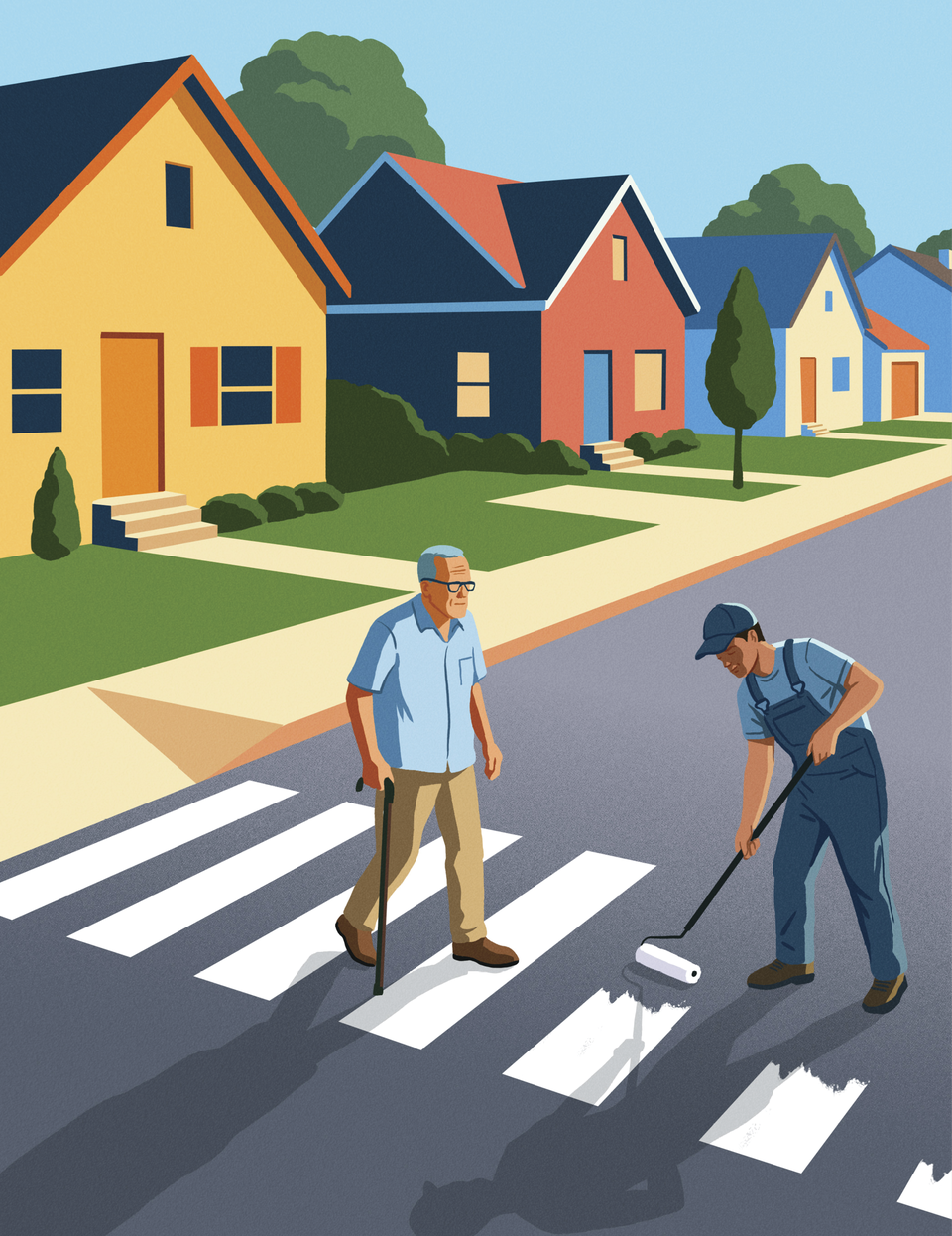
Community grants. AARP will award over $8 million in local grants this year to improve communities for older residents as part of our Livable Communities initiative, which supports the efforts of localities to become great places to live for those 50 and older. Now in their 10th year, our Community Challenge grants have invested more than $24 million in projects, such as crosswalks and public space enhancements, to develop livable communities. Visit aarp.org/communitychallenge to learn more.
For most older adults, having good housing options and communities that are responsive to their needs are top priorities. AARP is committed to making that a reality. —Rodney Harrell, AARP vice president, family, home and community