FEATURe STORY
One-Day Home Fixes
The Property Brothers take us through quick improvements to make your home more livable as you age
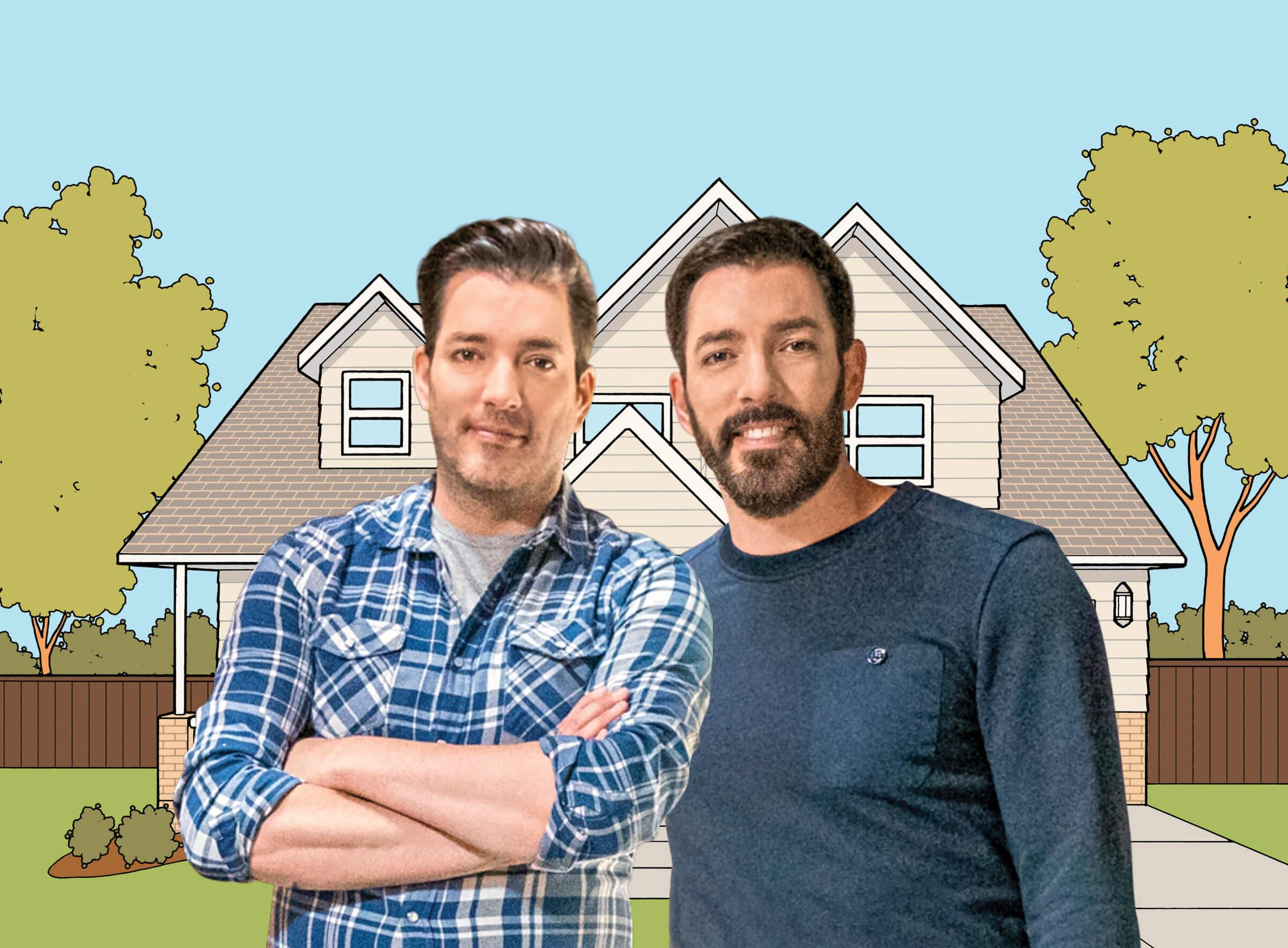
Brothers Jonathan, left, and Drew Scott
JONATHAN SCOTT is walking through his Los Angeles home, pointing out upgrades that “anyone at any age” can do to make life better now and far into the future. “Trust me, I think about aging,” he says. Wood-slat sound panels buffer noise so everyone can hear each other. Motion-sensor hallway lights mean no one—young, old or in-between—fumbles in the dark. A desk-mounted charging station eliminates having to bend down to reach an outlet.
Joining the video call, Jonathan’s twin brother, Drew—the other half of HGTV’s Property Brothers—describes the simple, aging-in-place upgrades he’s been testing for their parents, Jim and Joanne Scott, 92 and 81, who live nearby: a facial-recognition door lock that opens as if by magic, sofa legs raised a few inches so standing up feels less like a full-body workout, and clear plastic stair treads he calls “a no-brainer for safety.”
The real appeal is how doable these all are. No demolished walls. No parade of contractors (though a few fixes might require a quick assist from a pro). “You can do these things in minutes or hours, not weeks,” says Jonathan. “And you’ll feel like a hero doing most of them yourself.”
Now turning 48, the brothers are thinking more about what they call “forever home” design: changes that make sense today and will keep working as you age. “Don’t wait until something goes wrong,” Drew says. “Make things better now. You’ll feel good immediately—and keep feeling good every single day.”
What follows is their room-by-room guide to one-day fixes that yield results fast in safety, comfort and peace of mind. They’ll make your house easier to move through, calmer to live in and maybe even better by tonight.
ENTRYWAY + FRONT DOOR
Coming home to chaos can be stressful. A well-organized doorway setup reduces clutter, bending over and slip hazards—three things that get more annoying (and riskier) over time.
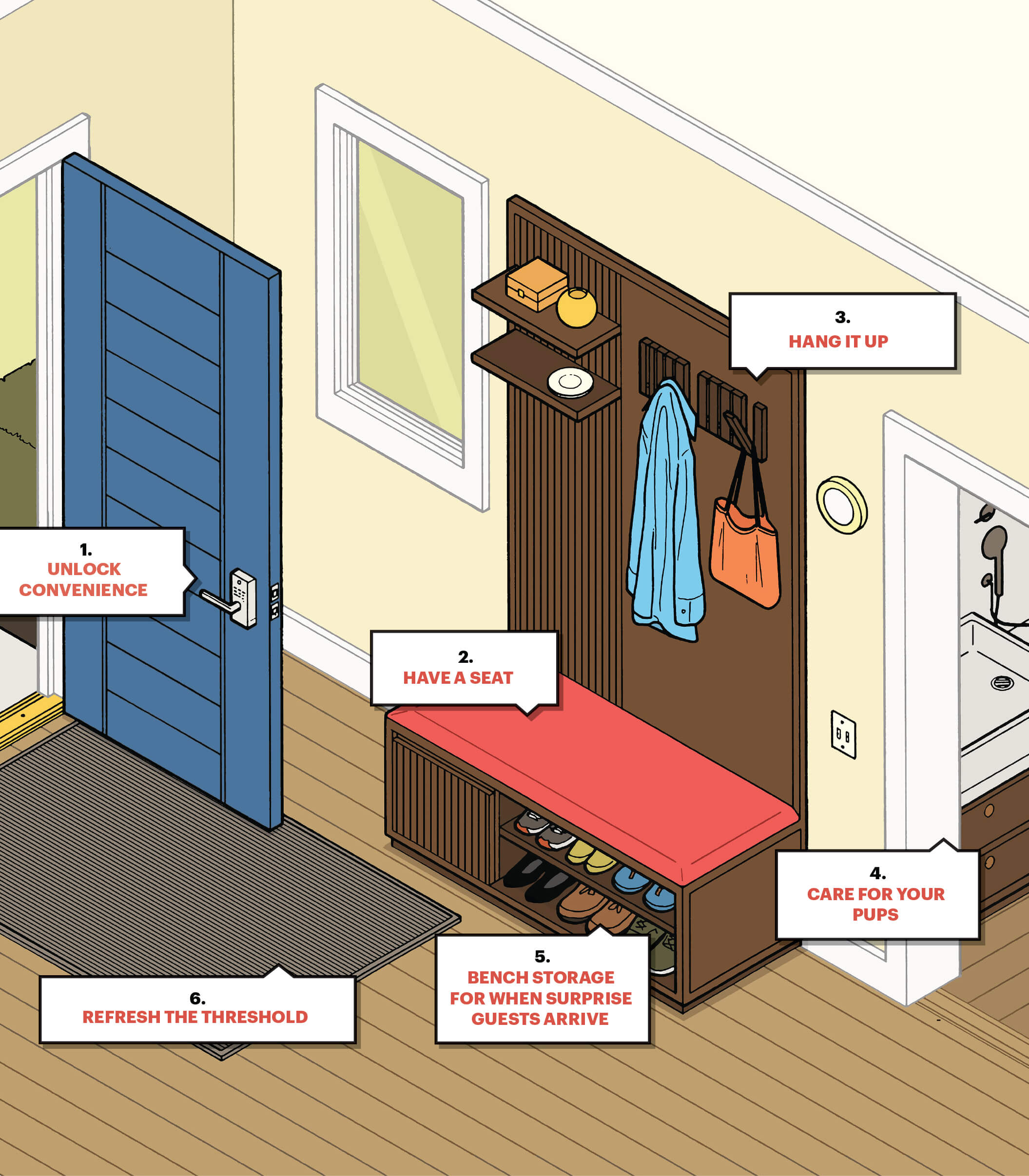
1. UNLOCK CONVENIENCE: Drew says it’s easy to install a smart lock, which eliminates fumbling for keys if you’re carrying groceries or have arthritis. Companies like Schlage, Yale and Chamberlain have models with cameras and more. His dad, he says, loves his lock’s facial recognition: “He literally stares at the lock and it opens.”
2. HAVE A SEAT: “A low-profile bench with storage gives you a place to sit, put on shoes and hide all those hats and tote bags,” says Jonathan, adding that built-ins are a worthy splurge.
3. HANG IT UP: “Wall-mounted flip hook racks fold away but pop up when you need them,” Jonathan says. Wayfair, West Elm and the Container Store sell them for under $100.
4. CARE FOR YOUR PUPS: A dedicated dog-washing station (either with an ad hoc hose attachment or a permanent plumbed pet shower) contains the mess to a mudroom or laundry room near the entrance. You may need a plumber to extend a water line.
5. BENCH STORAGE FOR WHEN SURPRISE GUESTS ARRIVE: You want enough space for shoes, backpacks and the dog leash so you can “shove things away fast” when the doorbell rings, Drew says.
6. REFRESH THE THRESHOLD: A doormat covering more of your entryway will lower your fall risk. “Three by five usually works great,” Jonathan says. “Just make sure it’s machine-washable, nonslip and thin enough for door clearance.”

AROUND-THE-HOUSE TIPS
Dare not to glare: Jonathan says putting UV-reflective solar film on your windows is a quick, easy way to cut cooling costs and increase privacy.
LIVING ROOM + FAMILY ROOM
Your living room works harder than any other room in the house, which means that upgrades here pay off every single day. Here’s how to move more freely in the place where life actually happens.
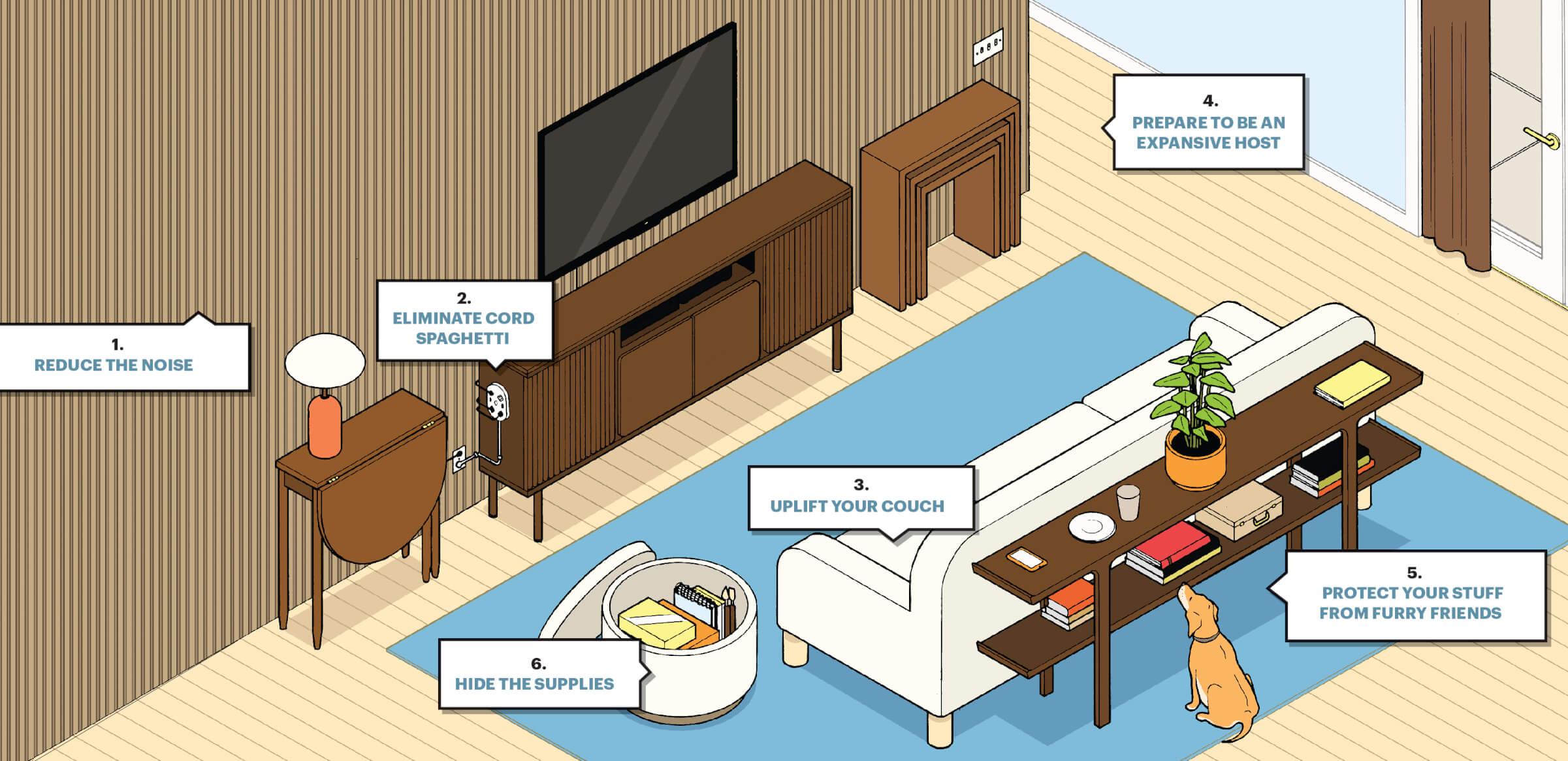
1. REDUCE THE NOISE: If your living room sounds like an echo chamber, Jonathan suggests wood-slat acoustic wall paneling: “It kills the reverb and looks beautiful.” The Scotts partner with the Wood Veneer Hub (WVH), but you can buy wood-slat sound buffers at Home Depot and Lowe’s.
2. ELIMINATE CORD SPAGHETTI: Dump your old electrical splitters, Jonathan says. His upgrade: a low-profile surge protector with multiple outlets and USB ports, mounted so it can’t slide around.
3. UPLIFT YOUR COUCH: Getting up from a low sofa is easy—until it isn’t. Drew has a simple fix: Since most furniture legs use a universal screw, you can swivel on taller (and preferably thicker) legs to raise the seat.
4. PREPARE TO BE AN EXPANSIVE HOST: In-person social connections matter as you get older, so be ready for anything without cluttering the room. Drew’s fix is furniture that expands when you need it: “Stacking stools, nesting tables and gateleg console trays are great for game night or surprise visitors.”
5. PROTECT YOUR STUFF FROM FURRY FRIENDS: A small layout tweak can prevent pet-induced disasters. “Add a slim console behind the sofa and suddenly there’s a safe spot for drinks and breakables,” says Jonathan.
6. HIDE THE SUPPLIES: Drew loves furniture that doubles as container space. Games, puzzles, paints, drawing pads—“It can all be stashed away,” he says, “so you’re not living in a permanent craft store.”

AROUND-THE-HOUSE TIPS
Update outlet plates and switch plates: Fresh white plates (or a coordinating color) are cheap and “make the room look cleaner in 10 minutes,” Drew says.
BEDROOM + CLOSETS
For the spot where your day begins and ends, do this to reduce nighttime stumbling, improve storage and, most important, get a good night’s rest.
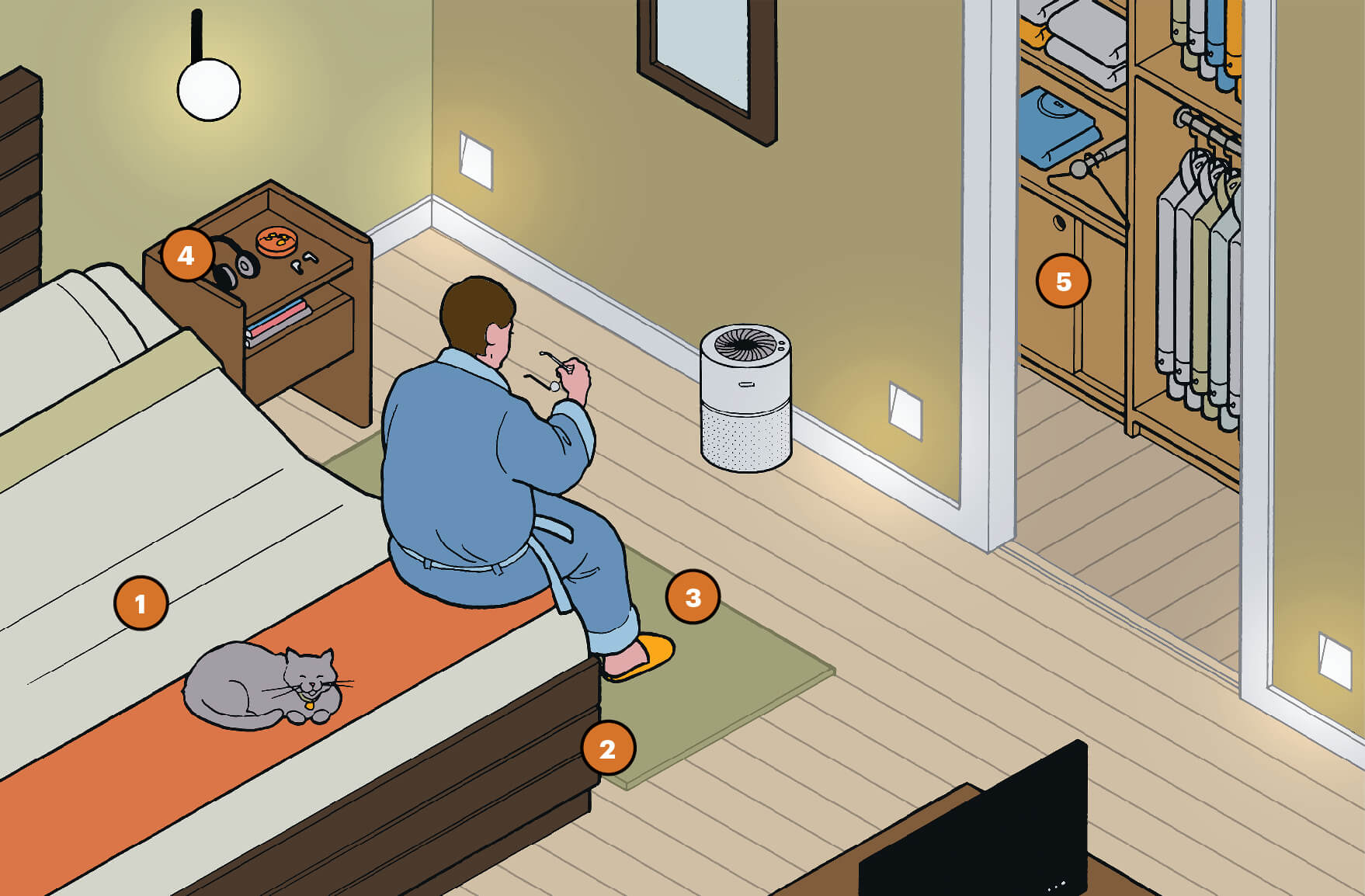
1. Splurge on a smart system: A smart mattress, while pricey, can transform your sleep. Sensor-dotted bed toppers can track snoring and temperature shifts (including hot flashes) and can cool or warm you to keep you comfortable. Jonathan notes that some systems can respond automatically: “If you’re snoring, it auto-elevates the head.” Top models include Saatva Solaire, Eight Sleep Pod 5 Ultra and Sleep Number Climate 360.
2. Sleep flexibly: “Adjustable bed frames aren’t super cheap, but they allow you to sit up, raise your head or legs easier and take pressure off the back and hips with the touch of a button,” says Jonathan, who says he loves his adjustable bed “to an embarrassing degree.”
3. Warm the landing: Drew loves “having warmth under your feet when you’re getting in and out of bed.” If your rug doesn’t cover enough flooring, “just get a runner for both sides.”
4. Tune out the noise: The brothers’ low-effort solution to TV-in-bed battles: Many smart TVs have Bluetooth connectivity. “Connect Bluetooth headphones to your TV so your partner doesn’t hear anything,” says Jonathan.
5. Get more into (and out of) your closet: Most people waste bedroom closet space by hanging everything on a single rod. The brothers call it “rod void.” By adding shelves or drawers, “double stacking” your rods, or adding a telescopic valet rod (that angles out to hang a single suit or dress for steaming), “all of a sudden it doubles or triples the amount of stuff organized,” says Jonathan.
AROUND-THE-HOUSE TIPS
Freshen air: Dust and allergens can make your breathing harder and make sleep less restful as you age, which is why Jonathan recommends “a good air purifier with a medical-grade filter.”
HALLWAYS + STAIRS
These are full of the sneakiest hazards. The good news: The fixes are fast, cheap and satisfying.
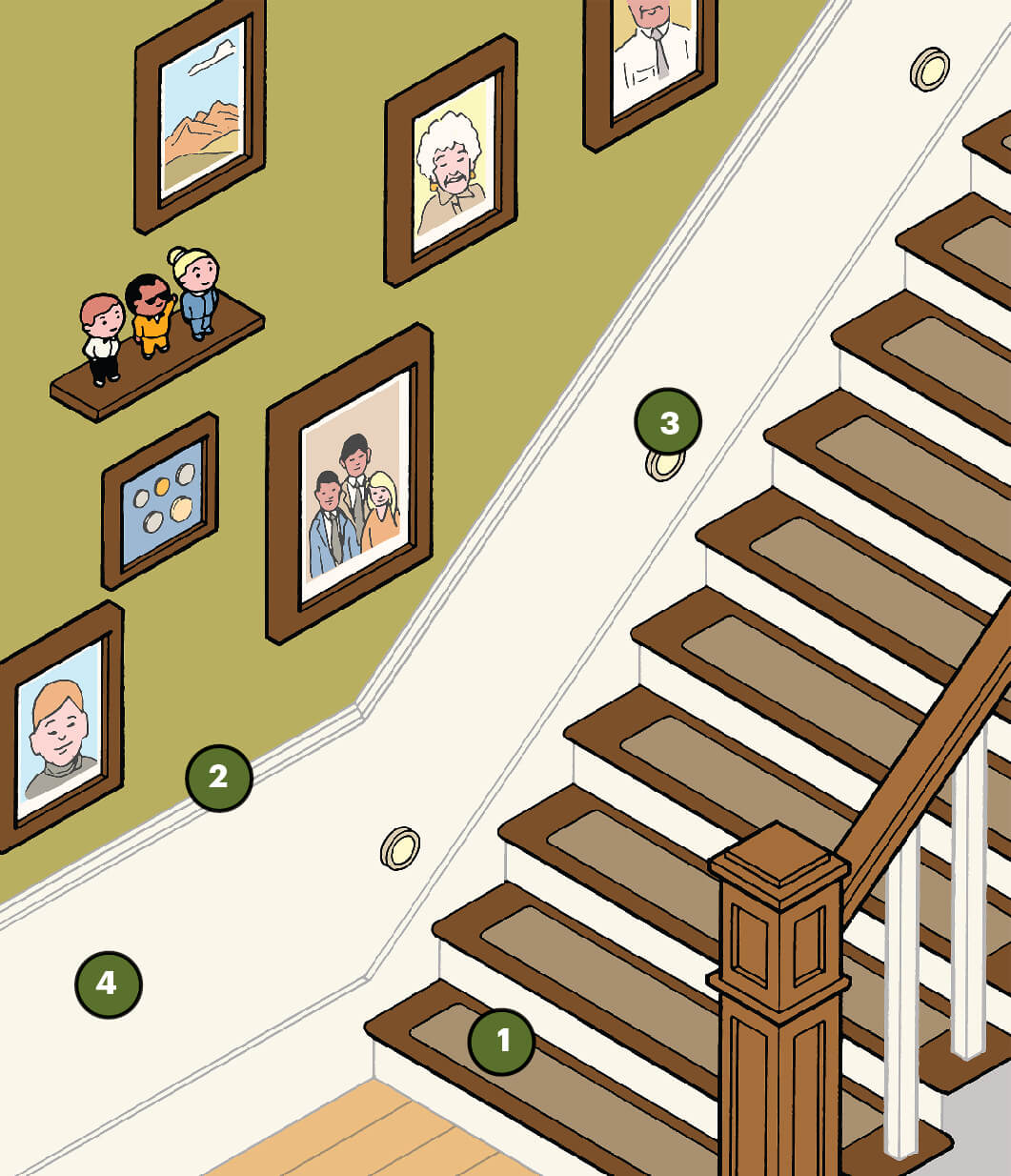
1. Make stairs safer: Falls are the leading cause of injury for adults 65-plus. One of Jonathan’s favorite one-hour upgrades is installing transparent anti-slip stair treads on wood or other hard surfaces. Or, for a classic look, call in a pro to add a carpet runner. “With families, with older people, with anyone who wears socks, this is a no-brainer,” he says.
2. Add depth with trim and paint: High-contrast trim colors (say, sage green against a white wall) help define visual boundaries, making navigation safer. You can add contrast easily with a chair rail: Just measure, attach pre-primed trim with adhesive and a few nails, then paint. Basic wainscoting takes more time but remains a manageable project. Both options protect walls from scuffs, transforming plain hallways into more inviting spaces.
3. Light the way: Motion-activated lights in hallways, staircases and bathrooms are “nonnegotiable” for safety, Drew says, illuminating your path without blinding you. Battery-powered stick-on LED strips work great and install in minutes—no electrician needed. For stairs, Drew suggests adding lights at both the top and bottom so you’re never navigating in shadow.
4. Touch up walls and trim: Buffing away the scuff rewards you immediately with clarity and safety. A quick paint touch-up or repainting trim in a warm, neutral semigloss shade brightens hallways and improves visibility without a full paint job. (Heck, even using one of those eraser-style sponges can make a difference.) “It can make an old space new in an afternoon,” Jonathan says.
AROUND-THE-HOUSE TIPS
Show your collectibles: “If you aren’t showcasing what you’re collecting, you shouldn’t be collecting it.”
KITCHEN + DINING ROOM
The brothers’ best one-day kitchen upgrades focus on safety, smarter flow and heading off major repair bills down the road.
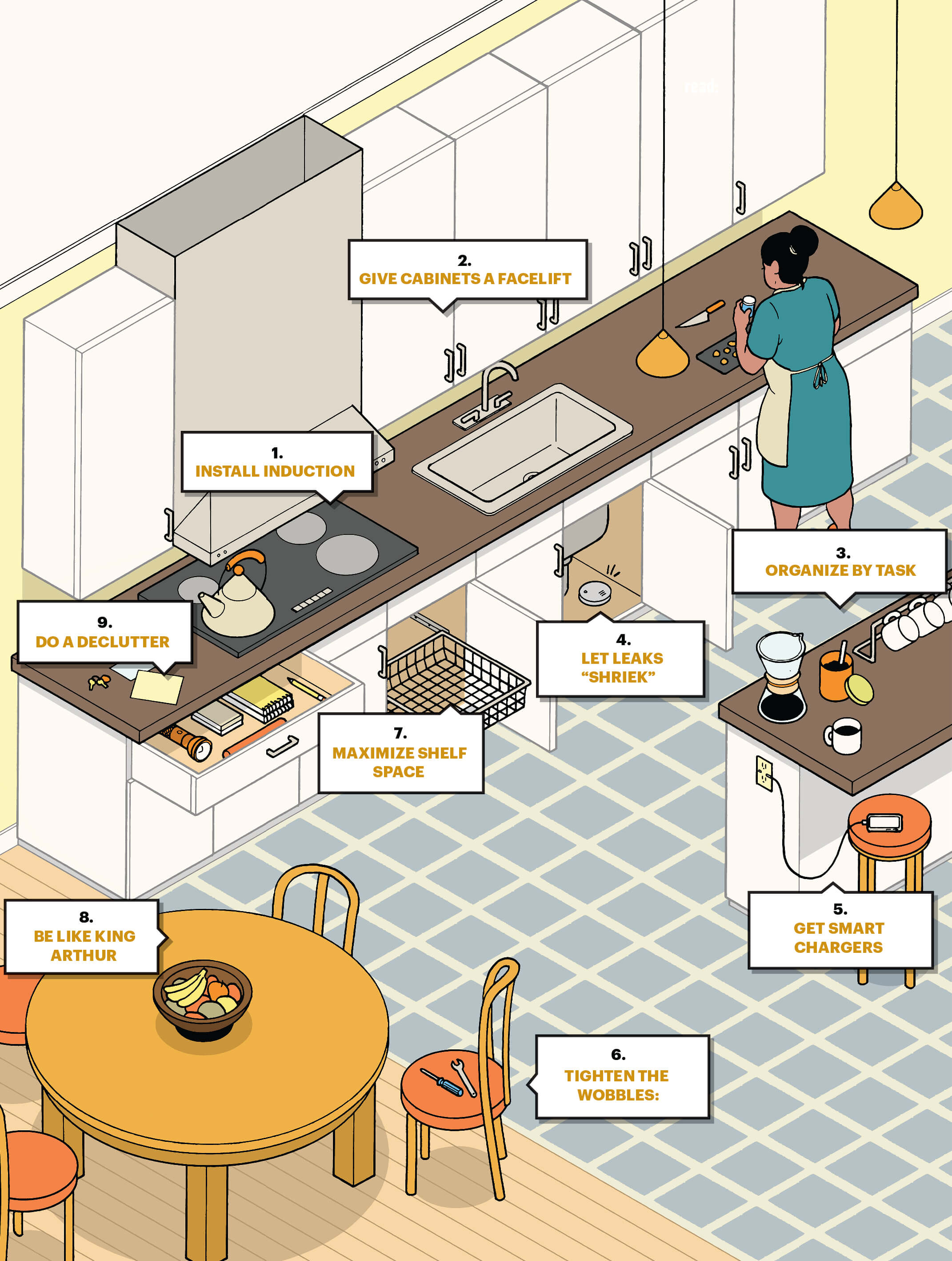
1. INSTALL INDUCTION: Consider buying an induction range, which heats cookware without a flame or heated coil. “The cooktop can shut itself off so you don’t set a fire,” Jonathan says—safer for anyone with memory concerns.
2. GIVE CABINETS A FACELIFT: “Swap out old knobs with D-shaped pulls that are easier to grab and open,” Drew says. If you’ve got dinks and chips, “add a little filler and some paint and you’re done.”
3. ORGANIZE BY TASK: For example, instead of going around the kitchen every morning to collect what you need for coffee, Jonathan suggests setting up a simple coffee station with the machine, mugs, coffee, filters, spoons and sweetener all in one place.
4. LET LEAKS “SHRIEK”: To keep a slow leak from becoming a massive problem, Jonathan says to add cheap leak-sensor “pucks” under sinks, behind toilets and near the water heater. They’ll sound an alarm if they get wet.
5. GET SMART CHARGERS: Multiple generations living together means more gadgets to charge. Swap out a few old wall outlets for new ones with built-in USB ports so you can plug in charging cables without bulky charging blocks, says Drew.
6. Tighten the wobbles: “Don’t flip out; flip your chairs,” Drew says. Tighten every screw and bolt. Add felt pads to chair legs so they glide quietly and don’t scratch floors. “You won’t believe how satisfying this simple 20-minute fix can feel,” he says.
7. Maximize shelf space: If you have shelves in a cabinet or open pantry, Jonathan recommends adding a deep pullout tray system—“a life-improving one-day improvement, especially for older people,” that keeps items accessible.
8. Be like King Arthur: “A round table matters more as you age,” Jonathan says. “It keeps everyone equally close to the conversation, so you can hear each other, and nobody gets stuck on the ‘far end.’ ”
9. Do a declutter: “Go drawer by drawer, take everything out, then be honest with yourself,” says Jonathan. Toss or donate what you don’t ever use and store everyday items within reach so you’re not bending and digging for basics.

AROUND-THE-HOUSE TIPS
Upgrade task lighting where you cook, work and read: Under-cabinet lights eliminate shadows on kitchen countertops. “If you find yourself avoiding activities because the lighting isn’t great, that’s the universe telling you to fix it,” says Drew.
BATHROOM
Bathrooms are small, slippery and used when you’re tired, rushed or half-awake. The rule here: Focus on comfort, safety and better storage.
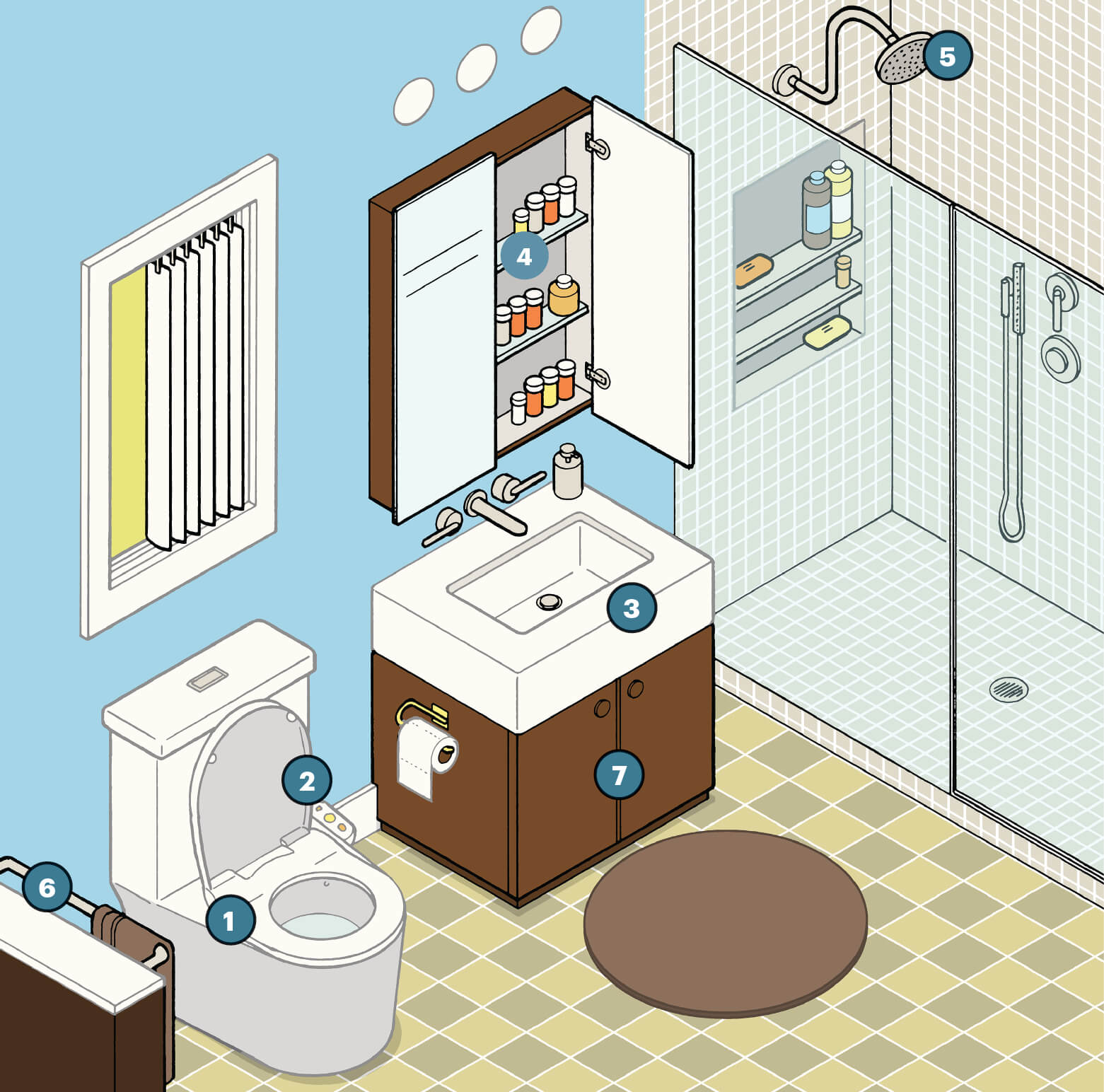
1. Reduce the noise: Drew’s biggest pet peeve in the bathroom: “that loud smashing sound of plastic against porcelain.” So, he says, swap in a soft-close toilet seat. It’s cheap, fast and makes the room feel less public restroom–adjacent.
2. Go bidet (yes, really): Jonathan calls an electric bidet “a life changer,” especially in helping to maintain independence and dignity. “Having a toilet that cleans with water is more sanitary, and it can make the whole routine easier if flexibility or mobility isn’t what it used to be.” If you have an outlet near the toilet, a toilet seat bidet supplying warm water is a straightforward installation. If you don’t, an electrician can add one in under an hour.
3. Don’t put your sink on a pedestal: Jonathan is blunt about pedestal sinks: “Absolutely useless!” Replacing a pedestal with a cabinet sink creates a critical stability anchor for balance and brings helpful tools—magnifying mirror, electric toothbrush—closer. “It also lets you hide your toilet paper.”
4. Hide medicine in plain sight: As the daily necessities of aging multiply, sharing a bathroom counter becomes a cluttered, risky endeavor. Jonathan recommends putting it all behind a recessed, mirrored medicine cabinet. “Most are designed to slip neatly between the wall studs,” he says, creating essential, eye-level storage and space for a larger mirror. While installing one is a manageable DIY project—just be sure to check for wires first—hiring a professional guarantees a safe, perfect fit.
5. Empower your shower: If you’ve got a showerhead that’s too low or hits at an odd angle, the brothers’ no-demolition upgrade is a gooseneck extender that raises your showerhead and angles it outward, giving you more headroom and a better spray position. “Most people can install this without a plumber,” Drew says. Wrapping Teflon tape over the new gooseneck’s threads makes for tight seals when screwing it in.
6. Use discreet grab bars: They don’t all look like the ones at a hospital, Jonathan says. Companies such as Moen, Zuext and Grabcessories by Live Well make stylish ADA-compliant bars that blend naturally with your home’s decor, including some that double as towel racks and toilet paper holders.
7. Soft-close everything: As with toilet seats, so with cabinets: “Stop the slam,” Drew says. Add soft-close hinges or dampers to vanity doors and drawers, preventing painful pinches.
AROUND-THE-HOUSE TIPS
Light remotely: Pair a smart bulb with a remote switch, and you won’t have to navigate in the dark. “You can completely change how you move through your home at night,” Jonathan says.
Property Brothers: Under Pressure is a new 14-episode HGTV series starring Drew and Jonathan Scott that tackles the emotional and financial stress of buying and renovating homes in a tough market. The series guides buyers through the entire process, from house hunting to functional design.
Got Bigger Plans? AARP Can Help
▶︎ The AARP HomeFit Guide is a 36-page, room-by-room checklist that helps you spot smart upgrades to make daily life safer, easier and more comfortable at every age—a practical blueprint for the bigger projects you may want to tackle next. Go to aarp.org/homefit for more.
▶︎ The free weekly AARP Livable Communities newsletter shares ideas for improving the places where we live—from walkability to housing options to community design. Visit aarp.org/livable to enroll.
▶︎ And visit aarp.org/homeandcommunity for even more tips and tools for your housing needs.