REAL People/Comfort and Joy
A Chorus Where Everyone Belongs
Connie Young and Susan Dommer created a musical community for people with dementia and their caregivers
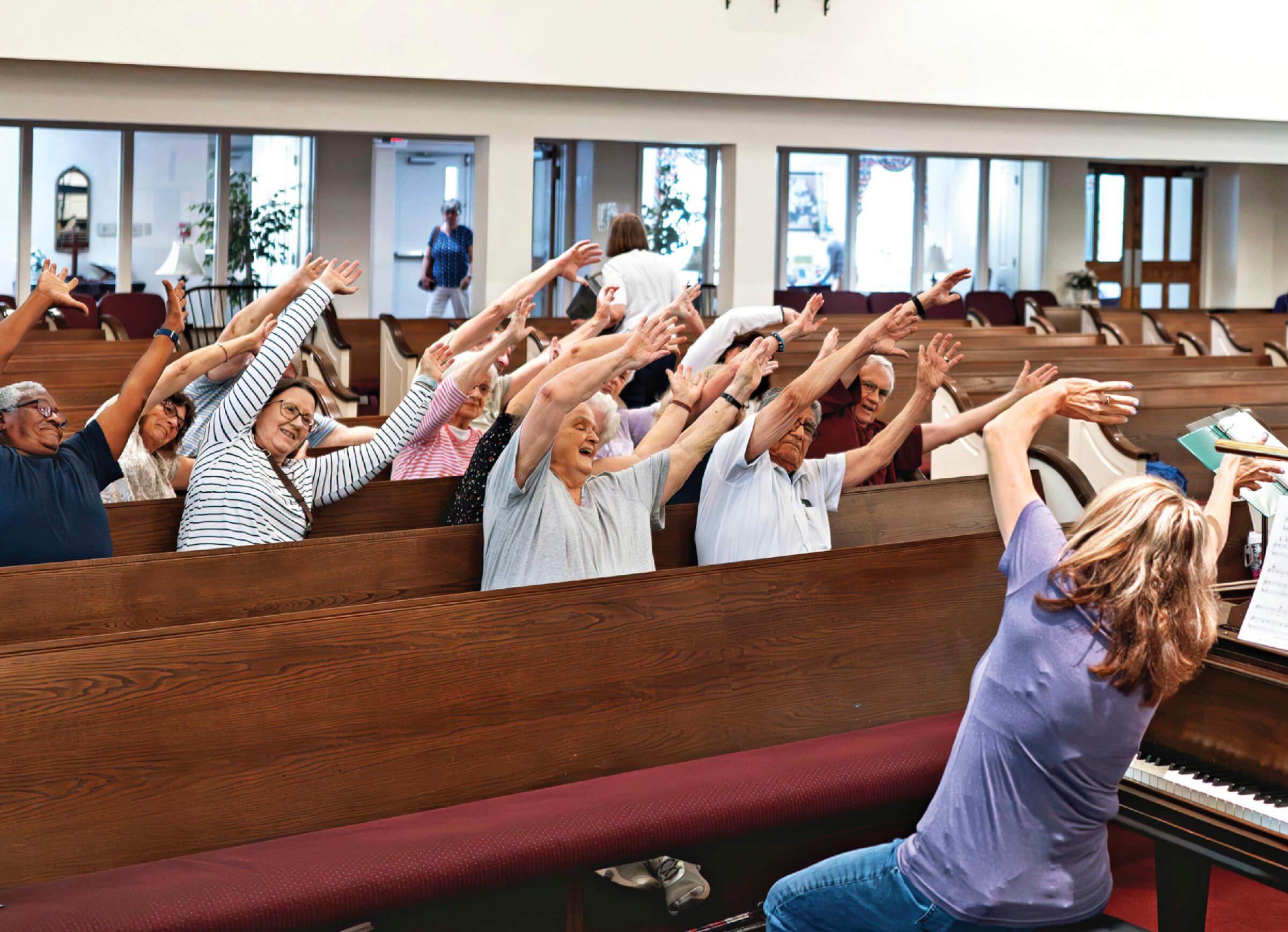
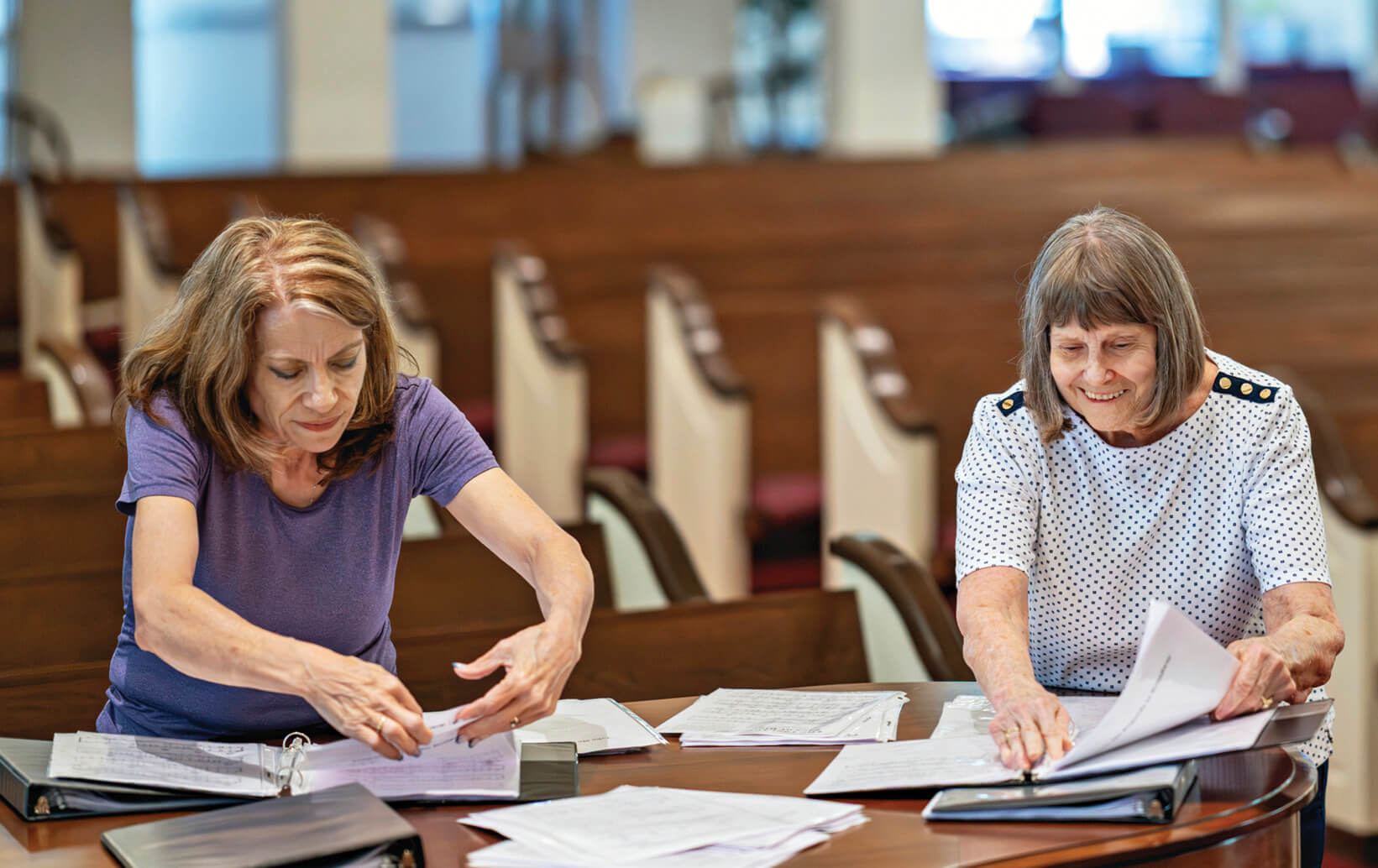
Dommer leads members of the Forgetful Friends Chorus, which she founded in 2016 with Young, below.
CONNIE YOUNG: In my mother’s final days, my family gathered to sing to her. Her eyes were closed, but she smiled, even though she had advanced dementia. When we sang the Louisiana State University fight song and “Jesus Loves You,” her two favorite songs, she sang with us. I was surprised, but it meant a lot to see her singing.
Susan Dommer: There’s extensive research about music and the brain. We know that in dementia patients, response to music is one of the last things to leave. People’s speech may be gone, but when they hear the right music, they can sing.
Connie: Caring for someone with dementia is hard, sad and isolating. After my mother died, I saw a post about the Giving Voice Chorus in St. Paul, Minnesota, where people with dementia and their caregivers sing together. I immediately forwarded it to Susan, the choral director of the church I attend. I asked, “What do you think?”
Susan: I said, “I’m in!” We started our group, Forgetful Friends Chorus, in 2016, to perform at our local Walk to End Alzheimer’s. We practiced two songs: “Getting to Know You” from The King and I and “You’ll Never Walk Alone” from Carousel. The first one because the group didn’t know me, and the second because caregivers often feel alone. Immediately after the performance, people were like, “When’s the next one?” And suddenly I thought, We can keep doing this. Now we perform several times a year at senior centers and memory care units.
Connie: It’s just amazing to see the way people respond.
Susan: I have seen people who were nonverbal start to nod and then sing.
Connie: For people with the disease, their world isn’t making sense anymore. But when they sing, it makes a bit more sense to them. When we perform, we tell people in the audience, “Sing with us if you want to.”
Susan: Many people do. It stimulates their brains. When you’re in a chorus, your heartbeat and breathing synchronize with the group. It’s not just performance, it’s emotion. Everybody deserves to have joy, and singing can often provide that.
Connie: Chorus members are with a group of people who are like them, who understand, so it feels safe too.
Susan: I also see caregivers’ moods change. When their loved one starts singing, they glimpse a part of that person that they might not have seen for a while. I’d love to see more of these choruses forming. It’s not hard to start one.
Connie: Caring for someone with dementia motivates you to try to help other people—that’s why we started the chorus. Even from the darkest experiences, it’s possible to find and share some light. —As told to Nora Rappaport
Connie Young, 78, is a retired virologist who lives in Gainesville, Virginia. Susan Dommer, 62, who lives in Manassas, Virginia, is the music director at the Manassas Church of the Brethren and helps lead the Greater Manassas Children’s Choir.

MEMBERS ONLY
See our chorus video by visiting aarp.org/forgetfulfriends
Want to sing with a loved one who has dementia? Find free resources for caregivers—or get the SingFit app at a discounted rate—at aarp.org/singfit