FEATURe STORY
A Heart-to-Heart Talk With Your Ticker
It’s been pumping, racing and skipping your whole life. Here’s how your heart keeps the beat and what you can do to help it stay strong
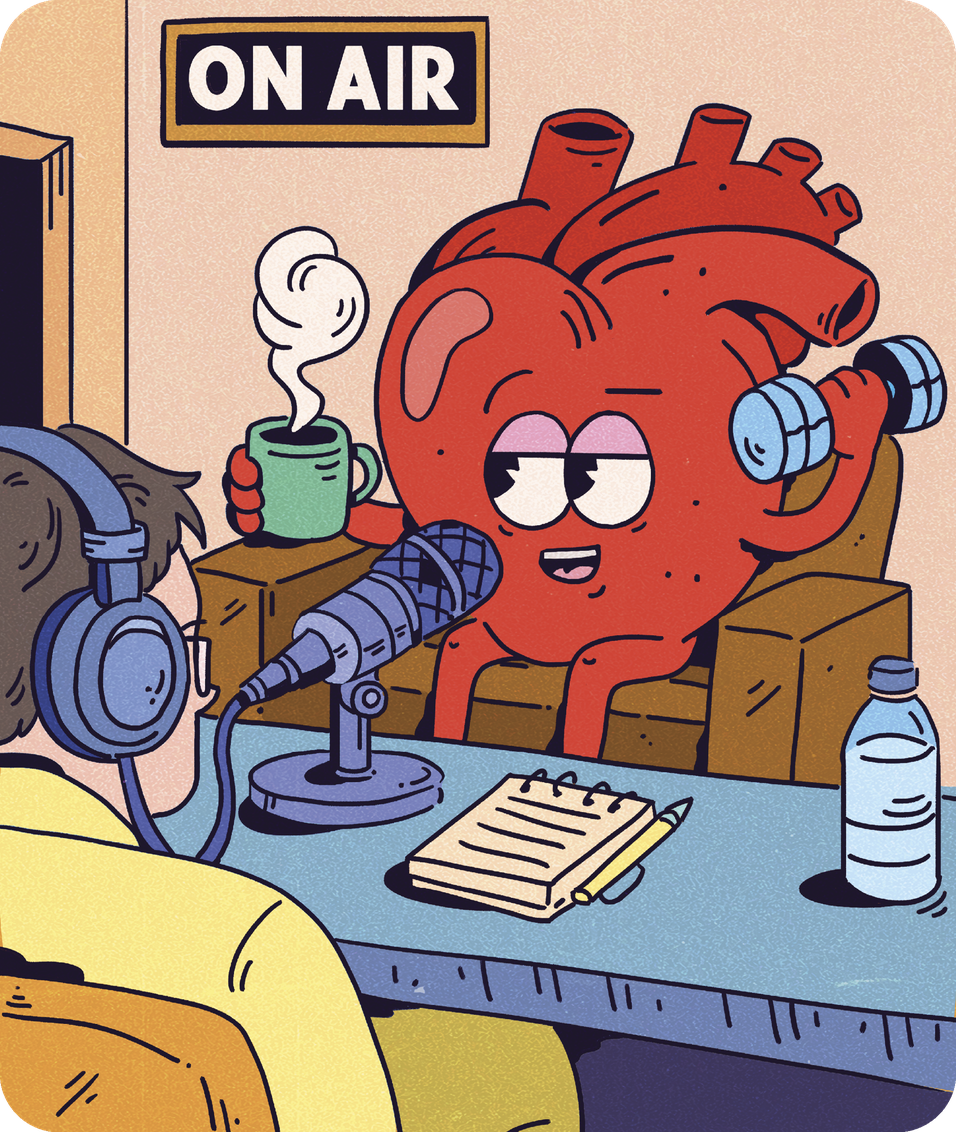
MY GRANDPA JOE died the same way his sister and three brothers died: heart attacks, all around. And they all struck early. Joe was just 58 when his heart stopped. I never had the chance to meet the guy, but I inherited some of his genes. So as I cruise into my 50s, I can’t help wondering: How many ticks does my own ticker have left? You might wonder the same about yours.
Cardiovascular disease is the No. 1 cause of death in America, taking out more of us each year than all forms of cancer combined. Yet the truth is, I actually know very little about my heart. How does it work? What does it need? And is it planning to attack me? To find out, I’m going straight to the source and sitting down with my own beating heart to pump it for answers.
Put on your hard hat. It might be dangerous where we’re going.
WHY THE HEART BEATS
The chest cavity is booming like an engine room as we enter and summon the heart’s attention.…
AARP: [Shouting] Hey! I didn’t realize it would be so loud in here!
Heart: You want quiet? Take the elevator up to the brain cavity. Down here, it’s hard labor. You have about 10,000 miles of vessels in your body, and I have to keep the blood flowing through every inch.
Wow, I had no idea.
Impressed? You should be. You can live with just one kidney or half a liver, but if I shut down even for a few minutes, you’re in big trouble.
Understood. But what’s all the noise down here?
Beautiful, ain’t it? [Pauses to listen to the sound: lub-dub, lub-dub, lub-dub] That’s the sound of my valves snapping shut.
Why do you snap them so hard?
I have performance goals, pal. Each time I contract, I have to push out 50 to 70 percent of my blood volume. If my valves were as lazy as you are most days of the week, blood would start flowing backward. Then I wouldn’t hit my numbers.
I see. And what’s all this equipment around us?
Well, you can’t miss the big ol’ airbags. Lungs, they call them. They’re not much to look at, but they do keep me in good supply of oxygen. The rest of this is mostly plumbing. You have pipes sending blood out and more pipes bringing it back. This big one above us is the aorta. I pump about 2,000 gallons a day through that pipe.
Why so much blood?
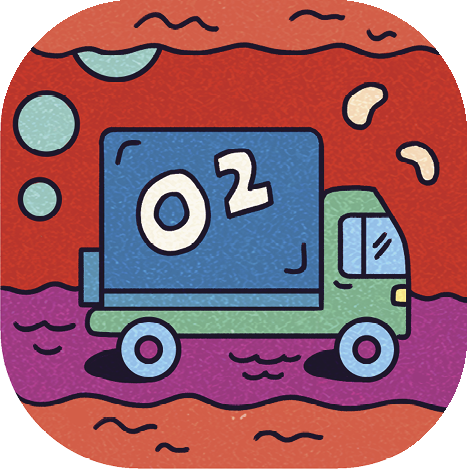
Your body runs on oxygen, and I’m the DHL of O2. I take oxygenated blood from the lungs and pump it to the rest of the body. When it comes back to me depleted, I pump it back over to the lungs for a refill. And on and on it goes for something like 100 years.
Do you ever get time off?
Oh, yeah. Between each pump I get nearly half a second off. That’s what I like to call “me time.” It’s just long enough to fill my chambers with blood for the next pump.
That’s not much of a break.
You said it, pal. I’m a muscle, but I don’t get PTO like your other muscles. I get to watch your pectorals relax all day long while I pump 100,000 times every 24 hours.
Well, that gives new meaning to the Celine Dion song “My Heart Will Go On.”
Oh, boy. Don’t even get me started on love songs.
But you’re the international symbol of passion. There are about a million songs with your name in them: “Unchain My Heart,” “Achy Breaky Heart.”
Love is a feeling, and I don’t do feelings. I do pumping. Love is a brain problem. Those songs should be called “Unchain My Amygdala” and “Achy Breaky Cranium.” Look, I might get involved if the brain conjures up serious romantic feelings. If your genitals need some extra blood flow, for instance, I’m happy to pump a little harder to provide it. Is that something you want to get into?
Actually, maybe we’ll save that for another interview.
That’s what I thought.
MEET THE PUMP SUPERVISOR
So who’s the boss around here?
You probably think the brain tells me when to pump, right? Everyone thinks that, but I’m my own boss, thank you very much. Think of me as the owner-operator of the blood department. I’m wired with my own electrical grid, and that lets me pump without assistance.
Whoa. How does that work?
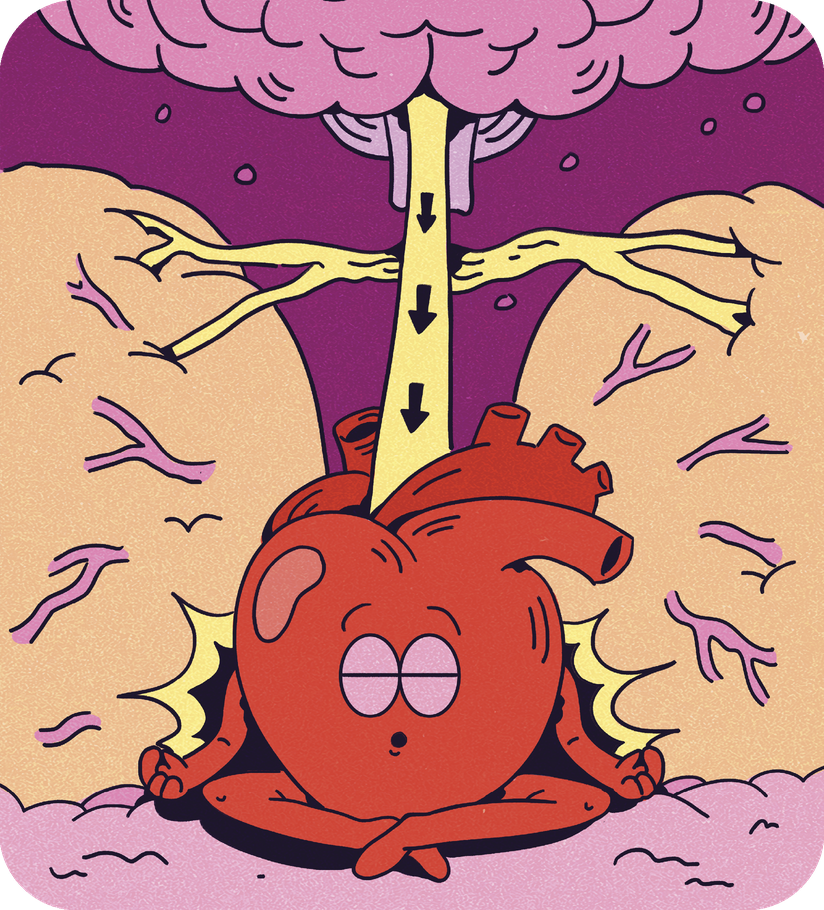
Look here on my right side, near my top. If you dug into my flesh here, you’d find my sinus node, which is basically a living pacemaker. It generates electrical impulses that shoot through conduction fibers to keep me pumping around 60 to 100 times a minute while you’re at rest.
That sounds complex.
Sure, but it’s necessary. I need to be able to pump blood even when your brain shifts into overnight maintenance mode. The guy upstairs sleeps eight hours a night. I can’t afford to.
Does that mean you can keep pumping even if the brain dies?
I could keep pumping for a while if I got supplemental oxygen. Hours? Maybe a couple weeks? There are a lot of variables, but my ability to keep pumping is the reason doctors can harvest donor organs after someone dies. The brain clocks out, but the ticker keeps on ticking.
2,510
Number of people who die daily from cardiovascular disease in the United States
SOURCE: AMERICAN HEART ASSOCIATION
But, surely, you work with the brain sometimes. Like, if someone cuts me off while I’m driving, I can feel my heart rate go up. Explain that one.
Well, let’s say you finally make it to the ol’ treadmill. As I start pumping harder, I send the brain a signal to dilate your arteries to accommodate the stronger flow. Later, let’s say the brain picks up a danger signal coming in from your eyeballs: You see an alligator, or a charging rhino, or a briskly walking salesperson holding a clipboard. Your brain shoots me a message via your spinal cord, and I can increase blood flow to prepare you for battle.
So your communication is usually about increasing blood flow?
Not always. Your brain also sends me soothing messages as a reminder to chill out and slow down. These come through a different channel, called the vagus nerve. Actually, could you do me a favor? All these questions have me feeling a little stressed. Would you mind activating your vagus nerve for me right now? Do this: Take a slow, deep breath. Fill your lungs all the way, and then exhale long and slow. Feel that? That calming sensation is your vagus nerve at work, and it’s helping me relax. Mmmm, nice.
PLUMBING AND WIRING PROBLEMS
Cardiovascular disease is the leading cause of death worldwide. Why?
Honestly, it freaks me out. But it’s not all my fault. I’m just the pump; often, the pipes are the real problem.
You mean blood vessels?
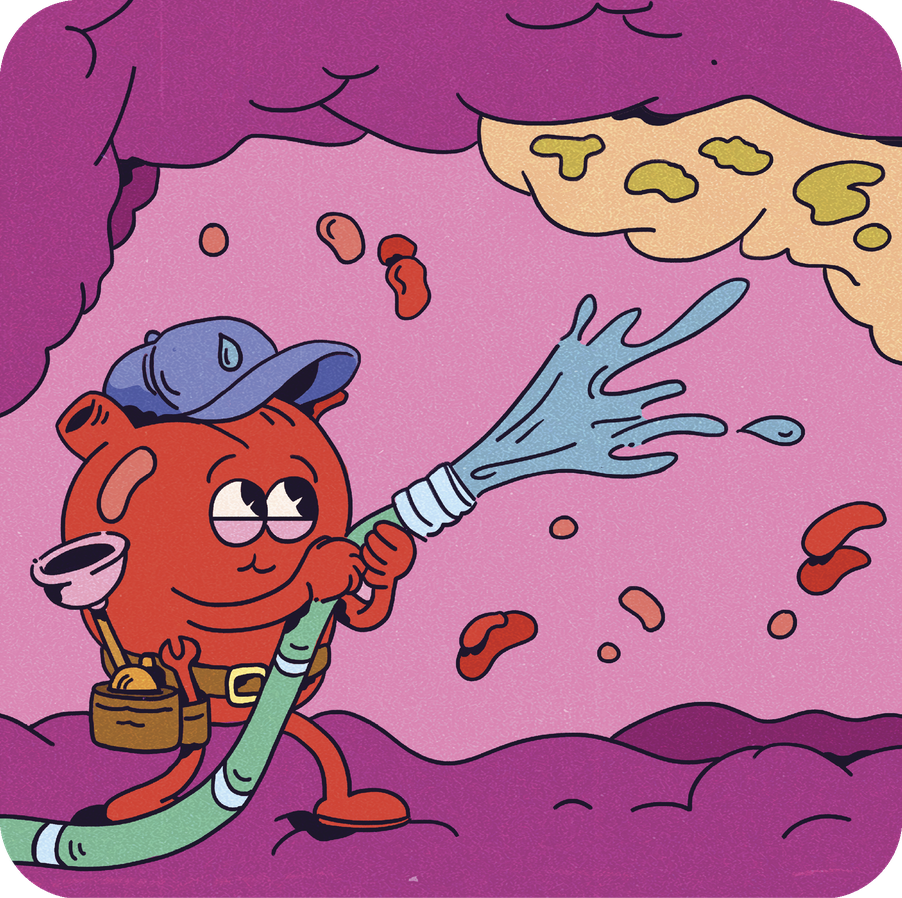
Yeah, specifically the arteries, which carry blood away from the heart. They’re the most vulnerable, because that’s where the pressure is highest. And the biggest issue is the coronary arteries. They carry blood from my lower left chamber to my muscle cells so I can pump oxygen to myself. Problem is, they’re narrow and close to the pump, so they’re under a lot of pressure. If they get clogged, I start gasping for breath.
That’s a heart attack, right?
I don’t care much for that term. I’m not attacking you; I’m dying. A clogged coronary artery is my No. 1 fear.
What about stroke?
That’d be my second-biggest fear. With a stroke, there’s usually a clog in a pipe that’s bringing blood to the brain cells, like a blood clot or a hunk of plaque.
That sounds bad.
To say the least. The brain drinks blood like a 3-pound tick. It guzzles 20 percent of the oxygen I pump. And for every minute it goes thirsty, you lose about 1.9 million neurons.
OK, so the pipes can clog. But don’t heart problems ever start with you, the actual heart?
Sure they do. I’m a mechanical pump, so I’m prone to mechanical problems. My valves can malfunction, for instance. Or I can become too weak to pump well. That’s called heart failure. Or I could have an electrical problem that causes me to beat too fast or too slow. That’s called an arrhythmia.
Is that dangerous?
Sometimes, but not always. An occasional skipped beat may not be a problem, but if there’s a short circuit, my four chambers can’t communicate properly. That’s when I might need a pacemaker to keep me on track. But if you want to talk about extreme electrical malfunction, I’ll tell you about cardiac arrest. That happens when my signal’s so broken, I can’t pump blood at all.
And that’s … fatal?
Without help, yes. But if someone gives you chest compressions, I can keep pushing out blood. That buys you some time until someone zaps you with a defibrillator. If you’re lucky, that’ll reboot my electrical system. If I start flatlining, though, your doctor’s going to try to wake me up with a big dose of adrenaline. But the odds aren’t exactly in your favor at that point.
I guess that’s the worst-case scenario.
Yeah, but cardiac arrest is extreme. The most common electrical problem is actually something called atrial fibrillation, or A-fib. It’s when my upper chambers contract hundreds of times a minute, which you might feel as a fluttering in your chest.
That doesn’t sound so bad.
It might not be immediately dangerous, but the risk with A-fib is that my chambers aren’t filling or emptying properly, which means they can’t pump effectively. So blood is more likely to pool and form a clot. If I pump a clot out into an artery, that’s bad news: A-fib increases your risk of stroke by about 500 percent.
WHAT THE HEART REALLY WANTS
Now that I’m properly scared, tell me: What can I do to make your life easier?
I’m glad you asked, because I have a couple requests. For starters, could you watch your blood pressure? When it gets too high, it damages not only me but the plumbing around me too.
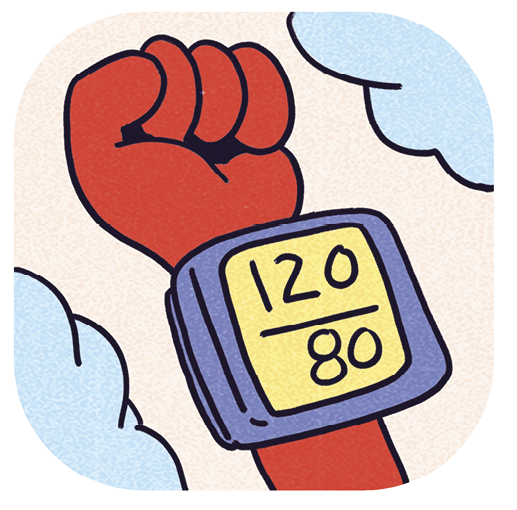
How do I lower my blood pressure?
I don’t want to be rude, but you’ve added some new fat tissue over the past few years, and that tissue comes with new blood vessels. As your plumbing system grows, I have to pump harder, and that drives the pressure up. And while you’re at it, stop it with the salty foods—fast food and ultra-processed stuff. All that sodium draws water into your vessels, and more blood volume means higher pressure. Try to keep it to 1,500 milligrams of salt a day—or 2,300 milligrams at most. Also, exercise more and stress less; a nice peaceful jog a few times a week can do wonders.
What else?
Make my life easier: Give me blood that’s easy to pump. I don’t like when it gets too thick and sticky.
Thick and sticky blood?
Yeah. Don’t you pay attention to your doctor? Every time you visit, she talks about things like LDL cholesterol, glucose and triglycerides. All this crud makes your blood thicker, which makes my job harder. LDL is probably the worst of them all. It’s like waxy balls of fat, and when your pipes have tears in them from high pressure, the wax balls can burrow into the walls and become inflamed like little pimples. When one pops, it spills sewage into your bloodstream. That can cause a clot.
Artery pimples? Gross. How do I avoid that?
Don’t smoke, keep your weight down and—please—exercise! I can’t stress this enough. When you exercise, every part of your cardiovascular system gets a tune-up. The damaged spots heal and become less likely to rupture. A flood of nitric oxide dilates your arteries and makes them more flexible. Your immune system hauls away damaged proteins that could otherwise restrict the flow. And exercise increases your body’s oxygen needs by 10 to 20 times. So I have to work harder to keep up. I’m a muscle: If I work hard, I get strong.
Why does your strength matter to me?
Strength is efficiency. If I can do my job in 60 beats per minute instead of 100, I have more time to properly fill my chambers between contractions. That means your blood flows better. I also need less oxygen to do my job, so your coronary arteries don’t have to strain to keep up.
OK, so what kind of exercise should I do?
Hike, jog, swim, play tennis. Do the cha-cha slide. I’m not picky as long as you get me pumping harder.
I feel like you’re dumbing it down for me.
OK, if you want me to dial it in for you, here’s my request: Alternate daily workouts between moderate- and high-intensity cardio. Aim for no less than 20 minutes every day. More is better. And then add two or three strength-training sessions per week.
Define “moderate” versus “high-intensity" cardio.
Moderate-intensity cardio is walking fast or power-cleaning your house. You breathe harder, but you can still hold a conversation. And high-intensity cardio is the kind that really gets you sweating and sucking wind.
Why is strength training important?
Nice, big muscles will pull more sugar out of your blood before it can accumulate and damage your arteries. And for me, muscle can actually act as a return pump. Strong legs—and strong calves, especially—can push blood back up, so I don’t have to strain to overcome gravity. A little muscle tone can do wonders.
Does it help you if I eat healthier?
Absolutely. When you eat more vegetables, the fiber pulls cholesterol-rich bile out of your gut as it passes through, so basically you end up pooping out cholesterol that would otherwise gunk up your arteries. Fruit, whole grains, beans and nuts have the same effect. Think you can eat more of those?
That doesn’t seem too ha—
Also: Don't smoke, drink too much, stay up too late, eat too many processed foods, neglect your oral health or skip doctor appointments. And whatever you do, don’t stress. I can’t stand stress!
DEALING WITH HEARTBREAK—THE DANGEROUS KIND
How likely is it that you’re going to kill me like my grandpa’s heart killed him?
Look, we’re not living in the 1970s anymore. Today, I’m 66 percent less likely to fail from a blocked artery.
What? Really?
Yessir. People today are better at taking care of themselves, and doctors are better at fixing pipes. If you have a blocked coronary artery, a heart doc can snake a little catheter in and pop it open within 90 minutes of your reaching the hospital.
OK, but how will I know if I’m having a heart attack?
You’ll probably feel a tight pressure or a squeezing sensation in your chest. But I have to warn you: Your brain might be “smart” and all, but he’s easily confused. He isn’t used to hearing me complain, so he might start sending mixed signals. You might also feel pain somewhere between your jawline and upper belly. Arms, neck and shoulders are common. You might feel sweaty, short of breath, lightheaded or nauseated.
Wow, why such weird symptoms?
Well, the brain and I don’t really train for this. So your first time will be ours too. And for women, the experience can be even stranger. They’re more likely than men to feel stomach effects, like nausea and vomiting. They’re also more likely to experience anxiety, shortness of breath, fatigue and shoulder pain.
And this heart attack pain—does it just come on suddenly?
Sometimes, but not always. I might start sending signals weeks before the actual attack. You might first feel some discomfort while climbing a flight of stairs. Then you’ll feel it while walking, going to the bathroom, cooking or just getting out of bed. The discomfort will get easier and easier to re-create—and that means you need to get to the hospital.
That’s kinda scary. Can we end on a happier note?
You mean a lighter beat? Heh-heh. A little cardio comedy there.
Nice try.
Thanks. Now get lost. I have blood to pump.
Clint Carter has written for Men’s Health, Rolling Stone, The Wall Street Journal and other publications.
CONSULTING EXPERTS: Lawrence Phillips, M.D., associate professor and director of nuclear cardiology at NYU Langone Medical Center
Miguel Leal, M.D., associate professor of cardiology at the Emory University School of Medicine
Monika Sanghavi, M.D., associate professor of clinical medicine at the University of Pennsylvania and the director of women’s cardiovascular health at Pennsylvania Hospital
WHAT EMERGENCY PHYSICIANS WISH YOU KNEW ABOUT HEART ATTACKS
Doctors can save your life, but they’ll have a better shot if you remember these basic facts.
▶︎ Your symptoms may be very subtle.
One in 5 heart attacks are considered “silent,” meaning the person doesn’t even know it happened. When in doubt about symptoms, seek help.
▶︎ Not all hospitals are created equal.
If you live near a hospital that’s a “comprehensive cardiac care center,” go there. It means they have a full cardiac team available 24/7.
▶︎ An ambulance ride can be lifesaving.
Paramedics can run tests, choose the best hospital and, if necessary, radio ahead to have your medical team prep for surgery. Always call 911 and have an ambulance take you to the hospital. And whatever you do, don’t drive yourself. Patients have been known to lose consciousness and crash trying to do this.
▶︎ Nobody will judge you for a false alarm.
Take your symptoms seriously. An EKG and a blood draw can help rule out a heart attack. If it’s a false alarm, that’s great news.

ARE YOU LIVING A HEART-HEALTHY LIFESTYLE?
A 10-point checklist to help ensure you're keeping your pump primed
1. You log a minimum of 150 minutes of moderate-intensity exercise (or 75 minutes of vigorous exercise) every week.
Hitting these goals could reduce your risk of death from cardiovascular disease (CVD) by roughly 25 percent.
2. You eat at least five servings of fruit and vegetables a day.
This number is associated with a 12 percent lower risk of death from CVD, according to research in Circulation.
3. You avoid binge drinking alcohol.
In a recent study, subjects who overserved themselves weekly during the past three months had an overall 26 percent higher risk of coronary heart disease.
4. You eat at least four to six servings of seafood each week.
People who hit this goal were 23 percent less likely to die from CVD, according to a study of more than 18,000 people.
5. You don’t smoke.
Smoking destabilizes arterial plaque, making it more likely to break off. And that can double your risk of heart failure.
6. You eat plenty of fiber.
In a review of 18 studies, researchers found that people who ate the most fiber were 17 percent less likely to die of CVD.
7. You take at least 7,000 steps a day.
Compared with those who take 2,000 daily steps, those who take 7,000 are 47 percent less likely to die from CVD, according to a large review.
8. You sleep seven to nine hours a night.
According to the National Sleep Foundation, prioritizing both sleep quality and quantity helps reduce the risk of heart disease and improves overall well-being.
9. You move around throughout the day.
A study of 90,000 people found that those who sit more than 10.6 hours a day are 62 percent more likely to die from CVD causes. (But standing for 5 minutes every half-hour can help.)
10. You avoid added salt and don’t eat too many packaged foods or restaurant meals.
Every 1 gram increase in daily sodium intake increases your risk of CVD mortality by 6 percent, according to a study in the journal Nutrients.
Go to aarp.org/heart for the latest heart health news and more.