COVER STORY
Hiding in Plain Sight
Acclaimed actor Alfre Woodard is known for submerging herself in her roles to the point of disguise. Fresh off the set of ‘The Boroughs,’ she reflects on a life and career of unusual variety, resilience—and quiet rebellion

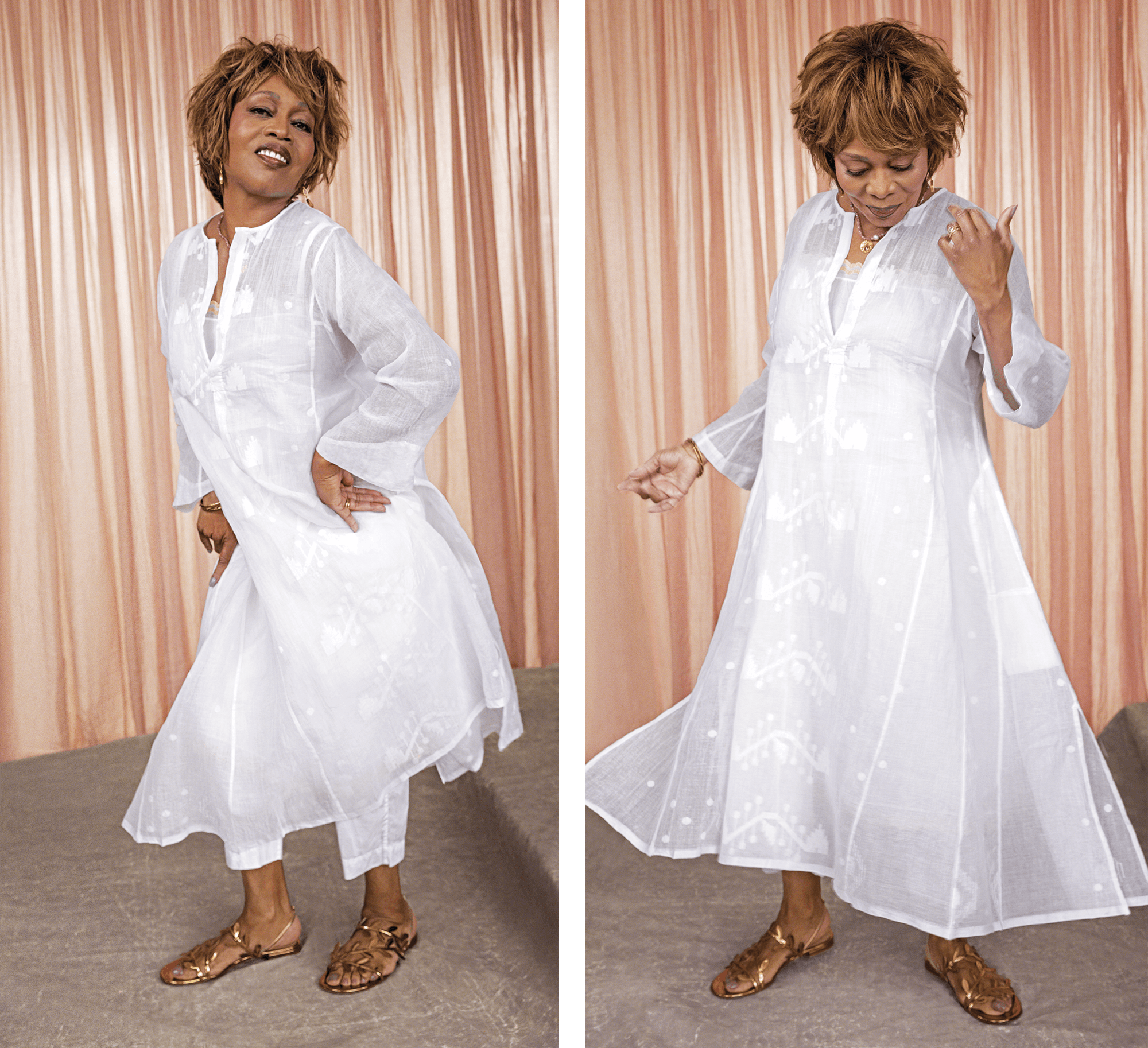
Alfre Woodard, photographed for AARP in New York on March 23, 2026
ALFRE WOODARD IS one of the most successful actors in Hollywood, but you might not recognize her if you saw her on the street.
During her nearly 50-year career, encompassing well over 100 roles, she’s won a Golden Globe and four Emmys, and she’s been nominated for an Oscar. She’s played a U.S. president, a crime boss, an anti-apartheid activist and more. Yet, “for a period of time, everyone between the ages of 30 and 50 was convinced they’d gone to high school with me,” says Woodard, fresh off an Amtrak train ride marked by Don’t-I-know-you? double takes from fellow passengers.
In an industry whose stars often cannot separate their own personalities from the roles they play, she is an actor’s actor, as one critic put it—“chameleonic, idiosyncratic, true.” At the same time, for a major star she has a somewhat unusual passion: teamwork. “Alfre never feels it’s a solo enterprise,” says filmmaker Lawrence Kasdan (The Big Chill), who directed her in two movies from the 1990s, Grand Canyon and Mumford.
Describing the set of her new Netflix series, The Boroughs, in which a group of retirement community residents battle an otherworldly threat, Woodard, a former high school athlete (track and basketball), likens her fellow septuagenarian castmates—including Alfred Molina, Geena Davis and Bill Pullman—to a seasoned relay team. “It was like we’d been running together since junior high and now you’re at the Olympics,” she says. “You put your hand out, bam, you know the baton is there.”
Still, up close, the star power is there. Sitting in a dimly lit booth in a Manhattan eatery, Woodard, 73, somehow manages to sparkle. Sipping a cup of mint tea, she opens up about a life and career of trust, faith and storytelling. Her joyful intensity draws you in.
Loving Family, No Limits
WOODARD WAS BORN and raised in Tulsa, Oklahoma. Her parents—father Marion, or “MH,” an interior decorator and entrepreneur, and mother Constance, a homemaker—came from enslaved-people-turned-landowners on her father’s side and sharecroppers on her mother’s.
From a young age, performing was not only encouraged but required for Woodard. “My mom was from a family of 12,” says Woodard, the youngest of three. “Whenever we were all together with her family, all they did was laugh and talk over each other. If you were little and said, ‘I want to say something,’ they didn’t go, ‘What do you want to say, little one?’ They’d go, ‘It better be funny! What? What?’ ”
Even in the era of segregation—Tulsa high schools were not desegregated until 1973—she never doubted she could say and do what she wanted. “From the time I can remember, my father would say, ‘Nobody, no man in this world, I don’t care who it is, is better than you are,’ ” she says, slapping her hand against our table, rattling her cup on its saucer. “What I got from my family is a strong sense of self, a sense of value.”
And a clear sense of the tumultuous world beyond her doorstep. At age 5, “my father made us watch the news every night,” she recalls. “I was watching the Civil Rights Movement.” By age 10, she was helping her parents register voters.
One day in middle school, two teachers “pulled down the shades and passed out mimeograph sheets and said, ‘These sheets are not to leave the room,’ ” Woodard recalls. They told the story of the 1921 Tulsa Race Massacre, when white mobs destroyed the prosperous Black neighborhood of Greenwood, killing dozens and leaving thousands homeless. Although the event wasn’t in the school’s official curriculum, the teachers wanted their students to know the truth, she says.
From the passed-along stories of those Black Tulsans who survived the violence and endured, she says, “I learned what resilience looked like.” She also learned the importance of protesting and taking action. “Whether it was African American, Indigenous, women, LGBTQ—which we didn’t have, it was just gay rights—when they called for people to come stand with them, you went,” she says.
Her life changed forever the day a teacher took the students on a field trip to a movie theater, where they saw an Oscar-winning French drama, Sundays and Cybèle, about a neglected girl who befriends a middle-aged war veteran. Sitting there, Woodard had a revelation: This is powerful. This is what I want to do. This is how we change the world.
Relying on Faith, Seeking a Break
IN 1974, Woodard graduated from Boston University with an acting degree and started working onstage in Washington, D.C., and New York. She then took off with a caravan of friends to Los Angeles to act in films.
“Oh, honey,” a Black theater actress warned her, “there’s no such thing as a Black film actress.” But Woodard wasn’t discouraged. “In my mind, I just went, Well, that’s not my reality.”
She joined an improv troupe and waited to get film auditions. And waited. “I wouldn’t get an audition for nine or 10 months at a time,” she remembers. When she’d hear about a role, “my agents would say, ‘Oh, Alfre, that’s not for you. It says attractive young Black woman.’ ” Or they’d tell her she didn’t look the right kind of Black.
She kept preparing, believing that “when somebody wanted to invite me into a space with them, that was the kind of person I should be with.” She also grounded herself with prayer and a devotion to Christian Science, a faith she has followed since her college days.
“She’s a very centered, spiritual, powerful, confident person,” says actor-director Jonathan Frakes, a friend of Woodard’s since those early days in Hollywood. (He directed her in Star Trek: First Contact two decades later. )
From a Rainbow to a Movie Debut
CONTINUING HER theater work in Los Angeles and New York, Woodard had a breakout performance in 1977 in an L.A. production of For Colored Girls Who Have Considered Suicide/When the Rainbow Is Enuf. Film director Robert Altman, who’d seen the play, landed Woodard her first film role: an assistant manager at a five-and-dime store in Remember My Name (1978). He also cast her in his film HealtH (1980).
After that, Woodard wasted little time. Her next film role, in Martin Ritt’s Cross Creek (1983), earned her an Academy Award nomination for best supporting actress. Woodard didn’t win, but she maintains that the work was enough for her.
“I’m a child of Southern Blackness, a grandchild and a great-grandchild,” she says, banging on the table again—this time, with a fist, her eyes lit up. “You push and you work because you’re part of the continuum! You don’t go up and down thinking, We’re going to win the championship this year. Oh, we lost the championship! No, you play ball. You be the best athlete you can. The trophy is not the thing.”
The trophies came anyway. In the 1980s she won two Emmy Awards for guest turns of remarkable intensity: first, in 1983 on Hill Street Blues, then, in the 1986 pilot episode of L.A. Law, as a woman dying of leukemia who alleges she was gang-raped. Meanwhile, she also worked regularly on St. Elsewhere.
And in 1983, over beers in a friend’s basement, she had a meeting of the soul with writer-producer Roderick Spencer. Both were living with significant others at the time, but the pull was hard and strong. “It was recognition at first sight,” she says. “I knew he was my people.” They married later that year and eventually adopted two children: daughter Mavis, 34, an equestrian, and son Duncan, 32, a professional golfer.
As her career became more established, Woodard began to use her voice for social good. Already active in the anti-apartheid movement, she took on the role of Winnie Mandela—the wife of political prisoner and future South African president Nelson Mandela—in the 1987 television film Mandela. In 1989, she joined Mandela star Danny Glover and actor Mary Steenburgen to found Artists for a New South Africa, using their visibility to push for sanctions. The country held its first multiracial general election in 1994.
Creating a Career … and a Soirée
IF THE ’80S FOUND Woodard commanding the small screen, the ’90s saw her claim the big one. Her first Golden Globe nomination came with 1992’s indie standout Passion Fish. Work poured in, and she thrived among the ensemble casts of several other films throughout the decade.
Eventually, Woodard was carving out roles for herself by convincing filmmakers to think more expansively. Where roles for Black women were absent, she created them. She played the judge in the 1996 courtroom hit Primal Fear, for example—a part originally written for a white man in his 60s.
“How do you think I have a career?” she says, laughing. “That has happened five times in my life when I played a role meant for a curmudgeonly, older white guy.”
In 1998, Woodard won her first Golden Globe Award (beating out Meryl Streep), for best actress in a miniseries or TV movie, for portraying a nurse complicit in the Tuskegee syphilis study in HBO’s Miss Evers’ Boys. She joined the megahit Desperate Housewives in 2005, if only reluctantly. (“I don’t wear heels,” she warned producers.) The role of Betty Applewhite had been offered to two white actors before it came to Woodard.
By then, Woodard was growing weary of seeing Black actors pitted against one another—“like we’re in some kind of individual roller derby to get a role,” she says. She flatly rejected the framing—often by her own agents—that other Black actors were rivals. So in 2009, she created the Sistahs Soirée, an annual pre-Oscar gathering for working Black female actors, to cultivate connection in place of competition.
“I love Alfre for understanding the need for an event like this,” says actor Octavia Spencer, a regular attendee of the Soirée along with Viola Davis, Rosario Dawson, Angela Bassett and Kerry Washington. Remembering her first time attending, Spencer says, “I looked around, taking note of the all-female, Black brilliance that engulfed me. While none of us left that room with a trophy, we gained so much more: sisterhood and an acknowledgment of our shared struggles.”
Home Is Where the Family Is
OVER THE PAST 15 years, Woodard has been busier than ever, playing a formerly enslaved woman in 12 Years a Slave (2013), a U.S. president in State of Affairs (2014), a crime boss in Luke Cage (2016) and, most recently, a CIA official in the streaming series The Last Frontier.
But one of Woodard’s favorite roles is the title character in Juanita (2019), adapted for the screen by her husband, Spencer. She portrays a woman who hops on a Greyhound bus to find a fresh start in life. On set, says director Clark Johnson, Spencer and Woodard “were a blast together."
When she’s not working, she mostly wants to be with her children, flying to wherever they are. “They’re the most hilarious, the most poignant, the most perceptive, the most alive and smart and interesting human beings of anybody I’ve ever, ever met,” she says.
At those family gatherings, Woodard returns to what she was raised on in Tulsa: food, conversation, connection. “All we do is talk and tell stories,” she says.
In this still-tumultuous world, she says, she and her various tribes must keep connecting and “keep rebelling.” Her acts of rebellion include pushing for voter registration, championing LGBTQIA+ communities and continuing to demand justice for the descendants of the Tulsa Race Massacre.
Now, as our scheduled hour-long interview has stretched to nearly four, Woodard stands to go. But before she slips into the Manhattan night, she leans in to make one final point about those, like her, who have lived through the turmoil of the past 50 years.
“We are the generation of hope,” she says firmly, locking eyes with me. “But that hope must not be left to chance. We must take action.”
Natasha Stoynoff is an award-winning journalist, screenwriter and New York Times best-selling author.
Alfre Woodard’s Must-See Roles
Before The Boroughs came many stellar performances
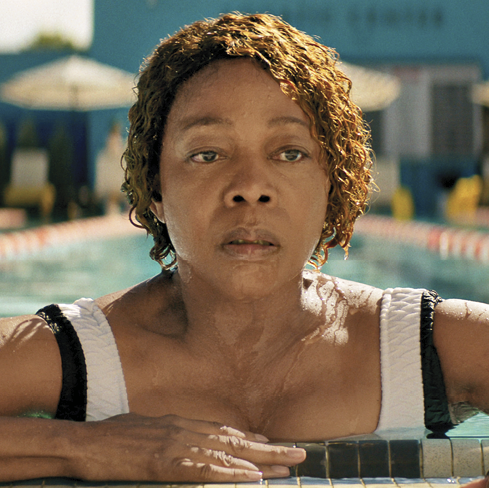
The Boroughs
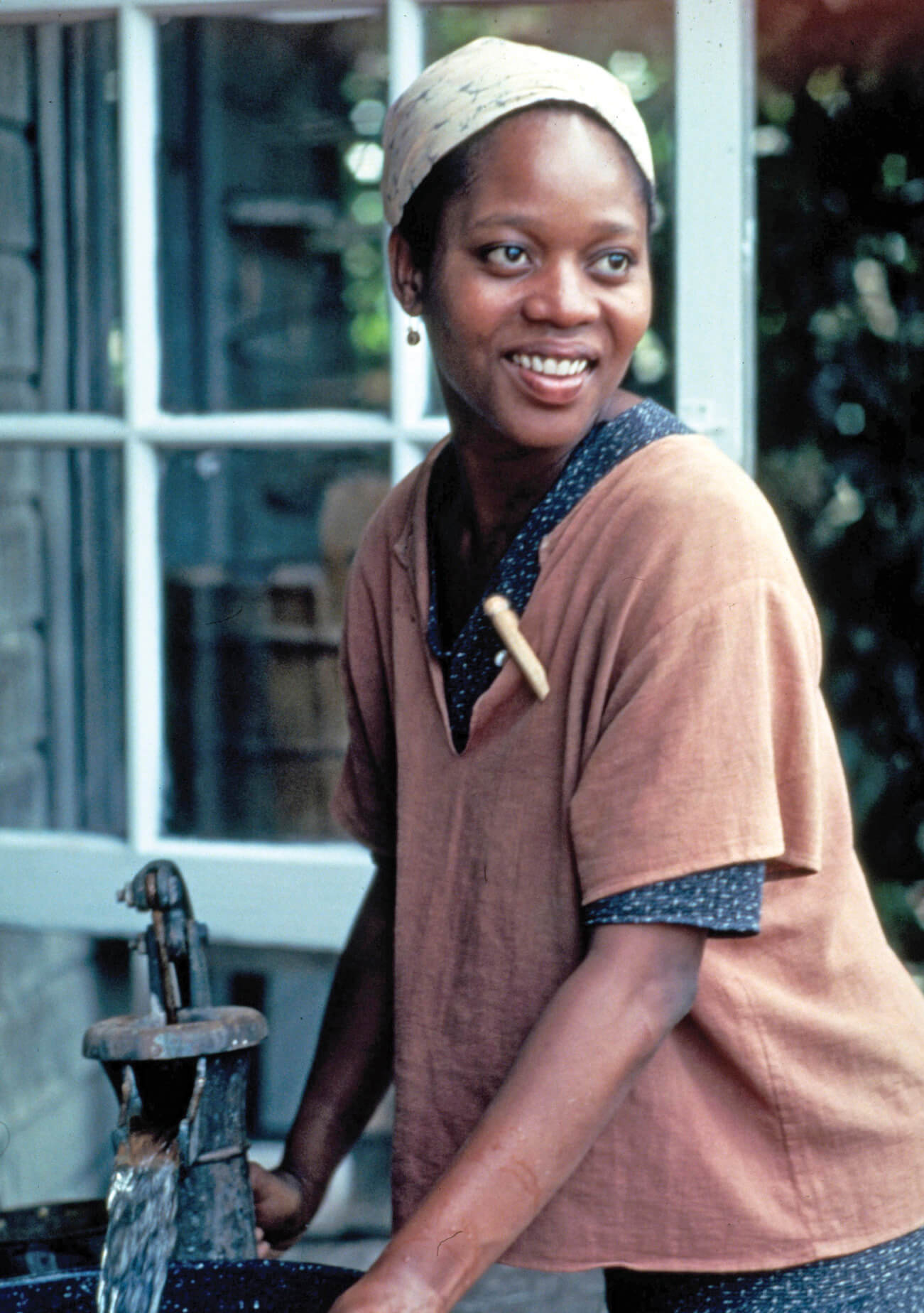
Cross Creek (1983) Woodard landed a best supporting actress Oscar nomination playing Geechee, the poor housekeeper of a big-city novelist (Mary Steenburgen) who moved to a shack deep in the Florida Everglades.
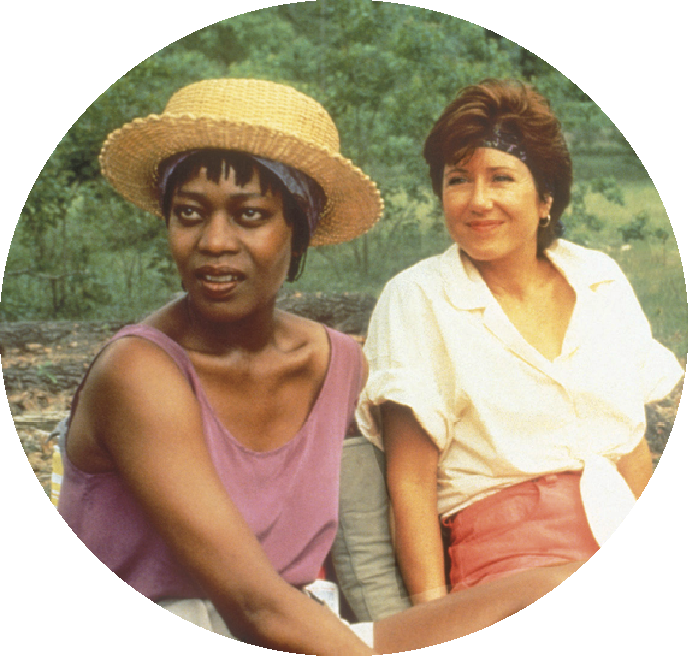
Passion Fish (1992) In this indie about a recently paralyzed actor (Mary McDonnell) stewing in bitterness, Woodard plays a nurse whose tough-love approach is just what her patient needs.
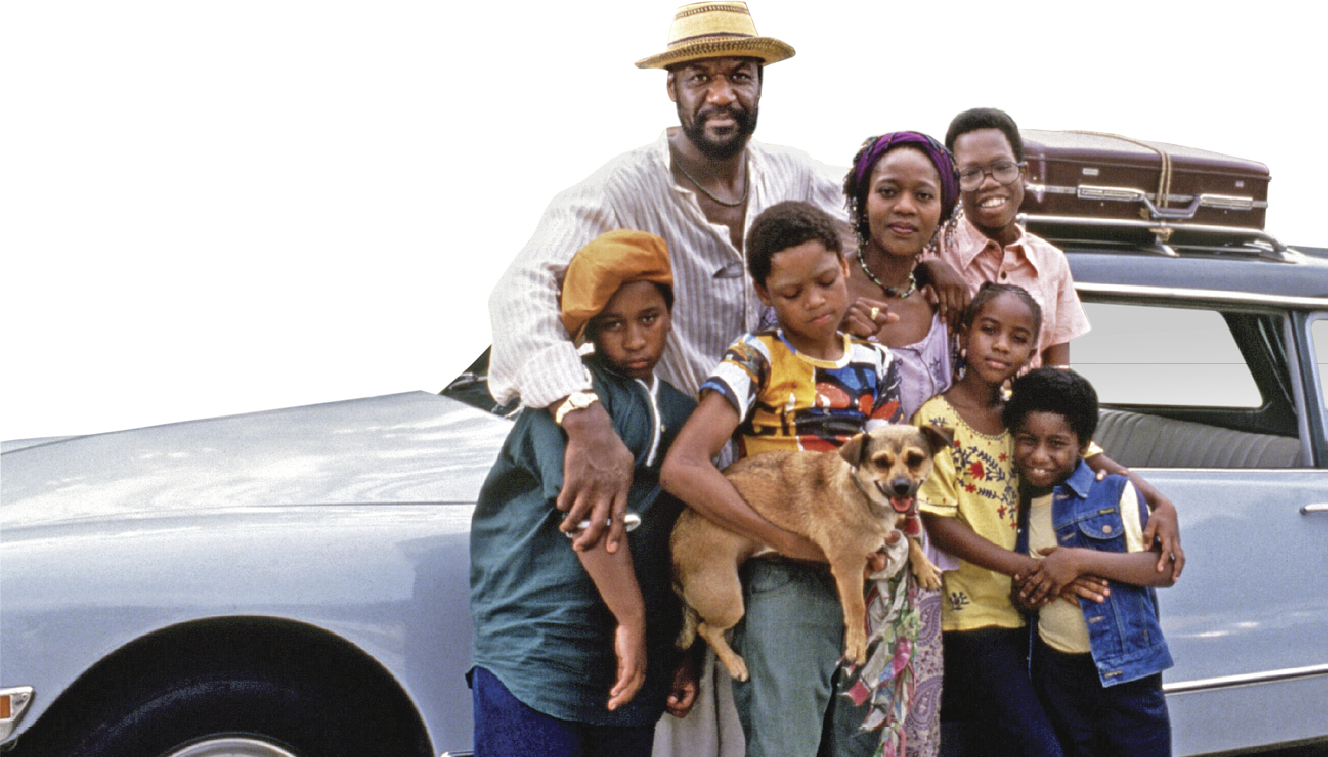
Crooklyn (1994) Spike Lee’s semi-autobiographical film is a nostalgic look at a Brooklyn family in the early ’70s. Woodard and Delroy Lindo play parents whose love isn’t always spoken but is never in doubt.
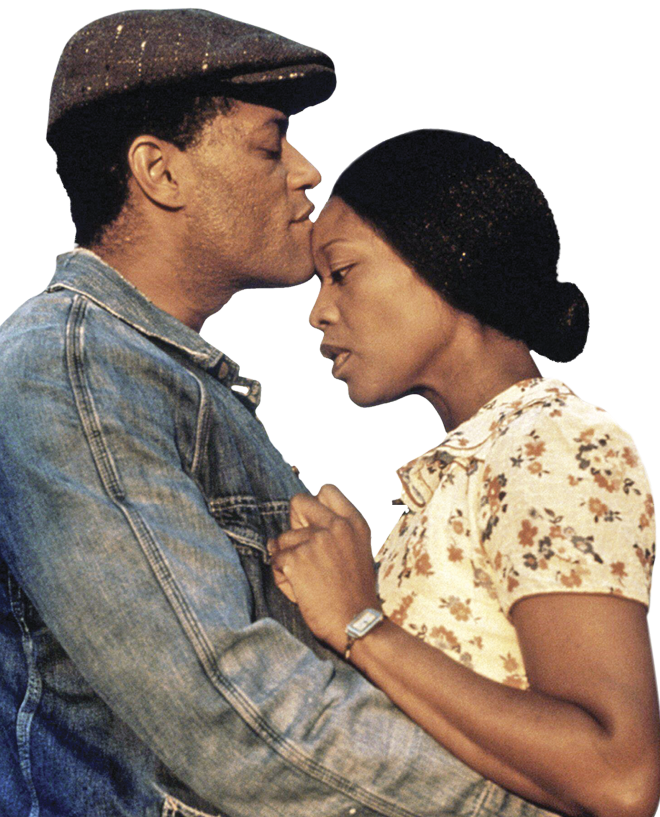
Miss Evers’ Boys (1997) Woodard nabbed her third Emmy for this HBO drama about the U.S. government’s unconscionable Tuskegee syphilis experiments in the 1930s. As a nurse who cares for the Black test subjects, she delivers a stunning mixture of compassion, outrage and guilt.
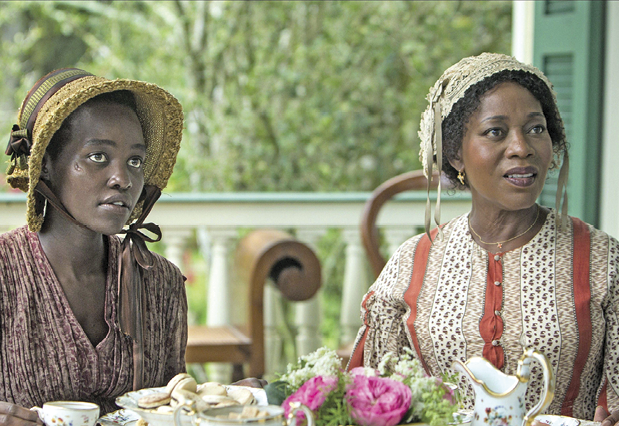
12 Years a Slave (2013) Woodard is indelible as a formerly enslaved woman who rises to a position of power in plantation society. Her screen time is brief, but you’ll think about her conflicted character long after the end credits. —Chris Nashawaty
Want More Alfre?
For an exclusive behind the scenes video, visit aarp.org/alfre or scan this code with your phone.