THIS IS 50
I Love You—Let’s Not Get Married
Do wedding vows make sense for new couples in their 50s?
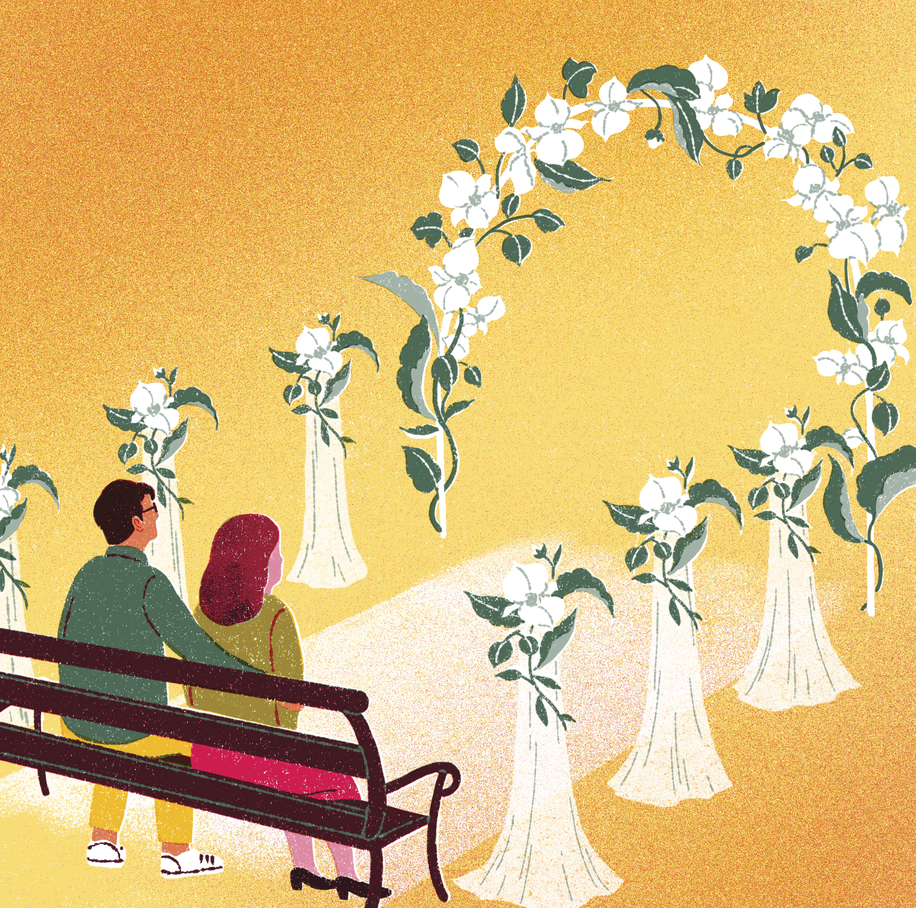
AFTER A 34-YEAR marriage and a painful divorce (is there any other kind?), I’m in love. She’s 54, divorced too. I’m 59. We’ve known each other for 16 years, and it’s the kind of strong, snug relationship I crave at this age. Romantic but grounded in friendship. Passionate yet comfy like a pair of old jeans. Not puppy love but grownup love: honest, safe, enriching, you-make-me-laugh, you-make-me-a-better-person love.
Marriage seemed like the next step. But some family and friends asked, “Do you need to get married? It’s not like you guys are having kids.” Cohabitation is common among 50-somethings. Of the more than 4.8 million older Americans living together but not married, nearly half of those are 50 to 59, according to the National Center for Family & Marriage Research at Bowling Green State University in Ohio.
“People aren’t necessarily interested in combining their finances or taking on any debt,” says Susan Brown, the center’s codirector. Other factors include preserving autonomy and not disrupting a relationship with grown children.
Cari Shane, 60, understands those arguments. A freelance writer in Washington, D.C., Shane and her partner began dating in their mid-40s. They first met in college and later reconnected on Facebook. After a long-distance relationship, he moved into her row house. They ruled out marriage in their 50s to avoid entangling their money. “I don’t see how marriage benefits us in any particular way. It actually creates negatives,” she says. “Why make it more complicated for his two kids and my three kids when we become elderly? It’s so much easier if my kids are using my money and his kids are using his money to take care of their parents.”
Marriage, however, can offer benefits in your 50s—in sickness and in wealth. “Just for starters, the tax rates are lower,” says Richard Craft, a principal and adviser at World Investment Advisors in Berwyn, Pennsylvania. After one year of marriage, you’re eligible to receive a spouse’s Social Security benefits. Spouses can also make health care decisions if one becomes ill (though experts say getting medical and financial power-of-attorney documents is optimal). “If you’re living together and you get sick, your partner doesn’t have any rights,” says Patrick Simasko, a financial adviser and estate planning attorney in Mount Clemens, Michigan.
Danielle Coulanges, author of the relationship guide Marry Your Best Friend, had a family member die from a heart attack, leaving a girlfriend in her late 50s with whom he had been cohabiting for a couple of decades. “She could not handle his affairs. His ex-wife had to claim the body,” Coulanges says. “And then she found herself homeless because she had no right to the apartment.”
How can you protect yourself?
If you’re living together …
Create a domestic partnership. Also called civil unions, these partnerships can provide upsides similar to those of marriage, including access to employment, health and retirement benefits. “A single person living with another single person can’t get those benefits,” Craft says.
Sign a cohabitation agreement. The agreement sets the rules for the relationship, including how assets will be divided if it ends. You can work with a lawyer to draft one or do it yourself (some states may require notarization if it involves real estate). “Living together can be risky without a cohabitation agreement,” says Scott Levin, an attorney and founder of San Diego Divorce Mediation & Family Law.
If you’re getting married …
Sign a prenup. This declares how you’ll split your assets not only if you divorce but also if you die. When people remarry, they often mistakenly assume that a will and an estate plan will enforce their wishes. “But if a spouse is the beneficiary, they can do whatever they want after you’re gone,” Simasko says, including cutting out your kids.
In the end, there’s no right or wrong decision about marriage or cohabitation, legal and financial experts say. It’s whatever feels comfortable. For me, marriage feels … right. I’m old-fashioned. I like tax breaks. And so in 2025, we exchanged vows. I don’t have children from my first marriage, but I’ve gained a stepdaughter, a stepson-in-law and a 4-year-old grandson whom I adore. I wanted to be a stepfather, not Mom’s live-in beau. For me, my answer about marrying was simply this: “I do.” —Ken Budd
Ken Budd has written for National Geographic Traveler, Travel + Leisure, The Washington Post Magazine and many more. He is the author of a memoir, The Voluntourist.