Feature STORY
Frugal ... And Loving It!
Saving money isn’t just about self-denial
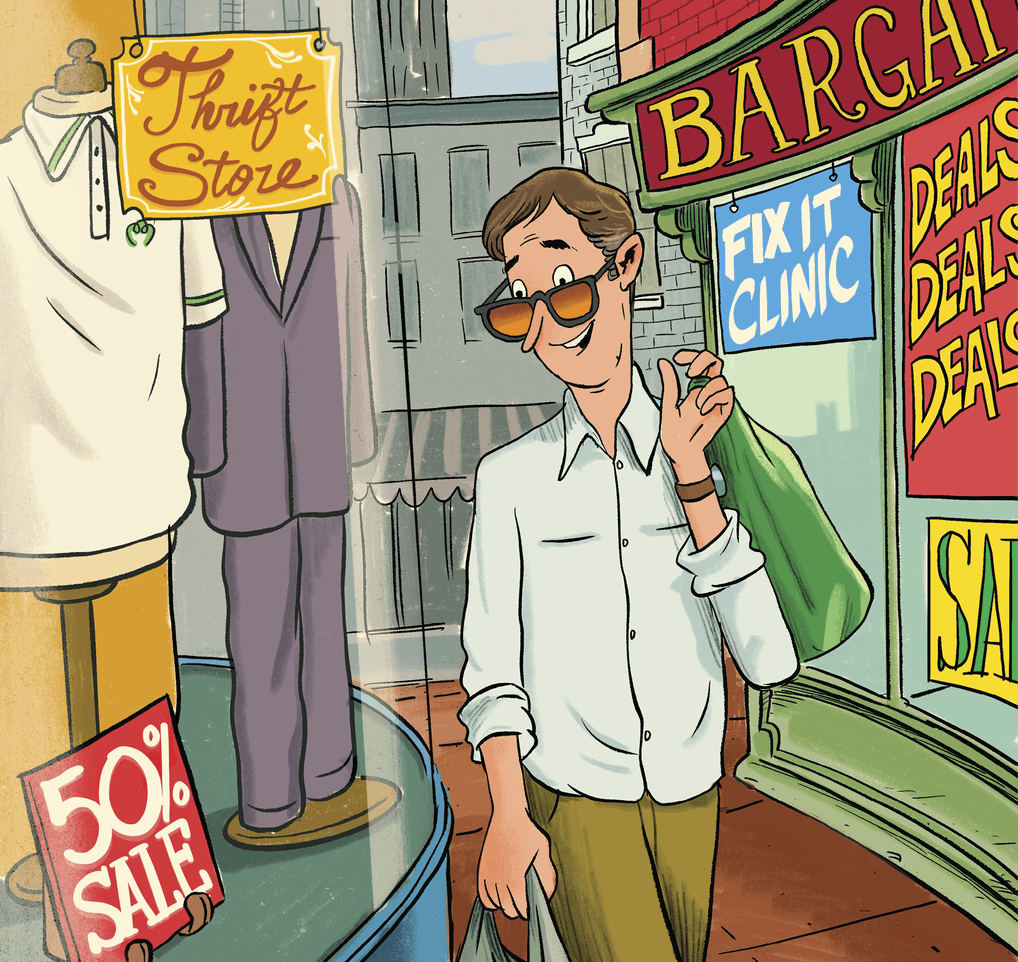
PEOPLE TEND to associate the word “frugality” with discomfort and belt-tightening. But for many older Americans, it’s about getting high-quality goods for less, saving money in creative ways and even building stronger personal connections and communities. Simply put, it can be fun!
This kind of frugality means sharing stuff with your neighbors, meeting up at events where people give old items new life and getting good vibes from keeping items out of landfills. Here are four easy ways for you to join in.
SHARE AND SHARE ALIKE
Give away or take, for free, items that might otherwise be trashed
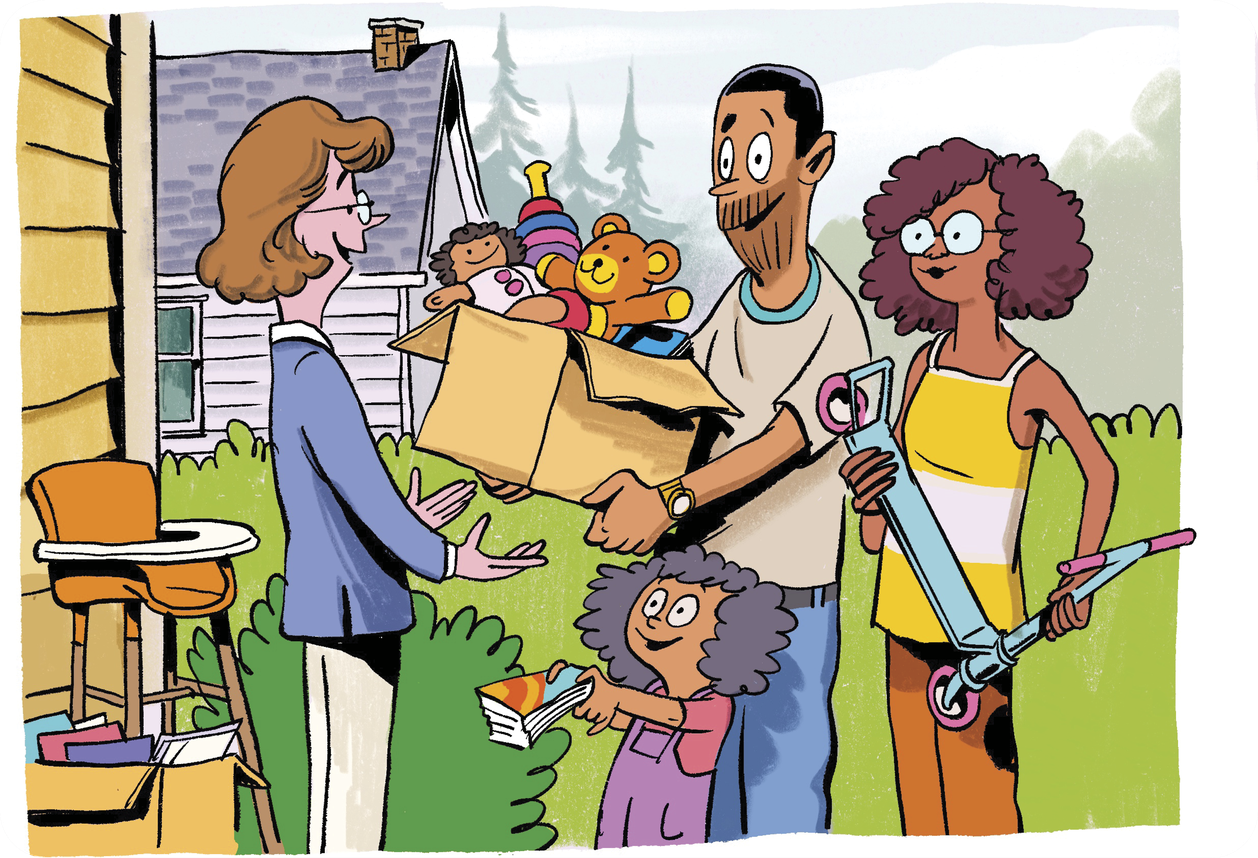
LOCAL GROUPS with names like Buy Nothing, Give and Take, and Freecycle connect people who have items they no longer need with folks who are looking for those very things. As a proud bargain shopper who hates to see still-good items go to waste, I have given (books, a tent, a murder mystery game I knew we wouldn’t play again), and I have taken (picture frames, a nightstand, a big bag of fireball candy). And the experience is usually seamless. These groups are moderated by local volunteers who try to keep them free of scammers and running smoothly.
Lorraine Burton, 55, from Ossining, New York, recently turned to these groups when her niece was visiting with small children. “I didn’t have any young kid stuff,” she says. “People gave me a high chair, a car seat, some toys and books, a baby bathtub.” After her family left, she passed the gifted items along.
“The gratifying part,” Burton says, “is matching an item with somebody who actually needs it, knowing that things that are usable are not going in the landfill.”
JOIN IN: To find a local group on Facebook, search for “Buy Nothing” or “Give and Take” and follow the steps to join. You can peruse items up for grabs or post what you’re seeking. If you see something you want, write a comment saying so. If the owner agrees to give you the item, he or she will respond. Once a match is made, the best practice is to use Facebook Messenger to arrange pickup, which is typically contactless, at a prearranged time from an outdoor location like a front porch or driveway.
Other giveaway groups, including buynothingproject.org, freecycle.org and trashnothing.com, may have dedicated websites and/or apps. And if you’re unable to find a group in your area, you could start one. Learn how at help.buynothingproject.org or do a web search for “starting a Facebook group.”
GET REPAIRS FOR FREE
Friendly fixers use their skills
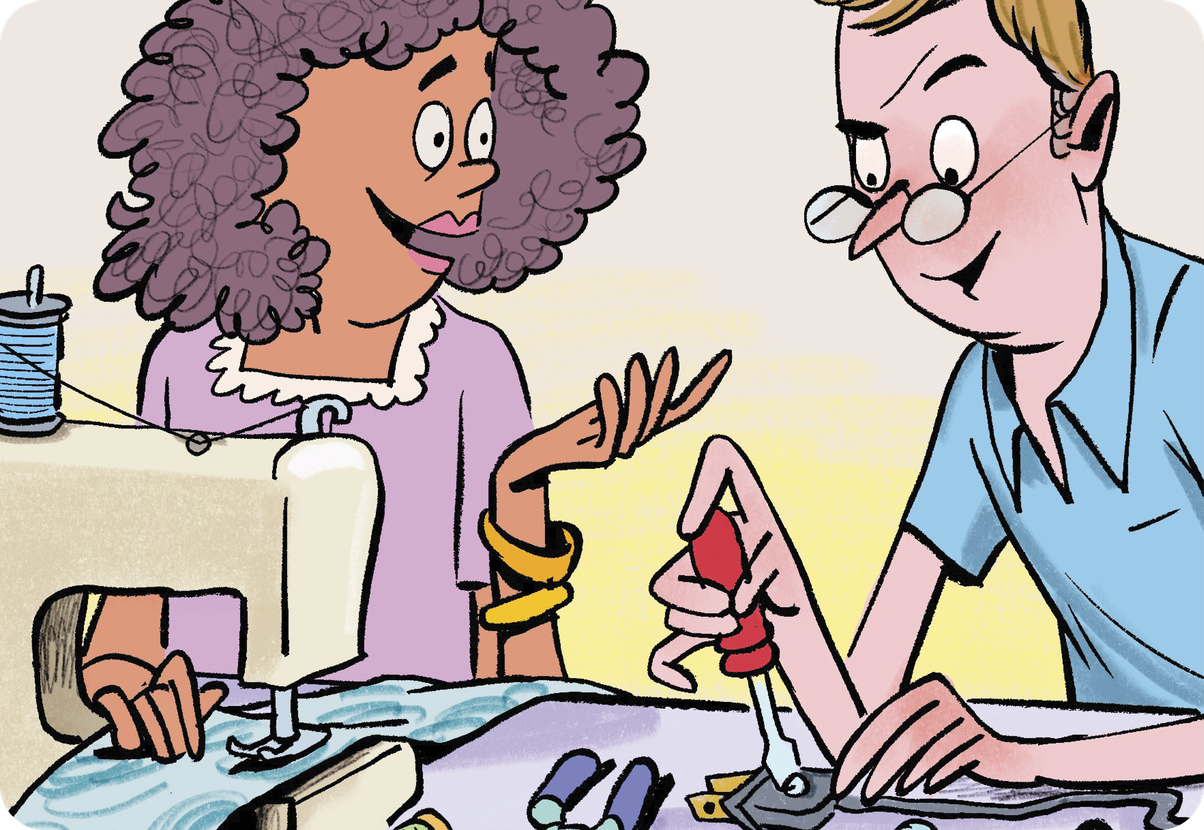
BROKEN ITEMS get new life thanks to volunteers who rewire lamps, mend rips and more at free fix-it events held around the country, many of which are part of the Repair Café movement, begun in the Netherlands 17 years ago.
Pat Slaven, 71, a textiles expert and former Consumer Reports product tester who lives in Ann Arbor, Michigan, has helped out at such events, doing stain removal and small sewing fixes. Once, for example, a woman brought in a shirt that had chewing gum on it. No problem—Slaven took out a tube of Bengay, her go-to for stuck-on gum. Another patron had a shirt with ink stains she was sure wouldn’t come out; Slaven got them out using a stain remover called Amodex. After her shift, she even got an assist herself from a fellow volunteer, the bike repair guy, who adjusted the gears on her bicycle.
At a recent Repair Café event at the library in Croton-on-Hudson, New York, volunteers were busy tinkering with broken appliances, jewelry, clothing, even screen doors. Organizers say their team repaired 72 items during the four-hour event and gave instructions for fixing 20 more that were beyond their scope. Chris Osborn, 77, a retired school librarian who previously sewed costumes for school plays, says she volunteers at events in five towns in the area. In Croton, she used thread and her deft hand to repair moth holes in two cashmere sweaters I brought in. “Sewing is not that hard,” she says. “A lot of it is just fiddling.”
Ray Glashoff, 67, brought in a torn screen from a kitchen window, which a crew from a local home-repair company replaced with a new one—a job that might cost $75 in a shop. “I thought they were going to patch it, but they replaced the whole thing,” says Glashoff. “I was so impressed.”
The volunteers clearly loved to help people out, and the patrons loved the results. Even a woman who came and left with a nonworking mixer was pleased, because she got an honest assessment of what her machine needed to be repaired without paying a diagnostic fee.
JOIN IN: At directory.repaircafe.us you can find a list of more than 180 Repair Cafés in the U.S. You can also search online for “repair cafe near me.” Local Facebook groups often tout upcoming events on their pages. Want to start your own? Visit repaircafe.org/en to learn how.
BORROW, DON’T BUY
Why spend money on equipment you might need only once?
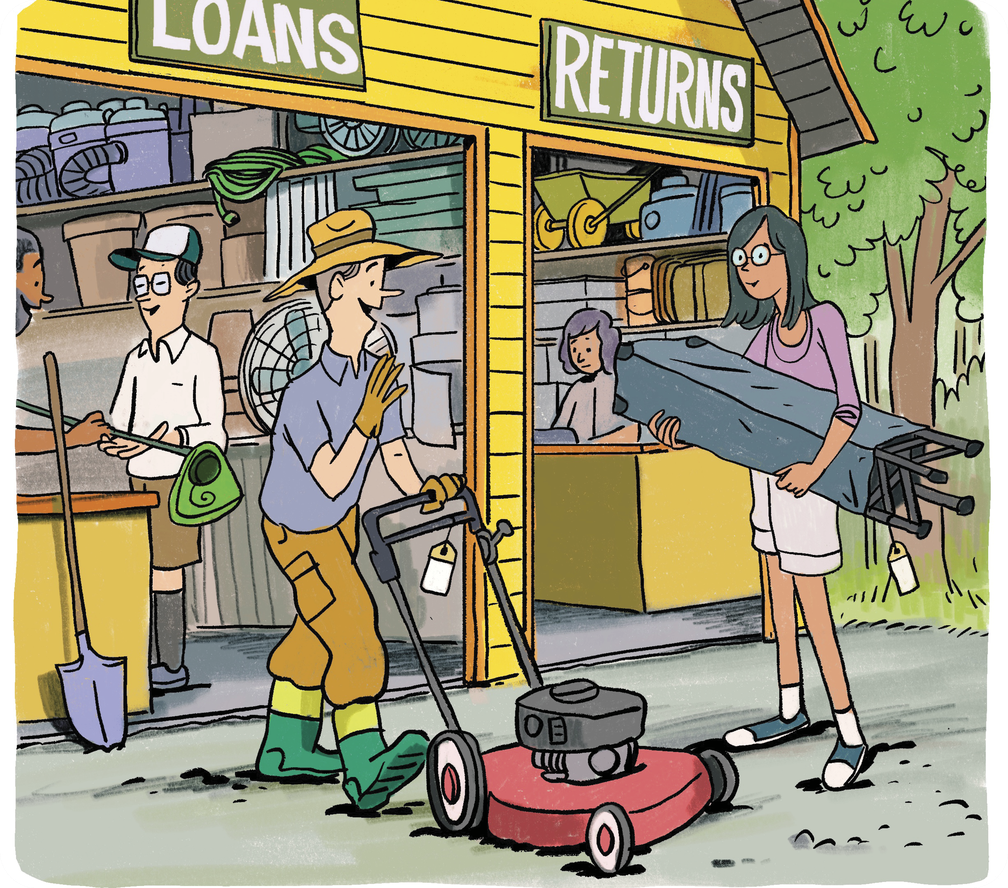
WHO WANTS to spend $200 on a weed whacker you use once a season or a tent you use once, period? In towns and cities, lending programs with names like “tool library,” “library of things” and “sharing shed” have shelves full of handy gear you can borrow, just the way you’d check out a book. Some of these repositories of items—think gardening tools, kitchen gadgets and more—lend them for free; others charge a nominal fee that’s still a great bargain compared with the cost of buying new.
Robert Bowles, 56, a founding member of the East Portland Tool Library in East Portland, Oregon, borrowed tools from it to fix up his mountain cabin. “I just re-sided the entire cabin,” he says, using a pneumatic nailer (which can retail for $200 and up).
In neighboring Washington state, the Seattle REconomy tool libraries lend out sewing machines, food dehydrators and event supplies like tables and dishes—“all these things that you might need from time to time but mostly don’t,” says founder Susan Gregory, 71. A popular item: lawn mowers. “A lot of people don’t own lawn mowers anymore,” says Gregory. “They still have a lawn, so they come in and borrow the lawn mower. They don’t have to own it or store it.”
Like many, the Seattle REconomy tool libraries are staffed mainly by volunteers and offer classes where people can learn how to use or fix things. “We have a lot of retired men and women,” Gregory says. “They just have so many skills and are really happy to share them and feel useful and be able to help someone with a project.
“Another bonus, I think, is people connecting with each other,” she adds. “Everyone who walks in goes, ‘Oh my gosh, this is such a good idea.’ ”
JOIN IN: To find a lending program near you, check with your local library or search online for “tool library,” “library of things” or “borrow” and the item you’re looking to borrow. (You might also turn up businesses that rent items for a small fee.) And don’t limit your wish list to tools; some tool libraries also lend out musical instruments, as do the public libraries in Los Angeles and Fort Worth, Texas, for example.
TRY SECONDHAND FIRST
Find well-made clothes, furniture and more at discount prices
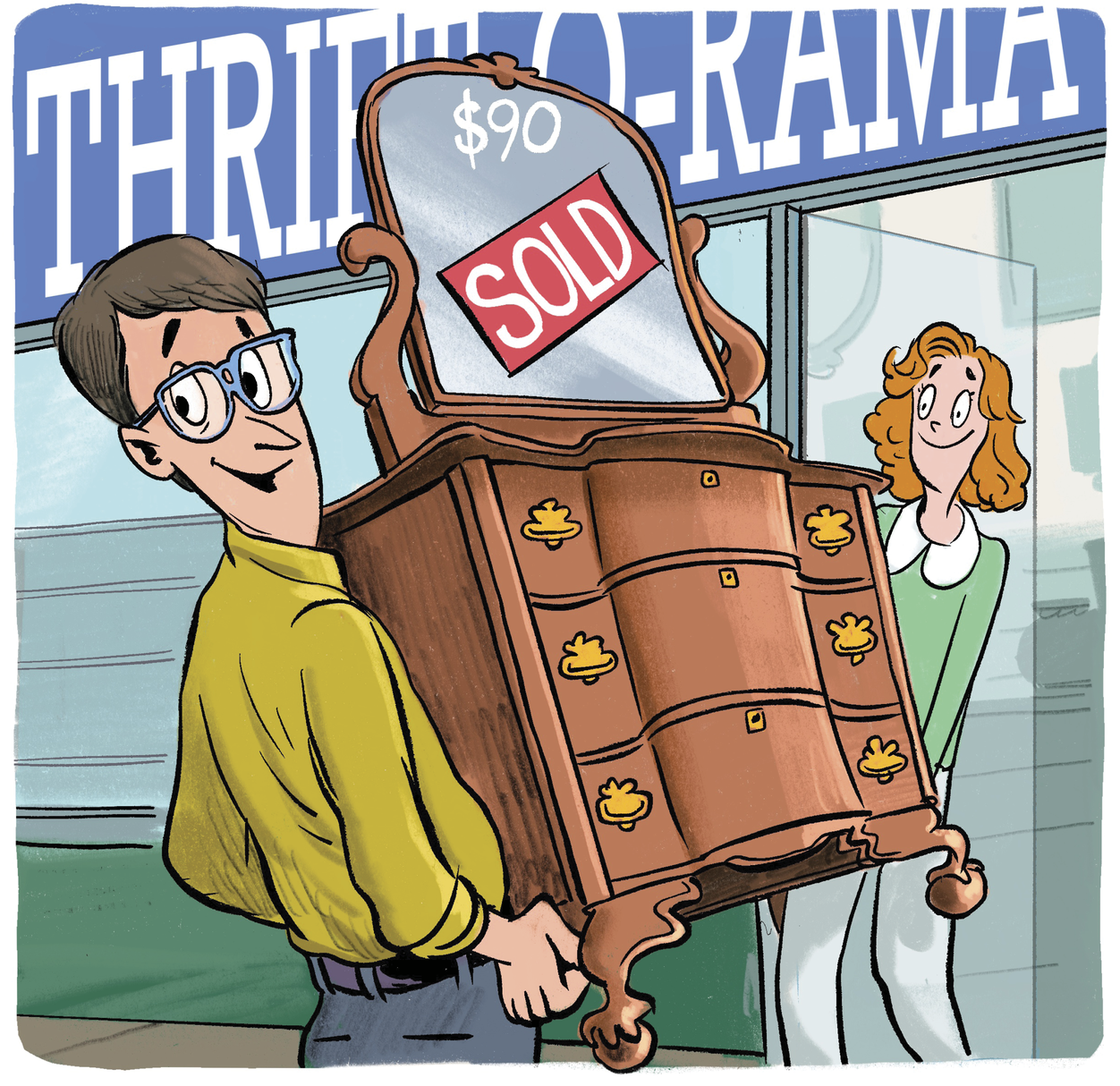
FOR BUYING quality items at bargain prices, some of the best places to shop are secondhand stores. One reason is that so many people are cleaning out closets, storage units and their parents’ homes that there’s a glut of items on the market. “Twenty years ago, I could get $295 for a nice oak dresser with a mirror,” says Polly Blythe, 58, owner of Polly Ann’s Vintage Market in Mount Vernon, Iowa. “The last one I sold, I got $95.”
“I always see well-made vintage pieces in good condition that I’d buy in a minute, and for so much less than the pressboard or poorly constructed furniture made today,” says Lissa Perrin, 77, a retired clinical social worker in Ann Arbor, Michigan.
“I’ve had very good fortune finding clothing that fits me well, looks nice and is well made,” adds Perrin, who has been thrifting since she was a kid. “My habit is to go to several on a Saturday or to drop in to one during the week if I’m nearby. I’ve found that some are better for furniture than others, while others have nicer clothing and housewares.”
Rob Kemper, 59, and his wife, Karen Knops, 51, make thrifting a date night activity, often stopping at a nearby shop in Bellevue, Washington, after they’ve eaten dinner but before they head home. “It pays to be a regular, particularly if you’re looking for high-quality items,” Rob says. “A brand-new pair of Nikes will sell within a day, if not hours, so the more you visit, the better your chances. I like to stop in every couple weeks to browse, and more frequently if I’m looking for something specific.”
One of his best scores, he says, is an indoor bike trainer for $40, a piece of cycling equipment that retails for more than $300.
Another perk of buying secondhand is finding creative uses for bargain items. “I can sell a small stoneware crock [made for pickling] because it’ll hold utensils,” says Blythe. “I try to show people a new way to use things.”
JOIN IN: Good items to hunt for (meaning you might find good quality at let’s-get-rid-of-it prices) include wood furniture (see above), books, games, albums, artwork, and kitchenware like glasses and pottery.
Additional reporting by Claire Leibowitz
Jody L. Rohlena is a former editor at Consumer Reports, ShopSmart and Reader’s Digest.
MORE SAVINGS IDEAS FROM AARP
Check out our annual “99 Great Ways to Save” special, plus additional articles on getting what you want for less … or even for nothing at all. aarp.org/99waystosave
Install the AARP Perks browser extension on your desktop or laptop computer and get easy access to your AARP discounts when you’re online. aarp.org/perks
Redeem 6,000 AARP Rewards points to download the AARP CA$H Hacks Challenge and learn how to spend less, save more, and better understand where your money is going. aarp.org/cashhacks
Sign up for the Money Matters newsletter to receive a twice-monthly roundup of savings tips and other smart ideas for improving your finances. aarp.org/newsletters

Learn how to stretch your food dollar from “25 Great Ways to Eat Healthy Without Breaking the Bank.” aarp.org/eatwellforless