Memorial Day TRIBUTE
The Buddy I’ll Never Forget
We honor the men and women who served, those who serve today and the friendships they forged in war
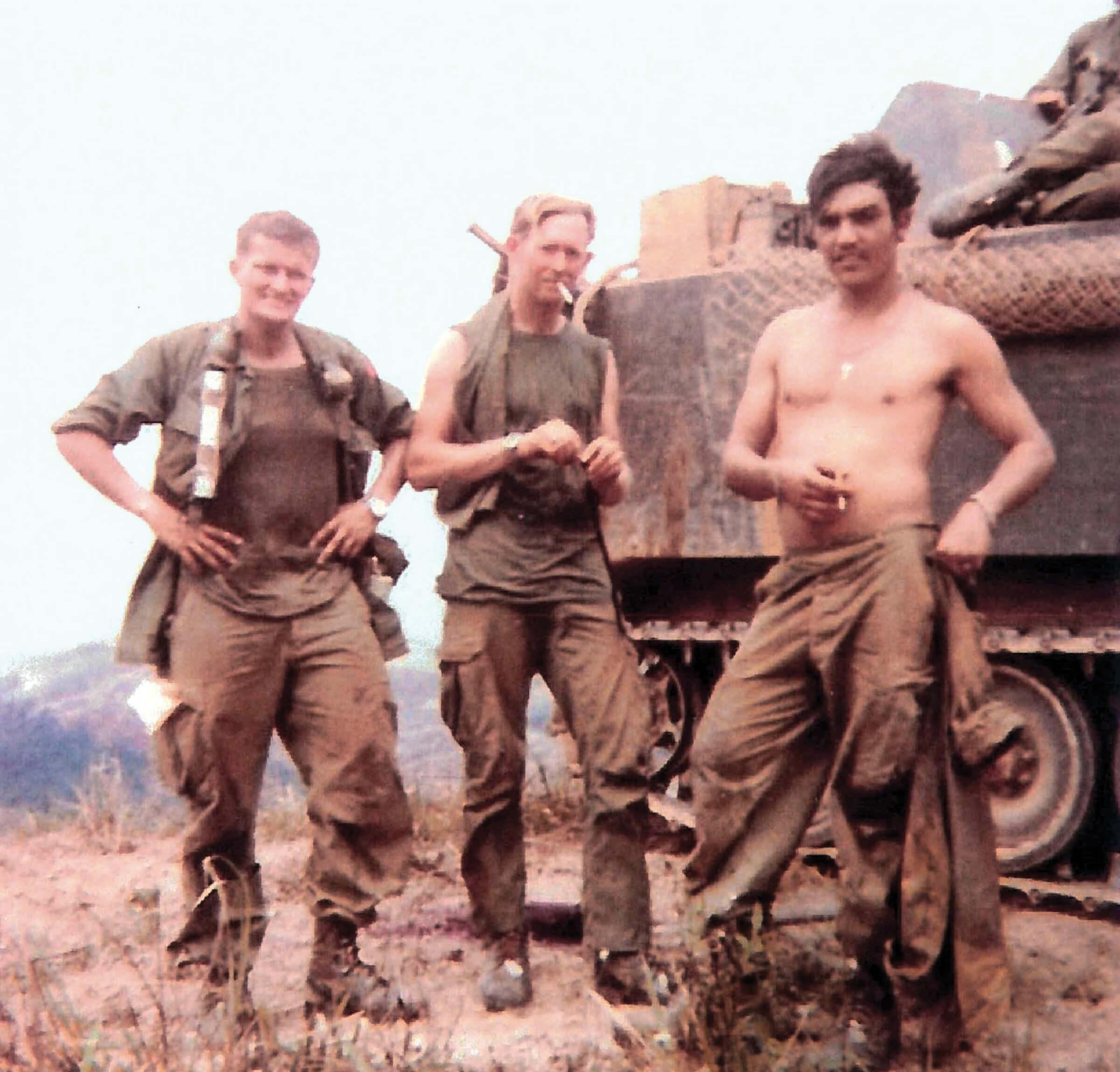
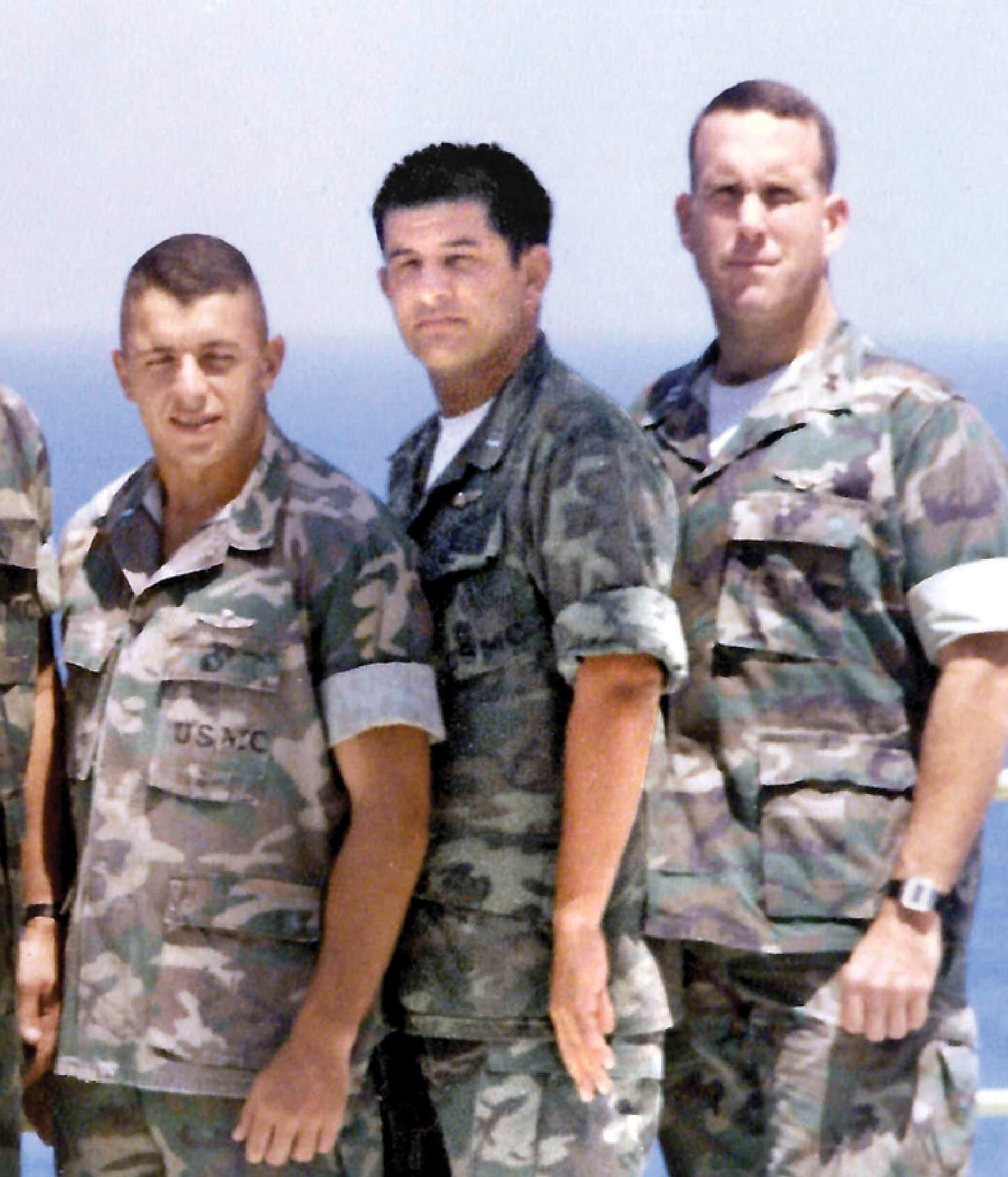
Albion Bergstrom, left, and Victor Locke, center, March 1971
VIETNAM WAR
Sergeant Victor Locke
By Colonel Albion A. Bergstrom
A New Englander who was awarded a Purple Heart after being wounded on March 25, 1971, Bergstrom, 78, earned three Legions of Merit, a Bronze Star and other decorations while serving in Vietnam and afterward. Today he is a professor in the Joint Military Operations Department at the U.S. Naval War College in Newport, Rhode Island.
I STARTED COLLEGE at Boston University, and the ROTC program was a way of serving my country. I didn’t think that I would end up in Vietnam, but it sure turned out that way.
I took over an armored cavalry platoon. Sergeant Victor Locke was my track commander, which meant he was in charge of my command vehicle. In an armor or cavalry unit, a leader needs to know his people. You don’t have to be loved, but as long as you’re respected, things work well. The basic unit was 50-plus soldiers. Their lives depended on your ability to be a decent leader and to listen to them. Victor had a previous tour in Vietnam and a lot more experience, so I came to trust him for his advice. That turned into a long friendship.
He called me L.T., for lieutenant, and he clued me in on things I needed to know. He’d say, “L.T., so-and-so seems to be down” or “L.T., the platoon sergeant is doing a great job but could use better backup.” He was from Oklahoma. I was a farm kid, and Victor appreciated that because he had a country background also. As a farm kid, I was more aware of being outdoors than a city kid. When we were moving through territory, Victor would sometimes say I seemed to have a sixth sense, like what the enemy was up to or when there might be an ambush.
I had a lot of men wounded in my unit, and after I left, two soldiers were killed. But I never lost a soldier. I wanted to bring everyone home alive. We grew up seeing a lot of World War II and Korea movies about all the great battles. That gave us a baseline of what our forefathers had done. I still feel that we served our country well.
Victor got out of the service and had a family. But by the time I retired, in 1999, he was dying of cancer. Agent Orange took its toll. We dedicated my retirement ceremony to him. At the time, my daughter Victoria was 6 months old, and Victor thought that was cool—that we had named her after him.
The day after my retirement, Victor passed away. He had been living in Arizona, and I flew out there. The last time I wore my uniform was for his funeral.
I am thankful every day that I am alive, and I am thankful that I was able to serve with such great soldiers.
WORLD WAR II
The Death March Five
By Staff Sergeant Les Schrenk
Schrenk joined the U.S. Army Air Forces on his 19th birthday in 1942 and flew with the Eighth Air Force’s 92nd Bomb Group, 327th Squadron. On February 22, 1944, while serving as a ball turret gunner on the B-17 bomber Pot o’ Gold, his aircraft was shot down by the Germans. Schrenk joined thousands of other POWs in what became a death march. He survived, spent his career as a warehouse supervisor and is now retired in Bloomington, Minnesota, at 102.
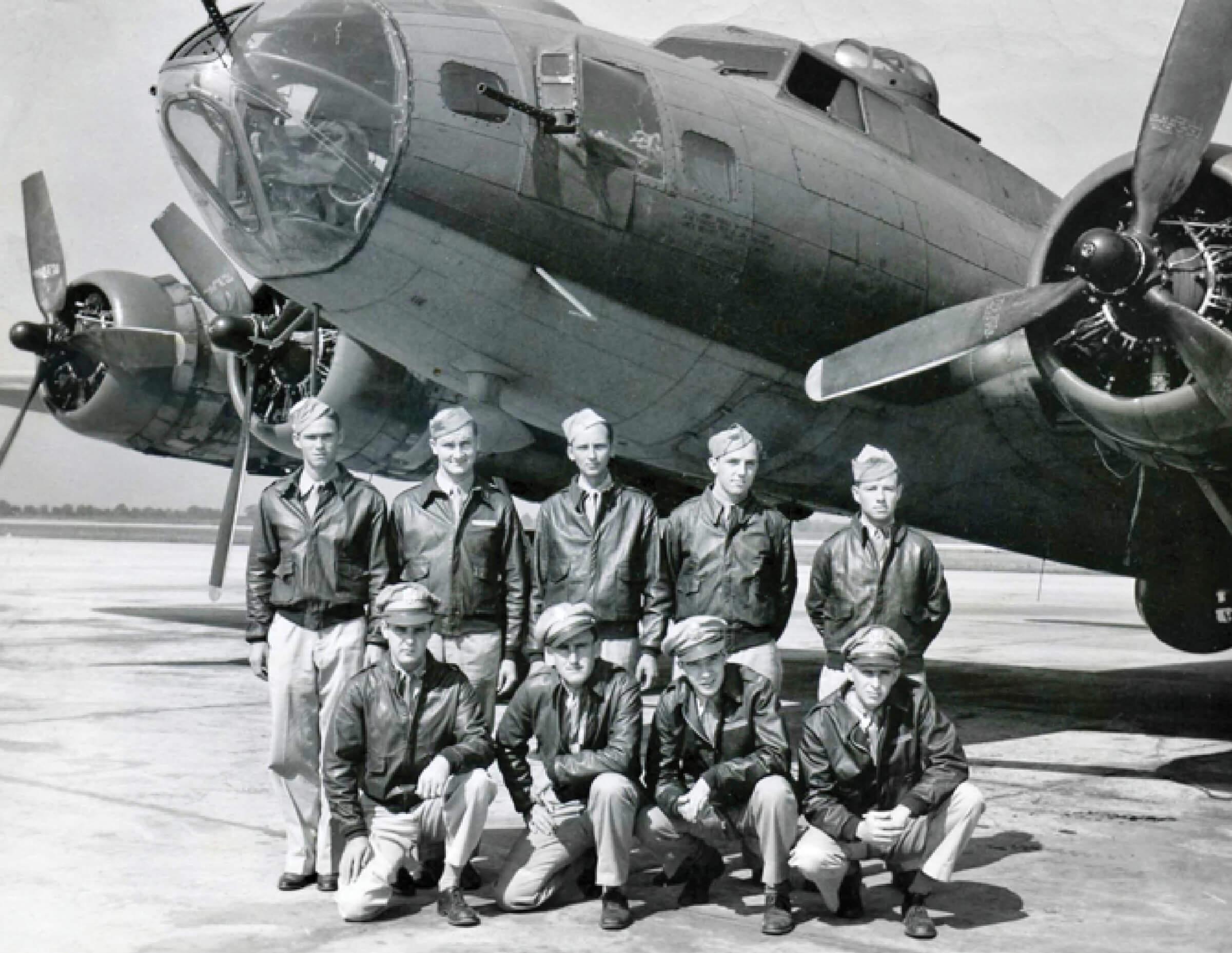
In front of a B-17 during training, August 1943. Top row, from left: Neil Byers and Schrenk; second from right: Bill Harman. Pete Guastella is not pictured.
WE WERE SHOT down on our 10th mission. We had already bombed our target, and we were attacked by a large formation of Ju 88s, Bf 109s and Fw 190s. We got hit in our right fuel tank, and it caught fire. Our plane was burning and exploding for 20 minutes, and the explosions kept getting louder and louder until one last explosion blew the right wingtip off. I came down with my parachute like a ton of bricks. The German pilot had radioed ahead, so ground troops had a perfect circle formed right where I was coming down.
I spent six months in a prison camp called Stalag Luft IV, in Poland. When the Russians advanced, the Germans marched us from Poland to Germany over the next 86 days. We had one blanket for five people. During the night, five of us slept next to each other, sometimes in a farmer’s barn, sometimes in a snow-covered field. The people I shared a blanket with were Neil Byers, Frank Fox, Pete Guastella and Bill Harman. All but Frank Fox were part of my B-17 flight crew.
I made very close friends with them during the march because we relied on each other’s warmth to stay alive. It was winter, and the guys on the outside of the blanket didn’t quite get covered. So to be fair, we shuffled back and forth under the blanket during the night.
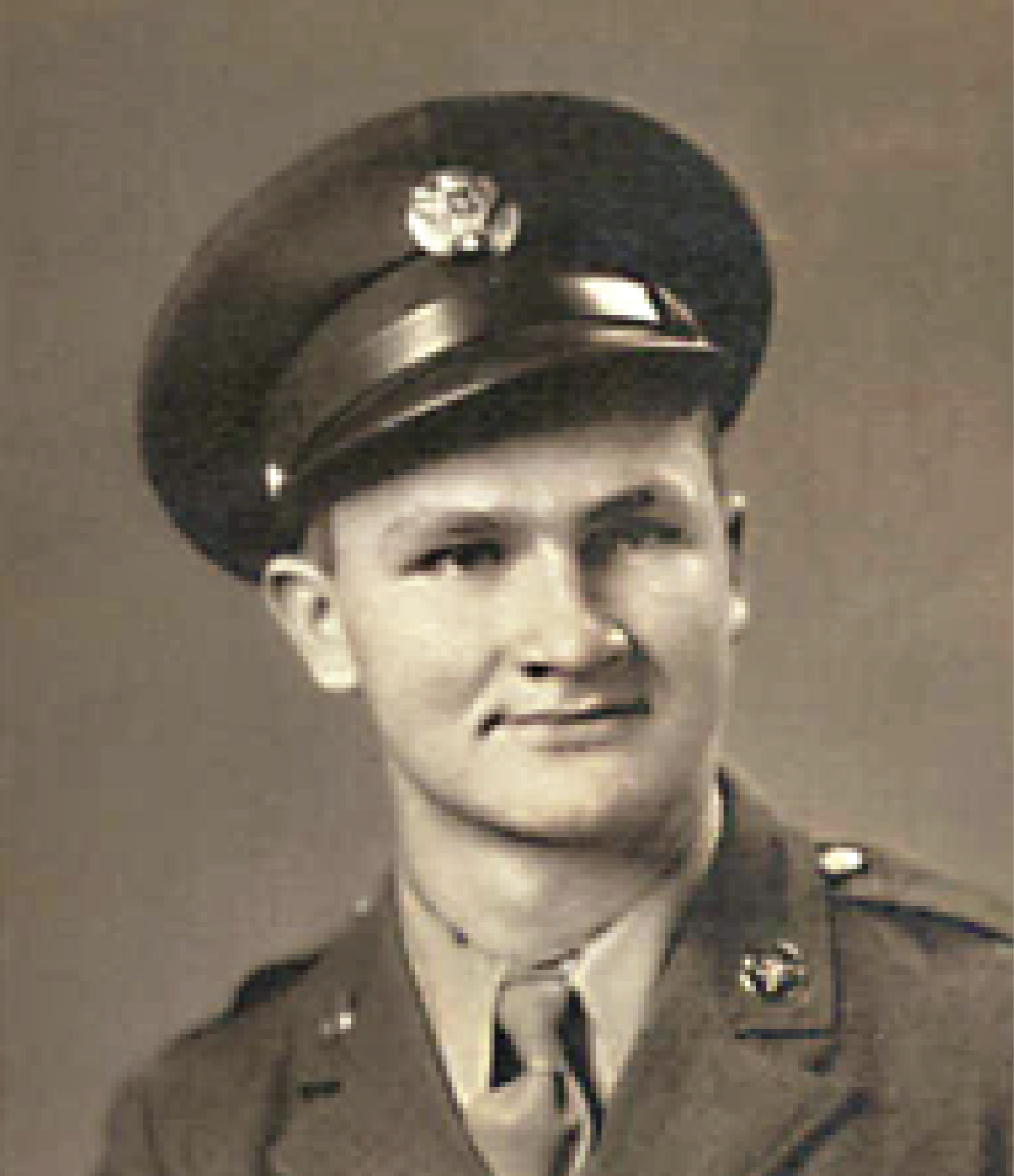
Les Schrenk, 1943
The death march started in Poland and ended up in a little town near Hamburg. We were so far gone by the end that we could barely put one foot in front of the other. I was 185 pounds when I got shot down, and I was 93 pounds when I was liberated.
I kept in touch with those guys and visited them over the years. Years after the war, I even became friends with the German pilot who shot down our B-17. But those men I shared a blanket with were the closest ones. They’ve all since passed away. I’m the only one left.
IRAQ WAR
Lieutenant Colonel Misca Geter
By Captain Vernice “Junk” Armour
Now an inspirational speaker based near Atlanta, Armour started her career in law enforcement and was the first Black female motorcycle police officer in Nashville. Commissioned as a Marine Corps officer in 1998, she graduated from flight school in 2001, piloting AH-1W Super Cobra attack helicopters during Operation Iraqi Freedom. She served two tours in Iraq, becoming America’s first Black female combat pilot.
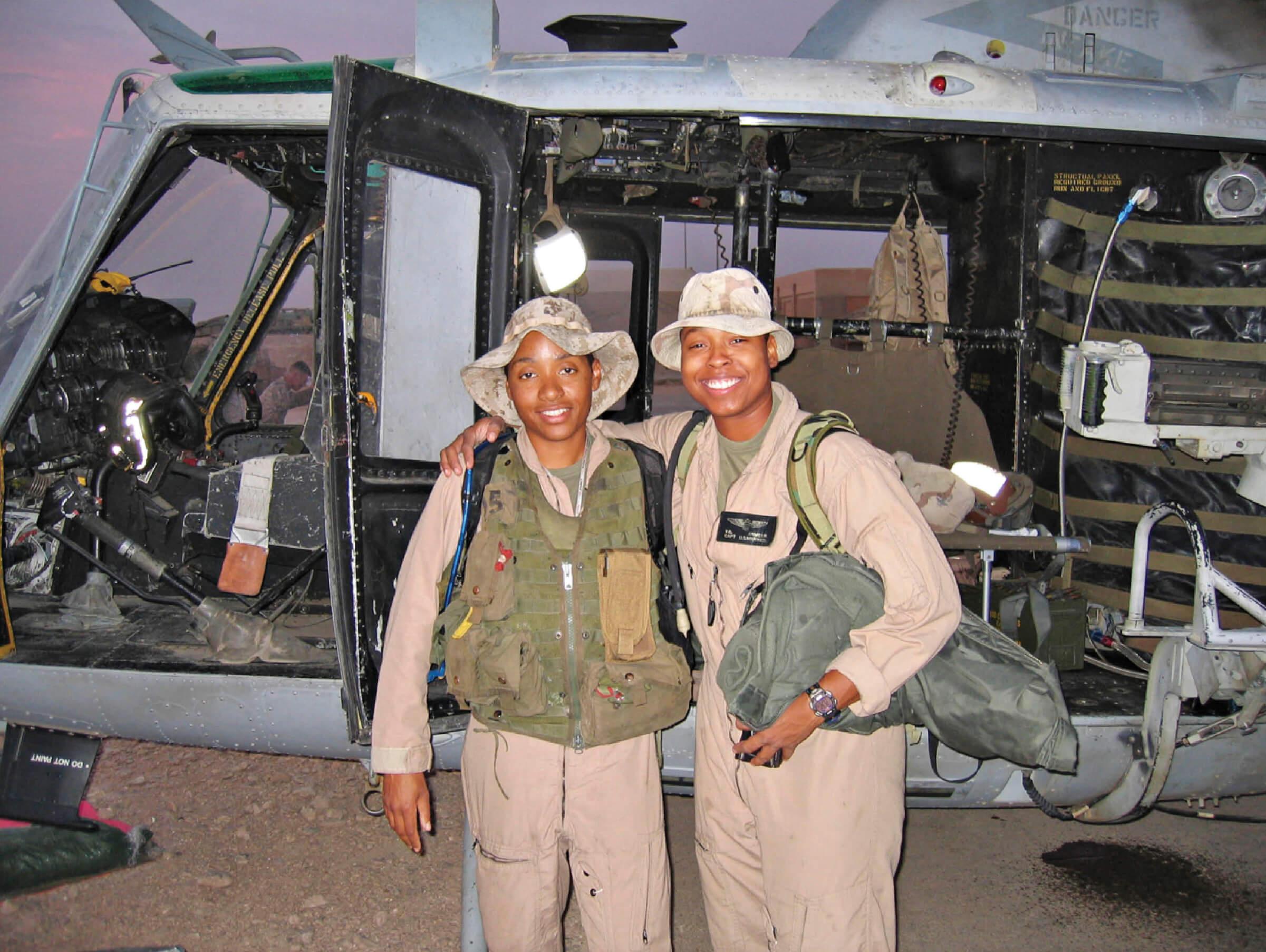
Misca Geter, left, and Vernice Armour in Iraq, 2004
WHEN I WAS in ROTC in college, I saw a Black woman in a flight suit and knew what I wanted to do. I wanted to be a pilot. I graduated from flight school on July 21, 2001, when there was no war. But 9/11 happened less than 60 days later, and something in me knew I would be going. I moved into my operational squadron, and several months later, another Black woman joined the squadron, Misca Geter. She was from North Carolina and flew UH-1N Twin Hueys. We were two out of three female pilots, out of 67 pilots in our squadron. We deployed to Iraq together with the 11th Marine Expeditionary Unit. I was involved in the Battle of Najaf, the Battle of Fallujah and the Battle of Ramadi.
My friendship with Misca was a huge support in navigating the environment of being two of only three female pilots. We were like Forrest Gump and Lieutenant Dan. We formed this amazing bond. There were no therapists over there. But I could talk to Misca.
And those were stressful times. Our Marines were going out on patrol. We were on the front lines, where everything was happening.
Whether it was combat stress or stress from the squadron with the guys, Misca and I had each other. All you had were your friends, and she was mine. We lived in the same tent together. We worked out together. We ate together. When things were really hard, she was the one who brought me back to sanity. I have said many times that Misca saved my life on and off the battlefield.
There is a picture that I will always cherish, with her aircraft behind us when we deployed to a forward operating base, which took enemy fire many times. Years later, it feels like no time has passed. It will always be that way.
GRENADA INVASION
Major Patrick Giguere
By Colonel Hank Donigan
Retired Marine Col. Hank Donigan, of Fallbrook, California, served multiple combat deployments over 34 years of active duty, from the peacekeeping mission in Lebanon in 1982 to post-9/11 Iraq in the early 2000s. A brain cancer survivor, Donigan, 70, has run the Marine Corps Marathon in Washington, D.C., 30 times, including this past October. Pat Giguere was one of his “running angels.”
Hank Donigan, left, and Patrick Giguere, far right, aboard the USS Nashville in July 1982
I ’VE RUN 538 marathons and had many “running angels,” people who appear out of nowhere and become a running soulmate, someone with you who is reliable, who supports you. Pat was an AH-1T Cobra attack helicopter pilot, and we worked in the same office at Camp Lejeune in North Carolina, early in my career in the Marines. He was our air officer, and we became friends. We ran together at lunchtime. Since I was single at the time, he and his lovely wife, Cindy, would invite me to visit.
When I got to Lebanon in 1982, I became part of a multinational peacekeeping force. Pat and I were on the same ship together in the Mediterranean, and we would run on the ship’s deck. Sometimes, you’re in situations where it’s not easy to stay fit. It’s easy to make excuses. But you cannot become sedentary. Pat and I ran. On some ships, three laps around the deck is 1 mile. On smaller amphibious ships with just a small helicopter pad, 11 laps around the deck equals a mile.
I spoke French, so I was designated to take a liaison team and join the French Foreign Legion. My lifestyle with the French was so much better. I got ahold of Pat and said, “You’re eating those rations at the Marine camp, and I’m out here with fresh food, vegetables and wine. I’ll come pick you up, and you can spend some time with me.” We solidified our bond during that deployment. People like Pat become your family. You bond very closely, so you can help each other survive.
There is a longer story about Pat and his heroism and what happened one day. But the short story is that Pat, serving as the two-aircraft Cobra attack helicopter detachment commander, was responsible for providing security for my helicopter-borne infantry company during the landing on Grenada as part of Operation Urgent Fury in October 1983. Later that day, while flying missions in support of U.S. Army forces, both Cobra helicopters were shot down, and Pat was killed.
During my years on active duty, there were many with whom I served who are now deceased, who are now my running angels. But Pat is the one who is always with me. There are many moments when I am running—in the rain, in the cold—when he is there, challenging me, pushing me forward.
My wife, Naoko, and I were blessed with a “retirement child” when I was 51. Our fifth child, Patrick, named after Pat and born on St. Patrick’s Day, is now 20 years old. And every year on St. Patrick’s Day, we celebrate both of these beloved Patricks.
VIETNAM WAR
Specialist 5th Class Francis Whitebird
By Specialist 4th Class Paul Critchlow
A former newspaper reporter and later vice chairman of Bank of America Merrill Lynch, Critchlow, 79, grew up in Omaha and played football for the University of Nebraska. He received a Purple Heart and a Bronze Star for valor while serving in Vietnam. Critchlow is retired in Sarasota, Florida.
Francis Whitebird in Vietnam
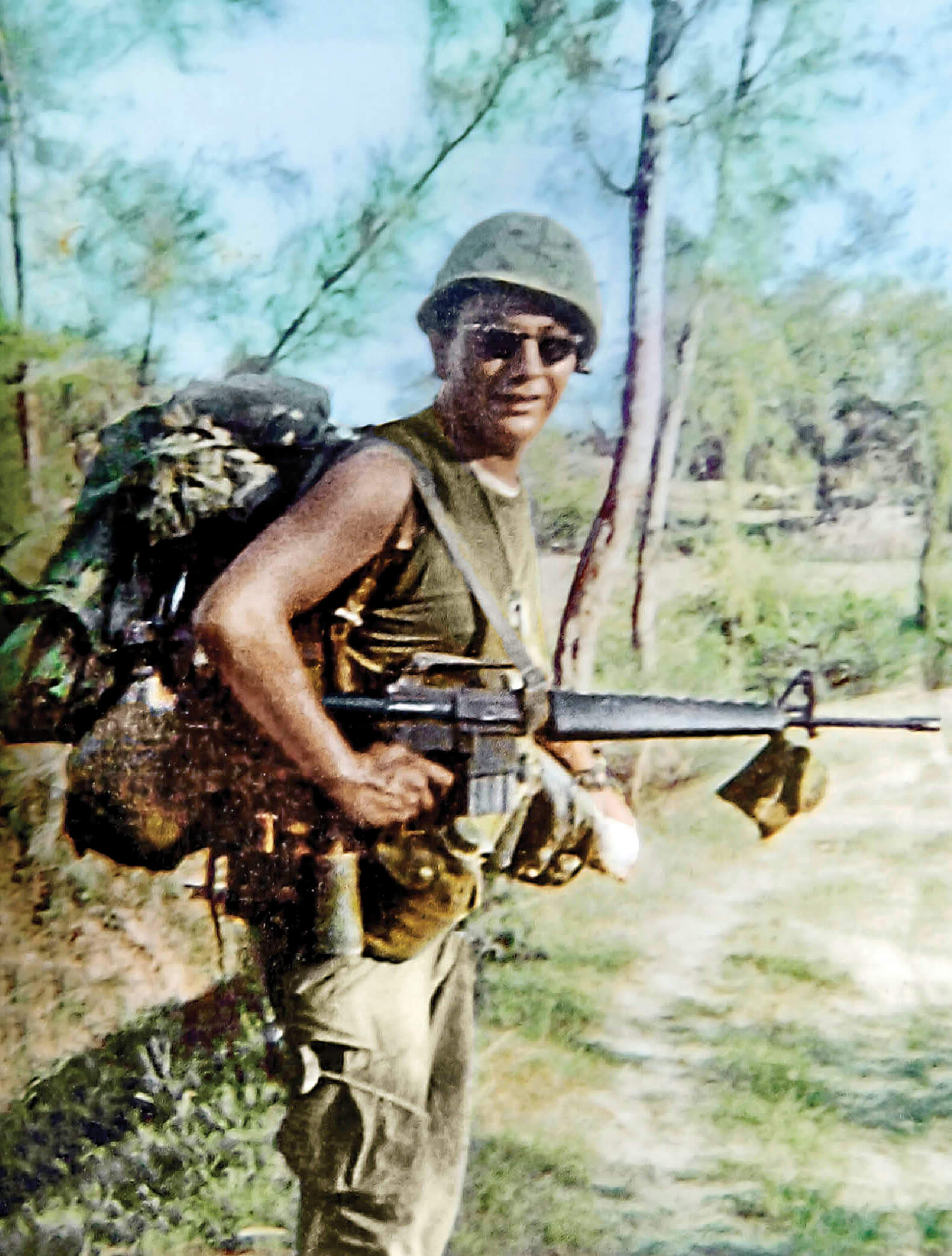
Francis Whitebird in Vietnam
IN 1968, I gave up my final year of college deferment, told my draft board I was ready to be drafted. I ended up a private first class, assigned to the 196th Light Infantry Brigade in Vietnam. Francis was the lead medic for the company. We connected quickly. We were both from the Midwest, me from Nebraska and he from the Rosebud reservation in South Dakota.
Francis had a reputation as a warrior. Medics don’t necessarily aspire to get into the fight, but he was a protector. I remember watching him run under fire to help save people. He was legendary for that. He gave the troops confidence. They knew that they could count on him if they got wounded.
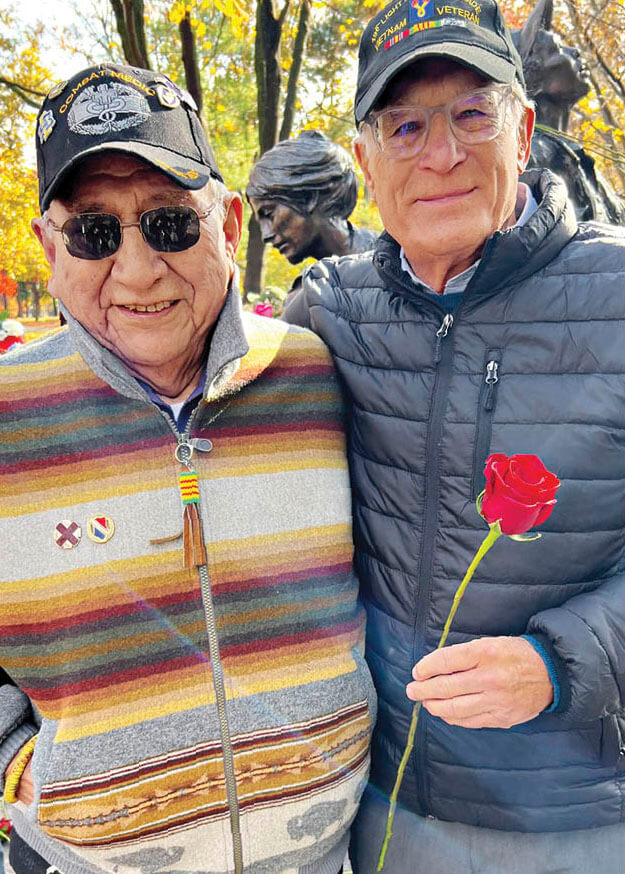
Whitebird and Paul Critchlow, 2023
It was a crazy place. Francis and I survived battles together. Every morning, he would wake up and say, “It’s a good day to die!” I’d say, “Francis, why do you keep saying that?” But it was his warrior credo. That meant “I’m ready to fight.” On August 19, 1969, our brigade was part of a tremendous battle in Que Son. We found ourselves surrounded—about 200 of us facing at least 1,000 enemy soldiers, possibly more. I was wounded at about midnight, and I endured numerous surgeries and six months in the hospital back in the States. I lost track of Francis. Then one day soon after I got out of the hospital, my phone rang. Francis said, “I’m at the bus stop in Omaha, and I want to come see you.” He was on his way back from Vietnam, and he came to see me before he saw his own family.
Over the next years, we had an interfamily relationship. I was the best man at his wedding, and my kids came to know his kids. When my mother died, I went back to Omaha for her funeral. I looked over and saw Francis. I was so touched, I could hardly speak.
In 2004, Francis called and said, “I would like to adopt you into my family.” I went to a powwow on his reservation in South Dakota. There was a traditional sweat lodge ... you sweat out all the toxins and evil in your body in preparation for the ceremony. Then I was adopted. Francis calls me Misun, which means “younger brother.” I call him Chee Yea, or “older brother.” We can’t forget what happened in Vietnam. We celebrate each other and that we’re still alive. But we also celebrate the ones we lost.
GULF WAR
Sergeant David Westrup
By Colonel Cesar “Rico” Rodriguez
Rodriguez, 67, served as an Air Force fighter pilot from 1981 to 2006, earning numerous medals while flying under the call sign Rico. He had two air-to-air combat victories against enemy MiGs during the Persian Gulf War of 1991–92 and a third while serving with NATO forces in Yugoslavia in 1999. Today he lives in Arizona, where he runs Splash 3, a veterans’ and children’s charity he founded.
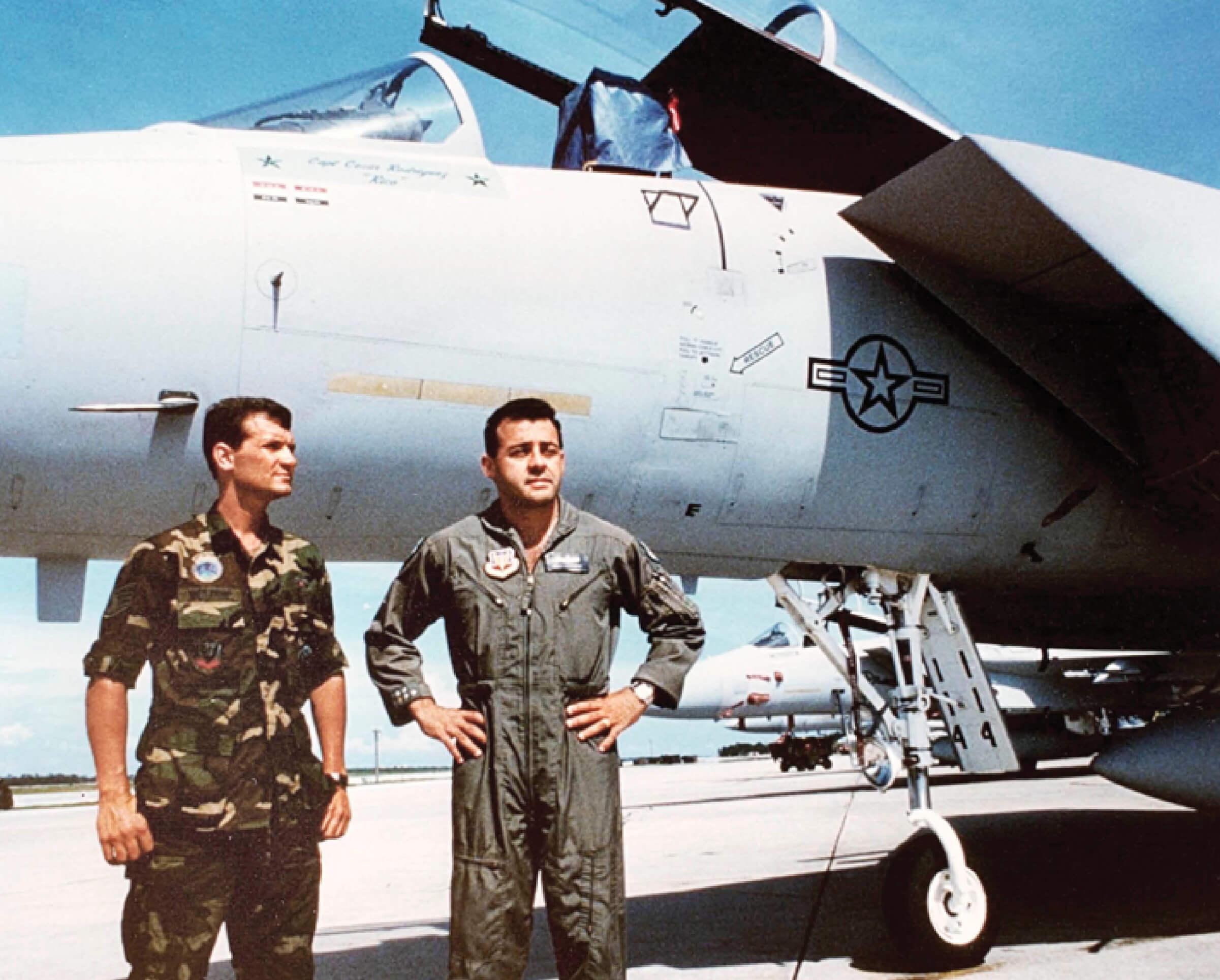
David Westrup and Cesar Rodriguez during Desert Storm in 1991
WHEN I think of battle buddies, I think of all the “fingerprints” on the mission. When I got to the flight line, I didn’t just see the airplane I was about to fly in combat. What I saw was the fingerprints of so many people—from family to community, from airmen to technicians to engineers. When I think about the fingerprints on my airplane, I want to say thank you. And during my time flying combat missions, the fingerprints were personified by Sergeant Dave Westrup.
When I went to war in the Persian Gulf, Dave was the crew chief for the F-15C Eagle, aircraft 85-0114, assigned to the 58th Fighter Squadron at Florida’s Eglin Air Force Base. He was from Kentucky. He was the one who made sure the fuel truck was there, made sure the weapons were checked, made sure the electronic warfare systems were ready to go. Of the thousands of airplanes that I’ve flown, Dave is the crew chief who sticks in my mind because he launched me on the two sorties that I flew in Desert Storm where I scored two air-to-air victories.
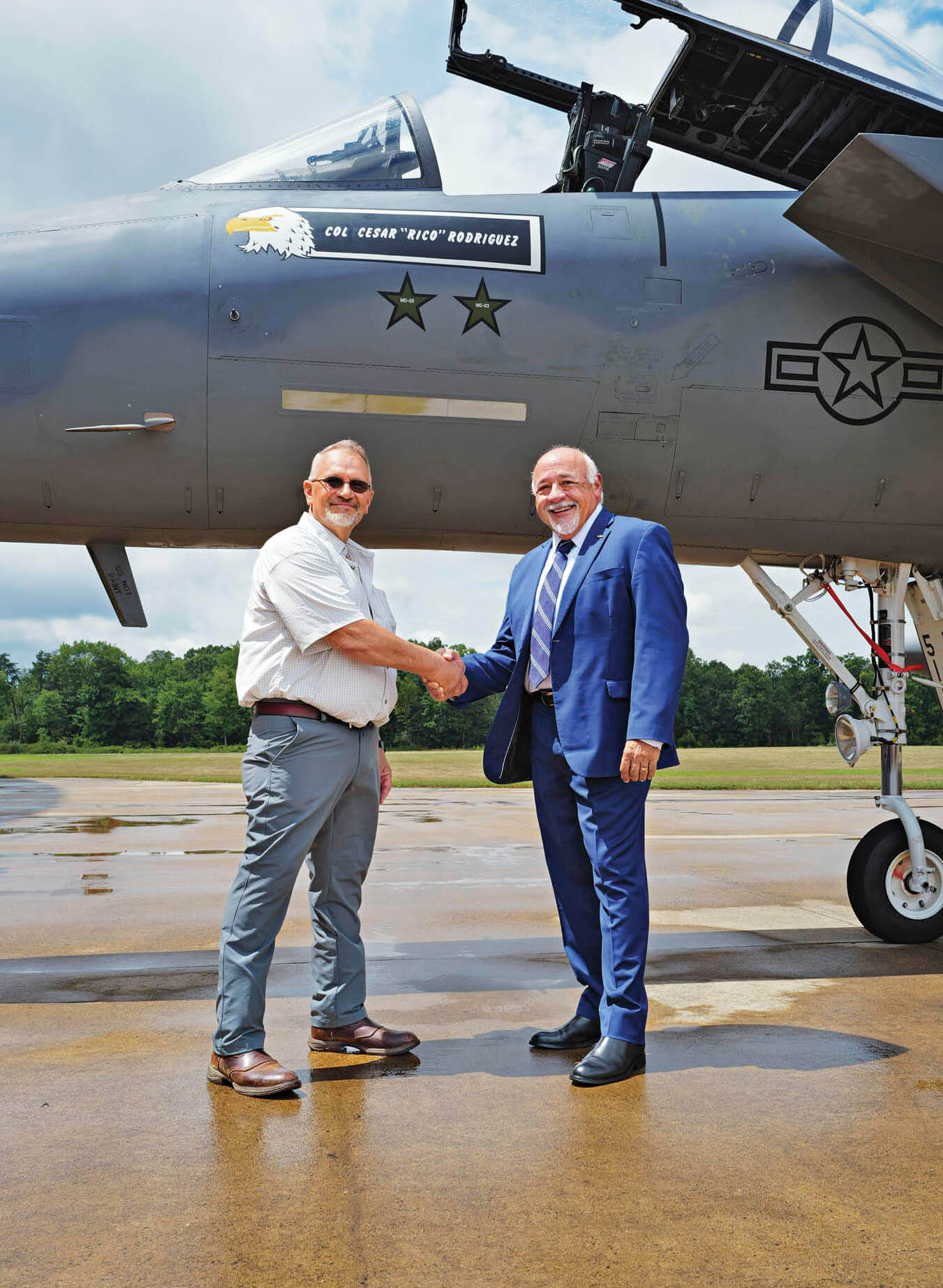
The two near Washington, D.C., in 2025
What I always remember about Dave is that, as I would come out to the jet, there were so many things going through my mind as the mission commander. There was no time for small talk. Dave would salute me, and I would salute him back. I would say, “How is the jet doing?” He’d say, “Hey, boss, she’s ready to go.” His words and actions gave me incredible comfort.
Dave was a career crew chief, and he retired after 20 years of service. He went back to Kentucky, where he works on his farm. He and his wife, Becky, have a beautiful family, with kids and grandkids.
On August 13 of last year, Dave and I were side by side when aircraft 85-0114 landed for the last time, at Washington Dulles International Airport. It was headed for restoration, then to the Smithsonian’s National Air and Space Museum collection.
It was an amazing reunion. I watched Dave and another crew chief circle the aircraft. It was clear how much passion Dave had for 114, and we were flooded with memories of 1991. We felt so grateful that we could render a final salute to that F-15 and say, “Hasta la vista.”
KOREAN WAR
Private J.C. Coffey
By Corporal George Sousa
Sousa, 95, served in the Korean War from April 1951 to March 1952. He then spent his career as a tuna fisherman based in San Diego and became a captain on large tuna vessels. Here, he recalls his friend J.C. Coffey.
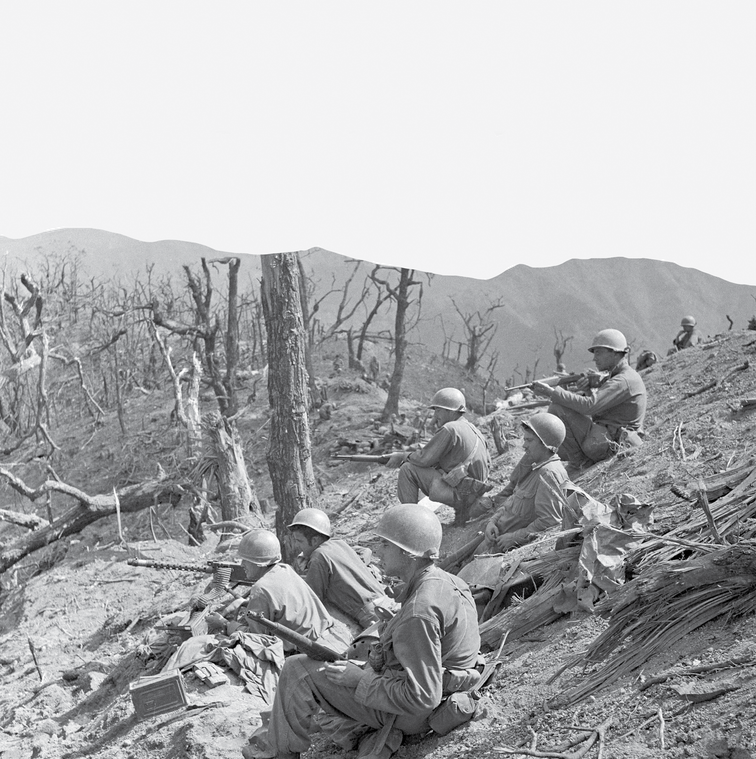
Troops secure “Bloody Ridge” in North Korea, 1951
I GOT MARRIED in December 1950 and was drafted into the U.S. Army in February 1951. I had never heard of Korea. I did three months of basic training and was shipped over to Korea to join the 2nd Infantry Division. I was 20 years old.
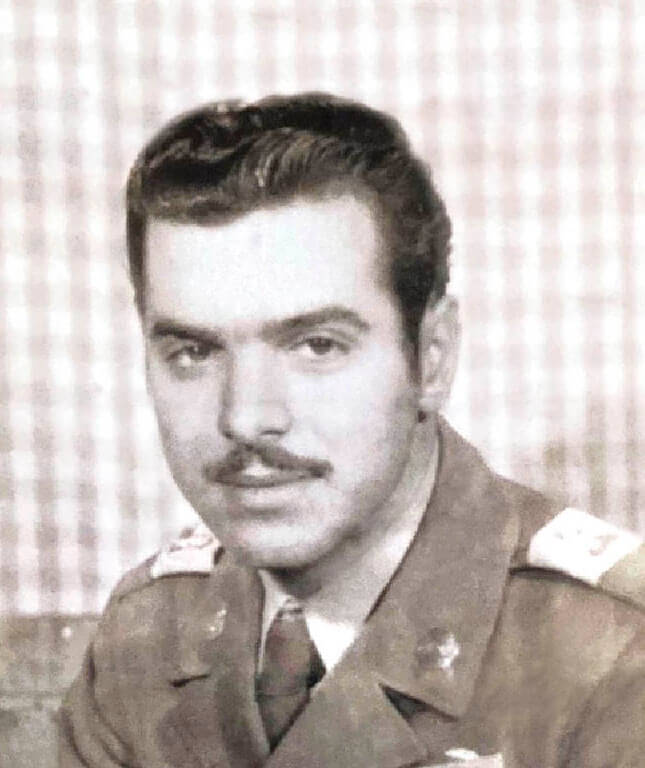
George Sousa
My unit was started out at a place called the Punch Bowl [the Haean Basin in the Gangwon province of what was then North Korea], and that’s where I met J.C. He was from West Virginia, and he had lied about his age and joined the Army at 16. When I met him in 1951, he was 18. He was kind of short, with curly hair—a good-looking kid.
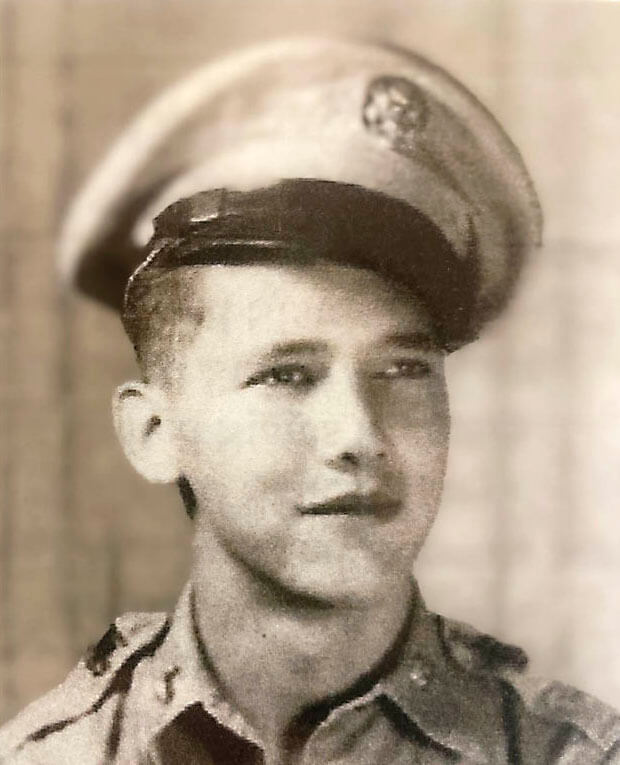
J.C. Coffey
We shared a foxhole, and the temperature sometimes reached 25 degrees below zero. We couldn’t make any fires because that would give away our position. When you live in a foxhole, you get pretty close to the people around you. J.C. was tough as nails and afraid of nothing. We fought together in the Battle of Bloody Ridge, and from there, we moved to Heartbreak Ridge. In that battle, North Korea had the advantage. They were occupying the ridge, and we were trying to take it. At one point, a North Korean tank came around a corner and fired three rounds. These shots wiped out my squad, and I was the only survivor. J.C. got shrapnel in his face, and he died right there. I took shrapnel in my stomach and my foot, and I was sent to Japan to a hospital for a month. Then I was sent back to continue fighting.
I got home in June of 1952. I felt it was my duty to call J.C.’s mother because I was the last one to see him alive. That was tougher than fighting in the war. J.C.’s mother had me crying on the phone. She said, “He was my only son. He was only 16 when he left. I begged him not to go!” I can still hear her voice, all these years later. That’s why I salute J.C.’s picture, which is on the wall of my office, every morning.
VIETNAM WAR
Lieutenant Edie Meeks
By Captain Diane Carlson Evans
As Army nurses, Meeks, 81, and Evans, 79, saw unspeakable things in Vietnam. Years later, Evans and her “sister veteran” Meeks led the charge to build the Vietnam Women’s Memorial, which was dedicated on the National Mall in Washington, D.C., in 1993.
EDIE AND I arrived in Pleiku in Vietnam in January 1969. We shared a hooch—which is what we called the building where we lived. We introduced ourselves and realized we were both from Minnesota. It was an instant bond. She was a city girl. I was a farm girl. I was 22, and she was 24. There we were, two Army nurses, in the last six months of our tour of duty, near the Cambodian border. Even if you’re in the middle of a war zone, Edie makes you laugh. She may have been crying on the inside but was laughing on the outside. Edie and I saved each other’s lives in Vietnam—and afterward too.
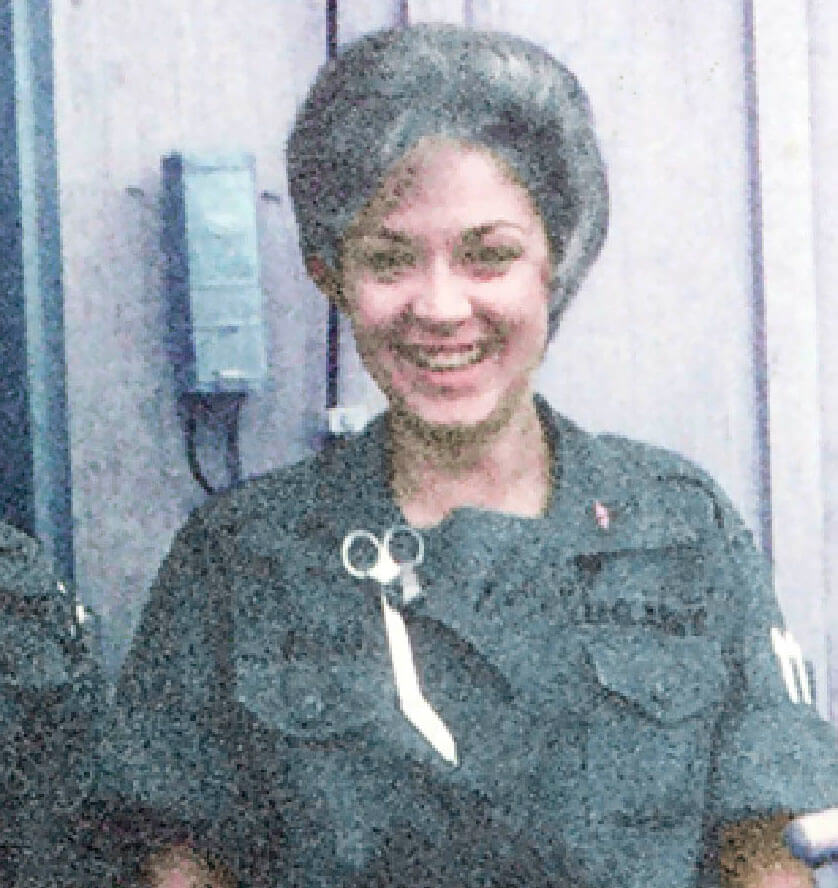
Edie Meeks in Vietnam, 1969
One night we were in our hooch when our camp was hit with rocket fire. I crawled to her room, and she was under her bed eating peanut butter and crackers. I said, “Edie, how can you eat at a time like this?” Laughing, she said, “If I die, I’m not going to die hungry!” We stayed under the bed and felt safe together, in this insane situation, until the sirens stopped blaring. When we went outside, the hooch next to ours was gone—a big black hole in its place.
I was working as a head nurse in a postoperative surgical unit, getting wounded casualties under their beds for protection and throwing mattresses on those patients connected to ventilators and chest tubes. Edie’s medical unit was dealing with FUO. That means “fever of unknown origin.” These patients could be near death, and it was hard to diagnose—it could be malaria, a parasite or cholera, or typhoid or plague.
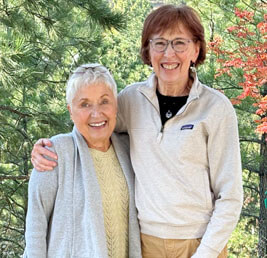
Meeks with Diane Evans, 2025
Our job was to help these young men survive. You wanted to save every soldier’s life and did all that it took. There were no tears because you had to shut down your emotions to get through the day. When you have patients in front of you who need every ounce of your energy and nursing skills, their survival depends on how brave you are, how quick, how smart.
But this also became our lasting trauma. It’s what we lived with when we returned home, remembering the patients we did not save, wondering if we could have.
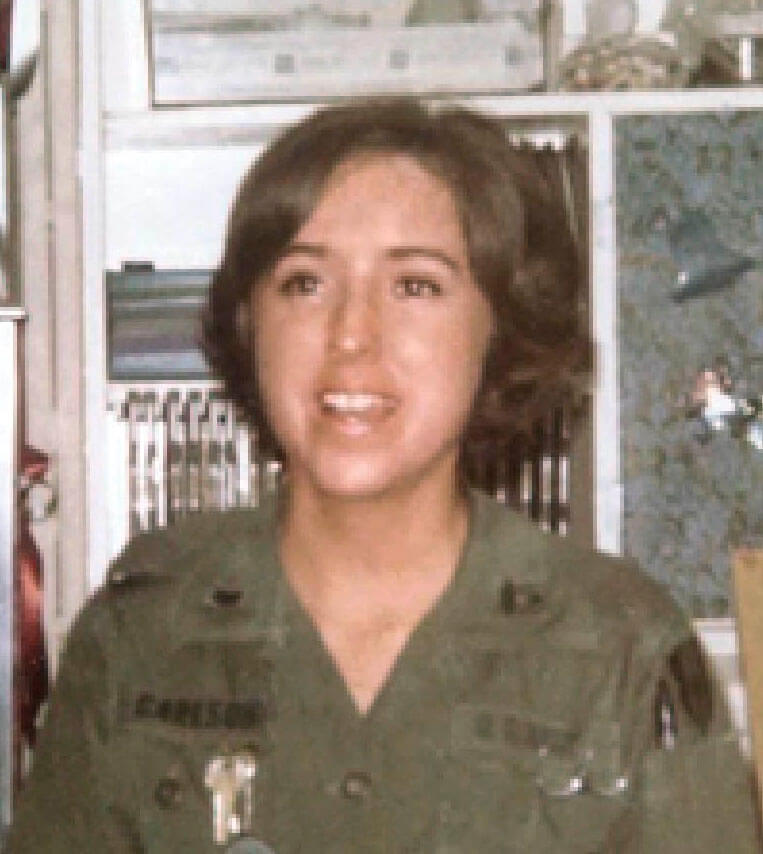
Evans in Vietnam
When I called Edie years later about launching a program to build a women’s Vietnam memorial, she was silent on the other end of the phone. She was still in the PTSD closet. I said, “Edie, I’m going to need help.” She said, “I don’t even talk about Vietnam.” I said, “If we don’t talk about it, how will people know?”
When she began speaking out, she was so sincere, honest and passionate. You loved Edie the moment you heard her voice. The Vietnam Women’s Memorial was the first memorial in American history honoring military women and women who served in support of the armed forces. Its motto is “Healing and Hope.” To me, Edie is the perfect example of why this memorial needed to be dedicated.
A.J. Baime is a writer and journalist whose books include Go Like Hell: Ford, Ferrari, and Their Battle for Speed and Glory at Le Mans and White Lies: The Double Life of Walter F. White and America’s Darkest Secret.
AARP offers help and advice at aarp.org/veterans for veterans and military families.
For more stories about men and women at war, visit aarp.org/warstories.