THIS IS 50
How I Got Unstuck at 55
The key was thinking—and living—like a 20-something
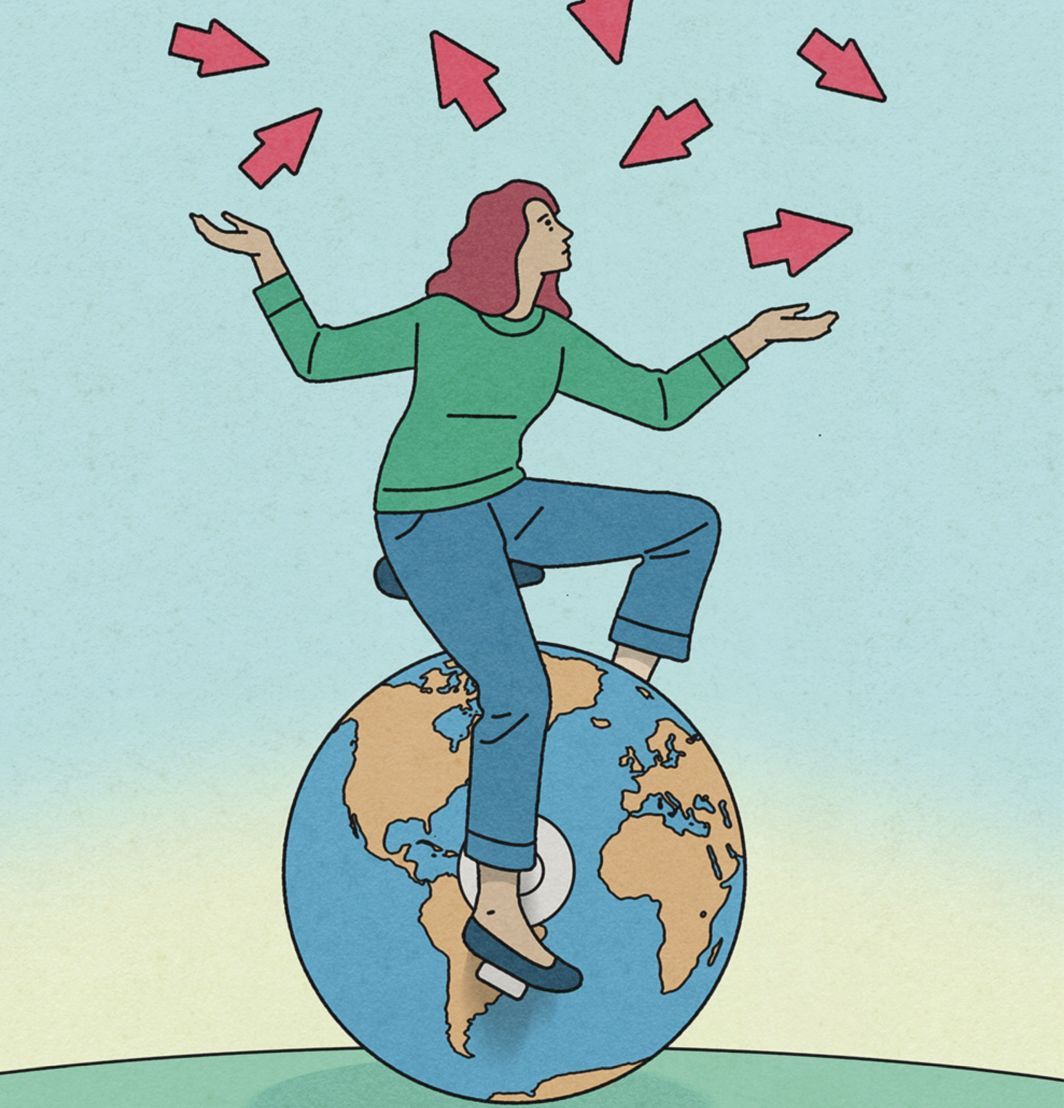
AFTER MY TWINS went off to college, I couldn’t get my head around my new reality: I was a single mom with nobody at home to mother. Worse, my writing career in print journalism had stalled. I was 55 and feeling old. And I hadn’t a clue about my ”what’s next?”
So in a reverse of all those years of parenting, I looked to my kids for guidance. They were in their “what’s next?” phase, flourishing and thrilled by the prospect of new adventures ahead. They were becoming masters at ... becoming. I took a page from their handbook and tried to approach change the 20-something way.
Your 20s are an experiment, a laboratory for an adult life. I was now at a similar juncture of life, only I was creating a second adulthood. As I watched one twin go to Colorado and the other to Arizona, I tried on an idea I hadn’t considered since my 20s: Why not a new place? As fate would have it, suddenly an ideal job came open—in New York state, 2,200 miles from where I lived in New Mexico. I accepted the offer, and so began my experiment. Though I would not know it at the time, this would be the year when I moved across the country and back in one summer. And that’s important, because in the 20-something mindset, it’s OK to just try stuff.
My journey led me to a new mindset of looking at my thoughts and emotions with compassion and curiosity. When I try something and it doesn’t work, I ask myself: But did I like that? Would it work the next time? What if I changed how I did it? The goal: to find a way to do more of what I love.
Here’s what the experts I consulted—and those experts include my family and friends—say I did right on this journey, and what you can do too:
Turn off your emotional autopilot. By age 50, experience has made our brains pretty good at predicting what feelings and sensations to cue up when certain things happen, such as sadness when you sit at a table for one where there used to be three. But we can rewire our brains to produce other responses, says Lisa Feldman Barrett, author of How Emotions Are Made: The Secret Life of the Brain. How? By noticing when you’re interpreting events in a habitual way—reacting rather than responding. For example, instead of thinking an empty nest automatically leads to loneliness, I rethought and reframed it: The empty nest leads to a newly invigorated life.
Find a new way. A big life event, such as kids moving out, can be stressful. I found relief in searching for things that give me pleasure, like attending an Irish acoustic jam night in Saratoga Springs. That led to a trip to Ireland, where I made new friends I now call my Irish family.
Create new stuff. One’s 50s can be a time of serious stagnation, says Gay Hendricks, a psychologist and author of The Big Leap. So “rebirth yourself,” he advises. “Do what you really came here to do.” And I did just that. From my empty-nest doldrums, I started working on a memoir on living boundlessly, and to my delight, it was published. Then I launched a writing retreat in Tuscany, Italy, that brings storytellers and songwriters together.
In the end, I learned that to live like a 20-something means to regularly ask yourself: What if I did that? With that attitude, my young adult kids are now flourishing. And so am I.
Carolyn Dawn Flynn is the author of eight books, including the memoir Boundless: A Road Trip to Rejuvenation. She lives in Albuquerque, New Mexico.