In the News Special Report
WHAT’S AT STAKE IN THE STATES
How this year’s midterm elections have the power to affect your life
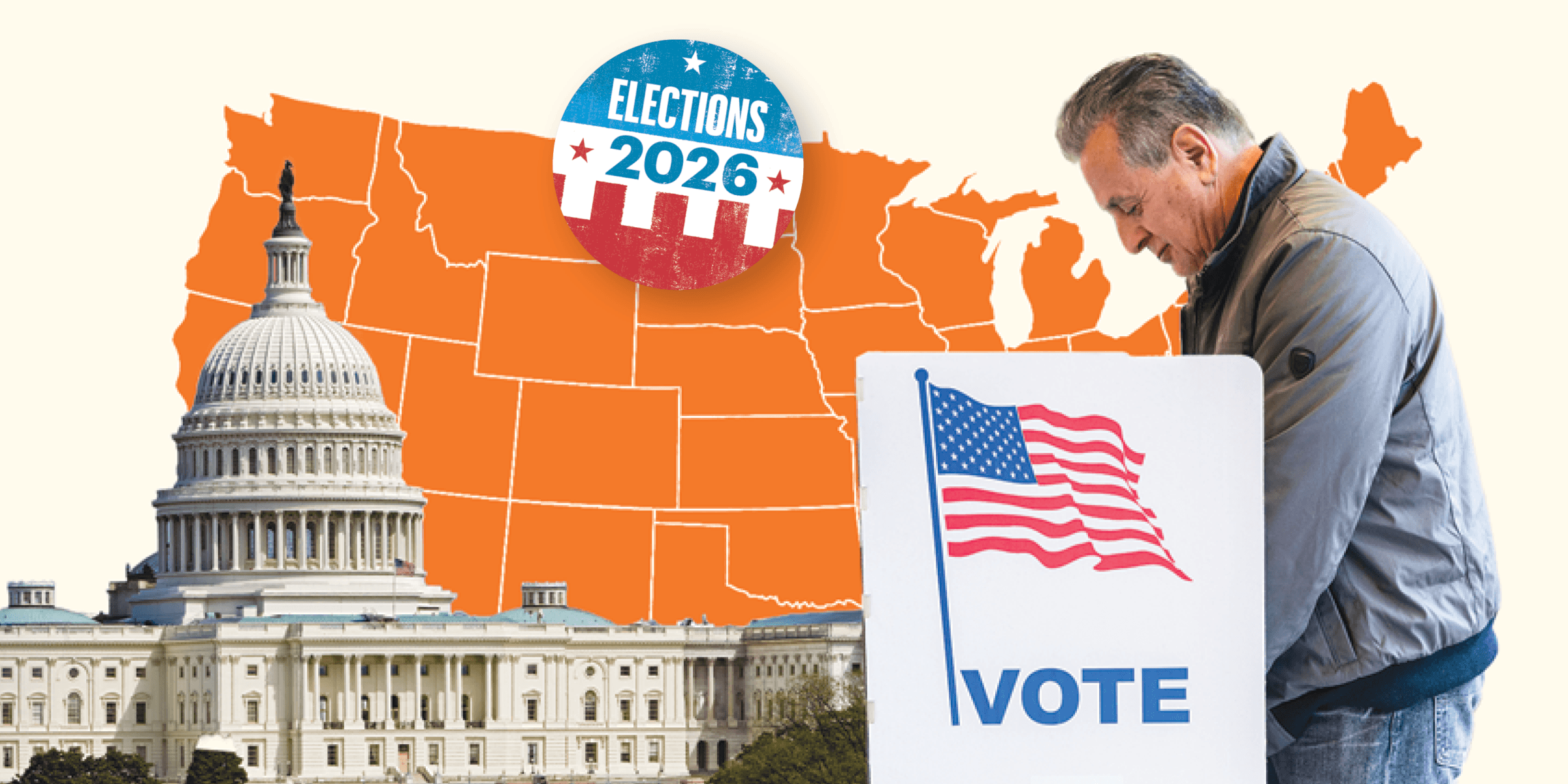
In Alaska, voters will be asked—for the third time—to change their voting system. South Dakota voters will once again weigh in on the state’s expanded Medicaid program.
And in six states, ballots will ask voters to declare that only American citizens can vote. That’s already the law for federal and state elections in every state, but the ballot measures will make the prohibition more explicit.
Oh, and voters will have plenty of other decisions to make on Nov. 3, as they pick 36 governors, 26 secretaries of state, 30 attorneys general and over 6,100 state legislators—more than 80 percent of the lawmakers in statehouses across the country.
That’s in addition to the midterm’s marquee question: Who will control Congress? Right now, Republicans hold both the House and Senate, but only by a handful of seats in each. A strong swing vote toward Democrats could flip control of one or possibly both chambers. And right now, the electorate is in a foul mood—only 18 percent of U.S. adults in a June poll by Marquette Law School said they “trust the government in Washington to do what is right” all or most of the time, while 19 percent never trust it and 63 percent trust it “only some” of the time.
But whatever happens in Congress, the outcomes in Montgomery, Alabama; Des Moines, Iowa; and four dozen other state capitals are poised to have a major impact on citizens’ lives, their communities and their future.
Certain federal issues certainly do affect Americans’ day-to-day lives—but management of those issues often falls to state or local governments, says Bill Sweeney, AARP senior vice president of government affairs. “Who we elect in those state and local races really impacts how these things get applied to us,” he adds.
MOTIVATION—AND CHANGE?
The last two midterm elections—2018 and 2022—brought out a higher share of voters than midterms normally do. And while it’s tough to predict turnout so far in advance of an election, there are signs the 2026 electorate is shaping up to be an energized one. In an April ABC News/Washington Post/Ipsos poll, 58 percent of registered voters said voting this year was “much more important” or “more important” than it was in previous midterms.
Here’s some of what they’ll be deciding:
State executives: The same number of states have gubernatorial elections in 2026 as in 2022, but more are for open seats—meaning the winner will be a newcomer to the governor’s mansion. There are 18 open races in 2026, compared with eight in 2022.
Legislatures: Republicans have the advantage among state legislators, holding 55 percent of seats nationwide. As of 2025, 27 states and the District of Columbia had “supermajorities”—enough members of one party to override a governor’s veto, says the National Conference of State Legislatures (NCSL). So even if chambers don’t flip, the political dynamic could change if those supermajorities turn into simple ones, says J. Miles Coleman of the Center for Politics at the University of Virginia.
Control of the legislature and the governor’s veto pen touches on issues important to AARP. Those issues include implementing tax credits to help cover caregiving costs; beefing up home care services so people can more easily age in place; and establishing state-facilitated work-and-save programs that help Americans prepare for retirement even if their workplace doesn’t offer a 401(k) or similar option. AARP has gotten traction on all those issues in some states but has plenty more to go.
Such issues are vital to older voters—the very people likely to vote in midterm elections. Signs are that 2026 won’t be different: Recent polls from The New York Times/Siena and AARP in key battleground states show older voters more intent on voting than younger ones. “We represent that constituency, and we are delighted they’re going to show up at the polls,” says Nancy LeaMond, AARP executive vice president and chief advocacy and engagement officer.
Ballot measures: Come November, the election process itself will be in contention. As of early August, more than 20 elections-related measures had qualified for the ballot, according to the NCSL.
That includes a measure on Alaska’s ranked-choice voting system, which lets voters rank candidates in order of preference rather than just selecting one. Voters approved the system in 2020 and, in 2024 and 2026, have been asked to repeal it. In addition to the state ballot measures affirming that only citizens can vote, several states’ ballots will include measures that would change the thresholds for approving ballot measures. The number of ballot measures will likely grow as more are certified; as of early August, there were 132, according to the NCSL.
Chris Adams is the Bulletin’s director of state news.
To track ballot measures in your state, go to the National Conference of State Legislatures (ncsl.org) and type “statewide ballot measures database” into the search bar. Or go to ballotpedia.org and, on the left, click 2026 Elections.