COVER STORY: FRAUD 2026
HOW I LOST MY LIFE SAVINGS IN 76 DAYS

“Are you free tomorrow? We are going to have a BBQ.”
The stranger’s text arrived one July morning, just ahead of a weekend memorial service for a colleague that included a picnic. So, while I normally ignore unsolicited texts, this one seemed legitimate.
“You mean Jack’s picnic?” I responded.
“No, Griffith Park at 1 p.m. tomorrow.”
“In L.A.?”
“Yeah. This isn’t Emma’s new number?”
It wasn’t, of course. Just an odd coincidence—one that would radically change my life. “It is always good to meet new people,” the stranger continued. “My name is Daisy Miller and I am 37 years old. How about you?”
I took 10 years off my 82. And so it began: a chance encounter with a woman who claimed to own a custom jewelry business in Los Angeles. A video of the cookout to make it feel real.
Our “relationship” would end in early October, 76 days by my reckoning. By then, my life savings were gone and my family battered by mistrust and fear.
Within days of our first exchange, Daisy said she wanted to spend her October birthday with me. Glamorous photos followed. She was young and gorgeous. A flirtation broke out.
Our texts quickly moved from budding romance to business. “I believe there are many beautiful things waiting for us,” she promised. Meanwhile, I should join her in investing in short-term gold futures.
I was lonely, and gullible enough to fall for it despite all the red flags waving in my face. What made it so believable was her gift of telling me where she was and sending pictures along the way—the San Diego Zoo, Catalina Island. One Friday night, we cooked a meal together through texts and screenshots.
I did have suspicions. I tried vetting her with the LAPD fraud division but came up empty. I tried Google’s reverse image search, but 10 photos revealed nothing. After those cursory efforts, I let down my guard completely.
Daisy suggested I invest in some gold options—a hedge in an uncertain economy. She sent me a screenshot showing she had earned $78,000 in trades the previous night on a website called SunX.
SunX.io is a legitimate website that has had its reputation tarnished by cybercriminals. “SunX has discovered that malicious individuals and groups have been forging official websites, creating fake apps, fraudulent customer service channels, and imitating our social media communities to carry out illegal fundraising, investment scams, and Ponzi-like activities,” the company said in a statement on its website.
But I had no idea I was dealing with a fake site until it was too late.
One night at dinner, I told my daughters, Jenny and Jessica, about Daisy. I showed them her pictures.
“How do you know she’s real?” Jenny asked. “I hope you’re not doing any kind of trading with her.” She was freaking out because the father of a friend had fallen into an internet romance, lost all his money and committed suicide. I was blind to all the warnings.
Daisy pushed me to start trading. I told her I was willing to risk $20,000 from money invested with my financial adviser of 20 years, Richard Ross. I told Richard I needed $20,000 to buy a new car. My relationship with Daisy turned me into a prolific liar.
The first night I invested, I almost did handstands when I seemed to make a profit of $1,920. Daisy convinced me to withdraw another $70,000 on September 4. I told Richard I wanted to set up a fund to help Jenny’s photography business.
A week later, on September 11, of all days, disaster struck. I lied and told Richard I was withdrawing the rest of my $133,000 in investments for a son-in-law to look after.
Meanwhile, at my grandson’s soccer match, Jenny and Jessica tried to intervene. “Dad, the moment you hit send, your money is gone,” Jenny warned. I would have none of it.
Al Levine's digital encounter was seductive.
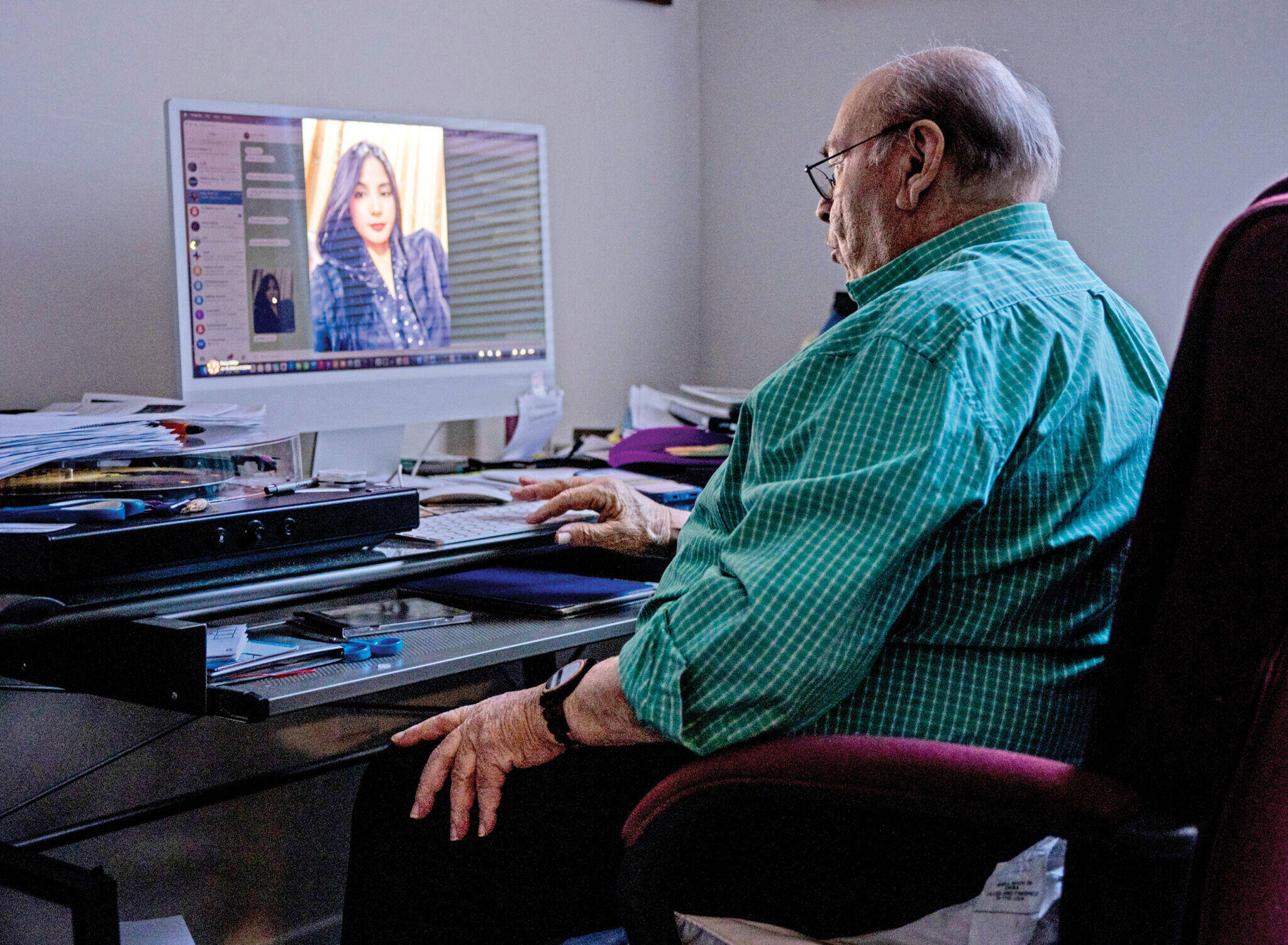
Al Levine's digital encounter was seductive.
The last transaction is the one that hurts the most. I took out a $20,000 loan to add to the money already “invested” because Daisy said I could increase my profits even more.
After my last trade on the counterfeit SunX site, on October 6, my account showed a profit of $170,000 and a balance of $1.3 million. It was all fake.
As the day of Daisy’s birthday trip drew closer, she suggested I withdraw $300,000 from my “account” to have spending money for us.
But my account said I couldn’t get any money until I paid $216,000 in capital gains taxes on my “profits.” It was one last attempted scam. The scheme finally collapsed when I called my nephew, Alex, who’s a software engineer, and gave him access to my account. He quickly found the SunX account was fake and that my money had been funneled directly to the scammers. I lost $271,000—all the savings I had.
At least I have plenty of company. The FBI has seen a steady uptick in romance scams and says that in 2024, victims lost almost $561 million to them. More than 80 percent of the victims were 50 and over.
Now I get by with my monthly Social Security check and a pension from the company where I spent my career as a sportswriter.
To make ends meet, I have sold the few things of value that I had: a Nikon camera, a never-worn Rolex watch and the 1996 Olympic torch I had gotten to carry.
The chances of ever recovering my losses are near zero. “Wire transfers and cryptocurrency move quickly and are rarely recovered,” says Detective James Amica, who investigated my case for the Kennesaw, Georgia, police department. “This is their job. They’re very good at it.” He found my money was wired to a bank in the United Arab Emirates.
As for Daisy, “she never existed,” Amica says. Her photographs were probably a stolen identity or created by artificial intelligence.
A Christmas Day brunch finally gave my family time to express what the scam has done to them. Jessica said she was worried that I would harm myself. “You were lying to me about so many things,” Jenny said. “I felt bad that I couldn’t trust you.”
The money is gone. And it’s going to take time to heal my wounded family. “I’m still angry,” Jenny says. “But you’re paying a steep price. I’ll eventually get over it.”
Al Levine had a four-decade career as a sportswriter, including at The Atlanta Journal-Constitution.
NEW TECH THAT TARGETS FRAUD
SCAMMERS ARE GETTING SMARTER—BUT SO ARE THE TOOLS THAT PROTECT YOU
Older Americans who already feel under siege from the threat of scams are facing even more risk as the use of artificial intelligence by crooks increases. But the good news is that an array of impressive new technology, including tools that harness the powers of AI, is being deployed to block scams.
Here’s a look at new fraud-fighting tech:
▶︎ Microsoft scareware blocker. “Scareware” is a tech-support scam that deceives people browsing the web into thinking their computer has been infected with a virus and urges them to call a phone number for “tech support.” A scammer answers instead. Cybercriminals then gain access to the person’s computer, where data can be stolen. Microsoft’s Edge browser now intercepts these scams in real time, using AI to scan web pages and spot potentially malicious ones, silencing false audio alarms, stopping the page from taking over the full screen and warning users.
▶︎ Apple Call Screening. The September release of Apple’s iOS 26 included a screening feature to prevent robocalls and let iPhone users decide how to handle calls from unknown numbers. Users can let the calls ring through like any other call; mute them, sending them directly to voicemail; or have the phone ask the caller to give more information about who they are and why they’re calling. With the third option, the phone won’t ring initially. Siri will answer the call and gather the information. A status message will then appear on the phone’s lock screen, allowing the caller’s reply to be read and the live call to be ignored or answered. (Android phones have had similar capabilities for several years.)
▶︎ Android’s Circle to Search. Android users have a new way to protect themselves from text scams. Google’s Circle to Search tool can identify suspicious texts. Users just long-press the home button on their Android device and circle the questionable text (or take a screenshot, open Lens in the Google app and select that screenshot). The system will then use AI and information found online to determine whether it’s a scam and offer guidance about how to proceed.
▶︎ McAfee Scam Detector. The popular antivirus program added scam protection last spring, using AI to analyze and flag risky text messages and email, warning users about a potential scam. It also watches for AI-made videos, alerting users when a fake is detected.
▶︎ New tools from WhatsApp. The messaging app will tell users when they’re added to a WhatsApp group by someone not in their contacts—and offer information about that group and ways to stay safe, including an option to exit and not receive notifications. The app warns users so they can pause before they reply to unknown people via private messages, providing additional context about whom they’re messaging with.
▶︎ SilverShield for NY state. At the start of 2026, New York’s State Office for the Aging launched a pilot program in partnership with SilverShield, a fraud prevention service that lets older adults check an email or text they think is suspicious. For instance, if they get an alert about a toll or other bill they “forgot” to pay, or something that asks them to click a link, they can forward that message to SilverShield. The service will instantly analyze the wording and other details, then reply with an assessment of how likely it is to be a scam—and what steps to take. SilverShield is free for some lower-income residents of New York. Others in New York and elsewhere can get it for a fee that starts at $50 a year.
▶︎ Mastercard Threat Intelligence. Fraud doesn’t typically begin when a criminal uses your credit card number to buy something for themselves. It more frequently begins when a company’s customer records are hacked and your data is stolen. But since many of these incursions are not discovered immediately, financial institutions don’t know to lock the cards down. Mastercard has acquired cyberthreat intelligence firm Recorded Future to close those communication gaps, with real-time alerts and proactive declines of suspected fraudulent transactions. The service is designed to assist banks and merchants, but consumers also benefit by avoiding the headache of dealing with fraudulent charges on their account.
Chris Morris is a technology writer who frequently covers fraud prevention.
AARP members can visit aarp.org/Norton-benefits to save on identity protection plans from Norton.