Your Life
A PLACE TO GET NEW GUIDANCE
Older volunteers provide free counseling on Friendship Benches
Grandparent Angela Jasper (left) offers a sympathetic ear to visitor Robin Baxter on a Friendship Bench on the roof of the Bernice Fonteneau Senior Wellness Center in Washington, D.C.
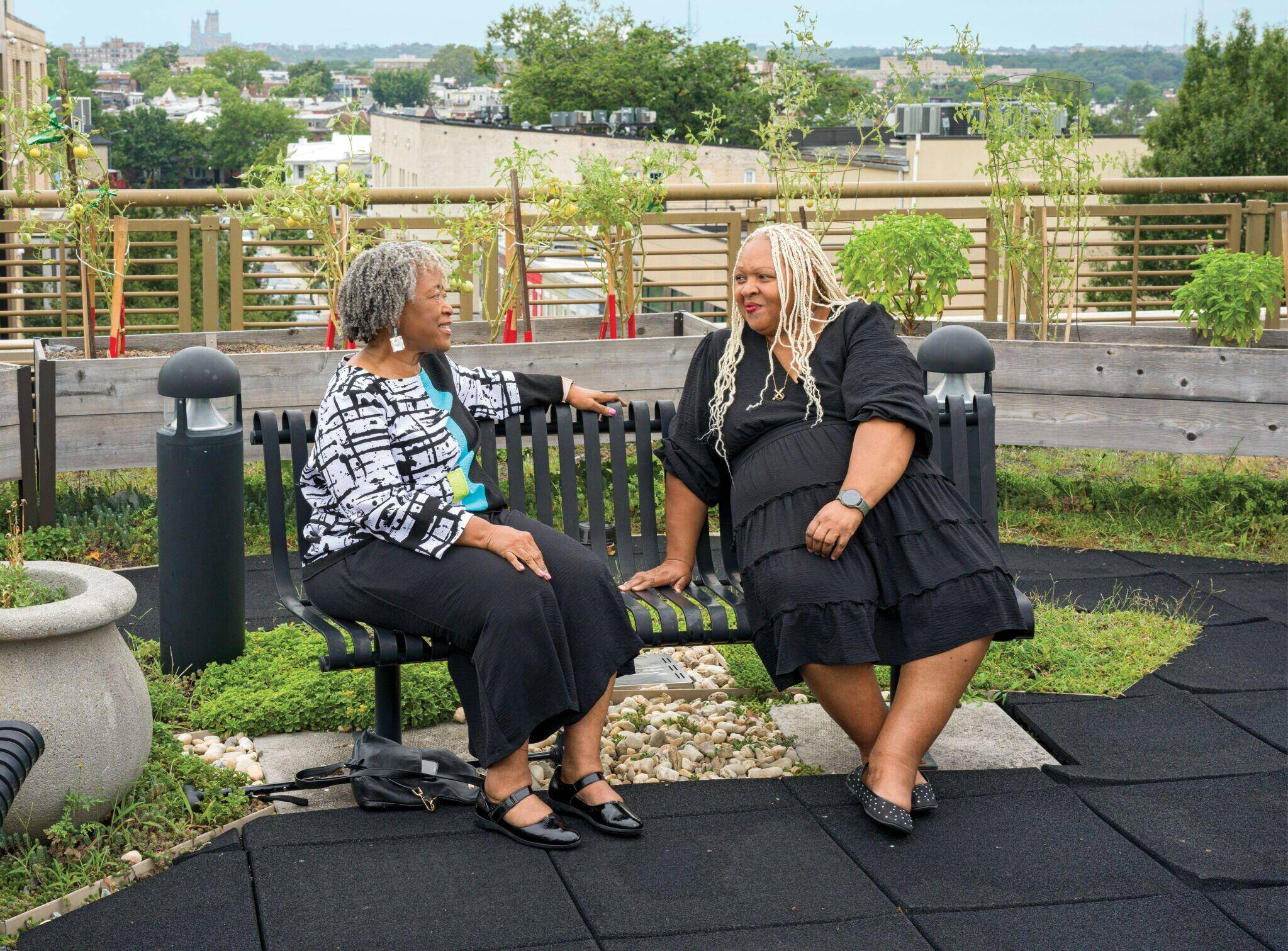
Grandparent Angela Jasper (left) offers a sympathetic ear to visitor Robin Baxter on a Friendship Bench on the roof of the Bernice Fonteneau Senior Wellness Center in Washington, D.C.
A few times a month, Robin Baxter heads to a senior center in Washington, D.C., to meet up with her “Grandparent,” Angela Jasper. The two women sit on a bench and talk about life.
A mere 12 years in age separate these two women. “Grandparent” isn’t a family role but a volunteer position. Jasper, 76, gives her time to Friendship Bench DC, a program launched in 2024 in which older women lend a helpful ear to others. These “visitors” share their feelings and discuss their problems, usually for 45 minutes to an hour per session.
Baxter, 64, tells Jasper about her concerns, including her unstable housing situation and family conflicts. She has seen a traditional therapist, Baxter says, but “it just didn’t suit me. She was talking down to me. Miss Angela listens to me. I tell her all the time, ‘I really appreciate your ears.’ ”
WHAT ARE FRIENDSHIP BENCHES?
This Washington, D.C., program is the work of HelpAge USA, a nonprofit devoted to advancing the rights and well-being of older people. It currently includes 10 Grandparents who meet with people in need at sites around the city, including social service organizations, schools, recreation centers and houses of worship. Another 12 Grandparents will begin their service soon. The project is an official adaptation of the Friendship Bench program, which started almost 20 years ago in Zimbabwe to provide counseling in a nation with limited mental health services.
“I tell her all the time, ‘I really appreciate your ears.’ ”
—Robin Baxter
The Washington Grandparents aren’t licensed therapists, but they do receive some training for the role. They’re more like nonjudgmental, compassionate friends who’ll listen patiently, keep the visitors’ secrets, and ask questions to get them to think and make positive changes. The sessions are free.
Grandmothers “have this amazing ability to convey empathy,” says Dixon Chibanda, a psychiatrist who founded the program in Zimbabwe and wrote the book The Friendship Bench: How Fourteen Grandmothers Inspired a Mental Health Revolution.
EXPANDING THE EFFORT
Other organizations and individuals around the U.S. are eager to begin their own Friendship Bench programs, says Cindy Cox-Roman, president and CEO of HelpAge USA.
Some similar efforts have sprung up, such as Arizona State University’s All Ears Friendship Bench Program, in which older adult volunteers sit on benches next to the sign “I’m All Ears! Talk to Me About Anything,” encouraging students to stop and chat.
And Friendship Bench NOLA, created at Southern University at New Orleans, launched in September. It calls its volunteers “supporters”; they are community members of various ages “who are already doing healing work,” says Carol Bebelle, 76, a community health professional who helped start the program.
THE POWER OF AGE AND WISDOM
Cox-Roman says having older people in the role is the key to the program’s success. “It’s about the iconic role of grandparents being that safe space,” she says, “the person you could always turn to for support.”
Volunteer Theresa Kelly, a 76-year-old retired elementary school teacher, points to one Friendship Bench DC visitor who touched her heart: a 17-year-old boy with concern for his mother, who had cancer, while grieving the death of his grandmother. “He felt like he wasn’t doing enough for his family,” Kelly says. “I helped him realize that he couldn’t solve the world, but there were things he could do to find joy. And I told him I could see such hope in him. It was beautiful to see him change. The last time we met, he was looking forward to high school graduation.”
When they said goodbye, “he told me he loved me,” she says with a smile. “I told him I love him too.”
Christina Ianzito is a staff writer and editor for AARP.